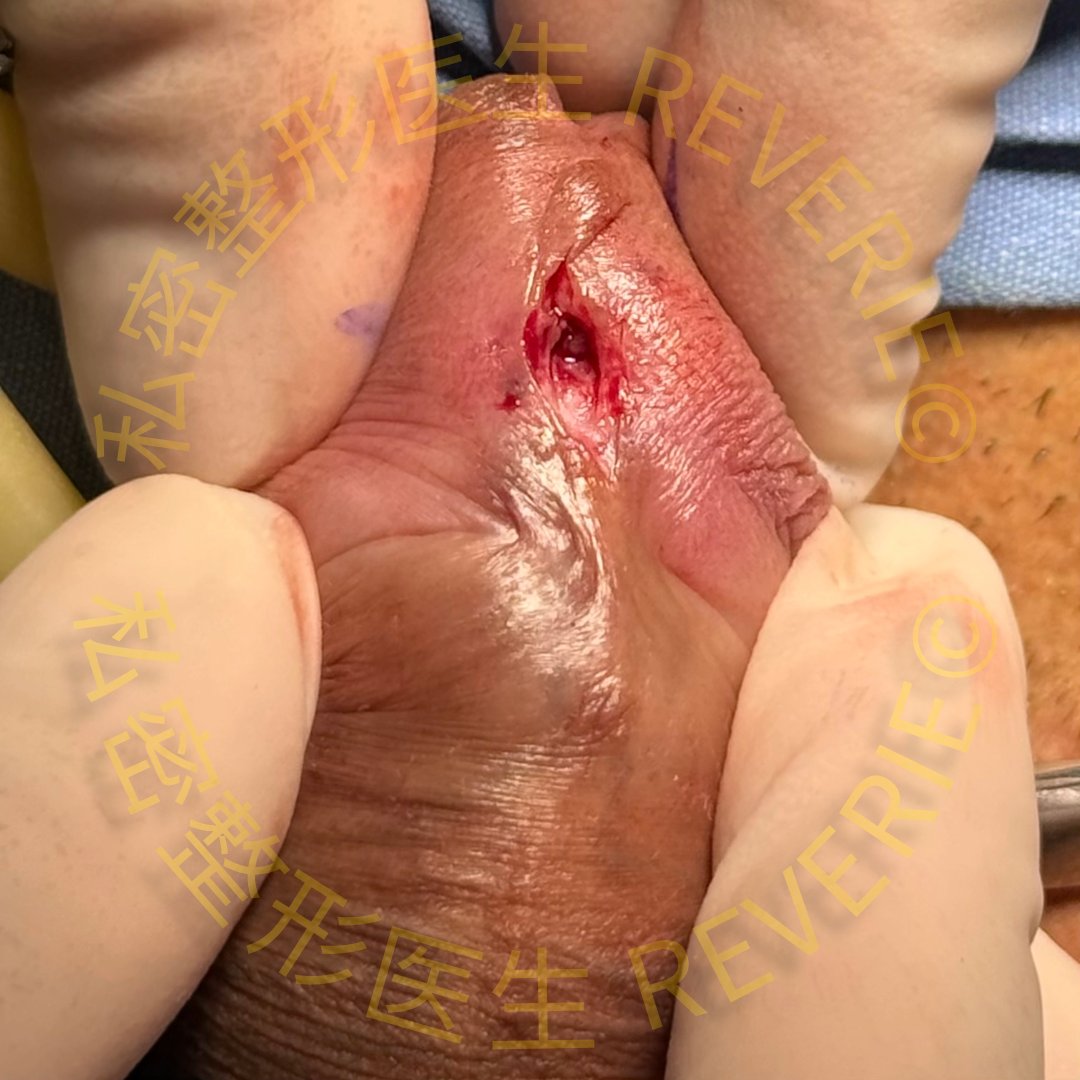
关于这个小孔(Pa孔)的修复,很多朋友觉得“缝一针不就行了”?其实没那么简单。你可以把这个孔想象成一个已经长好了的“耳洞”。因为孔的内壁已经长成了像皮肤或黏膜一样的组织,它们是非常稳定的。如果你只是拿线把两个口勒紧,它们就像两块熟肉贴在一起,是长不稳的,线一拆就会重新裂开。
所以,我们的手术需要分三步走:
1. “激活”伤口: 我们需要把孔周围那层旧的组织修剪掉,让它露出像新伤口一样的“新鲜红肉”,这样组织才有重新长在一起的能力。
2. 精细缝合: 就像修补一件贵重衣服,我们会用比头发丝还细的线,一层一层地把通道彻底关闭,原理其实跟处女膜修复非常接近,讲究的是精细对合。
3. 术后保护: 如果孔比较大,最怕的就是尿液去浸泡和冲击新伤口。所以,我们要辛苦你留置导尿管 7 到 10 天,给伤口一个干燥、安静的生长环境。
坚持过这几天,让组织彻底融合,这个孔才能真正闭合。
When it comes to repairing this small opening (the PA hole), many people think, "Can’t you just put a stitch in it?" Unfortunately, it’s not that simple.
Think of this hole like a healed ear piercing. The inner lining of the tract has already turned into stable skin or mucosal tissue. If we were to simply pull the edges together with a thread, the sides wouldn't actually bond—it would be like trying to stick two pieces of cooked meat together. As soon as the stitches are removed, it would just pop open again.
That’s why our surgical approach follows these three essential steps:
1. "Activating" the tissue: We need to carefully trim away the old, healed lining around the hole to reveal "fresh" tissue. This is the only way to give the body the ability to knit itself back together.
2. Meticulous Suturing: Like repairing a piece of fine silk, we use sutures thinner than a human hair to close the channel layer by layer. The principle is very similar to a hymenoplasty—it’s all about precision alignment.
3. Post-op Protection: For larger holes, the biggest enemy is urine soaking or splashing against the fresh wound. To prevent this, we’ll need you to use a catheter for 7 to 10 days. This keeps the area dry and quiet so it can heal properly.
Once you get through those few days and the tissue fully fuses, the hole will be permanently closed.