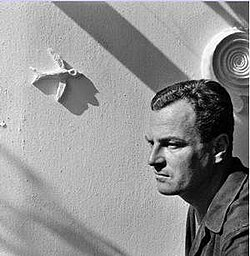
Sir Patrick Leigh Fermor DSO OBE, one of the last of the SOE’s legendary agents, slipped away at the age of 96.
Like Lord Byron before him, he was soldier, scholar, and wanderer - a man who lived life to the full. Both men stood fiercely for Greece. Both swam the Hellespont. Both became cherished adopted sons of that ancient land...
Upon his tombstone, the Greek inscription reads with quiet perfection: “In addition, he was that best of all things, Hellenic.”
Happy 96th birthday to Clint Eastwood.
A living reminder that strength, resilience, self-reliance, and dignity never go out of style.
His advice to men: “Don't let the old man in."
What’s your favorite Clint Eastwood film?
“You made the government retreat in a way that very few national protest movements have done in this country.”
John McGuirk on the progress made by the fuel protest movement this year.
Full speech linked in comments below 👇
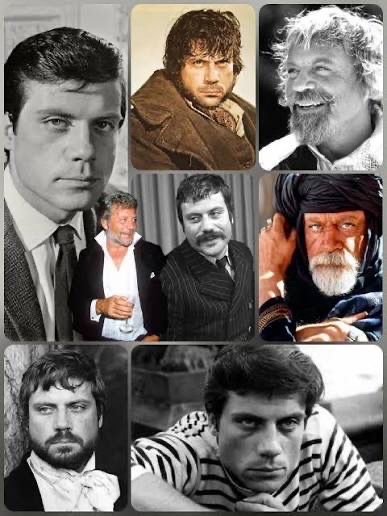
2 May 1999. Oliver Reed died (aged 61). He collapsed with a heart attack in a bar in Valletta, Malta, during a break from filmimg Gladiator after taking part in a drinking game with sailors. Films include Women in Love, The Devils and as Bill Sikes in the musical Oliver.
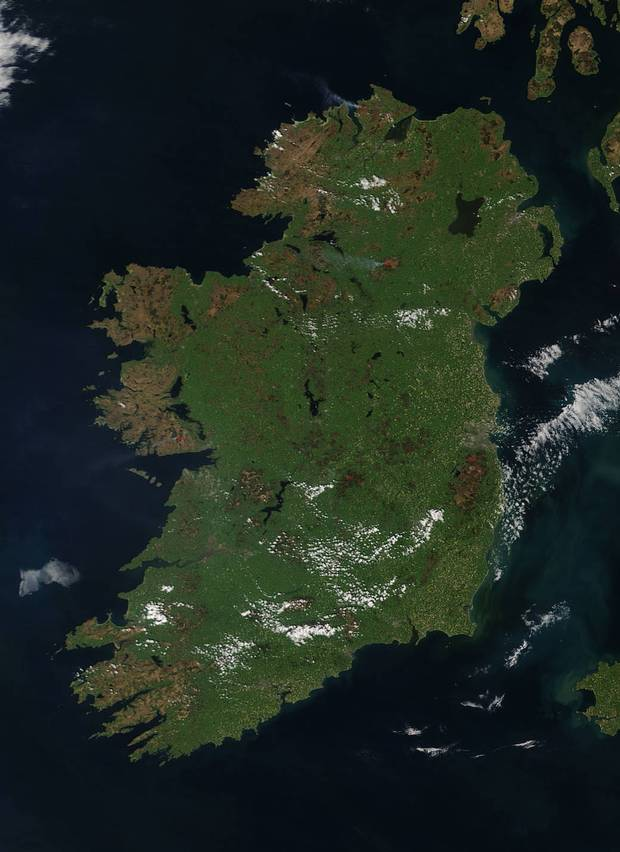
#OnThisDay 1949 26 Irish counties became a republic. R.É radio said "Our listeners will join us in asking God’s blessing on the Republic &in praying that it will not be long until the sovereignty of the Republic extends over the whole of our national territory”
#Ireland#History
Another dive into the literary loves of Ian Fleming.
This time, a memoir, Airline Detective by Donald Fish, published with an introduction by Ian Fleming in 1962.
Fleming first met Fish years earlier when covering an Interpol conference for The Sunday Times and recommended John Pearson, his aide at the newspaper, to help ghost write his memoir. Full of dramatic, eye-opening stories, it takes us on Fish's journey from Scotland Yard detective, to MI5, to leading the fight against international air crime as Head of Security at BOAC.
At the time, commercial air travel was still relatively new, and crime organisation were beginning to exploit airline services to move contraband – from smuggling people to diamonds. Fleming wrote in his introduction that '[the chapters are] some of the best I have ever read in any language on police work. Now that Donald Fish has retired and is free to tell some of his stories, the reader can be pretty certain he is getting the real stuff.'
Airline Detective was serialised in The Sunday Times and renamed Lawless Skies in the USA. It was also the basis of the popular BBC /MGM TV series, Zero One, starring Nigel Patrick.
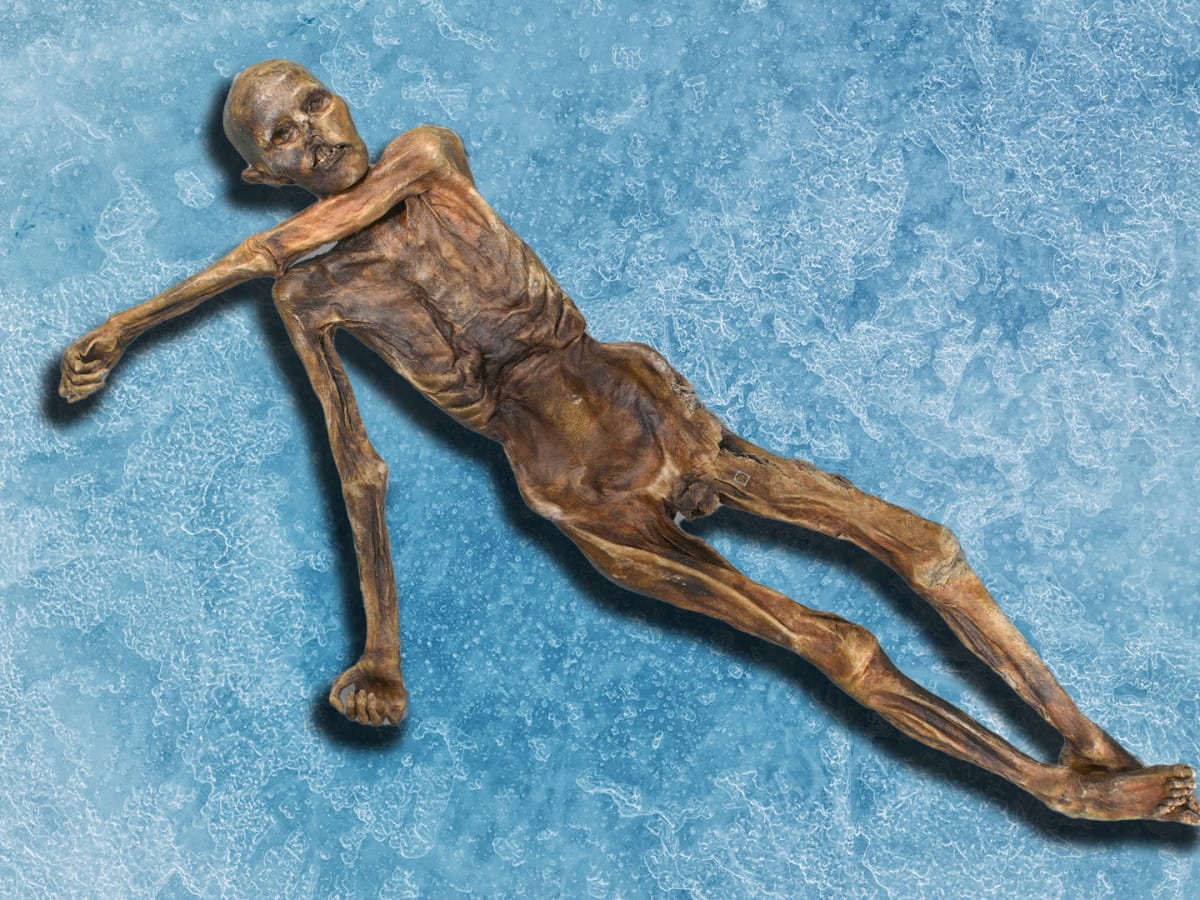
On September 19, 1991, two German hikers named Helmut and Erika Simon were making their way across a high ridge in the Ötztal Alps when they spotted a body partially embedded in the ice.
They assumed they had found a lost mountaineer. They reported it to the authorities. The authorities assumed the same thing.
It took several days, and some increasingly confused experts, before anyone began to suspect that the man in the ice had not recently gotten lost on a hiking trail.
He was 5,300 years old. He had been lying there, preserved by the specific conditions of that particular glacier, since the Copper Age. By the time the Simons found him, every human civilization either of them had ever learned about in school had risen and fallen while he waited in the ice.
His name, eventually, was Ötzi.
Over the following three decades, scientists subjected him to every analytical tool available, and then waited for better tools to be invented and applied those too.
They reconstructed his last meal: ibex meat, red deer, einkorn wheat, eaten within roughly thirty minutes of his death. They found pollen from a hop hornbeam tree in his clothing, which placed him in a specific valley at a specific time of year.
They identified 59 tattoos, placed along joints and pressure points in patterns that correspond so closely to acupuncture meridians that researchers still argue about what that means. They found in his DNA the oldest known case of Lyme disease, and evidence of a genetic predisposition to cardiovascular disease, and the fact that he was probably lactose intolerant.
They knew what he ate for his last meal before they knew how he died.
When they found out how he died, the entire frame of the investigation shifted.
There was an arrowhead lodged in his left shoulder. It had penetrated the subclavian artery.
He would have bled out within minutes, probably faster. The arrow's shaft had been removed, either by Ötzi himself in the moments before he lost consciousness, or by whoever shot him, covering their tracks. His hand showed defensive wounds.
He had someone else's blood on his clothing from at least four different individuals.
Ötzi did not get caught in a storm. He did not fall. He did not wander onto a glacier and succumb to exposure. He was shot in the back during what the forensic evidence strongly suggests was a violent and deliberate attack, by someone who knew him well enough to get close, or was skilled enough not to need to.
Nobody was ever charged. There are no suspects. The case is, technically, still open, which makes it the oldest unsolved murder in human history by a margin so large it is difficult to process.
Somewhere in the Copper Age, someone had a reason to kill this specific man, on this specific ridge, and then disappear back into a world that left almost no written record of anything. We know what Ötzi had for breakfast. We know his genetic risk factors.
We know the season and the approximate time of day. We have reconstructed thirty minutes of his final afternoon with more precision than most modern crime scenes allow. We have no idea who killed him or why. We probably never will.
#drthehistories







![TheIanFleming's tweet photo. Another dive into the literary loves of Ian Fleming.
This time, a memoir, Airline Detective by Donald Fish, published with an introduction by Ian Fleming in 1962.
Fleming first met Fish years earlier when covering an Interpol conference for The Sunday Times and recommended John Pearson, his aide at the newspaper, to help ghost write his memoir. Full of dramatic, eye-opening stories, it takes us on Fish's journey from Scotland Yard detective, to MI5, to leading the fight against international air crime as Head of Security at BOAC.
At the time, commercial air travel was still relatively new, and crime organisation were beginning to exploit airline services to move contraband – from smuggling people to diamonds. Fleming wrote in his introduction that '[the chapters are] some of the best I have ever read in any language on police work. Now that Donald Fish has retired and is free to tell some of his stories, the reader can be pretty certain he is getting the real stuff.'
Airline Detective was serialised in The Sunday Times and renamed Lawless Skies in the USA. It was also the basis of the popular BBC /MGM TV series, Zero One, starring Nigel Patrick.](https://pbs.twimg.com/media/HCGKfKXWcAADsYQ.jpg)