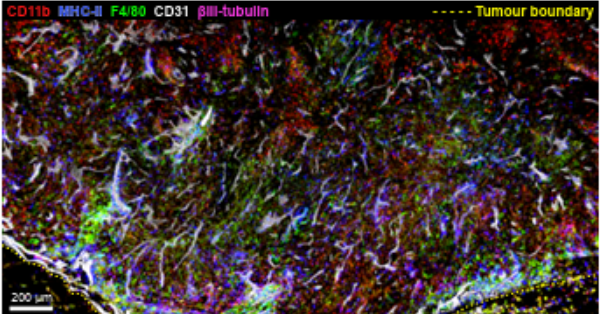
Interested in tumour immunity, dendritic cells and immunotherapy? Excited to share our study on CCR7+ dendritic cells (DCs) in cancer out today, a joint effort between @LabWithers and @ClatworthyLab. (🧵 1/8)
https://t.co/DspJiAl5vf
Academia has a problem:
Every author wants to use LLMs to write papers, but no reviewer wants to read AI (assisted) content.
And every reviewer wants to use LLMs for reviews, but no author wants their paper judged by an AI.
Authors & reviewers are the same people though...
China has selected its first group of young researchers to receive funding for up to 15 years, in one of the longest research grants on offer to scientists globally
https://t.co/6RnYWeNs6e
We usually think of #LymphoidStructures as signs of chronic inflammation.
But what if some actually protect tissues? 🛡️
Our new preprint reveals how tissue-retained mature dendritic cells (#mDCs) organize regulatory lymphoid niches with age!
https://t.co/3Y96WyWvs0
🧵 1/6
Check out our Opinion paper in @Nature, where we write about:
i) The decline in physician-scientist numbers worldwide
ii) Why this might be, based on our own data and others’
iii) Steps to reverse the decline
https://t.co/ugfP0LfwUQ
@rezamotallebov@CharlesSwanton@bealelab
THIS IS THE BEST PAPER OF 2026 SO FAR, A MONUMENTAL BREAKTHROUGH, A REVOLUTION IN THE FIELD OF INFLAMMATORY CONDITIONS:
Interleukin-10 Autoantibodies and HLA-DRB1*01:03 in Inflammatory Bowel Disease | New England Journal of Medicine https://t.co/4fKMgPMd4y
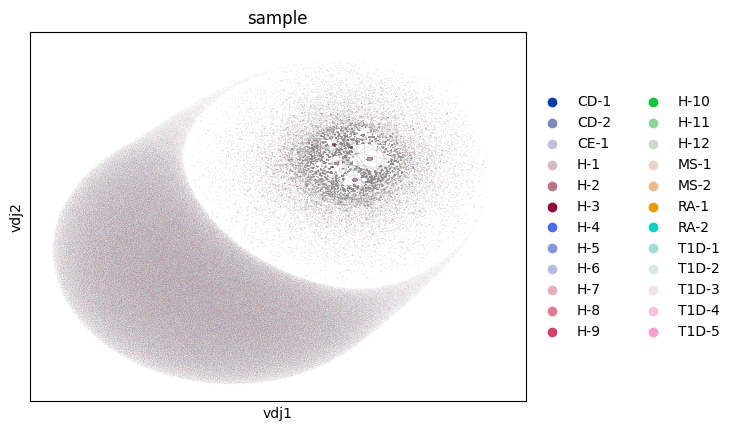
Sneak peak of upcoming sc-dandelion 1.0.0 release!
Read, process and plot 1M single-cell AIRR data e.g. @ParseBio's data in <15min without GPU! #singlecell#bcr#tcr
I am excited to share our latest research out today
@NatureGenet; here we discovered childhood brain tumours instruct cranial hematopoiesis and identify a clinically relevant mechanism to re-educate the skull bone marrow.
https://t.co/H3wnslLKcu
Very excited to share our latest preprint – We find that childhood brain tumours instruct cranial haematopoiesis allowing immunotolerance of childhood brain tumours and CNS development. A thread 1/11
https://t.co/UYAqszigN8
@Gilbertson_Lab@CRUK_CI@LPTrustUK@BrainTumourOrg
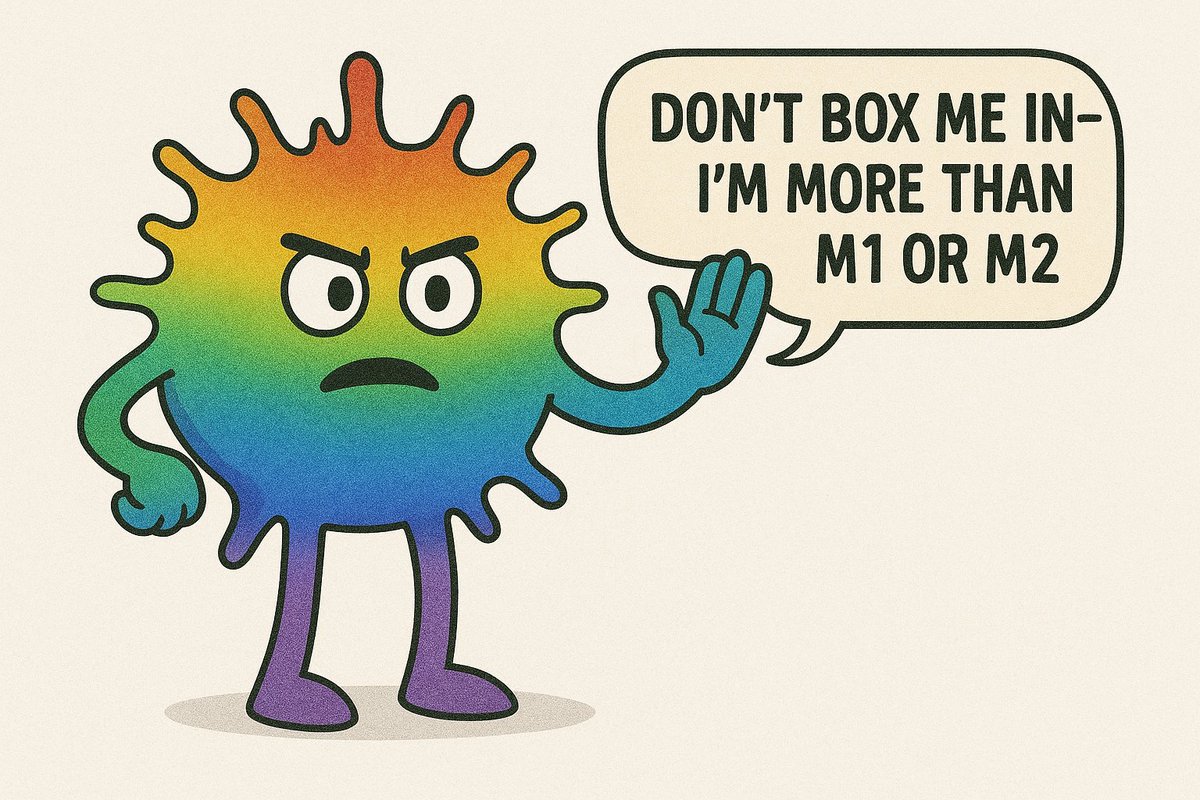
PSA: Stop calling macrophages in tissue M1 or M2. These are not states that exist in biology. The only use of M1 is a macrophage cultured ex vivo with LPS and IFNg; and for M2: IL-4/13/10. Macrophages in tissues are highly complex and diverse and do not resemble either of the aforementioned M1/M2 states. M1/M2 language causes confusion and sets the field back. Refer to your macrophages by the molecules they express and the cytokines they make.
In Vivo Labeling Resolves Distinct Temporal, Spatial, and Functional Properties of Tumor Macrophages and Identifies Subset-Specific Effects of PD-L1 Blockade
https://t.co/37iFtD1NPT @ColinYCLee@ClatworthyLab and @LabWithers
If interested, do also check out our previous related work using the Kaede model to study the temporal dynamics of *DCs* (https://t.co/vdupAEq0KI), *NK cells* (https://t.co/ErAaCVqGvr) and *T cells* (https://t.co/TmENyvvhcu); review article (https://t.co/8ek3qBbabz).
Our latest study using the photo-convertible Kaede model to track tumour-infiltrating leukocytes and their changes over time is now out in @CIR_AACR! https://t.co/nvMmz8VEUH @ClatworthyLab@LabWithers
We have a PhD position opening for Australian domestic students interested to work at the intersection of immunology, data science, and paediatrics! Check out the full description here!
https://t.co/1JST9pY21t @YUmmunology
CHOIR is now online @NatureGenet! CHOIR is a new clustering method for single-cell data that evaluates whether clusters represent statistically distinct cell populations. CHOIR scales to millions of cells and works with single-/multi-omic data of any type!
https://t.co/EKg20yMygH
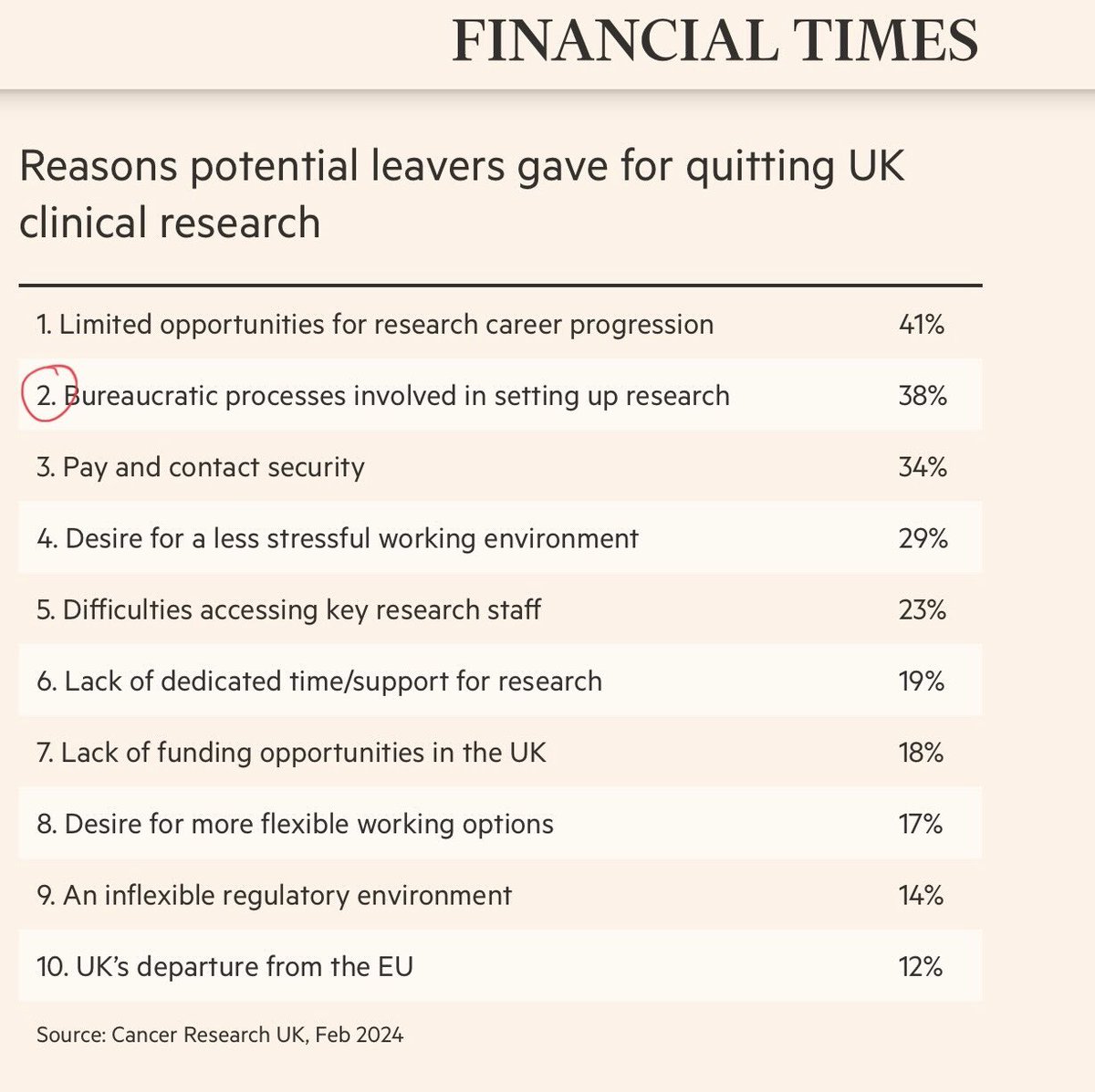
Thank goodness people are waking up to the fact that there is a crisis for clinical research in the UK @FT
High on the list are the bureaucratic processes that have become such an obstacle to getting things done
The March issue of JACI is now online! Check it out here: https://t.co/4YgvMs9UhI
This month's theme focuses on Spatial Transcriptomics.
Read the Editors' Choice summaries from the March issue here (free to read/download): https://t.co/E8Q6G0ePRu