Collar is a money market protocol for hedging pegged cryptoassets. Protect your portfolio by borrowing against it with 100% LTV and no risk of liquidation.
2/ Idea #1: Stablecoin liquidity = Stablecoin utility
The best stablecoins are those that are the easiest to turn into $1.
At the center are USDC and USDT, which are backed by tradfi assets.
One hop out are the crypto-backed stablecoins, including DAI, FRAX, MIM, and UST.
4/ ...and that’s just to name a few. Love what you see? To learn more, make a cup of tea ☕️ and read through the technical paper here:
https://t.co/vKGUSjMcr5
1/ Following up with $CREAM hack, the exploiter is keeping on withdrawing principal assets from underlying protocols, swapping centralized stablecoins for $DAI, and redeeming bridged $BTC. https://t.co/o9HcEUzeay
It’s a systematic failure under current over-collateralization and oracle-relied price feeding mechanism. Cream is always pioneering the innovation of current lending area, meanwhile is tripped by these side effects.
@peckshield Technically, it's not price manipulation. yUSDVault actually doubled in value. The problem is that it happened atomically so Cream couldn't liquidate accounts and prevent them from going under water.
Cream should not have allowed assets that can change their value so quickly.
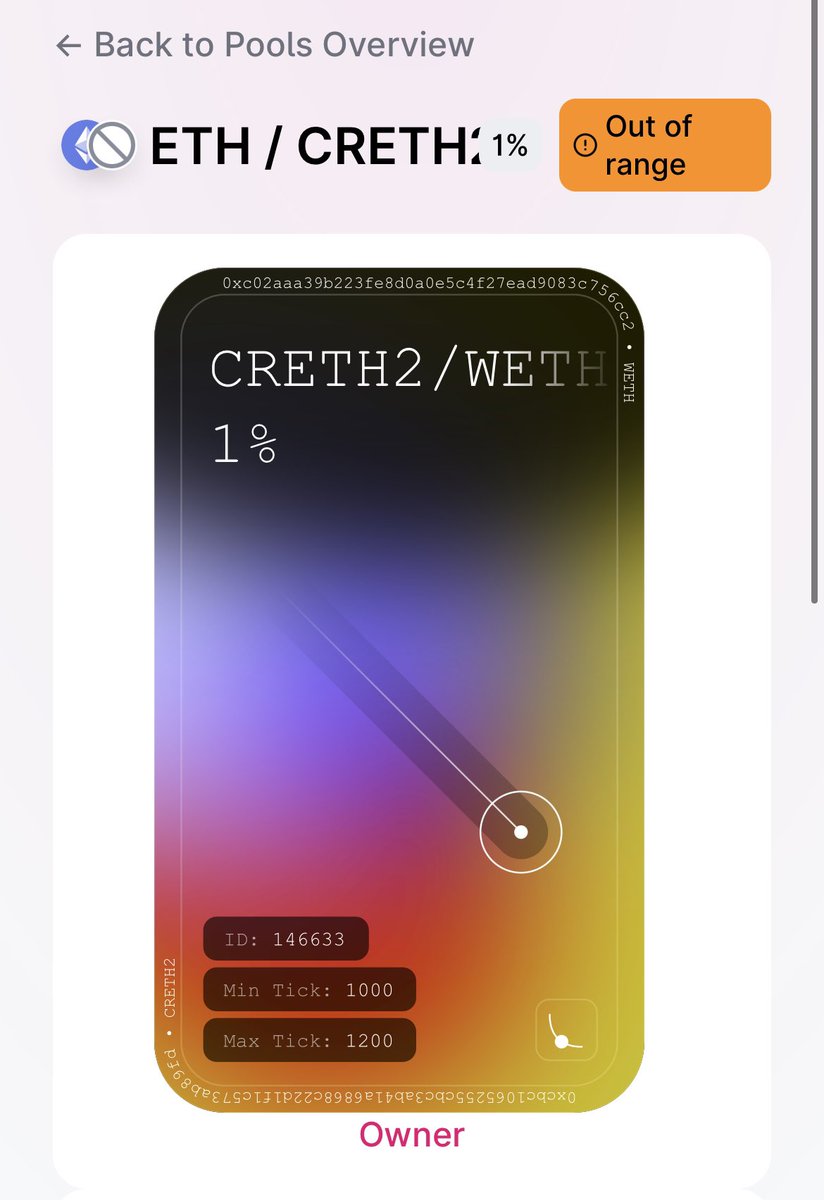
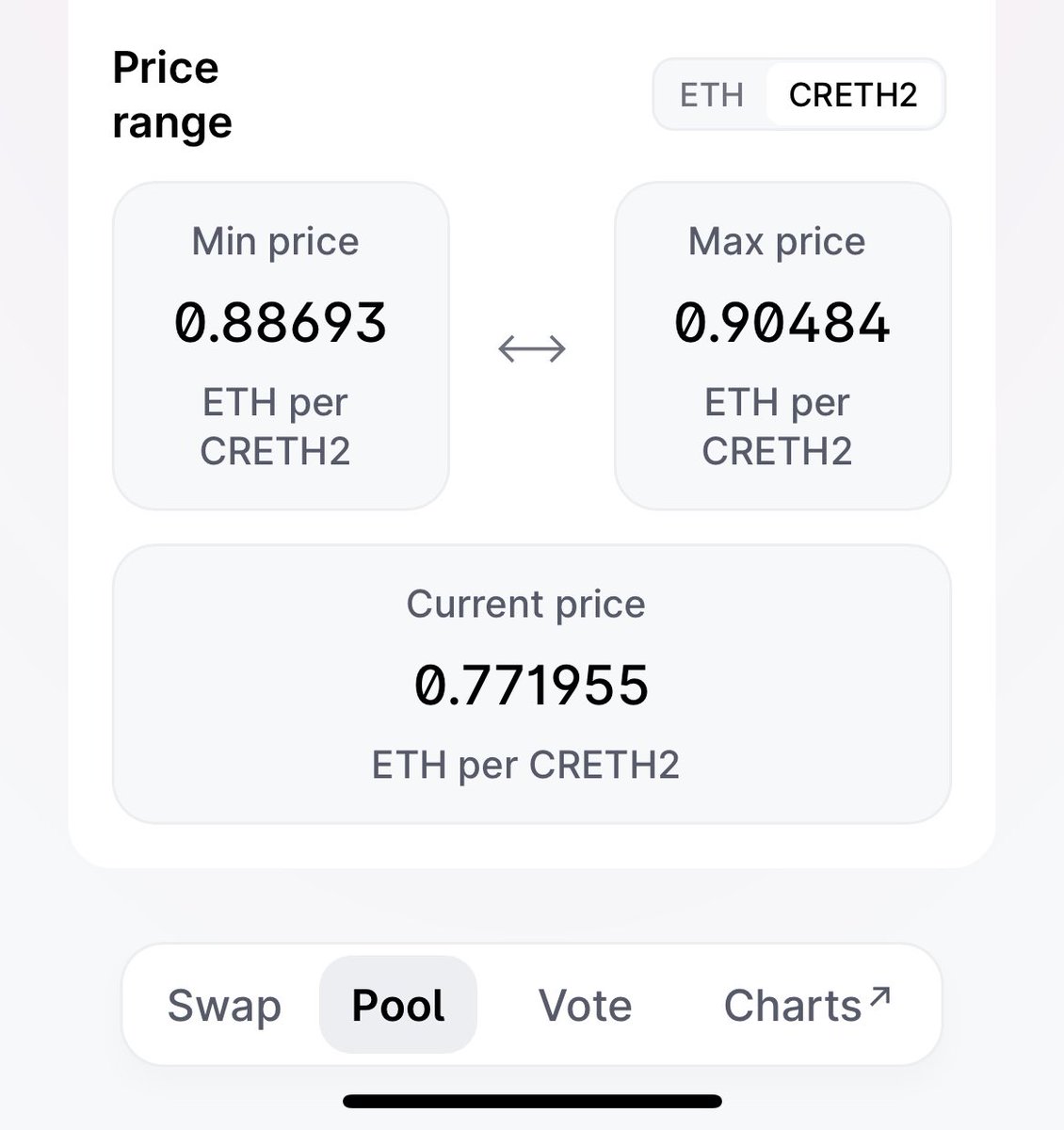
4/ This pool is yet to be in the range. It’s quite a surprise that the liquidity is provided above the current price. Apparently the exploiter believes CRETH2 is under estimated. CRETH2 holders can be relieved from the risk of depegging.
3/ For $CRETH, the exploiter offers an unique option for market rather than redeem them as ETH in cream protocol or dump into market. This transaction show 0 ETH and 12266 CRETH2 are provided into @Uniswap V3 liquidity. https://t.co/rQEMc1oqXc
Compound issue shows there is a really hard trade-off between permissionlessness and the ability to quickly and discreetly patch up vulns.
The community always demands things like timelocks, but they can do a lot of harm when things go south.
@0xSisyphus@dcfgod ruler failed to solve liquidity fragmentization and rc token slippage. But its mechanism to approach non-liquidation fixed-rate loan is still innovative. Collar continues, evolves and starts with new beginning.
To clarify. It's not bad that other blockchains are forking known protocols. This is actually good and expected in the open source environment.
The next step is to launch something innovative. I haven't seen much of that yet which doesn't mean it won't happen in the future 💛
It’s never be more clear for pricing how much the counterparty is willing to take the risk via Collar. This surprised by-product of Collar is a moderate approach towards decentralized insurance.
Users can consider Collar borrowing as a swap + an insurance enabling them to withdraw same amount of their principal assets anytime before expiry. Meanwhile lenders can consider Collar as fixed income product(before expiry)+ call option of collateral(after expiry).
Essentially, this options-based pegged assets swap decouples the risk of asset issuer positioning from asset pegging value. The de-peg risk from particular issuer of the asset is transferred to the counterparty of its loan.
#RecoverPool is live now.
As an offering of compensation to the Cover/Ruler communities, we have decided to offer a percentage of our governance token COLLAR to COVER/RULER token holders.
For $COVER holders: https://t.co/vc1yRI97uN
For $RULER holders: https://t.co/CQYxrqr8Qu
In these pools, you can swap your $COVER and $RULER to future $COLLAR. All transactions are processed through smart contracts that have been fully open-sourced and audited. All funds will be held in non-custodial pools. Collar Finance will not directly hold any of your token.