Butterball's Turkey Talk-Line turns 45 this year.
And we're glad there's still a human on the other end.
When your turkey is frozen solid at 9am on Thanksgiving, sometimes you need more than an answer. 🦃
You need someone to tell you dinner isn't ruined.
Happy Thanksgiving.
Restaurants already generate signals worth watching: complaints, refunds, unexpected price changes.
Give AI a specific job, let it monitor for problems and flag what needs human attention.
That's the thinking behind Digital Direct Reports: https://t.co/jrWGodiPNi
Papa John's found a quality-control camera it didn't have to install. 📸
Your phone.
Customers can submit photos of delivered pizzas, which AI analyzes for issues like burnt cheese and crust quality.
It's a clever way to extend quality monitoring beyond the restaurant.
Quick test for restaurant operators:
Can you compare your 10 highest-spend items year-over-year, using the same pack sizes and specifications?
That’s the kind of purchasing visibility our Digital Direct Reports can help maintain.
https://t.co/jrWGodiPNi
Every Thanksgiving, the American Farm Bureau tracks the cost of a traditional holiday dinner. It’s been doing it since 1986.
The idea is simple: compare a consistent basket of items to understand how prices are changing.
Restaurant purchasing is rarely that straightforward.
New case size. New supplier. New spec.
Same item name, different product.
Suddenly, “this November vs. last November” isn’t so simple.
Restaurants probably don’t need a fifth dashboard, they need the four they already have to compare notes.
82% of operators say technology helps their business, but 39% still cite integration as a barrier, according to the National Restaurant Association.
Restaurant AI is still in the test kitchen.
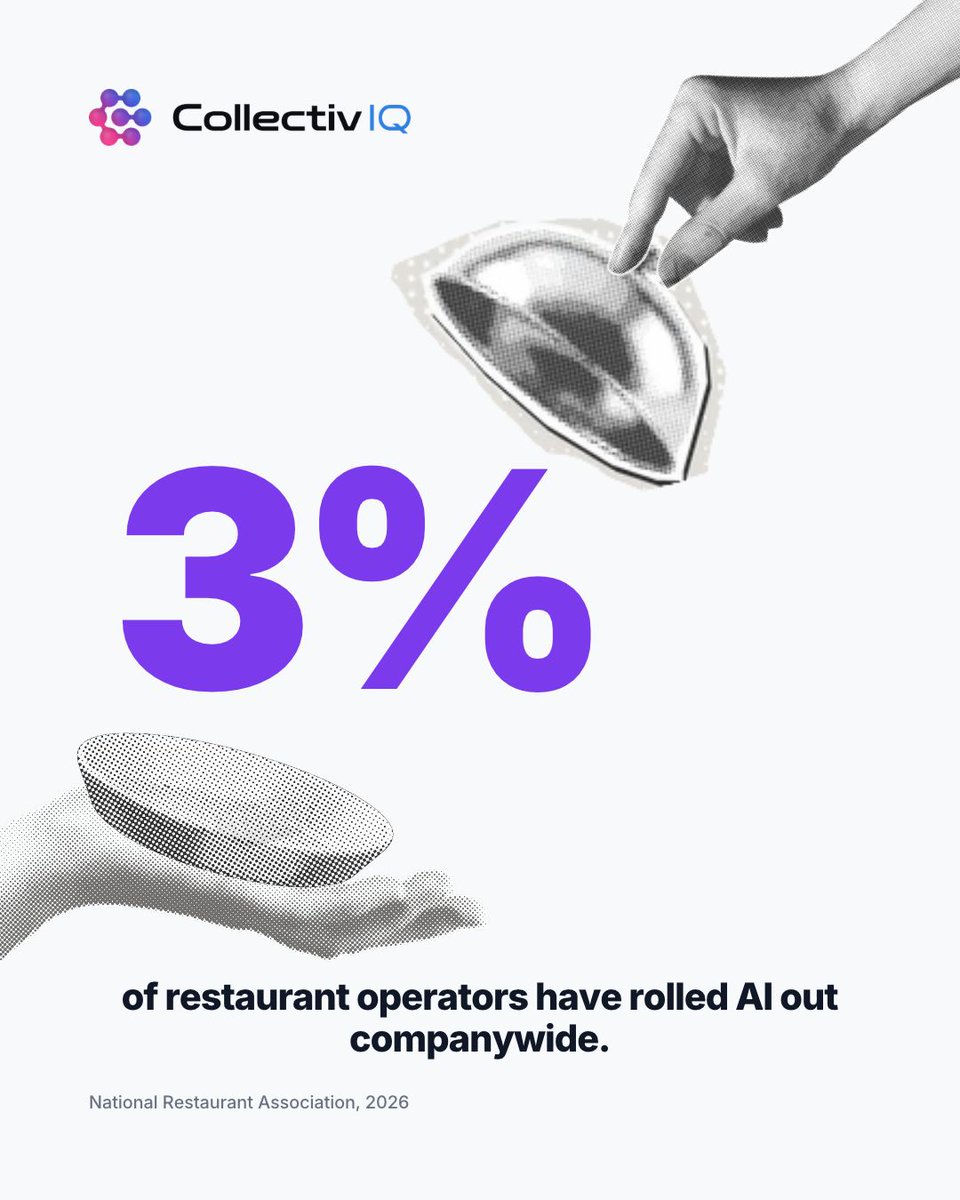
Only 3% of operators have rolled it out companywide, while 42% say more case studies would help.
A demo shows what AI can do, but an operator tells you whether it actually worked.
What’s the first job you’d trust AI to handle?
A new GM can inherit the keys, POS login and vendor list.
The institutional knowledge is harder to hand over.
That’s one reason we built GigaBrain: to help companies retain and share the context developed through everyday work.
More from IT Brief: https://t.co/0eE2T17QKt
Replacing a restaurant GM costs an estimated $17,651, according to Black Box Intelligence.
But what about the cost of everything they knew?
The supplier quirks, why Saturdays are different, and who to call when a machine breaks.
Your Caesar salad has to stop the scroll now.
Popmenu is bringing video to restaurant menus. TikTok turned 40M+ posts and reviews into a dining guide. AI is joining restaurant discovery too.
More decisions are happening before anyone opens the menu.
Seeing this already?
The walk-in cooler that sticks, that supplier who only delivers before 6 and how Friday orders always need adjusting.
Every restaurant has its version.
A new GM inherits the keys, and GigaBrain helps them inherit the context and knowledge too.
https://t.co/U5AFWd468c
Chipotle is building an AI assistant for its GMs.
The part we find interesting isn’t really the assistant.
It’s all the stuff a good GM knows that nobody ever thought to write down.
@SouthPark At Sky Co-op, a $20 price increase once went unnoticed for three weeks.
Now, the Co-op uses CollecitvIQ’s Digital Direct Reports to monitor purchasing data and flag unusual price changes for review. https://t.co/jrWGodiPNi
That’s why Sky Co-op, which supports purchasing for ~325 restaurants, uses our Digital Direct Reports to monitor pricing, fill rates, food safety and freight.
Because the most expensive problems don’t always show up on an invoice.
https://t.co/jrWGodiPNi
The lowest price isn’t always the lowest cost.
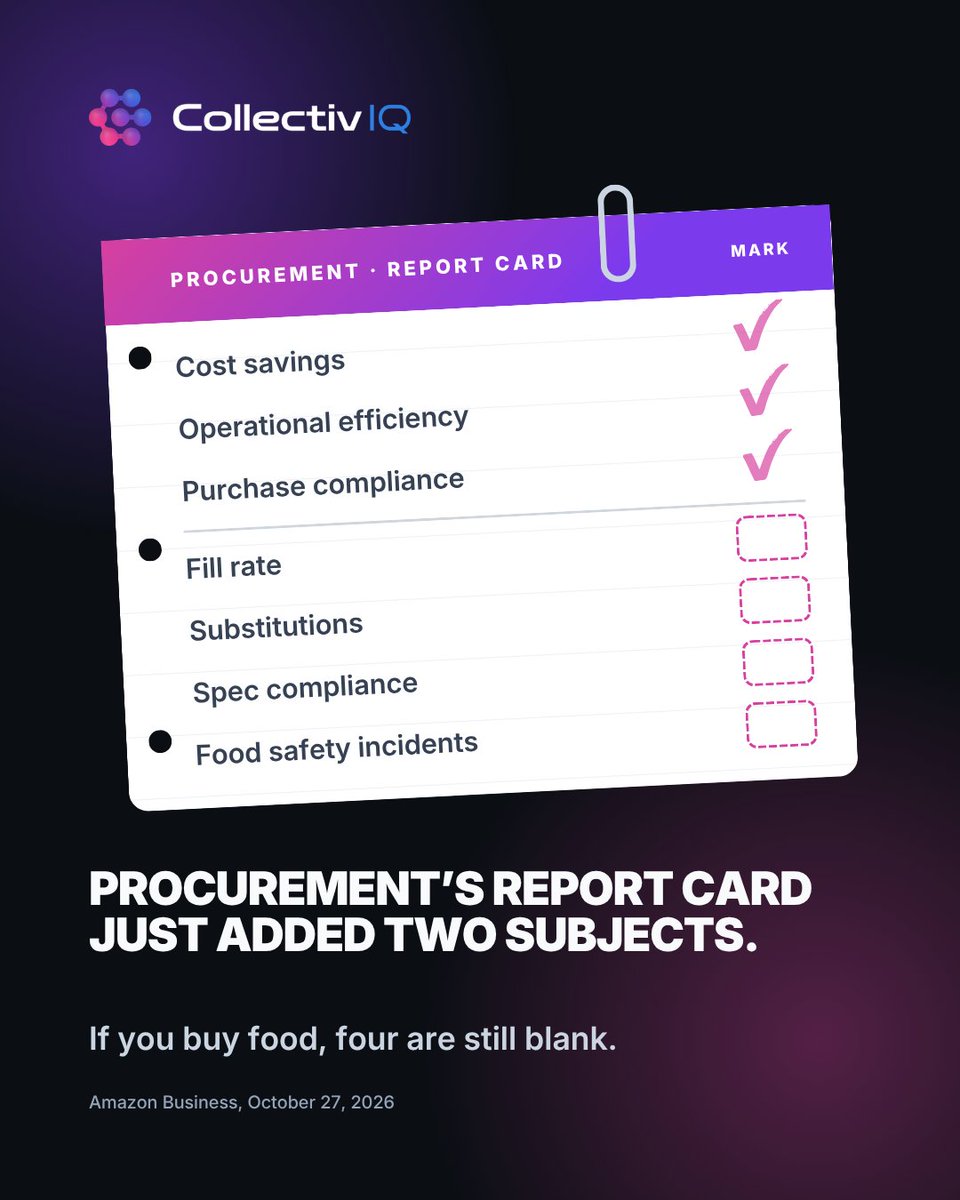
Amazon Business is placing greater emphasis on operational efficiency, purchase compliance, and savings.
In foodservice, a cheaper case that arrives late, fails specifications or never arrives can wipe out those savings fast.