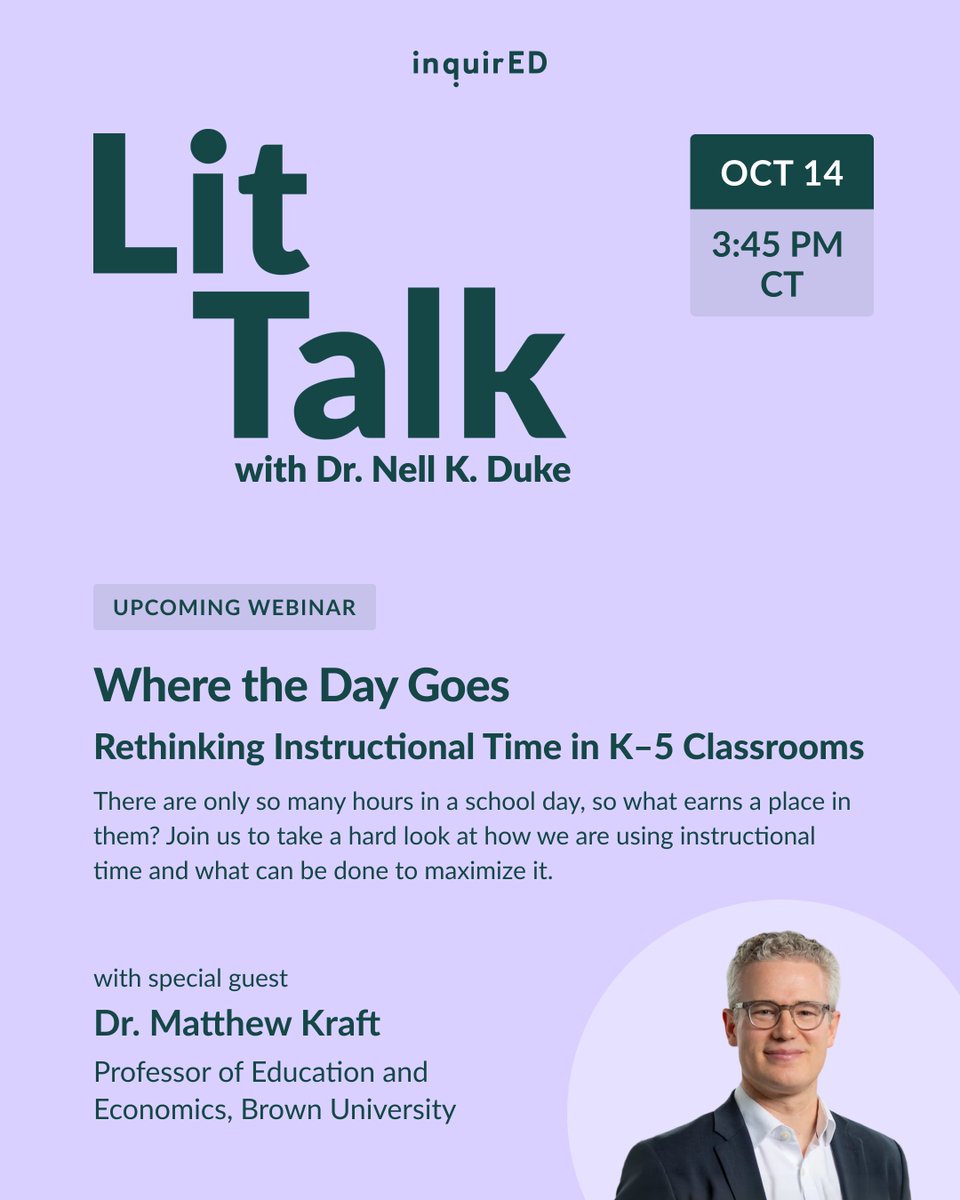
I'm hosting a new series, Lit Talk! I'll sit down with researchers I admire to dig into literacy questions educators wrestle with every day. First up, Oct 14: Dr. Matthew Kraft on instructional time, where it goes and how to make the most of it. Join us: https://t.co/0YIS4iPmB0
Colleagues and I found that social-studies led instruction that integrates literacy can improve literacy as well as social studies (https://t.co/7rPAWRMNxg). I'm excited about this curriculum. Check it out! (And no, they aren't paying me to say this 😊!) https://t.co/iixMe4qWwX
As the school year comes to a close, a new analysis shines a harsh spotlight on what's being called a "learning recession" among American students. It's a problem that started long before the pandemic, according to the latest National Education Scorecard — an annual deep dive into data about kids in grades K-12.
The findings of this report are sobering. Children had a steady decline in math and reading scores beginning all the way back to 2013, which happens to be when smartphones and social media really took off.
Compared to a decade ago, math scores today are down in 70% of school districts. Reading scores are down in 83%.
Scores have climbed a bit since 2022, but nowhere close to making up all the lost ground. In fact, 8th grade reading scores are now at their lowest level since 1990.
@wmbrangham recently spoke with Thomas Kane, one of the authors of the scorecard and a professor at Harvard University.
Students who took notes by hand scored ~28% higher on conceptual questions than laptop note-takers.
Writing forces your brain to process and compress ideas instead of copying them.
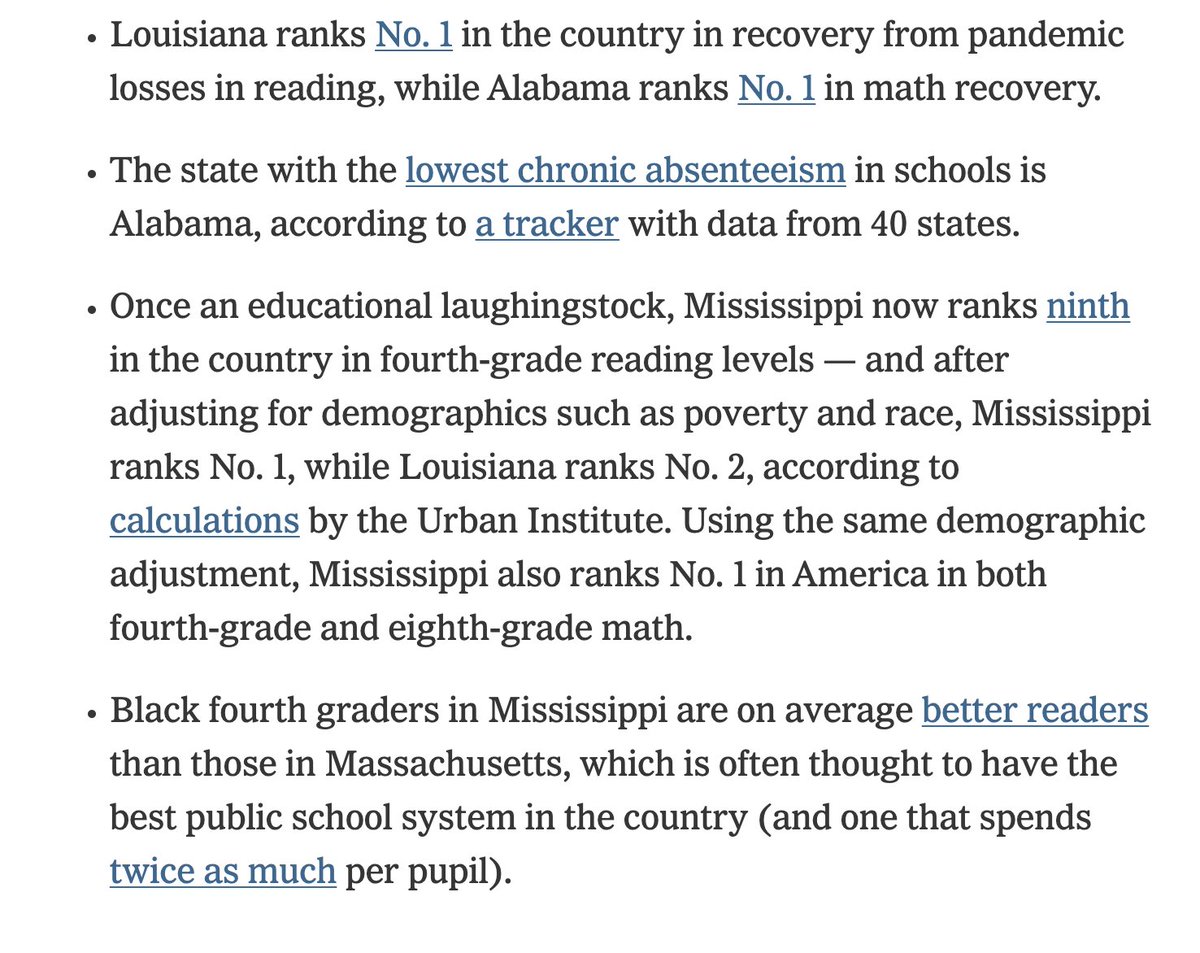
It's astonishing to witness the improvement in public education--reading, math, attendance, grad rates--in Alabama, Louisiana and Mississippi. But we're busy fighting culture wars rather than scaling up what these three states have done. Please do read: https://t.co/h20UCdCP2w
It's always a pleasure to talk with @jordanbpeterson. We went deep into the mechanisms by which the phone-based childhood brings different consequences for girls and boys -- in developmental trajectories and mental illness:
https://t.co/16Sp8Ef9GZ
Here's one of the best profiles of me and The Anxious Generation, by David Shariatmadari in @guardian. He shows the connection back to my earlier books and projects
https://t.co/4IphwstoWd
Today is the 1 year anniversary of The Anxious Generation!
To help readers who want to take collective action, I made a video of the talk I give at K-12 schools. Sign up below to get the link, then watch it with other parents, or your school community:
https://t.co/riH7oeCGQo
Most U.S. infant formulas contain mainly added sugars, posing a serious risk to babies’ health, researchers say. A “metabolic nightmare for infants.”
Via @PF0192 @USRightToKnow
https://t.co/uI5omx0UPU
“Just look at the progress of states like Louisiana and Mississippi, which are among the leaders in the science of reading and adoption of high-quality instructional materials.” https://t.co/6tZCkbChUr
@SpreadLoveFly@edutopia@NewJerseyDOE I know in the schools I work with administrators are building in time for positive calls and emails as a part of staff meeting time. The last 15 minutes is set aside for this purpose. So, leadership is key.
@SenatorHagerty A subcontractor, and sometimes a sub to a sub. So, the answer is that no steps were taken by USAID and there was no accountability for them.
Some want to accept "Reading Failure" from kids whose parents don't have money or look/sound a certain way. From Appalachia, to Chicago, to Albuquerque, to Compton, kids can do it. Ignore those lies from the pit of hell.
Reading To and With your children grows their brain. Reading With your child can be reading to them while asking questions, taking turns reading lines, reading out loud parts together. Cuddle up with a good book.
Research shows that the best habit for brain development in kids is reading
Instead of simply reading TO your kids
Try reading WITH your kids
Ask them what a word means, who their favourite character is, what they think will happen next
This includes them in the experience
A class-action lawsuit was filed today in Massachusetts against the publisher, Heinemann, its top authors Lucy Calkins, Irene Fountas and Gay Su Pinnell, and Columbia University. https://t.co/Uc2Lp1aKiE