Meet C4R, the Community for Rigor! 👋
Scientific rigor is a skill we can build. We create free lessons, activities, and teaching resources for researchers, students, and educators.
Follow for practical research tips and scientific discussion. https://t.co/2XoWxPsFYb
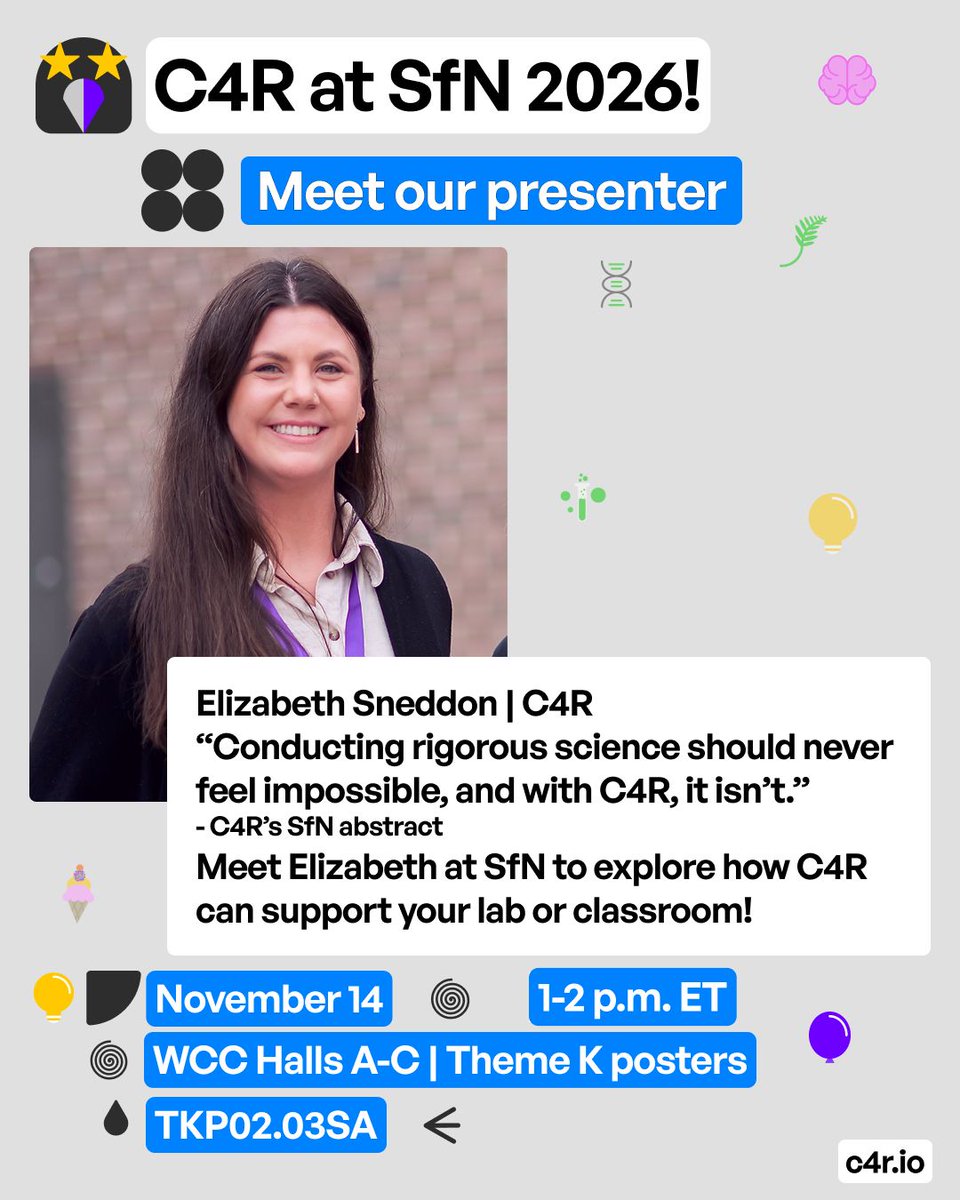
Meet our poster presenter at @SfNTweets 2026! 👋
C4R's Senior Curriculum Developer, Elizabeth Sneddon (@esneddon21) , presents Saturday, November 14th, 1-2 pm ET, in WCC Halls A-C, board TKP02.03SA.
Stop by to see how you can use our resources in your lab or classroom!
Can't make it? Visit us at booth 2524 Sunday-Wednesday.
#Neuroscience #ScienceEducation #PhDLife #ScienceCommunity
Should we pop the hood on research more often? 🚗
@siminevazire, editor-in-chief of Psychological Science and keynote speaker at #C4R26, says yes.
Her talk titled "Can Science Correct Itself? Lessons from Psychology's Reproducibility Movement" shares 9 lessons from psychology that any field can use.
You can see the full talk and hear all 9 lessons on our YouTube channel: https://t.co/0vgqogbqih
#OpenScience
Does our need to innovate crowd out rigorous science? 🔬
Dr. Diego Alzate Correa (@diegoalzatec ) from Ohio State University thinks so. Watch how Konrad Kording, C4R P.I. and Professor at University of Pennsylvania, replies.
What's your take? 👇
#RigorTakes
Looking for something to do Monday night at #SfN26? 👀
We're co-hosting a happy hour with @neuromatch on Monday, Nov. 16, 5-7 pm ET, and you're invited!
RSVP: https://t.co/wPpwsOw4RB
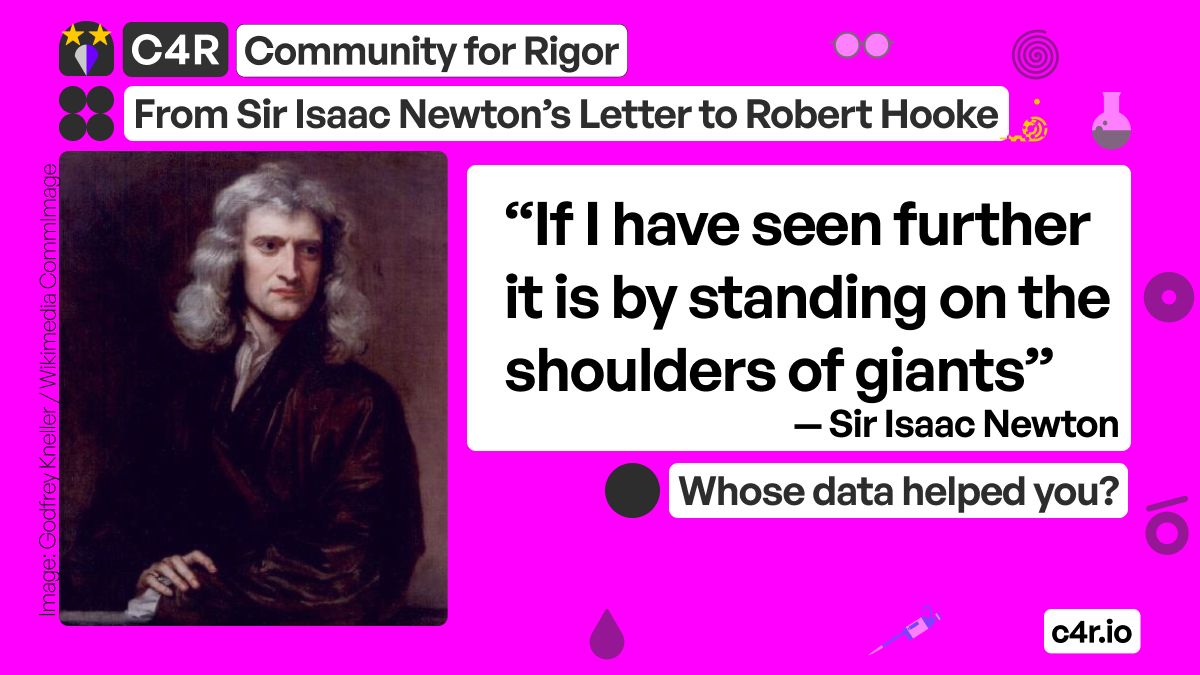
Science builds on itself. Every publication, dataset, and experiment is another building block.
Whose shared data made your research possible?
Tag them below!
#OpenScience#DataSharing#ResearchCommunity
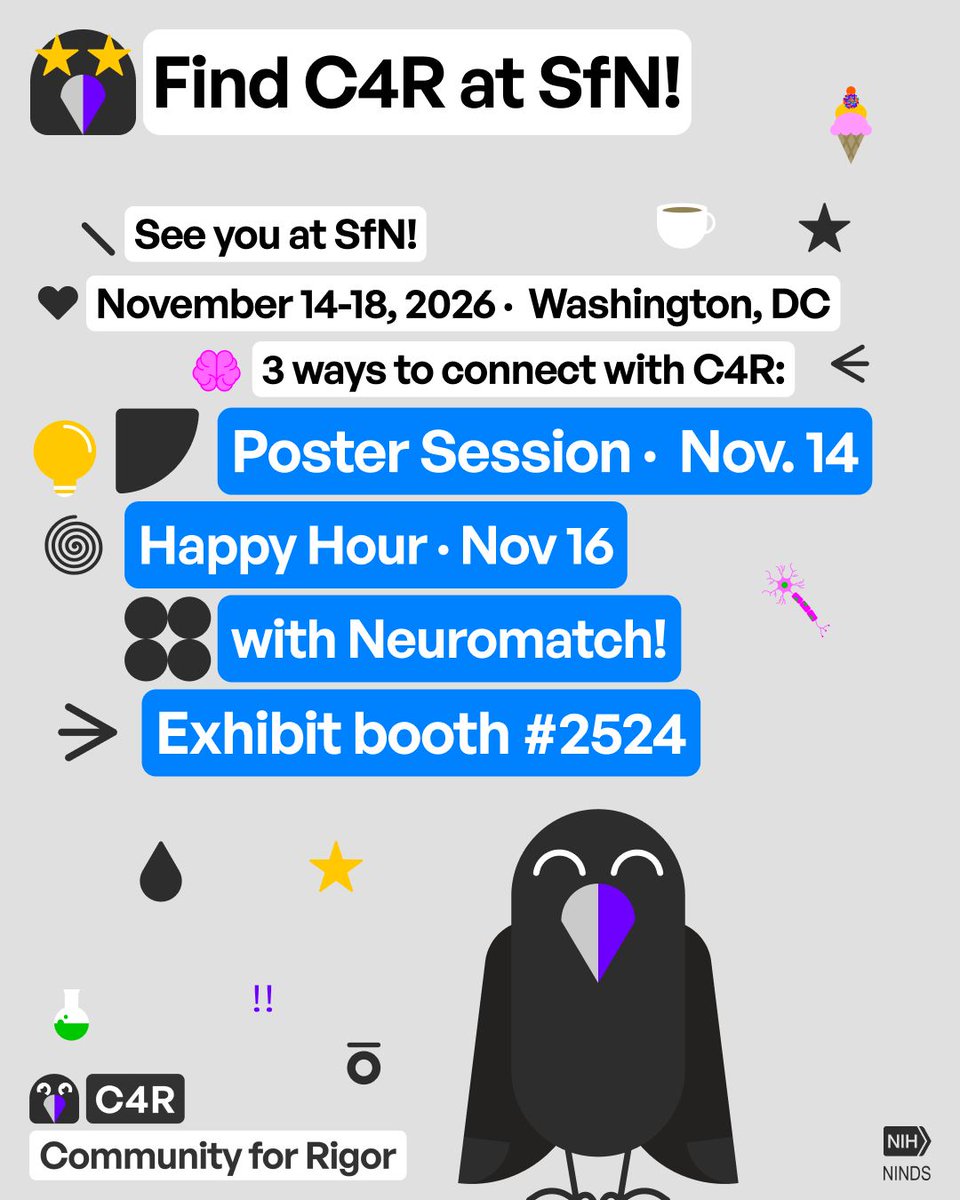
Going to #SfN26?
Come connect with us!
Here are 3 ways to find C4R:
🧠 Nov 14, 1-2pm: Elizabeth Sneddon (@esneddon21 ) | Poster TKP02.03SA)
🍻 Nov 16: Happy hour with @neuromatch
📍 Visit us at Exhibit Booth: #2524!
Happy hour RSVP: https://t.co/BGTdG9tnNP
See you there!
Data sharing is increasingly part of funder requirements. How can data sharing benefit your career?
Sharing well-documented data can help advance scientific knowledge, create opportunities for collaboration and support validation of findings. It may even lead to more citations!
And one benefit is especially personal: helping future you!
Ever returned to a dataset 6 months later and thought, "What was I thinking ?"
Clear metadata, organized files, and readable code make it easier to pick up where you left off.
Planning for data sharing encourages these habits from the start and can even make your research more efficient.
What benefits of data sharing have you experienced?
#DataSharing
@SableSys That's a good point and the jelly bean comic is a classic!🤣 Bonferroni is a great tool when you have multiple tests, since it helps keep false positives in check. Sounds like we need a Rigor Takes part 2 on multiple comparisons...and we might have found out next guest. 👀
Is p<0.05 enough?
Chapin Lenthall-Cleary of the Foundation for Individual Rights and Expression, argues p<0.05 isn't enough to claim statistical significance. A much stricter standard, he says, makes it "much harder to do nefarious stuff like p-hacking."
Our Rigor Takes series shares researchers' strongest opinions on rigor.
Watch the full clip to see how Dr. Konrad Kording, C4R P.I. and Professor at the University of Pennsylvania, replies.
Where do you set your threshold and why?
Follow along for more Rigor Takes from leading researchers and educators.
#RIgorTakes #Statistics
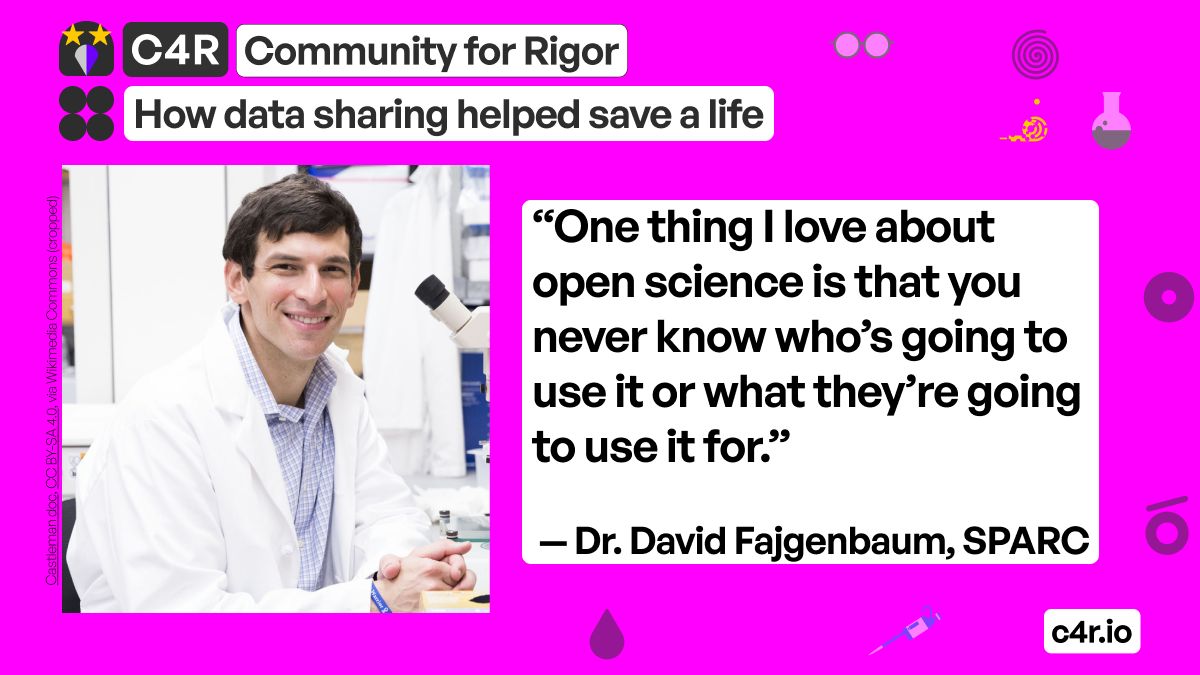
@DavidFajgenbaum@CureCastleman Through data sharing and determination, he found a treatment. He’s been in remission for more than a decade!
“Data sharing can open the door to opportunities or outcomes that you may have never considered.”
Explore the free Data Sharing unit at https://t.co/siEvhIQfDD.
How did data sharing help save a life?
As a medical student, David Fajgenbaum (@DavidFajgenbaum) was diagnosed with a rare immune disease that had no approved treatments.
Or maybe the right treatment just hadn’t been found yet...
#OpenScience#AcademicSky
@DavidFajgenbaum@CureCastleman Finally, he found a clue: mTOR was overactive in his blood.
mTOR is a protein that helps control cell growth, including immune cell activation.
With his doctors, he started taking sirolimus, a drug already approved to prevent kidney transplant rejection.
We'll be at #SfN2026, will you?
We'll be co-hosting a happy hour with @neuromatch on November 16.
Or come visit our booth (#2524) to talk about scientific rigor!
Looking for more details? https://t.co/nTJJ1gND2R
Going to #SfN2026?
Find Neuromatch at booth #2638 in the nonprofit section.
We’re also co-hosting a happy hour with @comm4rigor on Monday 16 Nov.
Let us know you’re coming to SfN and we’ll send you the details! https://t.co/8ebwmosR6v
A warm welcome to Kaela S. Singleton, PhD, (@kss_phd) our new Curriculum Team Manager! 🎉
We're thrilled to have her experience and perspectives on the C4R team as we continue building a community committed to rigorous research.
The unit includes 9 sessions and 9 interactive activities in 3 different formats, self-paced book, 1-hr meeting deck, 3-hr classroom deck. Free to use and integrate into your lab or classroom!
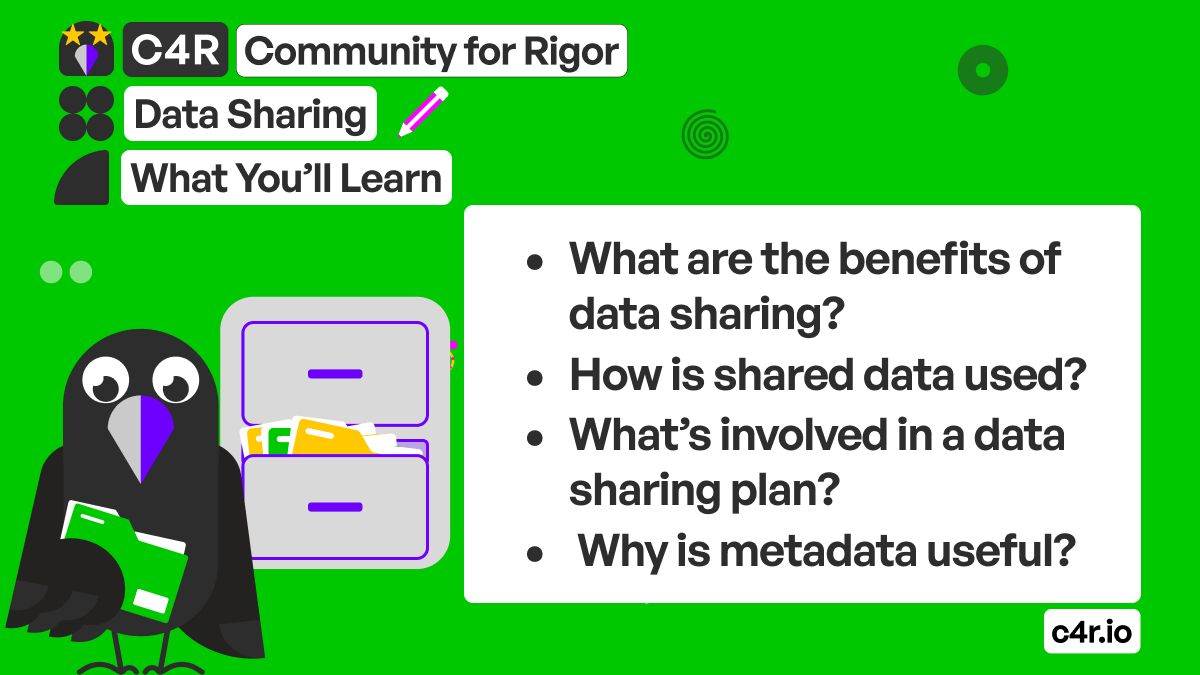
How can you share your data more effectively?
Over the next 4 weeks we'll be discussing our free online unit, Data Sharing: Quality data, open access. We'll be sharing researcher's perspectives, short lessons, and activities from the unit.
We hope you'll join the conversation!
#DataSharing
C4R materials are developed with scientists and educators from universities across the U.S., including Harvard Medical School, Smith College, Johns Hopkins University, Virginia Tech, and many more. Supported by NIH/NINDS.
Explore the free resources: https://t.co/yGYDTqN9eP
#ResearchMethods
Meet C4R, the Community for Rigor! 👋
Scientific rigor is a skill we can build. We create free lessons, activities, and teaching resources for researchers, students, and educators.
Follow for practical research tips and scientific discussion. https://t.co/2XoWxPsFYb
Learning formats include:
📖 Learn independently with self-paced Books
🥼 Bring a Meeting deck to your next lab meeting
🎓 Teach with our ready-to-use Class decks
Pick what fits your learning or teaching goals.