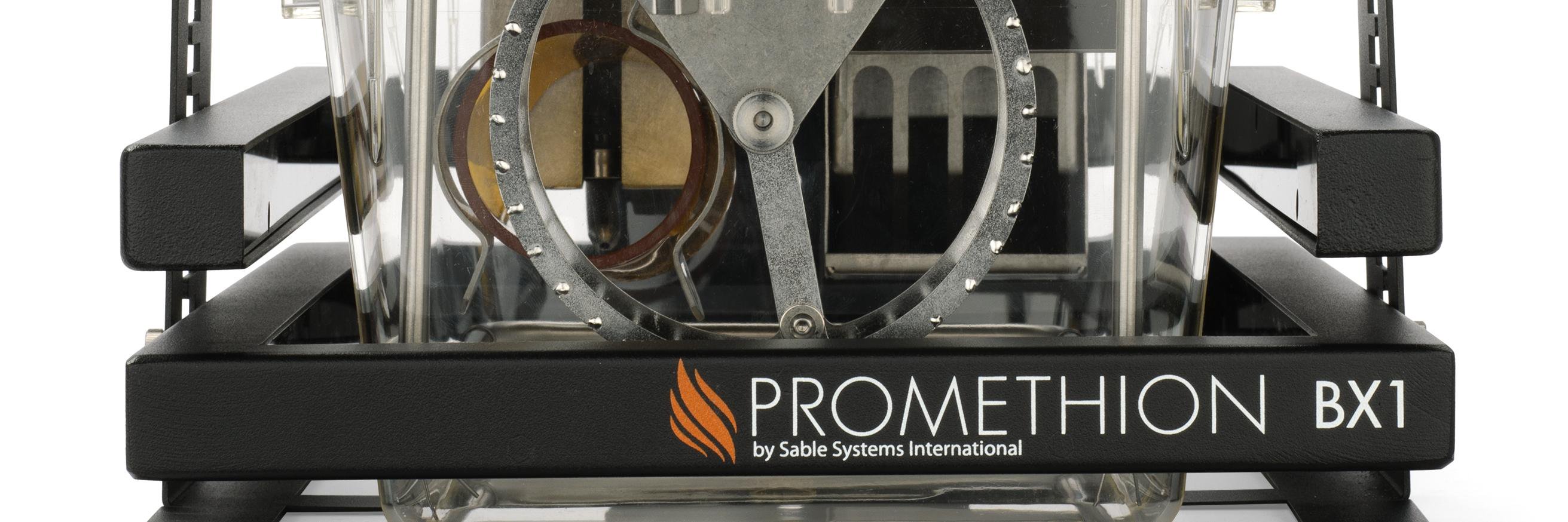
Thoughts, visions & revisions from John Lighton PhD, president & CIO of Sable Systems International (=the world's most advanced metabolic measurement systems)
Ever wondered what happens #Metabolically throughout the body when the presence of #Cancer results in life-threatening debilitating loss of #Muscle and #Fat in patients, decreasing their quality of life, and preventing them from receiving therapy they need to extend #Survival?
Hello all, we are looking for a research technician for our lab. Prior mouse experience is required. Please email me if interested. And if people can retweet this to spread the word, that would be appreciated as well. Thanks for checking.
The vital polarity behind life:
"Animals owe their existence to that attraction. We eat food, break it down into simpler molecules and send those to the mitochondria in our cells, which pry off electrons and let them flow through a string of molecules in their membranes known as the electron transport chain. At each step in this chain, a portion of the electrons’ energy is siphoned off to pump protons across a membrane—Mitchell’s great insight—and the pressure of those protons rushing back through a molecular turbine is what makes ATP. At the end of the chain, oxygen accepts the electrons and, together with protons, becomes water."
How could you possibly resist? Be there 😎 or be square! Plus, you get a chance to get excellent scientific support from our very stable isotope genius, @marshalldmccue!
This morning we kick off the 18th annual course for isotopic tracers in metabolic research.
Please stop by our booth to use our analyzer to measure the amount of carbon 13 in your breath in real time.
#metabolism#isotopeanalyzer
Some ideas that could transform longevity go unfunded because they’re too early for government funding or VC.
Through @impetusgrants, we give scientists fast grants of up to $500,000 to pursue these breakthrough projects.
We’ve deployed $34M across 146 projects, with just 1.1% overhead. We make funding decisions within three weeks, at least 14× faster than the NIH’s award timeline.
So far: 240+ Impetus-supported publications, from aging clocks to clinical trials. A few examples:
Biomarkers for faster aging drugs
We’ve supported multiple projects on what we believe is longevity’s top priority: speeding up the cycle of drug discovery and testing. These include Raghav Sehgal and colleagues’ “Systems Age,” a single blood test capturing how 11 physiological systems age at different rates, and TranslAGE, a platform for the systematic validation of epigenetic clocks. https://t.co/YQtPPdGGDg https://t.co/pBNifUHBsN
CAR-T immunotherapies: from cancer to aging
Corina Amor’s team used CAR-T therapies to clear senescent cells, a major contributor to age-related dysfunction. Her team’s CAR-T cells improved glucose control, exercise capacity and intestinal regeneration in mice. Impetus was the lab’s first grant. https://t.co/pGO772Xxcz https://t.co/lPqzgxT4dU
DNA repair in the world’s longest-lived mammal
Bowhead whales can live for over 200 years. We supported Vera Gorbunova’s team, which found that increasing the whale protein CIRBP in cultured human cells improved DNA repair and reduced chromosome damage. In fruit flies, it extended lifespan and increased resistance to radiation damage. https://t.co/uvlWqnpfMD
Large open datasets mapping how the body ages
Junyue Cao’s team built PanSci, which profiles 21.8 million mouse cells across 14 organs, revealing which cell populations expand or decline with age. It was the largest single-cell atlas of mammalian aging at publication. A follow-up atlas spans 21 mouse tissues, mapping changes in cell populations and gene regulation. https://t.co/cAEBrT29Qu https://t.co/UeoinlcHSn
Genetic clues to disease vulnerability
Ryan Dhindsa’s team identified rare variants disrupting ITSN1 that were associated with roughly tenfold higher odds of Parkinson’s disease. Follow-up experiments in a fly model showed that loss of the gene worsened neuronal damage and movement problems. The team also identified genetic variants associated with persistent Epstein–Barr virus DNA in the blood, pointing to differences in how the immune system recognises the virus. https://t.co/HCWfe7zyzi https://t.co/XwhkjU0uZ2
We aim to seed ideas that grow into new research areas and paths toward treatments, and bring exceptional scientists into aging who might otherwise work elsewhere.
https://t.co/Sm9272AzdY
Canada and Mexico sent water dropping aircraft to help fight fires raging in California.
Our bordering friends coming to our rescue despite Trump’s attempt to vilify them.
Thank you Canada and Mexico. 🇨🇦🇲🇽
1.Women in Afghanistan are only allowed to see female doctors.
2.Women are banned from education beyond the 5th grade.
3.Women cannot become doctors and are banned from medical institutes.
Now read 1 again.
1/ We discovered something totally unexpected about the neural structure of consciousness that overturns decades of thinking on its biological basis and brings us significantly closer to the recipe for generating conscious awareness.
New preprint: https://t.co/K8BwiHXvXg (led by @HesseJanis, with @FrankLanfranchi, @_conor_mcgrory, @Yuelin_Shi, and @EngelTatiana)
Look at these gorgeous, dynamic, orange mitochondria surrounding the blue nucleus.
A view of life from beneath a cell monolayer in a parti dish. Whatever angle you look at it, life is always dynamic and pretty special.
Buck scientist Taylor Valentino is helping advance research that could change how we understand aging. But changes in NIH funding are putting important scientific discoveries at risk. Stand with Buck science! Give today!
https://t.co/gxiDXxGSAK
New follower? I’m Greg Madison. I’ve been pioneering tangible interfaces in XR for decades: making digital illusions part of the physical world, keeping us grounded in it.
A thread on the ideas behind my work. 🧵
Here’s an early exploration from 2009.
https://t.co/6tNPYwHQsH