Frequently updated assortment of tweets related to the world of science (with some side tracking) - As an Amazon Associate we earn from qualifying purchases
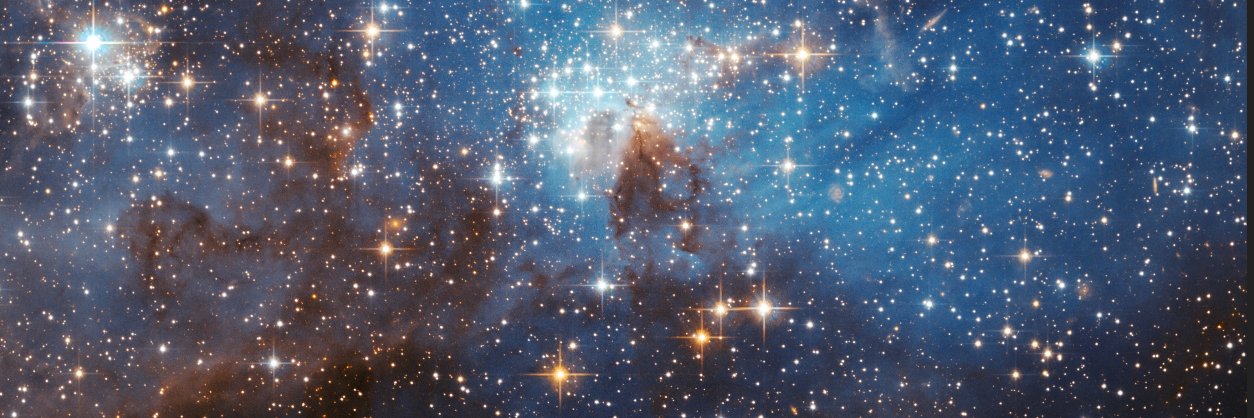
At first glance, a sky full of stars...
Look closer: most of these tiny points of light are actually galaxies!
This Rubin Observatory view captures around 10 million of them, each with a story to uncover.
(Video by WorldAndScience - Credit: RubinObs/NOIRLab/SLAC/NSF/DOE/AURA)
Stunning: A glowing segment of the Rosette Nebula, part of an immense 100-light-year star-forming region found 5,200 light-years away.
(Credit: NASA, ESA, STScI)
Out-of-this-world: Roughly 12 million light-years from us, Galaxy M81 harbors a black hole with a mass 70 million times that of the Sun—far exceeding the Milky Way’s central black hole by a factor of 17.
(Credit: NASA/JPL-Caltech/ESA/Harvard-Smithsonian CfA)
Spectacular: NGC 5335 shown in crisp, intricate detail.
Its fluffy, fragmented star-forming regions and lack of orderly spiral arms give the galaxy a gentle, almost cloudlike appearance.
(Credit: NASA, ESA, STScI)
Behold the Ghost Nebula (vdB 141), where cosmic dust takes ghostly shape.
(Credit: T.A. Rector/University of Alaska Anchorage, H. Schweiker/WIYN and NOIRLab/NSF/AURA)
NGC 2775 is a hybrid: its centre resembles an elliptical galaxy, while its outer ring mirrors the dusty, star-packed structure of a spiral. From our single viewpoint, we class it as lenticular.
(Credit: ESA/Hubble & NASA, F. Belfiore, J. Lee and the PHANGS-HST Team)
Pause your scroll for a stellar gathering.
A view of Messier 21, a young open star cluster where small, dim stars crowd together near the Trifid Nebula.
(Video by WorldAndScience - Credit: NSF–DOE Vera C. Rubin Observatory/NOIRLab/SLAC/AURA)