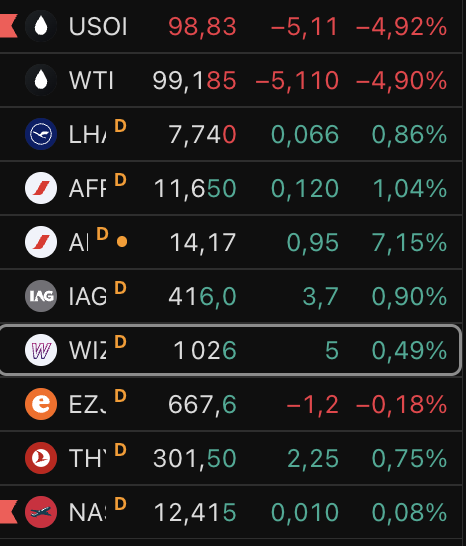
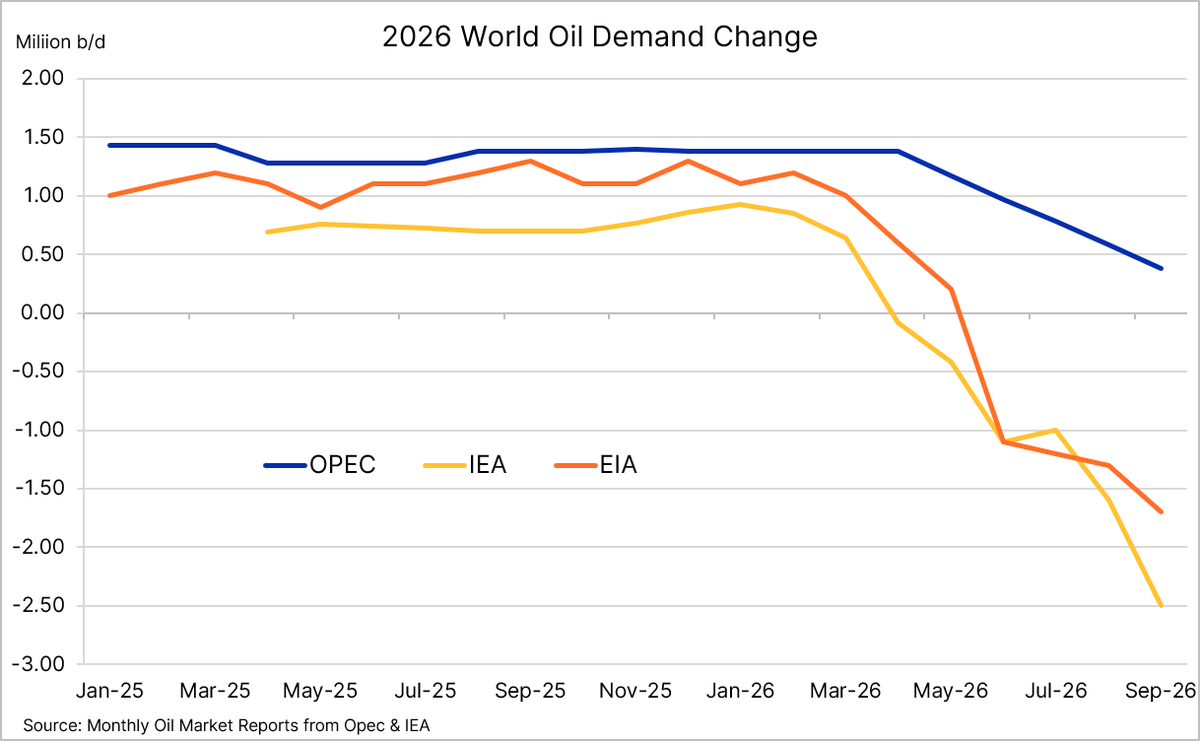
Not a trend reversal yet, just the market digesting a bearish demand print (IEA's September Oil Market Report today slashed its 2026 global demand forecast to a 2.5M b/d decline)on top of an already-stretched war premium. Airlines catching the fuel cost relief bid as a result. @JavierBlas@IEA .
@onechancefreedm Driven by tariff uncertainty and tightening global supply, trader stockpiled, prices went up and hit that $6.89 high, which was an exhaustion point rather than breakout ,triggering a wave of profit taking and long liquidation.
Gasoline demand is set for an 8.7% decline, while diesel consumption is expected to crash by 11.4%, Sinopec Economics & Development Research Institute says.
China’s Sinopec, the world’s top refiner by capacity, expects Chinese oil demand to drop by 8.9% in 2026 from a year earlier amid demand destruction from higher oil prices and the acceleration of electric vehicle adoption.
Demand is falling, but supply is falling more, which is why prices haven't crashed.
Keep in mind that all three agencies have institutional leanings toward the interests they represent (producers vs. consumers vs. a domestic producer-government),
The IEA cut its oil-demand forecast as the prolonged Iran war forces consumers to adjust to reduced supply and elevated prices. It now expects global oil demand to fall by 2.5 million b/d this year, a 940,000 b/d deeper contraction than previously forecast and the largest annual decline since the 2020 pandemic. Despite this demand destruction, the agency sees an even deeper supply shortfall, with disrupted flows outweighing weaker consumption, inventories drawing at record rates and the return of a supply surplus pushed into 2027.