The wait is almost over... BitSong AI v.0 opens on November 20 🎧
v.0 is the first piece. you describe the sound in your head and it helps you turn it into a full song. lyrics, track, cover art and a music video, all in one workspace.
..what we’re really building is bigger. we call it an AI Music Harness
..generating a song with AI takes a couple of minutes now. everything around it is still a pile of separate tools and middlemen: refining the track, getting the visuals right, planning the release, promoting it, distributing it, building a fanbase...
..the Harness is what connects that whole journey. it’ll understand what you’re going for, pick the right AI models for each step, and keep your project moving from the first idea all the way to the people who listen
..coaching, campaigns, promotion, distribution and fan relationships are next on the road. the people using v.0 will help us decide what comes first, so we want honest feedback. the brutal kind too
Want to be among the first to try it?
v.0 opens as a private pilot on November 20, for everyone on the waitlist. join by Thu Nov 19 and you start with 10 free generations
and we’ll be listening to what you make... if something stands out, don’t be surprised if you get a few more 😉
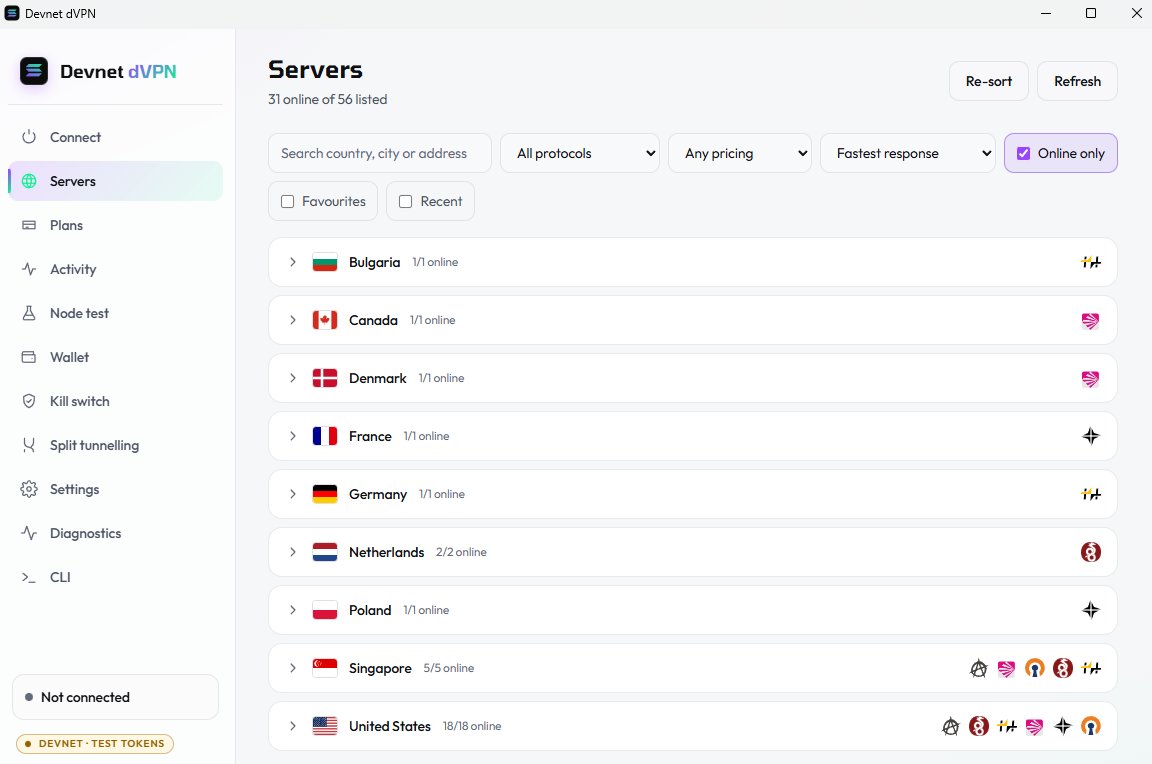
There are over 30 community hosted Sentinel dVPN servers on the Solana devnet!
Builders are on the devnet getting prepared to launch their own dVPN application on the Solana mainnet!
You can try to build your own app today or even have your AI agent connect through CLI.
What feeling would you turn into a song?
We typed "a warm late-night drive along the coast, nostalgic but hopeful" and got a full track back: lyrics, cover, vocals, master.
No studio. No instruments. No experience.
VeilDVPN v1.2 is live ⚡️
We are excited to introduce a major update to subscription plans and payments, expanding to the Solana network!
You can now pay for your subscription with $SOL or USDC on Solana, alongside native P2P.
Check the quick demo 👇
A traditional VPN company usually measures scale by its server fleet size. Sentinel uses a different model: independent node operators provide bandwidth to applications using the network.
Those operators form the supply side of the Sentinel Network. They run nodes, contribute bandwidth, expand geographic coverage, and create the connectivity layer that decentralized VPN apps can use without each builder operating a global server network from scratch.
For users, the experience can remain simple. Open an app, connect, and use the internet. Underneath, connectivity is supplied by independent peer-to-peer nodes rather than a closed server fleet owned and controlled by one VPN provider.
The distinction matters as privacy tools face pressure from platform rules, app stores, payment systems, datacenter policies, and jurisdiction-specific regulation. A traditional VPN company still depends on its own corporate structure and server relationships, while Sentinel distributes participation across operators, applications, and builders.
Sentinel is not a single VPN provider operating a closed server fleet. It is shared decentralized bandwidth infrastructure where applications, node operators, and developers can participate in the same network.
Explore decentralized VPN applications built on Sentinel: https://t.co/yK9zavfM1l
VeilDVPN v1.1 is live 🛡️
New protocols are now available:
🔸AmneziaWG: Advanced WG variant built to bypass deep packet inspection
🔸Xray: Cutting-edge proxy routing and camouflage
🔸Hysteria2: High-performance congestion control for maximum throughput
And minor bugs fixed 🐛
Today crypto users trust their VPNs even though they are closed-source.
Soon, crypto users will be demanding for open-source provable VPNs in the same way that they demand for open-source wallets.
dVPN builders on Sentinel are prepared and ready. Sentinel is early.
Airdrop on Demand - VeilDVPN 🪂
Heads up - a new exclusive drop for Bluefrens holders to explore VeilDVPN through direct, pay-as-you-go node connections!
Claim up to ≈150 hours of free bandwidth and connect to any node on @SentinelP2P 🌍
Join the Bluefrens Discord to claim👇
Three new VPN applications have launched on the Sentinel Network in recent weeks, as the ecosystem passes 1.9 million unique users and closes in on 2 million.
More applications mean more ways for users to access Sentinel's decentralized infrastructure.
Recent launches include:
ChibaTunnel
Open-source desktop dVPN for Windows, macOS and Linux developed by @TkdAxel
VeilDVPN
Android dVPN from @Bitveilofficial with multi-hop, subscriptions and direct $P2P payments.
Katacomb VPN
Open-source Linux client from long-time Sentinel community member @proofoftrinity supporting six protocols, multi-hop and on-chain payments.
Three different teams, building three different products on the same network of independently operated nodes.
And with Sentinel preparing for its move to Solana, the ecosystem enters its next phase with new applications already arriving and user adoption approaching another major milestone.
More applications. More ways to access the network. More users.
Explore applications built on Sentinel:
https://t.co/yK9zavfM1l
Another third-party dVPN application has been built on the Sentinel Network.
Introducing VeilDVPN, a new Android dVPN from the @Bitveilofficial team, using Sentinel's decentralized infrastructure and global network of independently operated nodes.
Users can choose between single-hop and multi-hop connections, subscribe to plans, or pay nodes directly in $P2P based on bandwidth or time.
They're building on infrastructure that has already served more than 1.8 million unique users across the Sentinel dVPN ecosystem.
VeilDVPN adds another application, another team, and another user experience to the growing number of products using the same shared Sentinel infrastructure.
The first public beta is now available for Android.
More details and download link in the quoted post. 👇
I am beyond excited to see @WellsFargo announce its @cosmos blockchain, enabling tokenized deposits for corporate clients!
Wells Fargo's blockchain is built on Cosmos, leveraging our superior interoperability, programmability, and reliability.
https://t.co/etTd4CYhgo
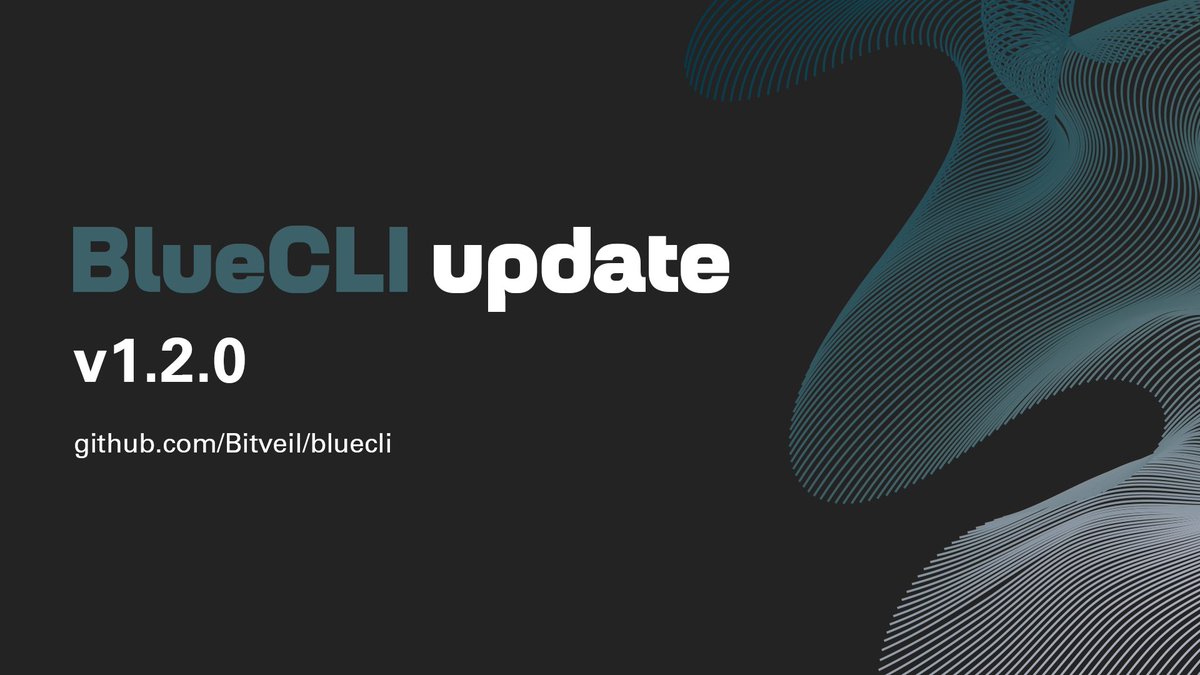
BlueCLI v1.2.0 just dropped 🟦
Native multihop eligibility is now live for dvpnx 9.0.0+ nodes: no more waiting for a first handshake.
BlueCLI auto-detects V2Ray transports on refresh, so fresh nodes become multihop candidates instantly ⚡️
Every application built on Sentinel shares the same decentralized infrastructure.
Developers, you don't need to build a decentralized VPN network from scratch.
You can build on top of:
• A global network of independently operated nodes
• Open source SDKs and APIs
• Node deployment and management tools
• Documentation and reference implementations
• Infrastructure already serving millions of encrypted VPN sessions every month
Focus on building your application, not the underlying infrastructure.
Build on Sentinel:
https://t.co/ot5PHTxQWQ
This is massive.
I'm proud to share that Cosmos is contributing to the CBWeb3 project alongside LNET Global and Peersyst to advance the future of interoperability for tokenized assets in Latin America.
Cosmos tech is a core of one of the biggest CBDC initiatives in LATAM.
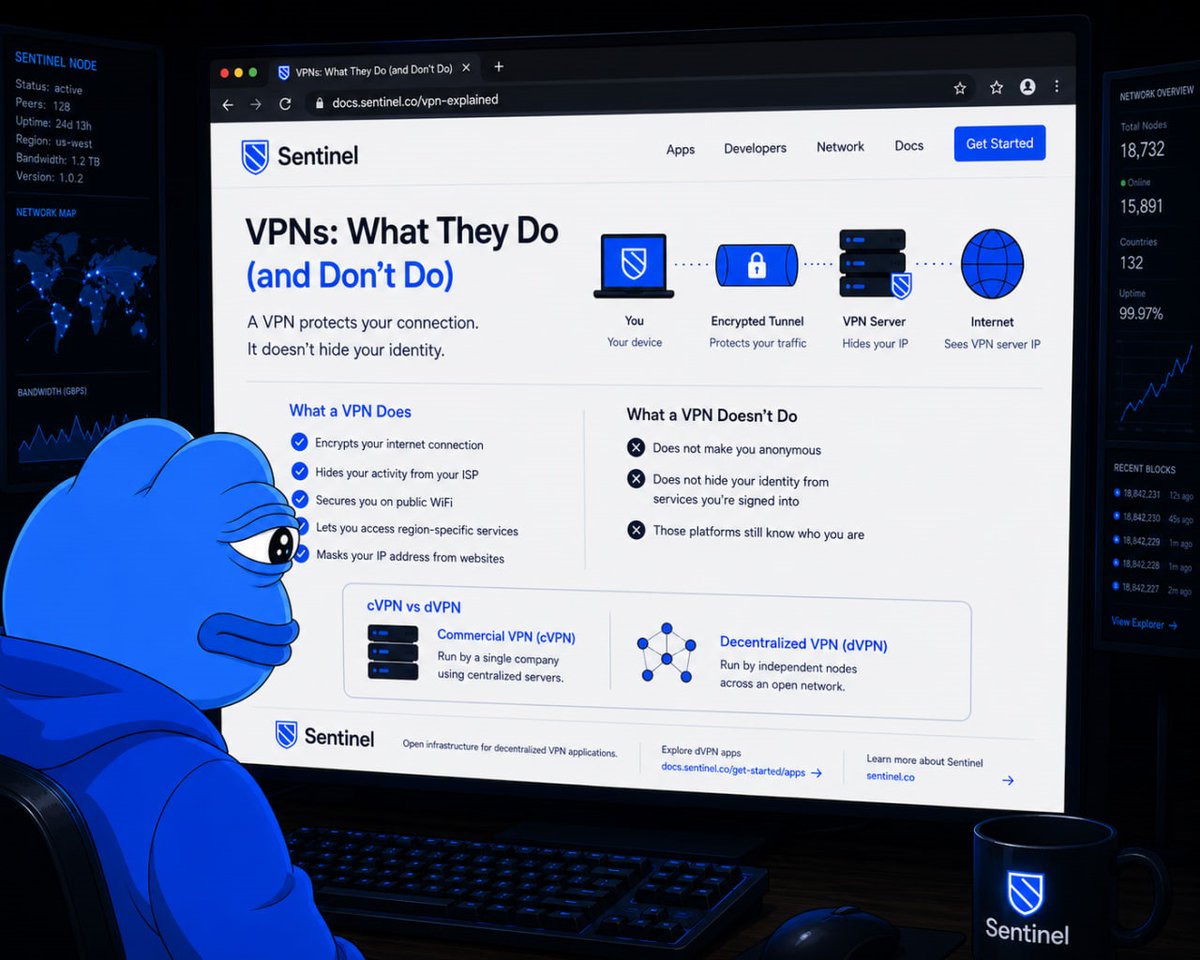
One of the biggest misconceptions about VPNs is that they make you anonymous online.. They don't.
A VPN changes how your internet traffic reaches its destination. Instead of connecting directly through your Internet Service Provider (ISP), your traffic first travels through an encrypted tunnel to a VPN server.
Without a VPN, your ISP can generally see which websites you're connecting to, even though it can't usually read the encrypted contents of those pages. With a VPN, your ISP can see you're using a VPN, but it cannot normally see the websites you're visiting through that encrypted connection.
The websites you visit see the VPN server's IP address instead of your home IP address.
For many people, the practical benefits are straightforward: protecting browsing activity from ISP visibility, securing connections on public WiFi, accessing region-specific services while traveling, and reducing exposure of their home IP address.
A VPN does not hide your identity from services you've signed into. If you're logged into Facebook, Google or X, those platforms know who you are because you've authenticated directly with them. A VPN protects your network connection. It does not replace your online identity.
The infrastructure behind a VPN also varies.
A commercial VPN (cVPN) routes traffic through servers owned and operated by a single provider.
A decentralized VPN (dVPN) routes traffic through independently operated peer to peer nodes across an open network.
Both provide an encrypted connection, but they differ in how the underlying infrastructure is owned, operated, and distributed.
Sentinel provides the open infrastructure for decentralized VPN applications, giving developers, node operators and businesses the tools to build, deploy and operate their own services.
Explore Sentinel decentralized VPN applications:
https://t.co/yK9zavfM1l
Imagine the ability for the community to fund the bandwidth and marketing of a decentralized VPN application built on Sentinel in exchange for ownership rights/revenue share.
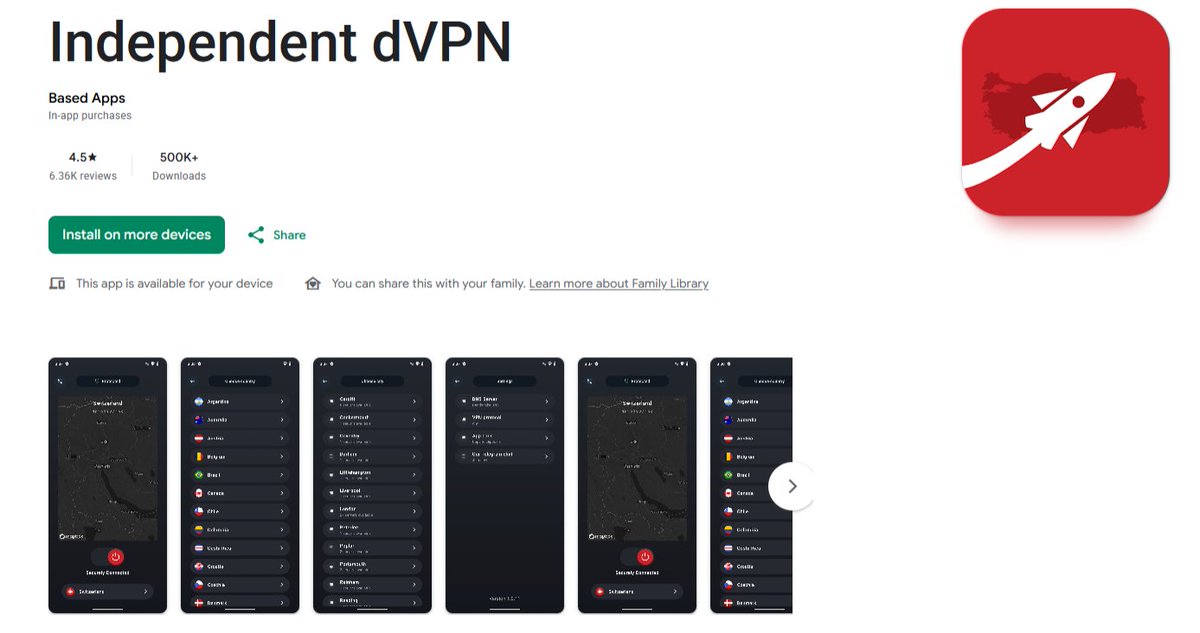
Sentinel is the first and only crypto protocol where anyone can build a web 2 consumer facing application using decentralized resources. Independent dVPN built on Sentinel is a 9 figure business and has established a proxy pool of over 50 thousand users. Independent dVPN organically scaled in the past years using only bandwidth from Sentinel community nodes.
Hundreds of millions of dollars has been deployed into AI agent tokens on platforms like Virtuals regardless of the utility potential of these agents.
Decentralized VPNs built on Sentinel are the first mainstream web 2 consumer-facing applications that can be built from on-chain resources at scale, and these applications have real business value and revenue potential.
With AI coding tools anyone can easily build their own mobile or desktop or TV dVPN application on Sentinel and cater it to the mainstream by offering traditional payment gateways.
This is not possible in the Cosmos ecosystem due to the exodus of liquidity and the lack of builders. It is possible in the chain with the highest amount of hyper-finalization and builders who understand consumer marketing strategies and effective GTM efforts.
Sentinel will evolve beyond the protocol layer to create a very robust financial and economic layer.
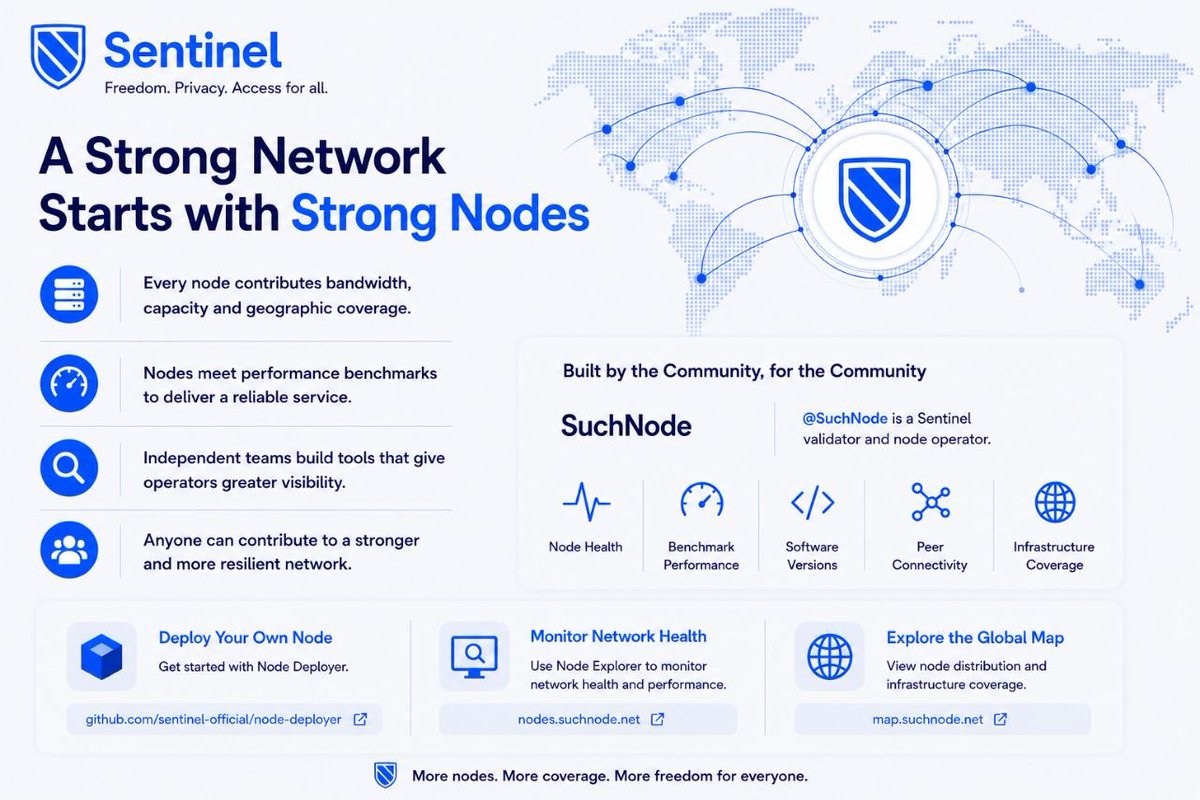
The strength of the Sentinel Network is only as strong as the nodes that make it up.
More than 1.8 million people have connected through applications built on the Sentinel Network. Every one of those connections was made possible by the independently operated nodes that form the foundation of the network.
Every Sentinel node contributes bandwidth, capacity and geographic coverage, helping to strengthen the network for everyone.
Running a node isn't simply about adding another server. Nodes are expected to meet performance benchmarks so they can provide a reliable service for users.
As the network has grown, independent teams have continued building tools for operators.
@SuchNode, a Sentinel validator and node operator, developed Node Explorer, giving operators greater visibility into node health, benchmark performance, software versions, peer connectivity and infrastructure coverage across the Sentinel Network.
Every new application depends on nodes.
Every new user depends on nodes.
Every node strengthens the network.
Whether you're deploying your first node or expanding existing infrastructure, you can help build a stronger, more resilient network.
Deploy your own Sentinel node: https://t.co/LF6rWbKo3l
Monitor network health with Node Explorer: https://t.co/cLOjJJbOsE
Explore the global node map: https://t.co/VFu7oSxyW4
The Sentinel ecosystem has stood strong for 9 years through several tumultuous market cycles with unwavering determination and consistent progress.
The current Cosmos leadership has made it clear that there is no focus on ecosystem chains outside of ATOM and there are very few active participants left in the ecosystem with little to no mind-share.
Sentinel started building on Cosmos from 2018 and has developed a significant amount of custom modules at the application layer over the years. Sentinel won the game of zones hackathon competition defeating teams like Luna (pre-collapse) and other highly capable teams - showing Sentinel's dedication and commitment to the Cosmos stack and the technology itself.
Sentinel always adapts to its circumstances and evolves for the changing times.
Sentinel has proven its ability to garner enterprise adoption and has reached new all-time-high metrics crossing over 200k users within a single month recently.
With consistent effort on network economics and revenue, several dVPN apps built on Sentinel intend to turn revenue positive in this year.
Some of the largest companies in the world today that you see focused on creating a rigid infrastructure to support a large userbase for years before turning revenue positive.
After years of dedication and commitment Sentinel has proven its scale of infrastructure and is now working towards creating economic structures in a permisionless ecosystem.
Every step of the way has been thoroughly documented and transparently shared. The entire ecosystem is open-source.
In this year, the Sentinel protocol layer will be transitioning to an ecosystem which has the highest amount of retail mindshare and active builders.
Sentinel has the only framework for individuals to build real-world consumer apps that have the ability to provide real utility to non-crypto users across the world.
Sentinel's decentralized architecture will not be compromised, the DHT will continue and building a dVPN and using a dVPN will always be possible with just a RPC connection alone.
Very thorough documentation will be shared in the near future including Sentinel's roadmap ahead as well as its journey towards revenue and progress with enterprise activity.
With more than 1.8 million users and an ecosystem of independent developers building applications, tools, and services, the Sentinel Network provides the proven infrastructure to build decentralized networking applications. There has never been a better time to build on Sentinel.
Whether you're looking to use the network, build on it, or contribute infrastructure, here's where to get started.
Use a dVPN
Connect to decentralized VPN applications built on the Sentinel Network and browse through independently operated nodes.
https://t.co/yK9zavfM1l
Deploy a node
Use Node Deployer to provision and manage Sentinel nodes with a streamlined deployment process.
https://t.co/LF6rWbJQdN
Host a node manually
Prefer full control? Follow the official documentation to install, configure, and operate your own Sentinel node.
https://t.co/UfuQh9k3jL
Create and manage plans
Use Plan Manager to create on-chain VPN plans, manage nodes, create VPN plans and configure services for applications built on the network.
https://t.co/tyqCJx9UYx
Build on testnet
Develop, test and validate new applications, integrations and features before deploying them to the Sentinel mainnet.
https://t.co/uzaxSu6SiH
Developer documentation
Explore the APIs, SDKs, architecture and technical documentation needed to build on Sentinel's decentralized networking infrastructure.
https://t.co/JkSePp8Axm
Sentinel provides the infrastructure. Developers build the network