CFA isn't just three levels of the same exam.
Each level requires a different strategy:
📘 CFA Level I
• Focus: Knowledge & concepts
• Format: MCQs
• Best strategy: Build strong fundamentals
📗 CFA Level II
• Focus: Application & analysis
• Format: Item sets
• Best strategy: Practice applying concepts to real scenarios
📕 CFA Level III
• Focus: Synthesis & decision-making
• Format: Item sets + constructed response
• Best strategy: Master portfolio management and practice writing answers
The progression is simple:
Level I → What you know
Level II → How you apply it
Level III → How you think and decide
Don't prepare for all three levels the same way.
Download CFA Level 1 Cheat Sheet :
https://t.co/X9WpdPsOoe
CFA Level 2 Cheat Sheet
https://t.co/TRcKugNZIp
Master Excel
Here’s what you’ll learn:
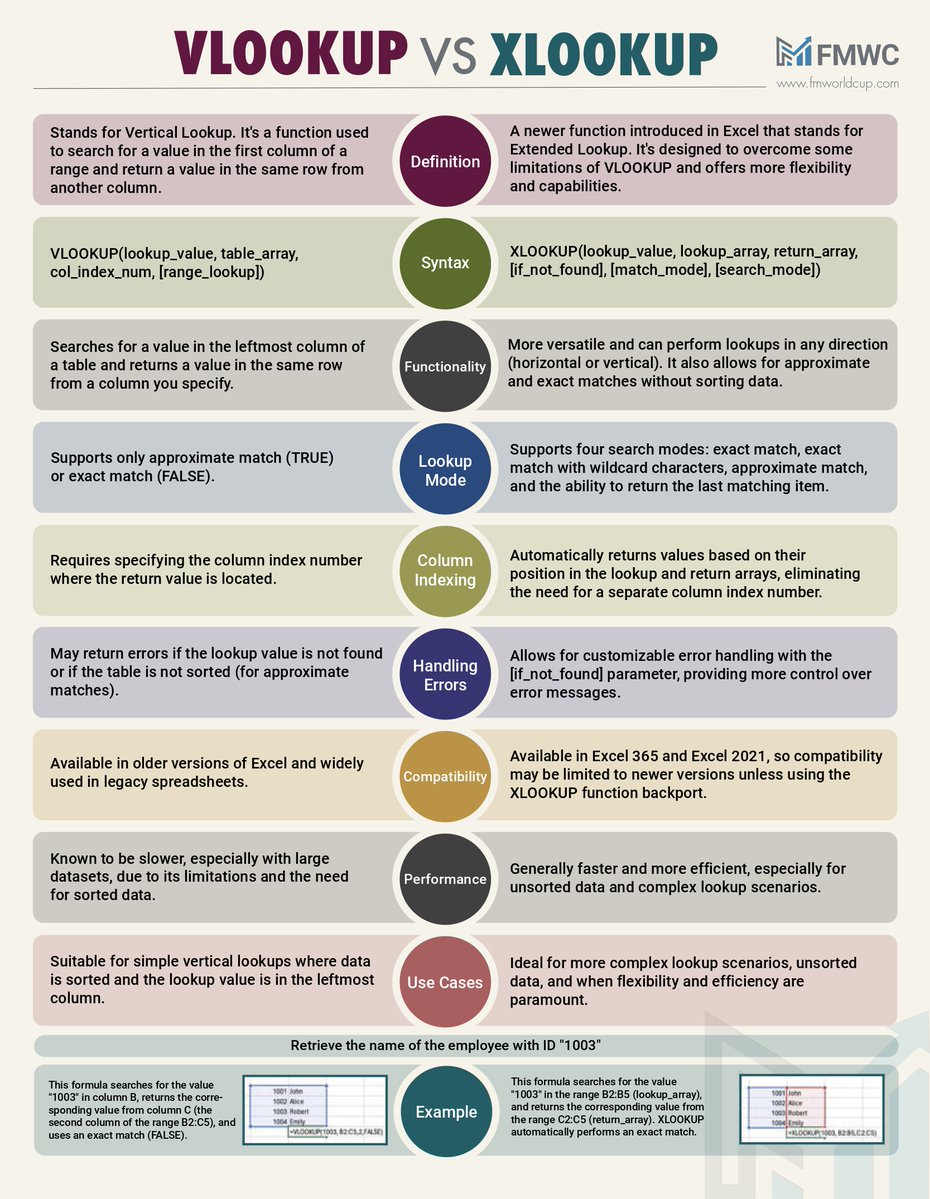
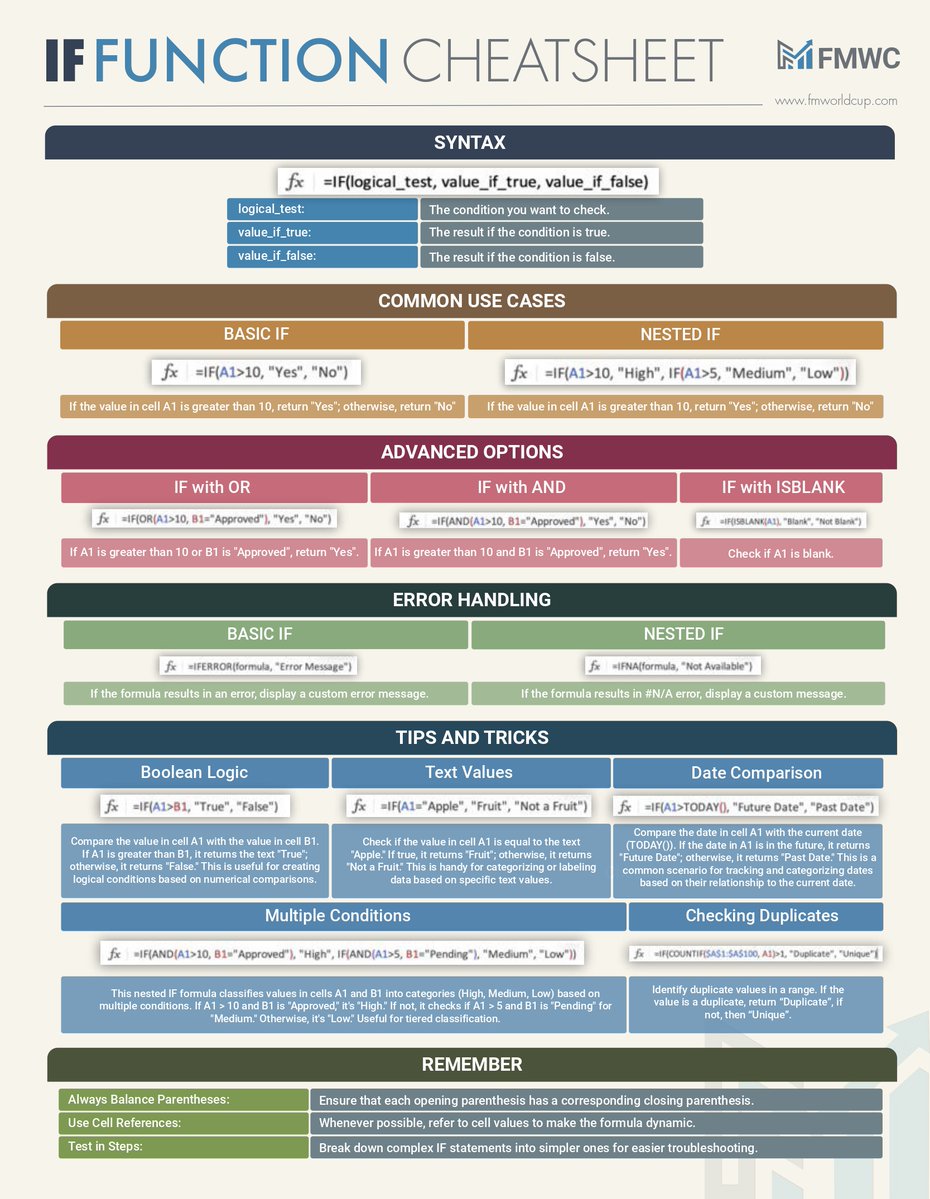
• The Excel function hierarchy from basics like SUM and IF to advanced tools like XLOOKUP, LET, LAMBDA, Power Query, and dynamic arrays
• Core formulas every Excel user should know: SUMIFS, XLOOKUP, INDEX/MATCH, XIRR, XNPV, PMT, IFERROR, and SEQUENCE
• How to use high-impact features such as Pivot Tables, Power Query, Data Validation, Data Tables, and Grouping for analysis and modeling
• Common workflow improvements: keyboard shortcuts, lookup strategies, large dataset techniques, and Excel performance optimization
• The most common Excel mistakes and errors, including formatting issues, reference errors, hashtag
hashtag
#N/A, hashtag
hashtag
#SPILL!, and error handling techniques
• How Python and ChatGPT can support Excel workflows through automation, formulas, Power Query generation, and repetitive task reduction
Source: Financial Modeling World Cup (FMWC) – Master Excel Guide
Most people learn financial models by their names.
But the real question is:
Which financial model should you use and when?
Here’s a simple breakdown:
1. 3-Statement Model
For understanding the complete financial picture by linking the Income Statement, Balance Sheet, and Cash Flow Statement.
2. DCF Model
For estimating the intrinsic value of a company or project based on future cash flows.
3. LBO Model
For analyzing leveraged acquisitions and the potential returns from an investment.
4. M&A Model
For evaluating mergers, including synergies, valuation, and accretion or dilution.
5. Project Finance Model
For infrastructure and large projects where project cash flows, debt repayment, and returns are critical.
6. Budgeting & Forecasting Model
For planning future revenue, costs, expenses, and overall performance.
7. Working Capital Model
For managing short-term assets and liabilities while improving the cash conversion cycle.
8. Startup 3-5 Year Financial Model
For forecasting growth, fundraising needs, investor returns, and business performance.
There is no single “best” financial model.
The right model depends on what you are trying to answer.
Are you valuing a business? Planning a budget? Raising capital? Evaluating an acquisition? Financing a project?
Start with the decision you need to make.
Then build the model around it.
Save this as a quick reference for your next financial analysis.
Want to learn more get this Financial Model Pdf
https://t.co/KRLzGLA7e7
https://t.co/hzOEME7Kta