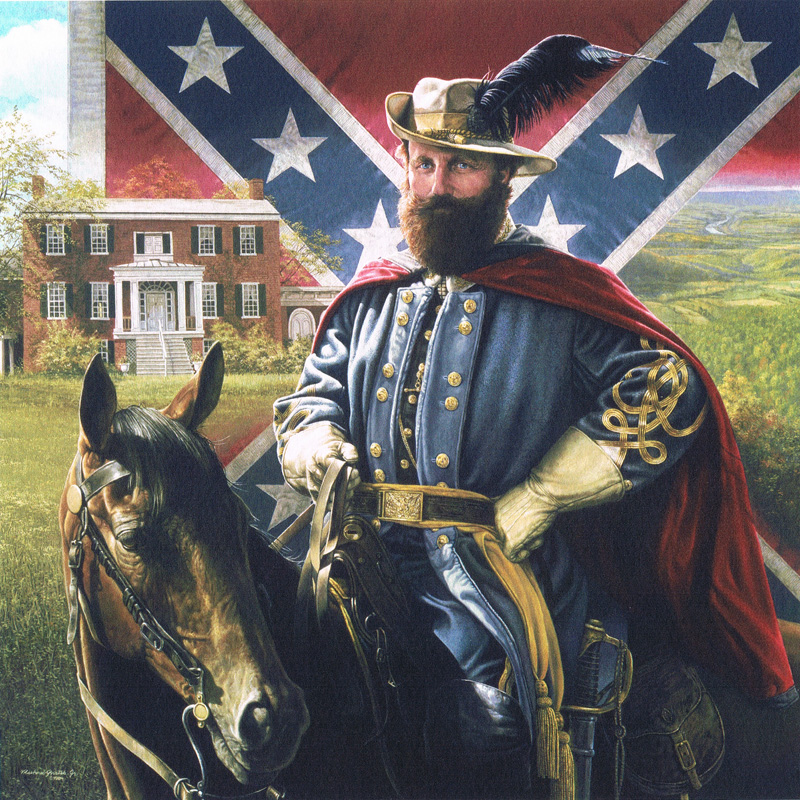
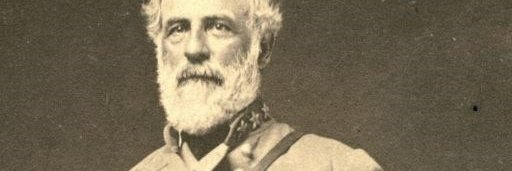
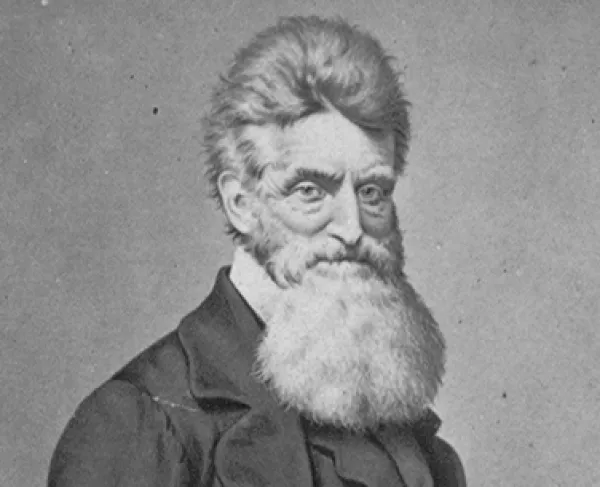
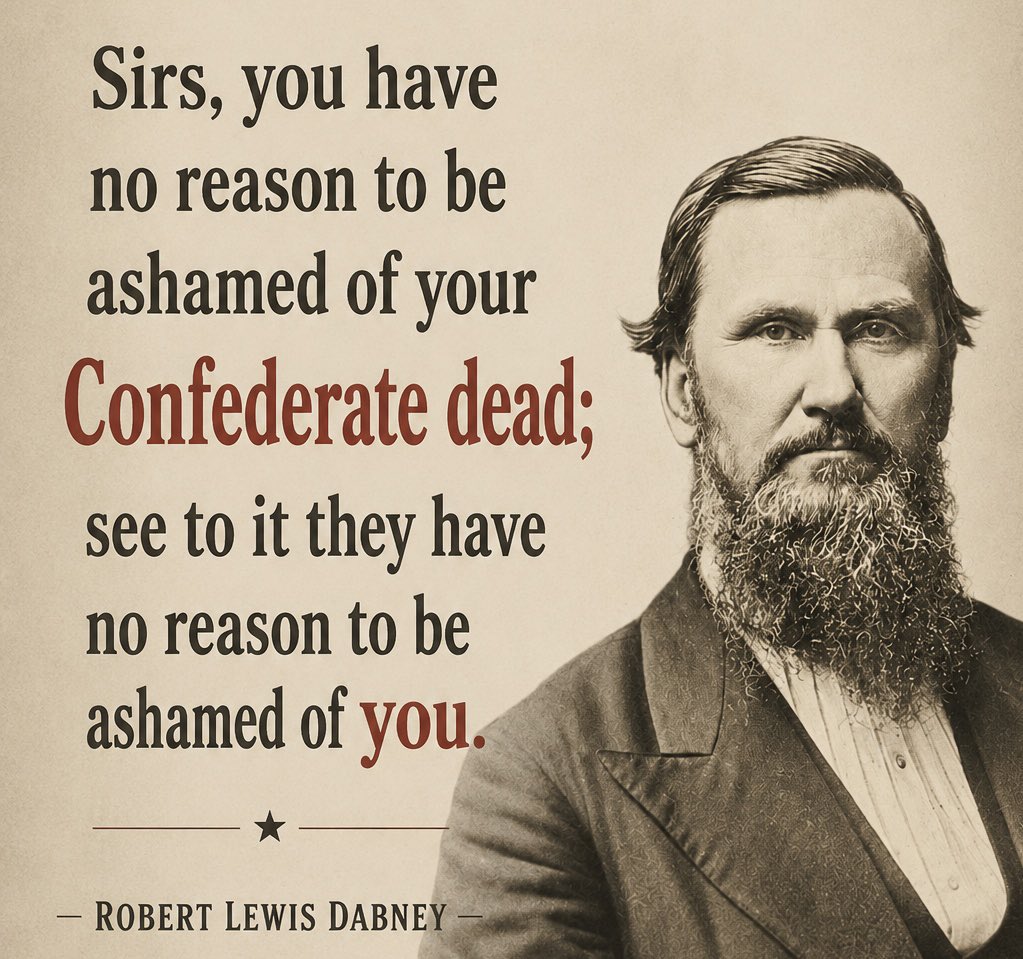
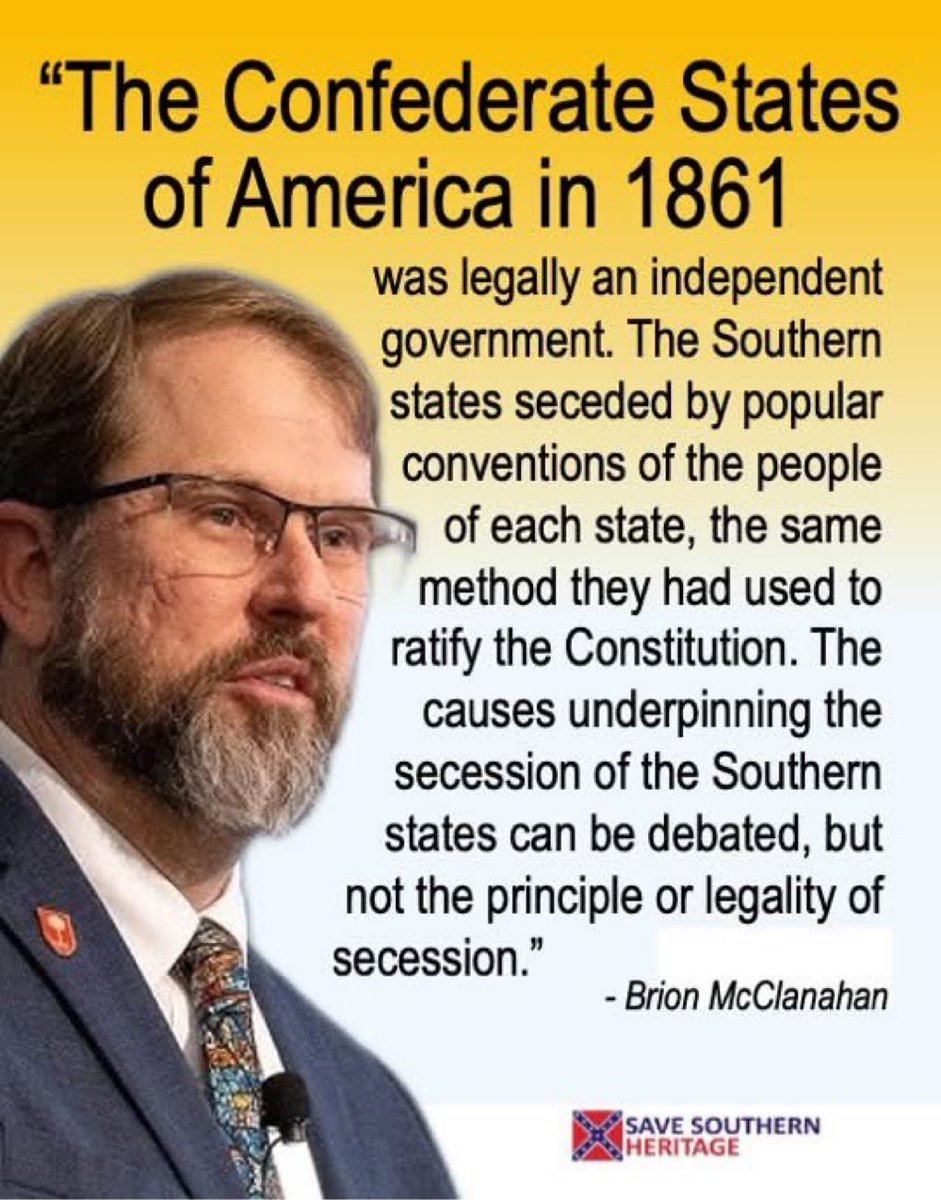
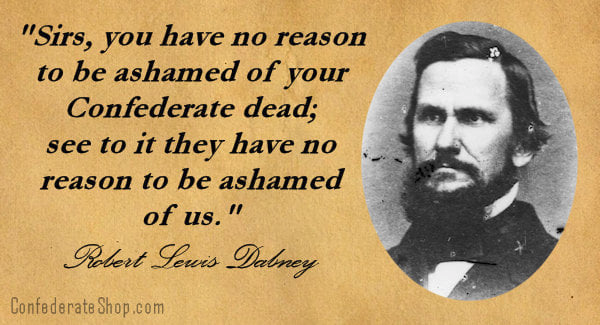
Per our usual, every ConfederateShop order receives a free sticker.
If you purchase anything within the next couple weeks you’re sure to get one of these.
Jefferson Davis’s accomplishments:
1. Distinguished services in the Black Hawk War.
2. Served valiantly in the war with Mexico.
3. Hero at Monterey; wounded at Buena Vista; scaled the walls of the City of Mexico.
4. He introduced the wedge movement and saved the day at Buena Vista.
5. United States Senator from Mississippi.
6. Secretary of War in Pierce's Cabinet.
7. First to suggest trans-continental railroads connecting the Atlantic with the Pacific.
8. First to suggest camels as ships of the uninhabitable West to convey military stores.
9. First to suggest buying Panama Canal Zone.
10. First to suggest buying Cuba.
11. He planned American trade with China and Japan.
12. He suggested closer relations with South America.
13. He urged preparedness for war.
14. He enlarged the United States Army by four regiments.
15. He organized cavalry service adapted to our needs.
16. He introduced light infantry or rifle system of tactics.
17. He caused the manufacture of guns, rifles and pistols.
18. He rendered invaluable services to Colt's Armory.
19. He ordered the frontier surveyed.
20. He put young officers in training for surveying expeditions.
21. He sent George D. MeClellan to Crimea to study the military tactics of the British and Russian armies.
22. He appointed Robert E. Lee as Superintendent of West Point, he advanced Albert Sidney Johnston to important posts.
23. He had forts repaired and many of them rebuilt.
24. He strengthened forts on the Western frontier, frequently drawing on arsenals in the South to do it.
25. He had the Western part of the continent explored for scientific, geographical and railroad work.
26. He was responsible for the new Senate Hall, the new House of Representatives, and for the extension of many public buildings in Washington, especially the Treasury Building.
27. He was responsible for the construction of the aqueduct system in the Nation's capital.
28. He was responsible for "Armed Liberty" on the Capitol having a helmet of eagle feathers instead of the cap of a pagan goddess.
29. He had Cabin John Bridge built with its span of 220 feet.
30. He was United States Senator under President Buchanan.
31. He was nominated for President by Massachusetts men in 1860.
32. He refused to allow his name to be presented for President at the Charleston Convention.
33. He stood strongly for the Union, but stressed the constitutional right of a State to secede.
Jefferson Davis, born 218 years ago, on June 3, 1808, in Kentucky, the son of Samuel Emory Davis, who fought in the American Revolution. Davis moved to Mississippi at a young age. His career was stellar: West Point graduate, Mexican War veteran, Congressman, US Senator, Secretary of War, and only President of the Confederate States of America.
Davis understood the Puritan-Cavalier divide in America, and wrote about it in 1863:
"We have never believed that slavery had as much to do with this war as personal resentment and vindictiveness, transmitted from generation to generation, smouldering embers of the old Cavalier and Puritan feuds, which had never died out. The descendants of those two classes in the North and the South would have gone to war, sooner or later, if such a thing as slavery had never existed. We do not include all the North in the Puritan, any more than all the South in the Cavalier classification, but that is the predominant element in each. Slavery is but the occasion of the strife, and its real provocations are the envy, malice, hatred, and all uncharitableness, which have characterized the deportment of Puritanism towards its political and ecclesiastical superiors from the beginning of its existence."
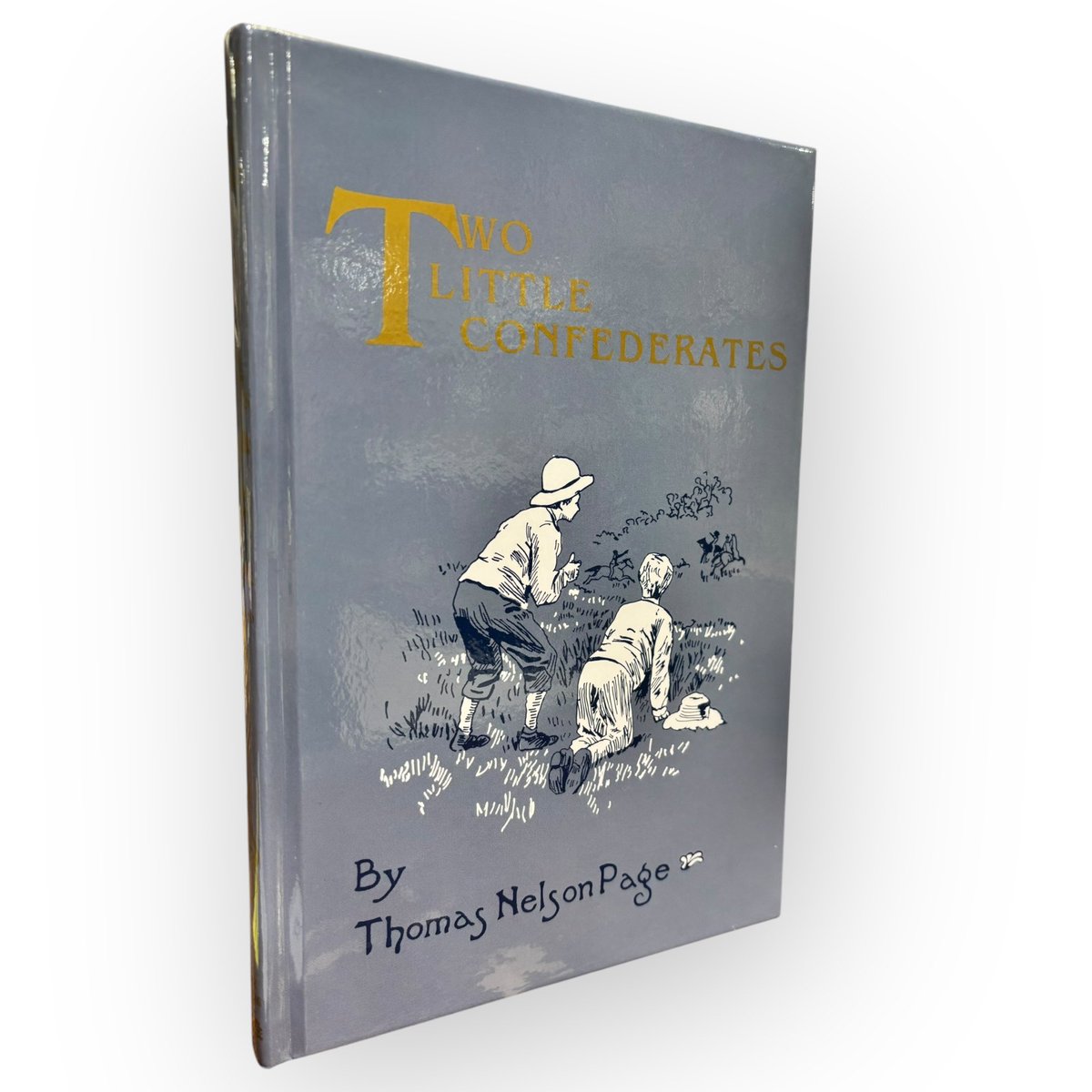
This week’s featured newsletter book is Two Little Confederates by Thomas Nelson Page.
Originally published in 1888, this beloved Southern classic follows the experiences of two children growing up in Virginia during and after the War Between the States. Filled with adventure, family, courage, and Southern traditions, it offers young readers a memorable introduction to a pivotal period in American history.
Recommended for ages 9-15 — this is a quality historical reprint, and it’s also on sale right now.
Thomas Nelson Page (1853–1922) was a Virginia author, lawyer, and diplomat. As a child, he lived through the War Between the States and Reconstruction, experiences that later inspired many of his writings. Descended from an old Virginia family, Page became one of the South’s most popular authors, writing classics that would encourage the future generations. He later served as the U.S. ambassador to Italy.
Praise of Nat Turner led to the War
Turner was a slave and self-proclaimed prophet who, despite having a kind master, murdered the family that owned him, killing even the wife and kids in grisly ways...then led a rampage doing the same to other families
Puritan Abolitionists like William Lloyd Garrison responded not with sympathy for murdered women and children, but with praise for the murderers!
As Fleming notes in his A Disease in the Public Mind, "Did Garrison express even a hint of sympathy or pity for these stunned, grieving families and their terrified neighbors? Did he confess that his immediate emancipation slogan was wrong, or at least in need of amendment? The only emotion Garrison permitted himself was thinly disguised gloating— and a call for sympathy for the slaves."
Further, Virginians saw the worst of the Haitian Revolution in what had happened. As Fleming notes, "It was as if a chapter out of Santo Domingo's final slaughter under General Dessalines had somehow been reincarnated in Southampton County, a thinly populated rural region not far from Virginia's seacoast. Blacks outnumbered whites by more than a thousand, but most whites owned only two or three slaves and many owned none. Seizing horses from nearby farms, Nat Turner and his swelling band, soon numbering more than fifty men, rode from farmhouse to farmhouse, killing everyone with white skin."
So, what they saw were insane abolitionists in Massachusetts cheering on the grisly deaths of women and children for ideological reasons, which hardened attitudes in an immense way, and led to the cycle of spite, hate, and violence that ultimately resulted in the Civil War
Notably, modern leftists now praise Nat Turner because they too hate white people and want to inflict upon all of us a Haitian-style campaign of murderous genocide in the name of equality
“Our men died the death of heroes. I sometimes think that surely our brave men have not died in vain. It is true, our cause is lost, but a people who loved those brave and noble heroes should ever cherish their memory as men who died for them. I shed a tear over their memory. They gave their all to their country.” - Sam Watkins, Company Aytch: Side Show of the Big Show
Rev. Randolph H. McKim, who was a Confederate chaplain in the war, gave a sermon about Robert E. Lee in 1907 titled "Lee the Christian Hero."
He calls Lee "my commander, whom I loved and revered, whom it was my proud privilege to follow in his great campaigns"
“…We must forevermore do honor to our heroic dead. We must forevermore cherish the sacred memories of those four terrible but glorious years of unequal strife. We must forevermore consecrate in our hearts our old battle flag of the Southern Cross – not now as a political symbol, but as the consecrated emblem of an heroic epoch. The people that forgets its heroic dead is already dying at the heart, and we believe we shall be truer and better citizens of the United States if we are true to our past.”
Confederate Veteran Rev. Randolph H. McKim