I met a trader who made $90k one month
Gave it all back plus more the next
He didn't have a strategy problem
He had no off switch
The market will always give you a chance to undo your best month
Alan Greenspan Dies at 100
Former Federal Reserve Chairman who led U.S. monetary policy for nearly two decades
Alan Greenspan, one of the most influential central bankers in modern history, died today at the age of 100.
His wife, NBC News correspondent Andrea Mitchell, confirmed that he passed away at home from complications of Parkinson’s disease.
Born on March 6, 1926, in New York City, Greenspan served as Chairman of the Federal Reserve from August 1987 to January 2006 - a nearly 19-year tenure under four presidents: Ronald Reagan, George H.W. Bush, Bill Clinton, and George W. Bush. He was the second-longest serving Fed chair in U.S. history.
During his time at the Fed, Greenspan guided the U.S. economy through the 1987 Black Monday crash, the dot-com boom and bust, and the economic shock of 9/11.
He became known for his deliberately opaque speaking style (“Fedspeak”) and for warning of “irrational exuberance” in markets in 1996.
His long tenure coincided with a period of relative stability and low inflation later called the “Great Moderation.”
Supporters credit him with helping deliver the longest peacetime economic expansion in U.S. history.
Others argue that his low interest-rate policies and hands-off regulatory approach contributed to the housing bubble and the 2008 financial crisis: a view Greenspan himself partially acknowledged later in life.
After retiring in 2006, Greenspan founded his own consulting firm, Greenspan Associates, and wrote several books, including the bestselling memoir The Age of Turbulence (2007).
He turned 100 in March this year.
Today’s news follows earlier false reports of his death in February 2026 that were quickly debunked.
Greenspan is survived by his wife of nearly 30 years, Andrea Mitchell.
10 TRUTHS THAT HIT YOU AFTER A DECADE IN THE MARKET:
1. The market doesn't get easier. You just stop expecting it to be.
2. Most traders don't fail because they can't find an edge. They fail because they can't stick to one.
3. The market doesn't test your strategy. It tests your relationship with money.
4. A large account doesn't create discipline. Discipline creates a large account.
5. Every trader wants freedom until they realize freedom requires self-control.
6. The market has a unique ability to turn your strengths into weaknesses. Confidence becomes overconfidence. Patience becomes stubbornness. Conviction becomes ego.
7. Your P&L is often a delayed reflection of decisions you made weeks ago.
8. The market rarely gives you what you deserve. It gives you what your process deserves.
9. The longer you trade, the less interested you become in extraordinary returns.
10. Eventually you realize that trading was never really about the market. It was about understanding yourself.
Trading is not for everyone. True.
It's for insanely mad people. Because who else would choose a profession like this.
You lose money.
Then spend more money to learn how not to lose money.
Then lose more money applying what you learned.
And then convince yourself that you're "close."
You stare at charts for hours. You spend weekends studying markets. You celebrate a breakeven month like it's a major achievement.
And after all that...
You still can't wait for Monday morning. 🤦🤷
It's for people who clearly have a very unusual relationship with pain.
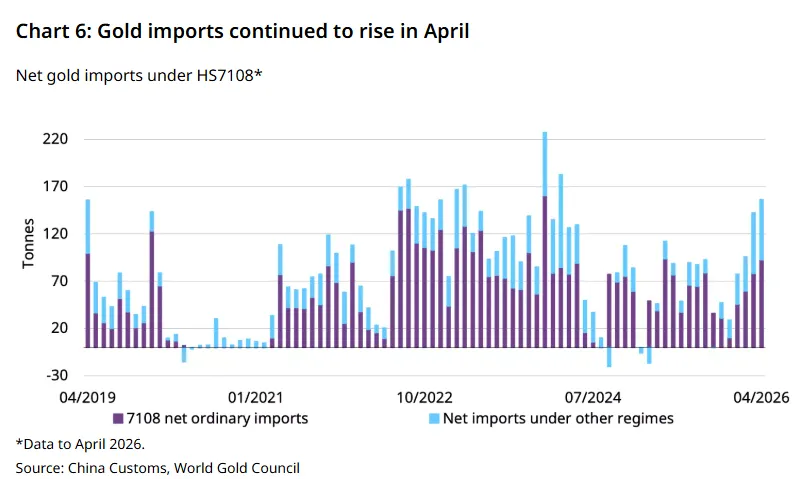
CHINA IMPORTED 157 TONS OF GOLD IN APRIL & SINGAPORE LAUNCHED A GOLD CLEARING SYSTEM: The Factory of the World Is Demanding Gold & the Plumbing of the New Financial World is Being Built Right Now! https://t.co/X5eVXUY4zA
Morgan Stanley: The world is in a “Nuclear Renaissance”.🌅⚛️🌏 #NetZero emissions targets coupled with ever-increasing data centre power demands will more than double #Nuclear power by 2050⏫ with value chain investments to hit $2.2 Trillion.💰🤠🐂#Uranium https://t.co/AKBOazY7uc
The government wants to fill our timelines with state funded propaganda.
Block the BBC, ITV and Channel 4.
They can't fill your feed if you've blocked them.
Simple problems require simple solutions.
Uranium zal een parabolische beweging maken, lees ons artikel aub op: https://t.co/C3CcyDxvWB en neem een gratis abonnement op onze nieuwsbrief.
#uranium#grondstoffen#beleggen#aandelen
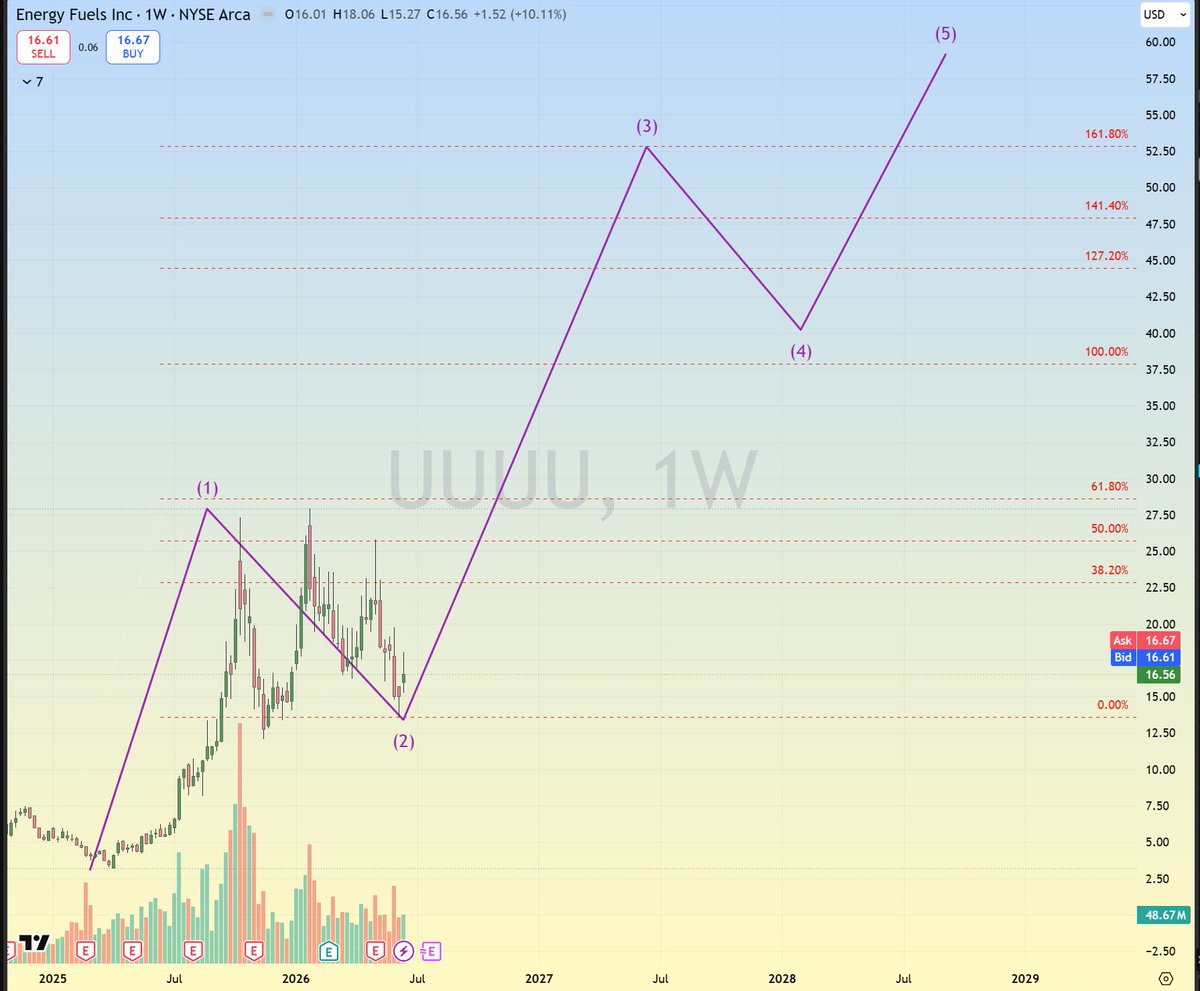
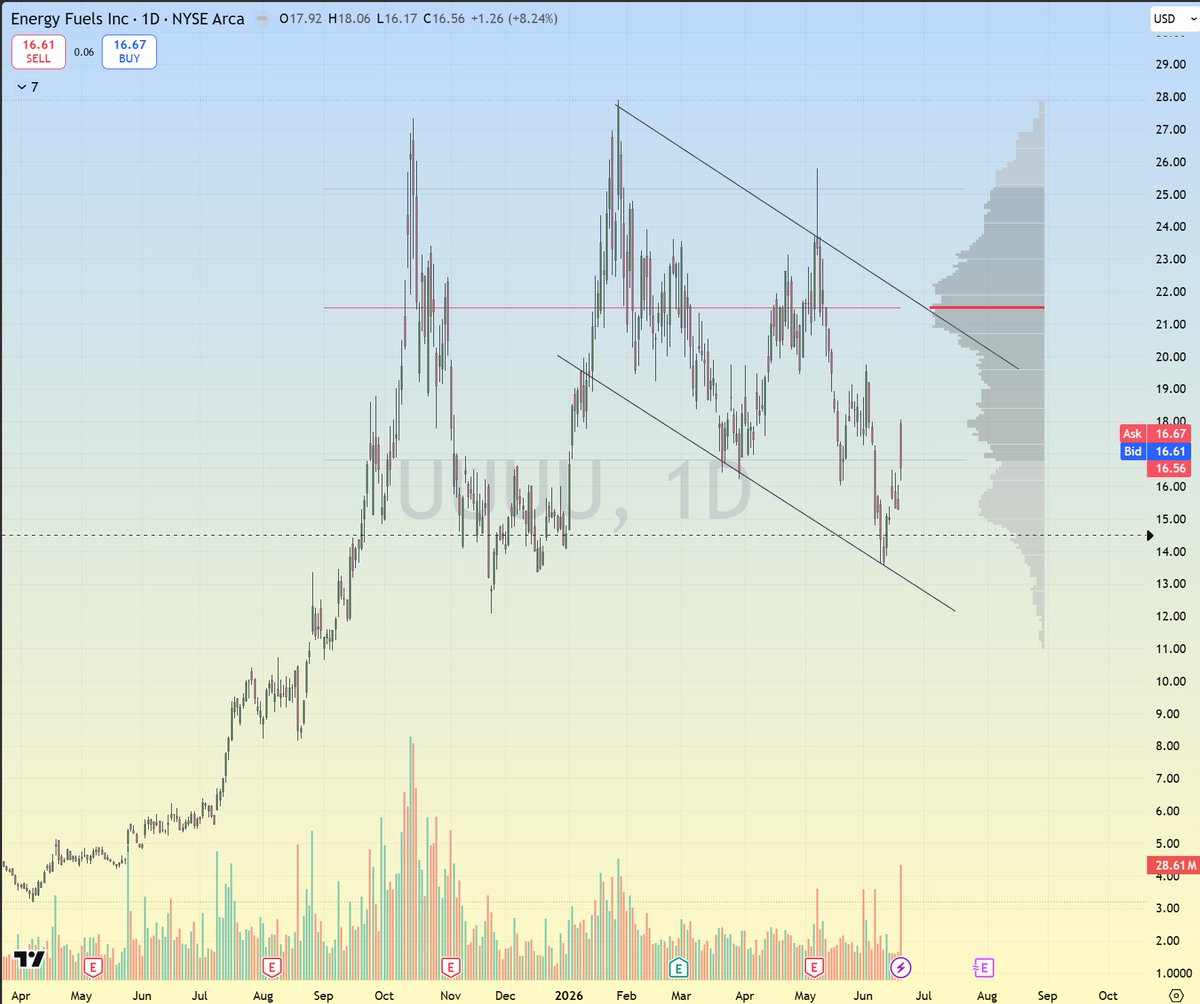
Next thing is to project Wave 3 from the base of Wave 2. Wave 3 usually hits the 1.618% extension as a minimum.
Wave 4 will be a shorter retracement in a flat pattern, usually the 38.2%, as Wave 2 already was a ABC of 50-61.8% and Wave 2 and Wave 4 are always opposite patterns.
Wave 5 will be a similar length to Wave 1.
All of this is just a guide. Waves consist of strong impulse movements, so if they don't get going within a fair amount of time, then they're usually a fail. Our sign here will be a new high above the volume shelf in the mid 20s, which will obviously be bullish regardless, but will qualify the longer term outlook and price targets also.
Bulkowski has some more information here if you want to understand the metrics better. https://t.co/SHqD5k6ivc
@Rororourboat79 Really appreciate your response thank you! Especially for clarifying the waves. I’m a long term holder in $UUUU v interesting to a different type of analysis.