Every growing business reaches a point where spreadsheets, manual tasks, and disconnected tools start slowing everything down.
That's where automation makes the difference.
I help businesses streamline their operations by building AI-powered workflows and business systems using https://t.co/rrQaIhQC5f, Zapier, Airtable, and https://t.co/KepggretWY - reducing repetitive work, improving visibility, and giving teams more time to focus on what matters most.
If you're looking to automate your workflows, optimize your CRM, or build systems that scale with your business, I'd love to connect.
Feel free to reach out or send me a message.
Meet Gareth, owner of Gareth's Glorious Glossary - a small private library with a growing problem: customers keep asking for books that are out of stock, and figuring out what to reorder (and how much) was eating up his day.
So I built him a Make scenario to take the guesswork out of it.
Here's the logic:
🔹 Pull book data straight from his booking system, sorted by number of times borrowed
🔹 Route requests by genre using a Router module
🔹 Use get(map()) to dynamically extract the top N most-borrowed titles per category - top 3 Action books, top 1 Romance book
🔹 Compose the results into clean, ready-to-use strings for reporting or reordering.
The beauty of get(map()) here is flexibility - Gareth can adjust "top N" per genre without rebuilding the whole workflow. Want the top 5 Mystery books next month? Just change one number.
Small automation, big time savings - and Gareth gets back to what he actually loves: running his library.
Most portfolio contact forms do one thing: send an email.
I wanted mine to do a lot more.
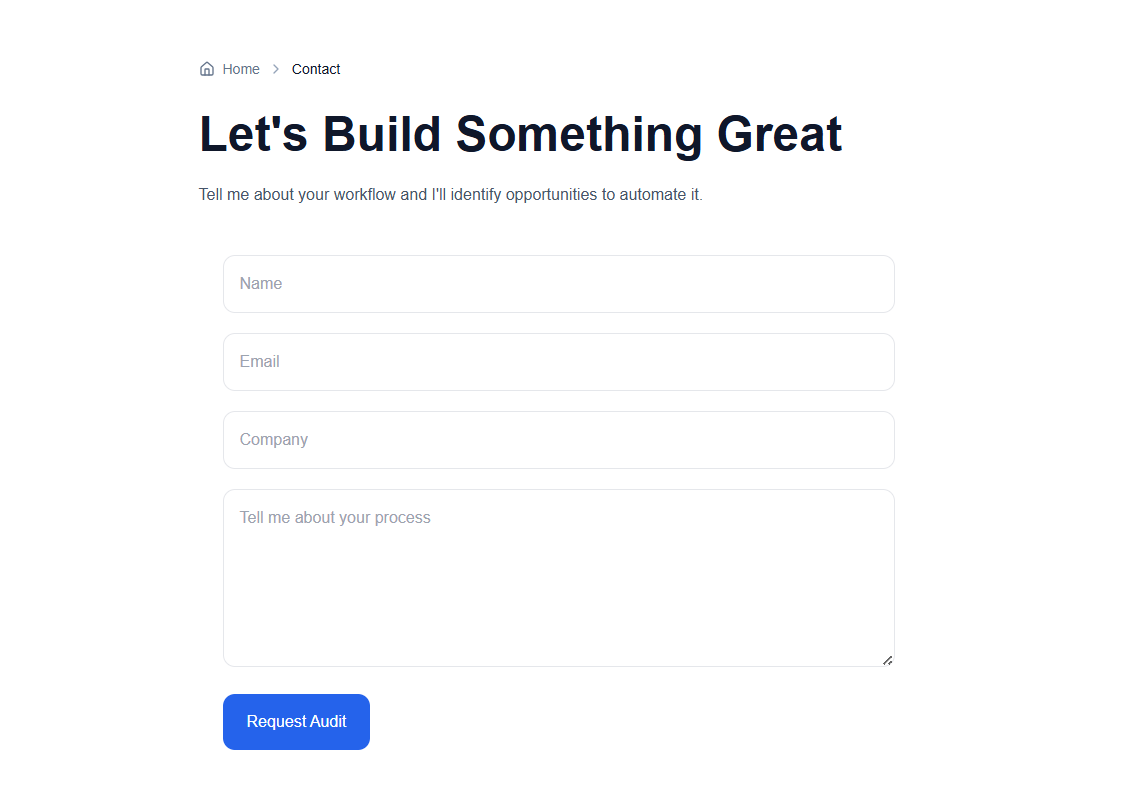
So last weekend, I turned my portfolio's contact form into a fully automated lead management workflow.
Now, when someone submits an enquiry through my website:
✅ Their request is instantly captured via a https://t.co/rrQaIhQC5f webhook.
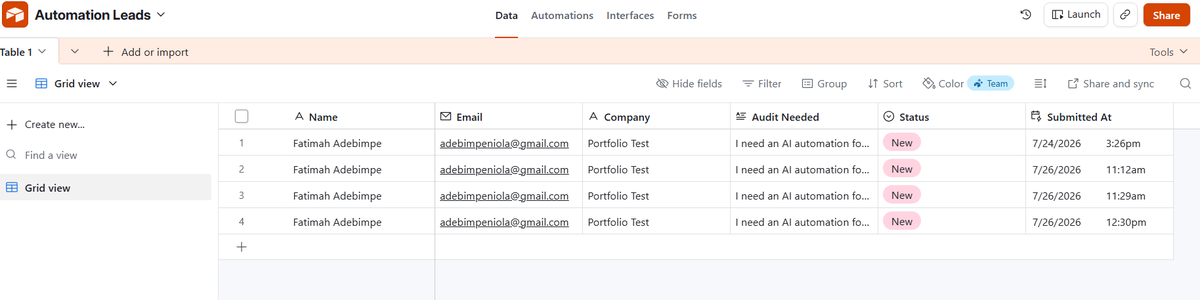
✅ A new lead is created in Airtable with their contact information, project details, status, and submission timestamp.
✅ I receive a beautifully formatted email notification with everything I need to review the enquiry.
✅ The visitor immediately receives a personalized confirmation email, so they know their message was received and what to expect next.
No manual copying. No missed enquiries. No wondering if a message actually went through.
The best part? This isn't just another demo project - it's the system powering my portfolio today.
I'm excited to keep adding more real-world automation projects to my portfolio as I continue learning and building.
🔗 Portfolio: https://t.co/DAWDxlHgBs
A client on Upwork had a Tally form that was getting flooded with abusive submissions - and he didn't want to see a single one of them, not even in a spam folder.
Here's the automation I built in https://t.co/rrQaIhQC5f:
→ Tally module watches for new form responses in real time
→ Make AI Toolkit (Simple Text Prompt) reads each submission and classifies it - insulting language or clean
→ If-else router splits the flow based on that classification
→ Approved → Gmail sends the client a clean, formatted email with the submitter's details and a preview link
→ Rejected → the submission is silently deleted
The catch: Make has no native "delete" module for Tally. So for the rejected branch, I used an HTTP module to call the Tally API directly with a DELETE request, removing the abusive submission entirely.
The client now only ever sees genuine, respectful inquiries in his inbox.
Everything else is filtered and erased before it ever reaches him.
Using an AI prompt instead of a static keyword list means it actually understands context and tone - not just flagging specific words.
Small scenario, real relief for the client.
#Automation #MakeDotCom #NoCode #API #Upwork #Tally #AItoolkit #Freelancing
A client came to me with a growing YouTube channel and a comment section they couldn't keep up with. Here's how I automated it.
The brief: their channel was growing, but by the time they checked their phone at night, there were 40+ comments waiting. Some were genuine questions. Some were "nice video." Some were spam. They couldn't triage them fast enough, and replying to everyone manually wasn't sustainable, but ignoring people wasn't an option either.
So I built them an automation in https://t.co/rrQaIhQC5f that does this:
→ Watches the channel for new comments as they come in
→ Pulls the actual video context (title, description, transcript) from Airtable, so the reply isn't generic, it actually understands what the video was about
→ Runs everything through an AI agent that decides what kind of comment it's dealing with.
From there, it splits into two paths:
If it's a simple, positive comment ("great video," "this helped, thanks"), the agent drafts a warm, human-sounding reply and posts it automatically. No robotic corporate tone, no queue for me to review.
If it's a real question, feedback, or anything that needs a human judgment call, the automation doesn't touch it. Instead, it sends the client a Slack message with the video, the commenter, their comment, a proposed response, and a direct link to the comment on YouTube. They review it, tweak it if needed, and approve it themselves.
Spam, bot comments, and low-effort one-word reactions get skipped entirely, but logged, so they can spot-check later if something looks off.
The result: they stopped ignoring their community, without losing control over what gets said in their name.
Getting here took a few days of debugging (funnily enough, most of it was a Slack permissions issue, not the automation logic itself). But watching it correctly flag a real question, draft a solid answer, and hand it over for one-click approval made it worth it.
This project reinforced something I keep coming back to: the best automations aren't the ones that replace a client's judgment, they're the ones that know exactly when to ask for it.
I almost gave up on my https://t.co/rrQaIhQC5f automation. Four times.
I've been building a YouTube Comment Management automation using https://t.co/rrQaIhQC5f, and connecting my Slack account turned into a multi-day nightmare.
Every time I hit an error, I did what felt logical: delete the scenario, start fresh, rebuild from scratch. Four times. I retraced every module, checked every mapping, second-guessed every field.
The actual bug? I never granted https://t.co/rrQaIhQC5f all the permissions it needed to access my Slack workspace.
That's it. One unchecked access scope, hiding behind a vague error message, cost me days.
Three things I'm taking away from this:
1. Before rebuilding anything, check permissions first. Most "broken automation" issues aren't logic errors, they're access errors in disguise.
2. Deleting and restarting feels productive, but it isn't debugging. It just resets the clock without addressing the root cause.
3. Read the connection settings carefully. When a platform asks for access, it's usually asking for a reason. Skipping through that screen is where the real bug was hiding.
Automation is 10% building and 90% patience. Grateful for the lesson, even if it took four rebuilds to learn it.
Have you ever spent days chasing a bug that turned out to be something small and obvious?
#Automation #NoCode #MakeDotCom #Slack #Productivity #WorkflowAutomation
I’ve just completed a hands-on session where I turned a static list of applicants into a fully automated Recruitment Tracking System -and the results were incredibly satisfying.
Here’s how the workflow came together:
The Foundation: I imported a repository of applicants and used monday magic to generate a structured tracking board.
The Build: I went beyond the basics, configuring custom automations to handle task updates and notifications.
Visualization: To make the data readable at a glance, I implemented a Cards View for candidate profiles.
High-Level Insights: I built a comprehensive Dashboard featuring chart and text widgets to transform board data into actionable recruitment reports.
The most insightful part of this lesson was seeing how the right triggers and actions can eliminate manual bottlenecks. It’s a game-changer for anyone looking to build smart, efficient systems that actually work for them.