Next Up Nicole Castoro, PharmD, PGY2 Critical Care Resident, NewYork-Presbyterian Hospital presenting Direct oral anticoagulants versus no anticoagulation for the prevention of stroke in survivors of intracerebral haemorrhage with atrial fibrillation (PRESTIGE-AF)
#NCSPharmJC
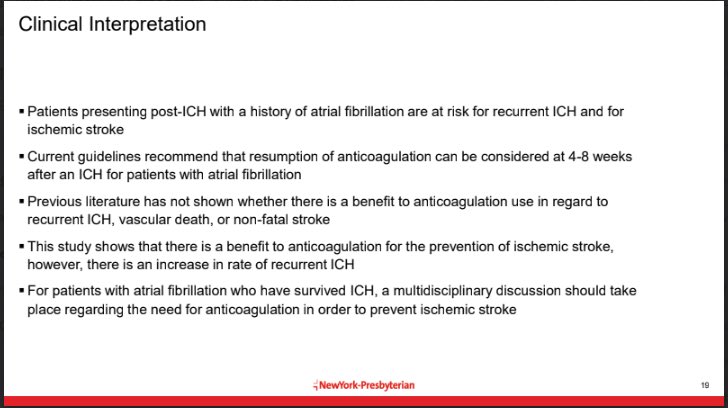
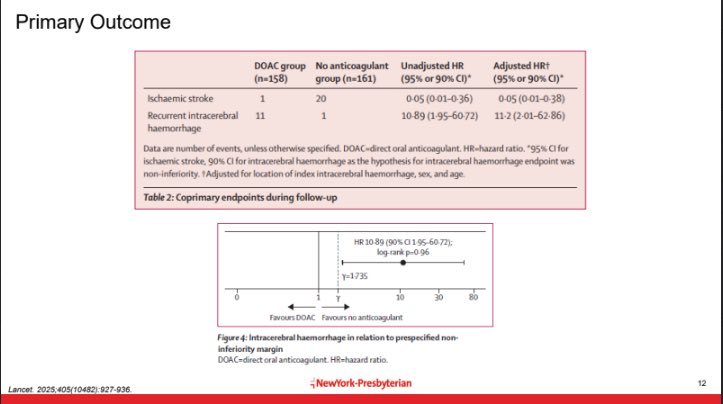
Summary: In survivors of intracerebral hemorrhage with atrial fibrillation, DOACs substantially reduced the risk of ischemic stroke compared to no anticoagulation, but this benefit was offset by a significantly increased risk of recurrent ICH
Thanks Dr. Castoro!
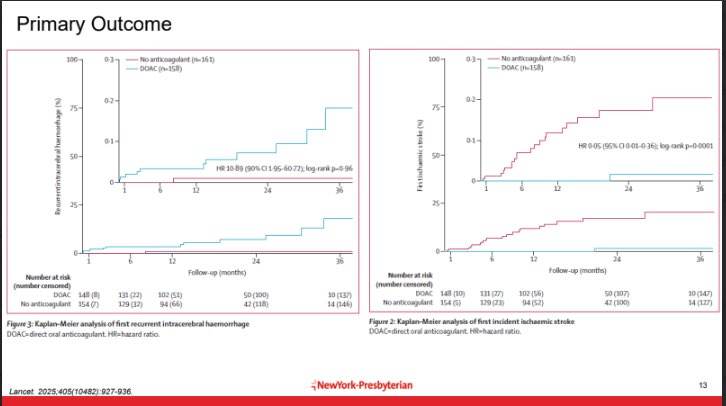
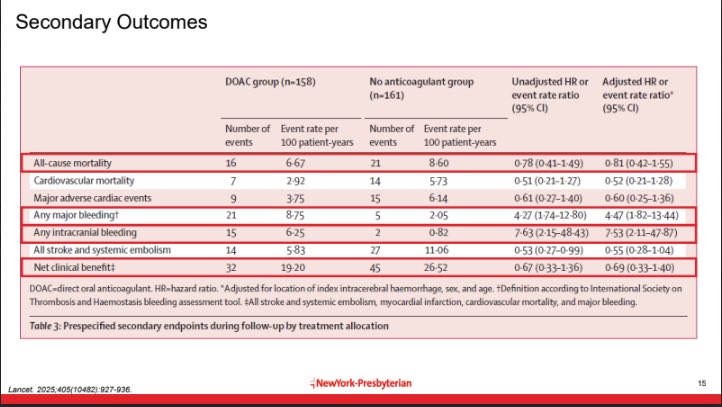
The DOAC group had a significantly lower risk of ischemic stroke than the non-anticoagulated group (unadjusted HR 0.05 (0.01-0.36)) but also had a significantly higher risk of recurrent ICH (unadjusted HR 10.89 (1.95-60.72))
#NCSPharmJC
The DOAC group had a significantly lower risk of ischemic stroke than the non-anticoagulated group (unadjusted HR 0.05 (0.01-0.36)) but also had a significantly higher risk of recurrent ICH (unadjusted HR 10.89 (1.95-60.72))
#NCSPharmD
First Up Alyssa Beyer, PharmD, PGY2 Critical Care Resident, Tufts Medical Center presenting on Localized Nicardipine Release Implants for Prevention of Vasospasm After Aneurysmal Subarachnoid Hemorrhage. A Randomized Clinical Trial
#NCSPharmJC#NCSPharm
Summary: Localized modified-release nicardipine implants placed into basal cisterns at clipping for aneurysmal subarachnoid hemorrhage safely reduced moderate-severe angiographic vasospasm versus standard of care and signals toward reduced delayed cerebral ischemia/resource use
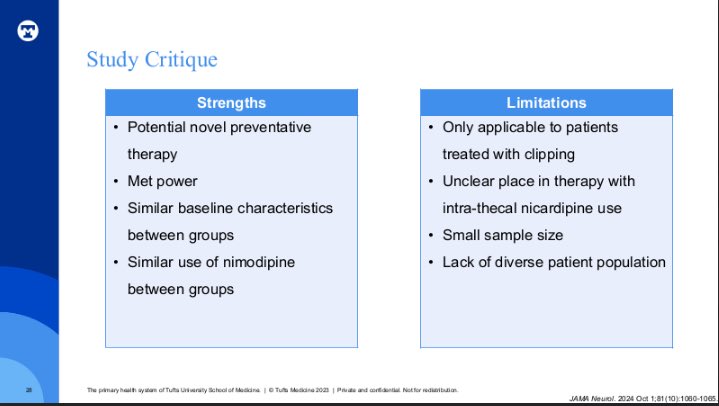
Strengths included similar use of established treatments (nimodipine) in each arm while this study may have been limited by a small sample size and limited population
#NCSPharmJC