Historian of Risorgimento, Italian Opera, and Nationalism. PhD student at University of Lincoln. PG rep @asmi_org Musician, and a massive Norwich City fan #otbc
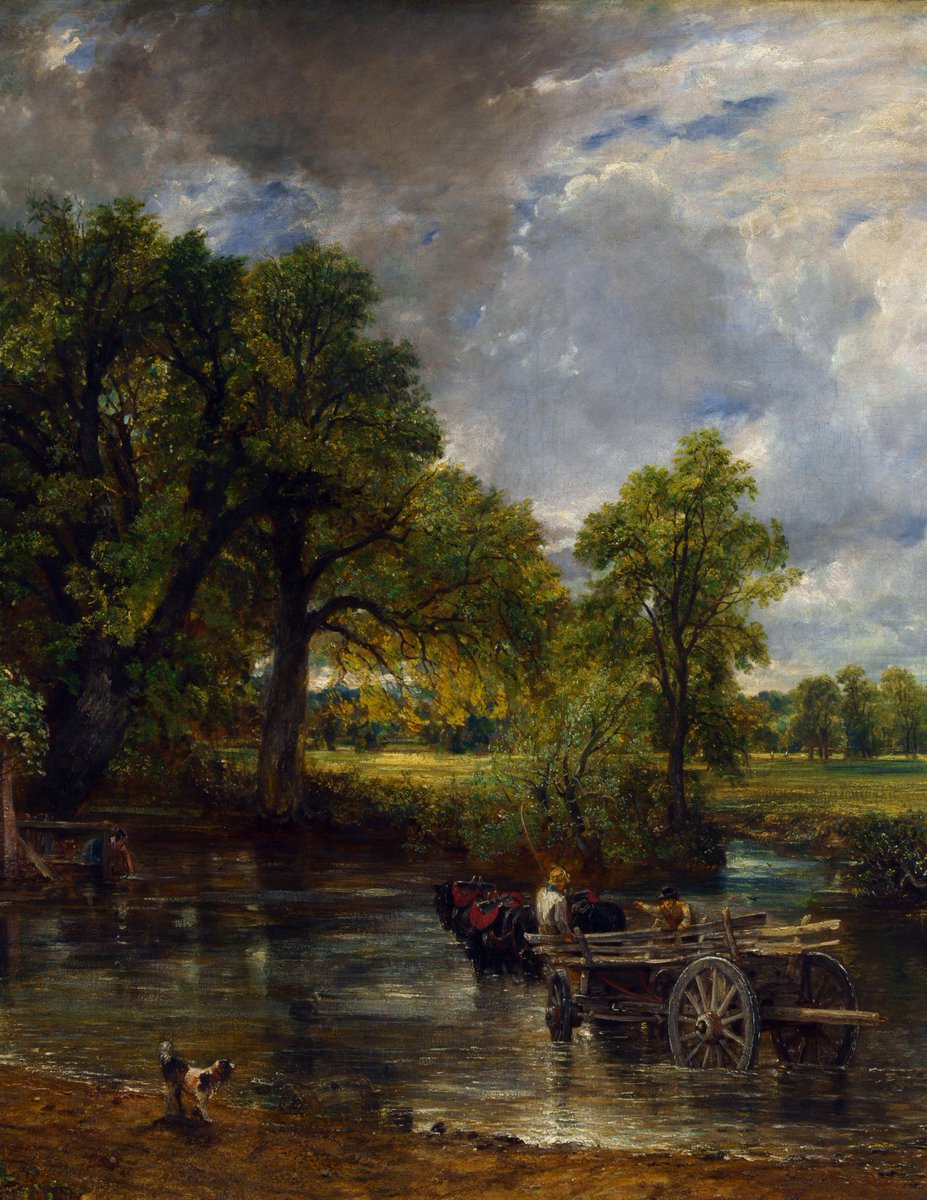
If you like the countryside then you will love John Constable.
He was probably the most boring landscape painter in history — and that's why he was one of the best...
This sweet innocent transgender girl was not a threat to women or girls.
It was the girl who wasn't transgender who turned out to be the deadly threat.
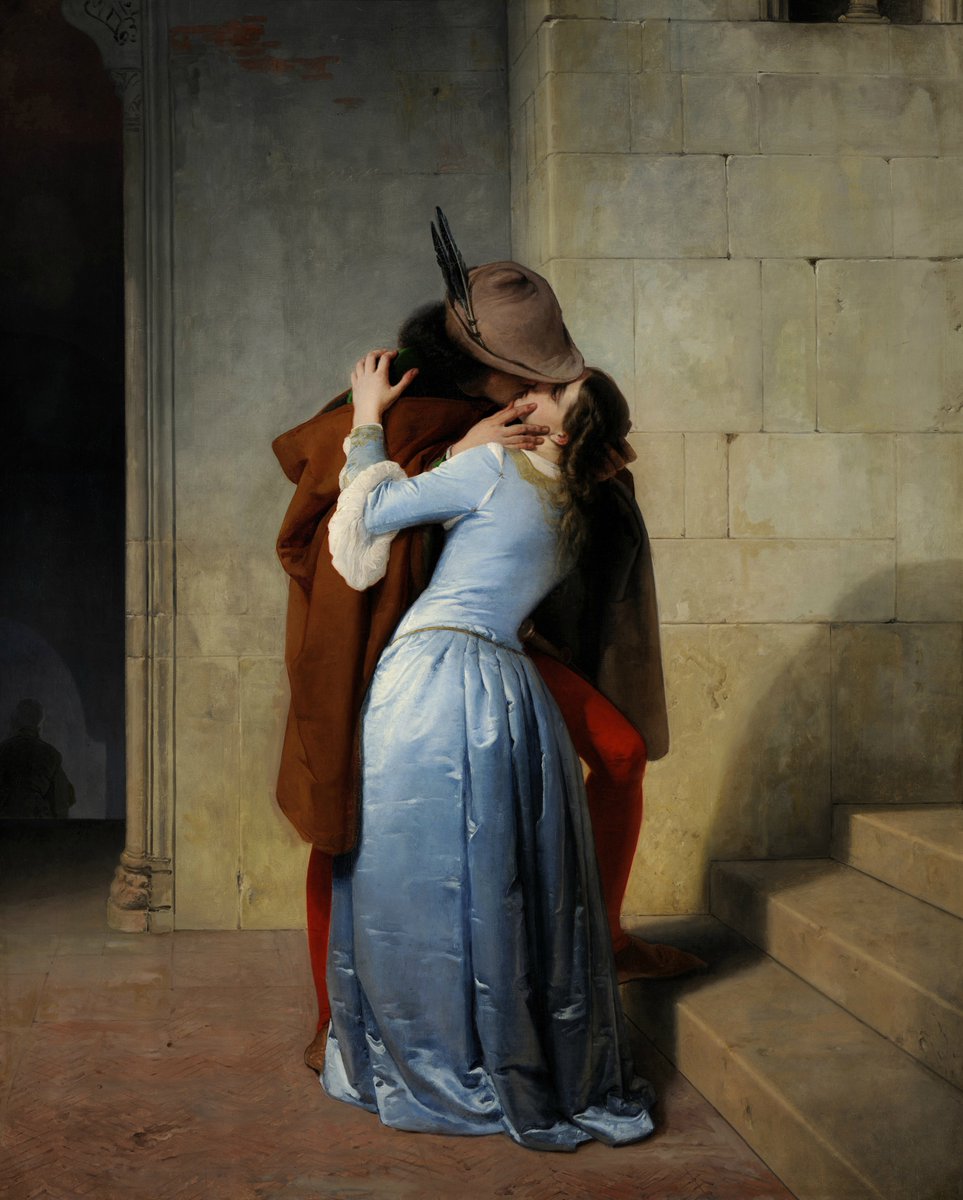
The Kiss, painted by Francesco Hayez in 1859, is surely one of the most perfect portrayals of romance in history.
But it also has a hidden political message.
This is the story of The Kiss — and how art can mean more than one thing at once...
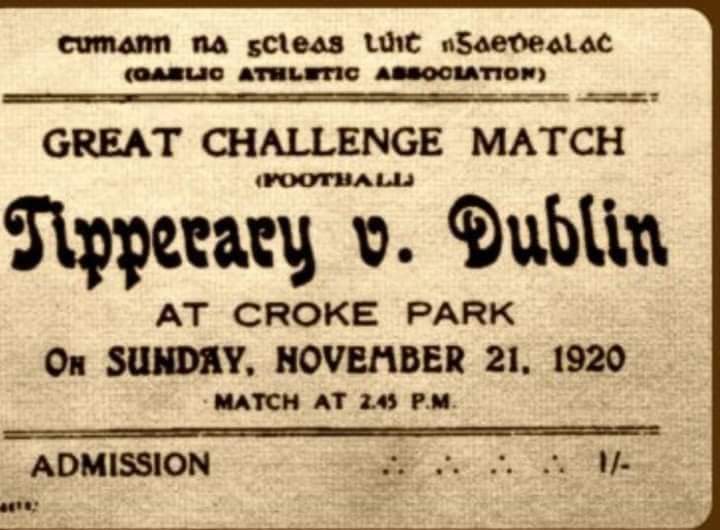
103 years ago today in Croke Park, Tipperary played Dublin before a capacity crowd. Suddenly at 3:25pm, armoured cars and trucks containing rabid Black & Tans, British Auxiliaries. RIC surrounded the stadium. Without warning they stormed the grounds, opening fire indiscriminately
Jonathan Ashworth, "Suella Braverman referenced Leicester as a failure for multiculturalism.. In a few weeks we will be celebrating Diwali.. One of the biggest Diwali events outside India.. Then we'll celebrate Christmas, Hannukah, Visaki, Eid.. Don't use Leicester as a pawn in your game to become the next Tory leader" #BBCQT
ʙɪʀᴍɪɴɢʜᴀᴍ ᴀʀᴇ ʙɪʀᴍɪɴɢʜᴀᴍ comp ✨
WHEN #NCFC beat Birmingham tomorrow, I’ll buy one lucky yellow a 🆕 Norwich shirt with the match-winners name on the back.
To enter, RT & follow me 💛👊🏼
𝔉𝔲𝔩𝔥𝔞𝔪 𝔥𝔬𝔬𝔡𝔬𝔬 special comp ✨
If #NCFC WIN tonight, I’ll buy one lucky yellow a 🆕 Norwich shirt with the match-winners name on the back.
To enter, RT & follow me 💛👊🏼
Will we finally break the curse? 😆🤞🏼
A wise man is warned about a divine flood that will destroy the world, so he builds a boat for his family and all the animals. They survive and humanity starts again.
This is NOT the story of Noah's Ark.
It's the Akkadian story of Atrahasis, written 1,000 years before Genesis.
There are several Ancient Mesopotamian flood myths dating back to at least 2,000 BC. The Sumerians, Akkadians, and Babylonians all told slightly different versions of the same story, in which the protagonist was called Ziusudra, Atrahasis, or Utnapishtim (who also features in the Epic of Gilgamesh!)
In all cases its basic narrative is the same. This is the Akkadian story of Atrahasis:
The Annunaki (major gods) create the Igigi to dig canals for them. But eventually the Igigi grow tired of this manual labour and rebel, so the Annunaki create humanity to do labour instead, as suggested by Enki, god of water and wisdom.
But the humans become too numerous; the gods are annoyed by how loud they are and how rarely they pray. Plus Ellil, god of the earth and air, can't sleep because of the noise humanity makes. So he sends plagues and famines to reduce overpopulation. The humans endure, however, and he decides to end them once and for all with a catastrophic flood.
Enki is supposed to keep this plan secret. But he tells a man called Atrahasis (whose name means "very wise") about the flood and advises him to build a boat. Atrahasis builds the boat exactly as told, puts his family and wild animals on board, and survives the flood. Ellil is angry with Enki, but he agrees to find other ways of controlling human population, such as cursing them with miscarriages.
One important difference between the story of Atrahasis and those of Ziusudra and Utnapishtim is that, in the latter two, they are rewarded for surviving the flood with immortality. Hence why Gilgamesh searches out Utnapishtim in order to learn the secret of living forever.
It became clear in the 19th century that the story of Noah's Ark as told in the Book of Genesis was derived from these much older Mesopotamian flood myths. The broad story is the same and so are many of the minor details, especially from the Utnapishtim version: sending out birds to see if the waters have receded, the goddess Ishtar creating a rainbow to show that the divine anger has ceased, and the boat coming to rest on a mountain.
But that isn't surprising. Mesopotamia had a huge influence on the religions of surrounding regions. Many (but not all) of the Greek gods were directly descended, via the Phoenicians and other Eastern Mediterranean cultures, from the Mesopotamian gods. There's even a flood in Ancient Greek mythology. Deucalion, the son of Prometheus, is aided by his father in building a boat to survive the flood sent by Zeus to destroy humanity.
So why all these flood myths? No doubt there is rich symbolic depth to the story, hence its survival for centuries and its changing interpretations by different cultures and religions. But it may have historical origins too.
When excavating the Sumerian city of Ur in the 1920s, Sir Leonard Woolley found a huge layer of sand and clay separating two different eras of construction. It was four hundred miles long and one hundred miles wide; this could only have been left by a catastrophic flood dated to around 2,900 BC — which fits with the chronology established in Mesopotamian mythology. So was this the "original" flood? Woolley thought so, but the myth could go back even further.
Some theorists argue that stories about floods might date back to the end of the last Ice Age 12,000 years ago. Sea levels rose as the glaciers melted, with catastrophic consequences for prehistoric humanity for the following six thousand years. It seems reasonable to assume that cataclysmic events of such magnitude would have loomed large in our cultural memory, passed on from one generation to the next.
Or not! We don't know for sure — and perhaps we never will — but these many versions of the flood myth are a wonderful example of how events and the stories we tell about them echo through history. There was evidently something about this myth, whatever its historical truth, that captivated people time and time again.
And even though most people today wouldn't say they believe in "mythology", we haven't changed the way we tell, understand, reshape, and interpret stories. How many different versions of Batman and Spiderman are there, for example, and how long will we go on retelling their stories? Who knows what future historians will make of our modern fascination with superheroes...