Regardless of how good some gov'ts are at eliminating #plasticpollution within borders, unless all countries adopt concerted efforts and are held to strong governance standards, without a truly global solution, countries will continue to deal with the plastic pollution of others.
JUST IN
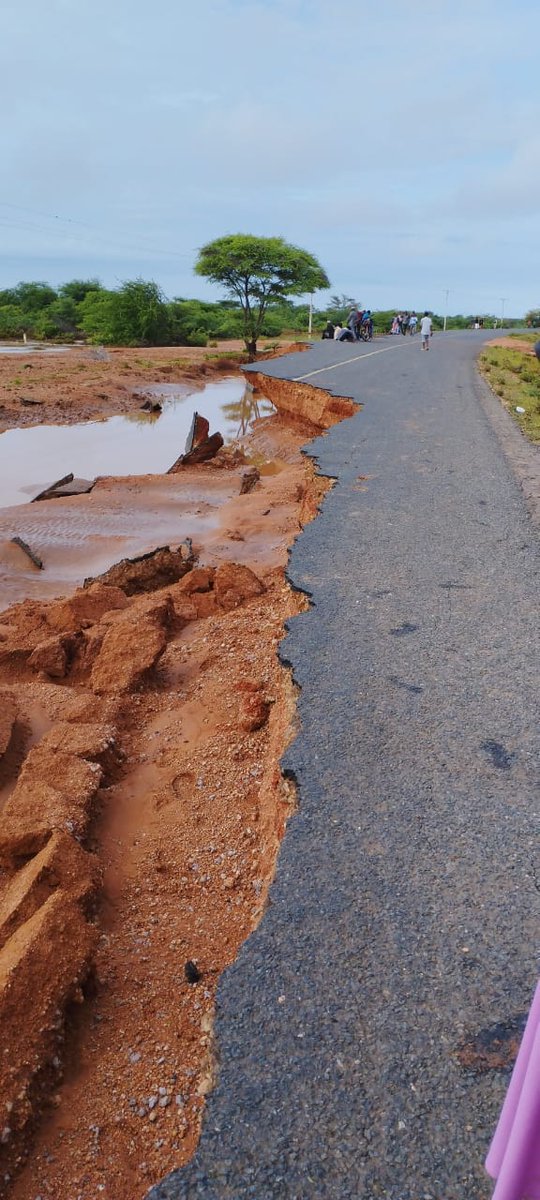
If you are planning to travel to Garissa from the Nairobi and vice versa, be advised to stay where you are or use a flight, the road has been fully swept by floods at around Bangale Area.
In many cases, plastic packaging will outlast the product its wrapped around by years, or even decades.
It's time to switch to reuse and refill, and #BreakFreeFromPlastic.
🥤Plastic🥤 produces climate-harming emissions at every stage of its lifecycle 😱.
From the moment the oil or gas 🛢used to make it is extracted from the ground 🛢️, to when it is burned in an incinerator 🔥, or degrades in a waste dump or the ocean 🌊.
1/ Plastic is a HUGE contributor to our growing #climatecrisis. So why on Earth is @UN welcoming @CocaCola - one of the world's largest plastic polluters - as a sponsor of the upcoming #COP27 ? Allowing a major polluter to use the event as greenwashing = a BAD look for the UN.
Fishers take over 100 plastic bottles to the lake daily, of which 25% don't return.
In the lake, plastic debris find way into humans through the food chain.
While there are various biodegradable fishing floats fishers say they cannot afford.
@Mugira
https://t.co/YQPZ3zcmnT
Don't believe the hype. "Compostable" plastics are largely not compostable + bring a host of other problems & emissions. Reusables are the only true solution to our plastic and climate crises. https://t.co/1Pn3Kqq0ET
The abrupt decision to lift GMO ban essentially curtails the freedom of Kenyans to choose what they want to eat. It's time we have an inclusive participatory process to look into food security issues. @routetofood@ISFAAKE@BIBA_Kenya#StopGMOs#KataaGMOs https://t.co/9xOVM9ZHwA
The plastic crisis has deep corporate roots:
The industry promotes the weakest form of the circular economy -recycling- which means production can keep going despite the reality that most items going into a recycling bin will end up being burned or dumped.https://t.co/lNobCLLWW6
More than $50 billion of foreign aid finds its way in Africa, annually.
But available data shows over 75% of the world’s poor live in Africa today.
Is Foreign Aid compounding Africa’s problems?
How much is it delivering sustainable economic growth?
https://t.co/mPz7i5Y8Sq