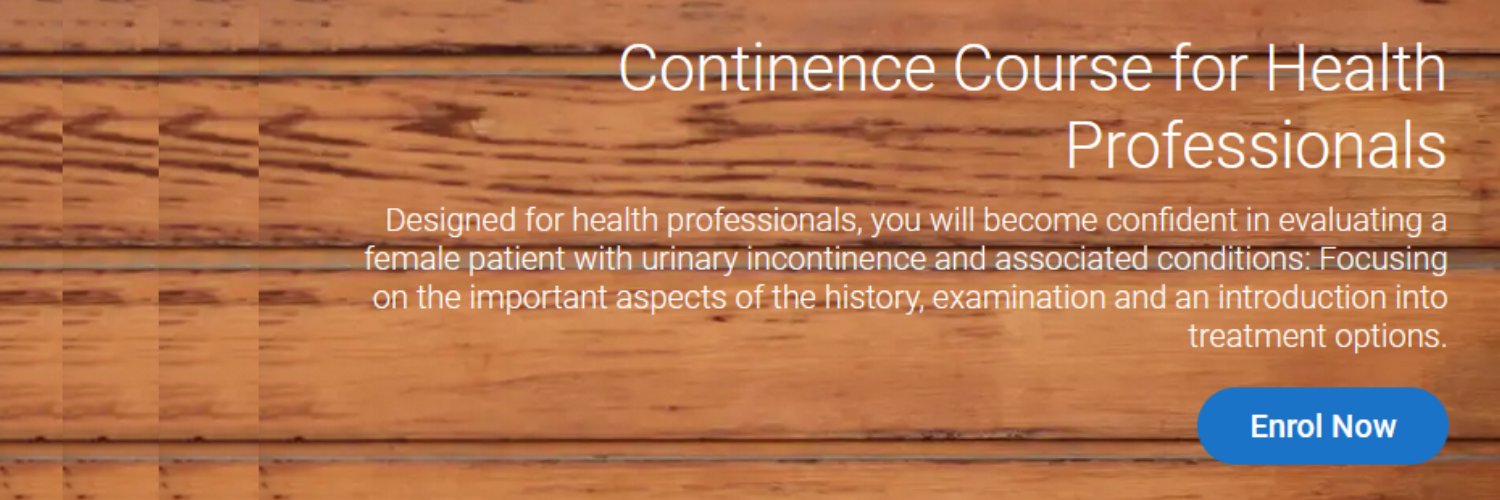
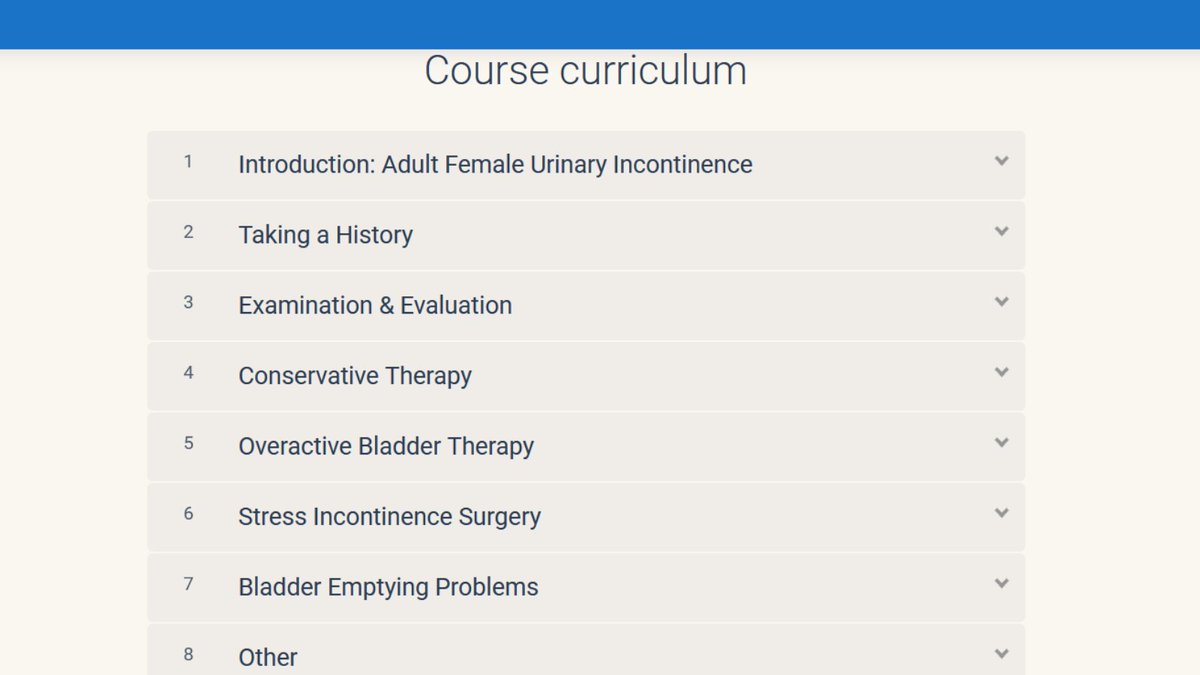
View the expanded course curriculum here: https://t.co/vQTkjBYVjX 42 of the 50 lessons are videos, average duration 2 minutes, 50 seconds. Total viewing time 2 hours. Find out more in the thread below.
The AMA awards made page three of today's Advertiser. Thank you to Bethany Griffiths and The Advertiser for the coverage, and congratulations to Dr Daniel Byrne, recognised for more than 30 years of service to general practice in South Australia.
One clarification, because the record matters. I was Australia's first urologist to sub-specialise exclusively in female and functional urology. I was not the first to work in this field. Professor Helen O'Connell AO, with whom I completed my fellowship, was doing this work long before me, and it was her training that made mine possible. Firsts are never achieved alone.
Image: The Advertiser, 1 September 2026, article by Bethany Griffiths.
Hashtags #AMA26 #WomensHealth #Urology #WomenInSurgery #WomenInMedicine
https://t.co/Qhs1e5Ylv2
Another robot dog from Geneva, and this one is nothing like the last.
The Unitree I walked earlier in this series is a companion. Boston Dynamics' Spot is a piece of industrial equipment that happens to have four legs. The grey box on its back is a camera, the cylinder behind it a laser scanner that builds a 3D map of everything around it. It carries 14 kg of whatever the job requires: thermal cameras to find overheating equipment, acoustic sensors to hear a gas leak, detectors to sample the air.
What it does with them is the point. Spot walks a route on its own, gathers the readings, notices what has changed since last time, and returns to its dock to charge. It manages stairs, mud and ice, and works from −20°C to +45°C. It has been deployed on offshore oil platforms and inside Chernobyl.
Every one of those readings used to require a person. Someone climbing scaffolding, entering a confined space, flying to a rig, walking through contaminated ground.
Which is where my mind went next. We ask people to enter dangerous places in medicine too. Infectious wards during an outbreak. Collapsed buildings after an earthquake. Contaminated sites where the first job is simply finding out how bad it is. A machine that walks stairs, carries 14 kg and reports back could deliver supplies, carry samples out, or let a clinician see and speak to a patient without another person entering the room.
Not a machine doing what a human cannot. A machine going where a human should not have to.
#AIforGood #Robotics #WorkplaceSafety #DisasterResponse #AIinHealthcare
Today my father would have turned 100. He came to Australia in 1948 to study medicine at the University of Adelaide.
He graduated in 1955 and worked in England, Scotland, Malaya and Singapore before coming back to Australia. The clipping is from January 1962. Minyip, in the Wimmera, population 800, ten beds. He was the only doctor. My English mother was only 23, and her family were in the UK, when travel to Australia meant weeks on a boat.
Before I was born, they returned to Adelaide and built a house in Paradise, an Italian area surrounded by market gardens that are now houses. He learnt Italian and looked after the local migrant Italian community, at a time when almost no GP in Adelaide spoke Italian. We were often paid in produce, more than we could eat.
He practised at Glynde for 55 years. Patients have told me he delivered them, and that he delivered their mother.
He worked seven days a week. I do not recall a single day, Christmas included, without home visits. His patients knew they could ask him to come to their house, and at the end of a long clinic he would go, coming home to eat after everyone else, or eating with us and heading out again.
He operated at Modbury and North Eastern Community Hospital when GPs still did obstetrics, hernias, appendicectomies and tonsillectomies.
He was still going to hospital grand rounds in his eighties. He never stopped learning, a habit I gratefully inherited.
He died nine years ago. People still stop me to tell me what he did for their family. Recently a woman I have never met messaged me to ask whether her childhood doctor was my father. She wanted me to know she was still grateful for the care he gave her family.
His grandson is now the third generation of our family to study medicine at Adelaide University, 78 years after my father arrived.
A note on the clipping. He was Sri Lankan. His parents had migrated from Sri Lanka to Malaysia. And for anyone doing the arithmetic, the paper had his age a year out.
#GeneralPractice #RuralHealth #Medicine #AdelaideUniversity
For ten years I wanted a bladder diary app my patients wouldn't have to pay for. This year, with AI and no coding background, we built it ourselves. Free, ad free, anonymous, self-deleting. For any clinician, any patient, anywhere: https://t.co/hHFatmYmb6
Sharing a free clinical tool for anyone whose patients need a bladder diary.
For years I wanted a bladder diary my patients could use without paying for an app or wading through ads, so this year my practice built one as a community service project. It is free, ad-free and anonymous, and it is deliberately not just for my patients. Any clinician's patients can use it, and the report goes to whoever requested it, not to me.
For your patients: it works in any phone browser with nothing to download, no registration and no login, and it never records a name. They log times and volumes over 3 days: output only, or intake and output if you want fluids, plus leaks, pad changes and ISC volumes where relevant. It records bed and wake times so nocturnal output is separated properly, and it calculates the nocturnal polyuria index automatically. At the end the patient exports a PDF report and emails it to your clinic or brings it printed. All data is hosted in Australia and permanently self-deletes after 30 days.
No commercial interest: there is nothing to buy and there never will be. Happy to answer questions.
The diary: https://t.co/pITJJ1mXq7
Clinician guide: https://t.co/AOKYTmMaBI
Ending the silence: Why I’m filming the stories Hollywood ignores.
During my talk at SOUTHSTART, I shared why I believe AI is the ultimate gatekeeper-remover.
#SOUTHSTART#AIFILM#SOCIALIMPACT
What if a medical consultation could take just eight minutes?
Across China, digital health kiosks are beginning to make this a reality. In a matter of minutes, these kiosks can measure blood pressure, check oxygen levels, connect a patient with a doctor via video consultation and print a prescription, all for around 2 yuan, about the price of a cup of coffee.
This is not futuristic technology. It is already being used to improve access to healthcare.
China is currently one of the global leaders in digital health, a sector valued at 128 billion RMB (approximately €17.6 billion). In 2023 alone, the Chinese government invested 3.2 billion RMB (€440 million) to expand telemedicine services, particularly in rural and remote regions where access to healthcare can be limited.
The concept is straightforward: if patients cannot easily reach healthcare services, healthcare should come to them.
More than 250 digital medical kiosks have already been installed in Shanghai metro stations, providing care for over 15,000 users each month. These kiosks are not intended to replace doctors. Instead, they support the healthcare system by managing simple consultations such as colds, skin conditions and minor illnesses, allowing hospitals to focus on more complex care.
One of China’s largest digital health providers, Ping An Good Doctor, has deployed 1,200 kiosks across 28 provinces, facilitating approximately 3.5 million consultations annually. By combining AI-supported symptom assessment with access to a network of 8,000 remote doctors, waiting times have been reduced by around 70% compared with traditional clinics, with patient satisfaction rates of 87%.
What makes this model particularly interesting is the collaboration between artificial intelligence and human expertise. The kiosks use AI to conduct an initial assessment, but every prescription must still be reviewed and approved by a licensed doctor before it is issued.
Currently, these kiosks can dispense 38 approved over-the-counter medications, covering common conditions such as colds, minor allergies and skin irritation. This is an example of how technology can support doctors and improve efficiency, rather than replace clinical judgement.
Healthcare is an area where safety and trust are essential. To ensure this, companies developing these systems must obtain multiple operating licences, and every AI algorithm must pass strict certification tests. Each kiosk is also inspected every three months to ensure it is functioning safely and reliably.
Major technology companies are helping drive this transformation.
• Ping An Good Doctor, 1,200 kiosks, 3.5 million consultations annually, 87% patient satisfaction
• Alibaba Health, 500 hybrid clinics combining AI with doctors, delivering 2.4 million AI-assisted diagnoses in 2023 with 94% accuracy for common conditions while reducing healthcare costs by 30%
Looking ahead, analysts predict that the number of kiosks could reach 15,000 nationwide, with 40% of China’s population using telemedicine services by 2027.
If each kiosk helps even 10 patients a day, that represents 150,000 health interactions daily, the equivalent of providing care to a small city through digital technology.
For rural and remote communities, innovations like these could play an important role in improving access to timely healthcare, early diagnosis and preventative care.
Read more: https://t.co/2fvjXIzeHz
#DigitalHealth #Telemedicine #HealthcareInnovation #FutureOfHealthcare #HealthTech #AIinHealthcare #SmartHealthcare #RuralHealthcare #HealthcareAccess #HealthEquity
Scene2 of Unconscious Bias explores the “Manel”, all-male panels that unintentionally exclude diverse expertise. When stages lack diversity, innovation suffers. Expanding the stage means inviting every expert voice to lead.
https://t.co/n1O8n4a3Zw
Why I’m using AI to solve the “small” problems (and why AI accessibility matters).
I’ve been exploring how we can use AI for "good" in our everyday lives.
I have bad hips. The idea of getting down on my knees to scrub a shower recess isn't just a chore, it’s a physical impossibility.
So, I sat down with AI. Not for work, but to solve a household problem. I asked for the most time-efficient, zero-scrub way to remove buildup and keep a shower clean without the physical toll.
The Result: My "No-Scrub" Standing Regime. It even told me what aisles to find the products at my
local Bunnings store.
1. The "Great Reset" (Initial Deep Clean)
• The Mould Blast: Selleys Rapid Mould Killer. Use chemistry to do the work. Spray, wait 3 minutes, rinse. No scrubbing.
• The Scum Melt: OzKleen Shower Power. Let it sit for 2 minutes to dissolve the cloudy mineral buildup, then rinse.
• The Accessibility Hack: Since I have a fixed rain shower head, I can't rinse the walls easily. AI suggested a garden pressure sprayer. Now I can blast the grime away while standing comfortably.
• The Final Polish: A squeegee and a quick microfibre wipe to get the walls bone dry. This resets the surface so the maintenance actually works.
• The Shield: Apply Peerless JAL Clean & Bead. This acts like a raincoat for your shower, making water and soap slide off before they can stick. This "resets" the surface so the maintenance actually works.
2. The "10-Second" Daily Routine
• The Tool: An OXO Good Grips Squeegee.
• The Spray: Glitz Daily Shower Cleaner (mist and walk away).
• The Logic: If you remove the water and the "food" (soap scum) daily, mould can’t grow. Prevention > Remediation.
Why am I sharing this? Because I want to ensure that no one is left behind as we enter this new AI era.
AI accessibility isn't just about who can code; it’s about who can benefit. When we share these small practical wins, we demystify the technology. We show that AI is for the person with chronic pain, the time-poor parent, and the senior wanting to maintain their independence.
If you’ve been hesitant to use AI, start small. Don't ask it to change the world, ask it how to clean your shower. You might be surprised at how "human" the solution feels.
And for those interested in my prompt for the video created with Veo3: A cinematic, high-definition close-up of water droplets bead-rolling off a pristine glass shower screen in slow motion. Soft morning sunlight filters through a window, creating a bokeh effect. The bathroom is modern, luxury, and impeccably clean. Professional lighting, 4k, peaceful atmosphere.
@aifilm4good
#AIforGood #DigitalInclusion #Accessibility #ProductivityHacks #InclusiveTech #AIFilm
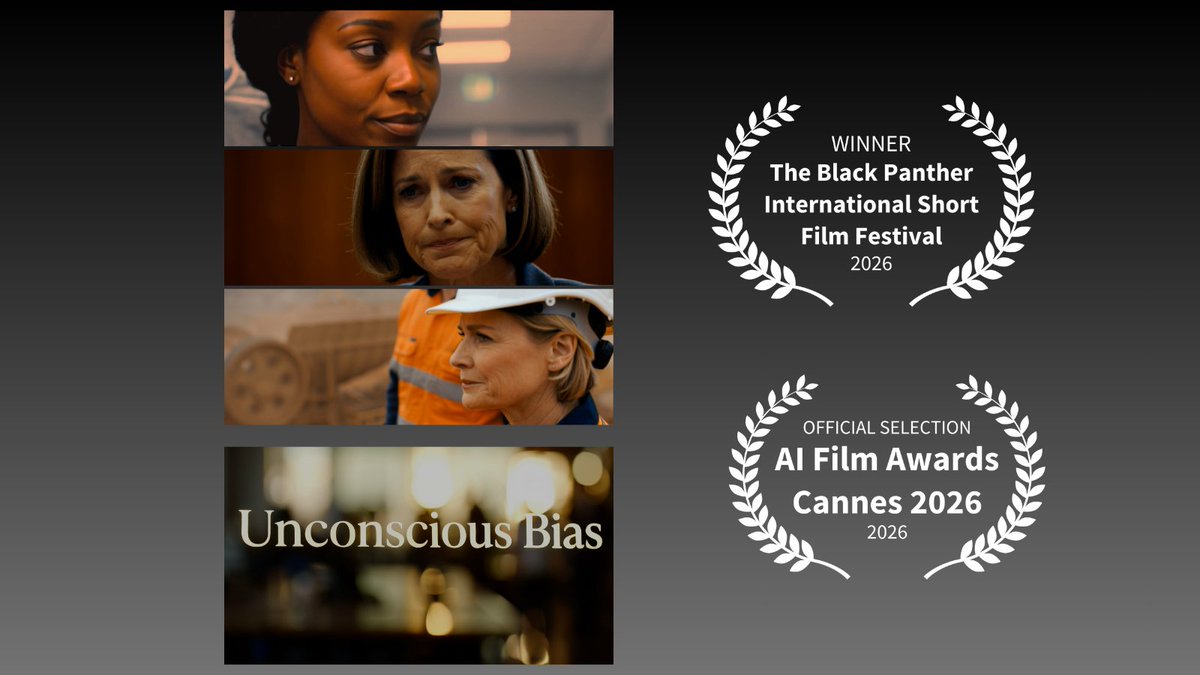
Since launching Unconscious Bias on Monday, the initial response has been incredibly encouraging, and we are thrilled to share that the film has just been Selected for the AI Film Awards Cannes 2026.
🎬 Watch: https://t.co/45tf4sZdz2
DM us for high-reso copy for your screening.
Our founder recently joined the Women in Oncology group to discuss the intersection of medicine and AI filmmaking.
The conversation highlighted a powerful shift: creating global impact no longer requires Hollywood budgets, just expertise, a story, and the courage to share it.
From Surgeon to Screen: Launching "Unconscious Bias" at RACS
Reflecting on a powerful International Women’s Day session last week...
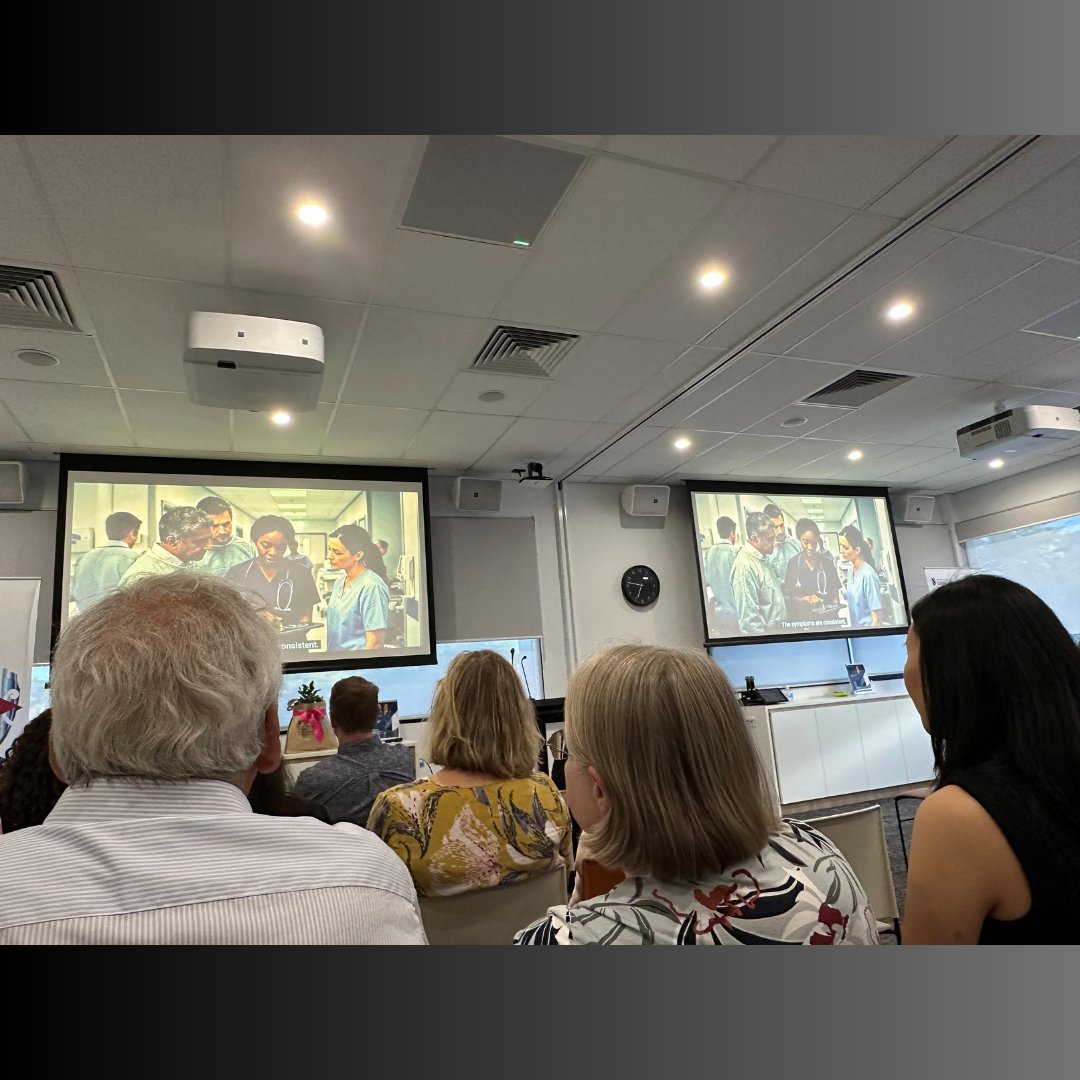
It was an honour to host the first public screening of "Unconscious Bias" at the Royal Australasian College of Surgeons (SA) International Women’s Day event last week.
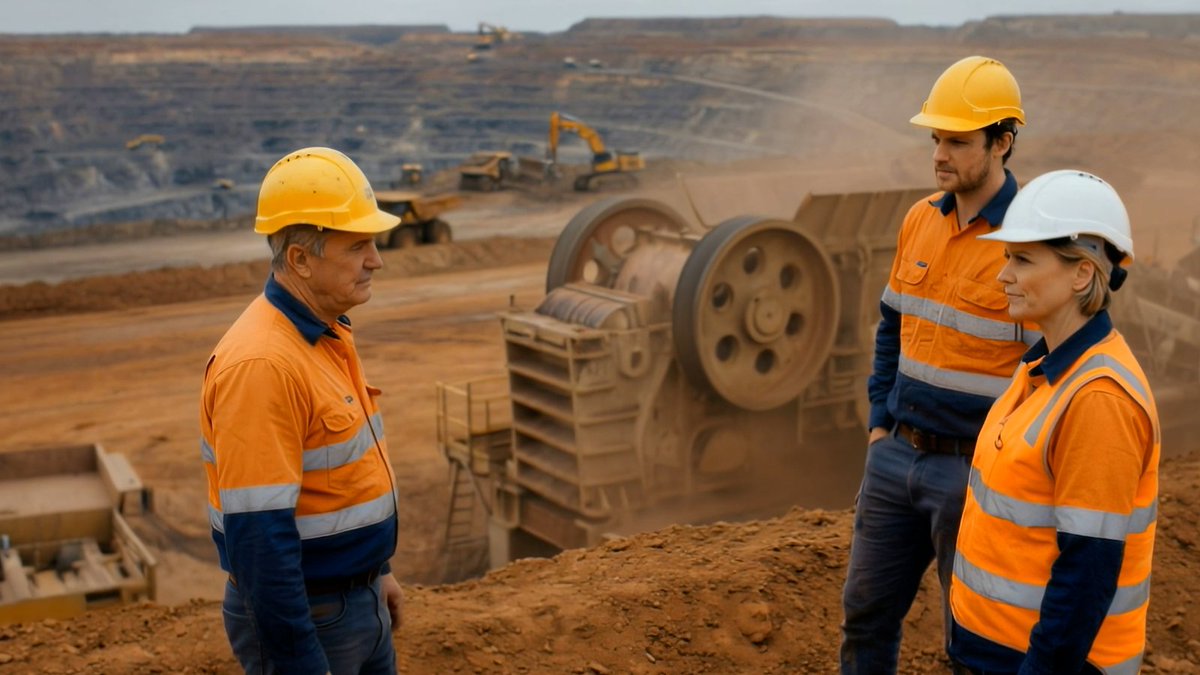
Sharing this project with my colleagues marks the beginning of a grassroots movement to move beyond simple awareness and toward genuine action. The film serves as a cinematic mirror of the "tax of disbelief" often navigated by women in high-stakes environments such as surgery, mining, and leadership.
I was inspired by Rosanna Stanimirovic, who shared her expertise on performing under pressure with Olympic athletes. The parallels for surgeons are striking. Maintaining peak performance requires not just technical skill, but the mental fortitude to recognise and mitigate the hidden biases that can influence our decision-making and team dynamics.
Together, we are working toward an inclusive culture where expertise is recognised without filter, and every professional is empowered to perform at their best.
Watch the 4-minute short here: https://t.co/fFMjvdigwT Learn more: https://t.co/KnqCMtCilG
@amapresident
#IWD2026 #WomenInSurgery #UnconsciousBias #HighPerformance #AIFilm4Good #Leadership
Unconscious Bias has won its first award at the Black Panther International Short Film Festival Created for #IWD2026, this 4-minute film reveals subtle workplace microaggressions women face—and invites self-awareness, understanding, and allyship. https://t.co/7epyIwqmn5
When the title is only the beginning. In Unconscious Bias we see “The Authority Flip”, when a woman’s expertise is quietly second-guessed. Recognising it builds stronger teams. 🎬 Selected for AI Film Awards Cannes 2026.
Watch: https://t.co/n1O8n4a3Zw
Headline: Scaling Global Impact from Your Desktop
Last week, I had the privilege of joining the Women in Oncology group to discuss the intersection of medicine and the future of AI filmmaking.
The core of our conversation was simple: the global stage is no longer reserved for those with Hollywood budgets. It belongs to anyone with a story and a desktop.
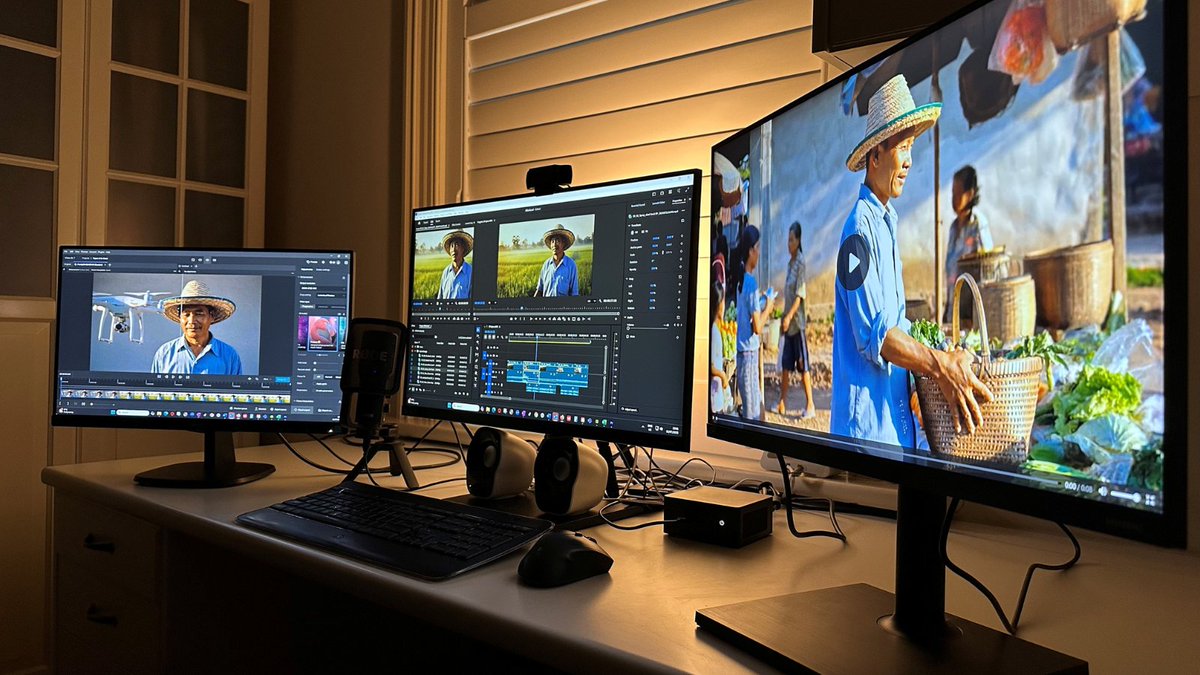
This photo shows my 'engine room', the place where my clinical background meets generative AI to create films like 'AI for Good'. For years, I’ve been passionate about telling the 'unsexy' stories; the medical stigmas and public health challenges that often go unheard.
AI has been the ultimate gatekeeper-remover, allowing me to scale human empathy and reach a global audience without leaving my desk.
As a urological surgeon and founder of AIFilm4Good, I believe we are entering an era where every professional can be a changemaker. We no longer need a massive crew to create world-class impact; we just need the courage to share our expertise through a new lens.
Thank you to the Women in Oncology for an inspiring dialogue. The future of advocacy is here, and it’s being built one frame at a time.
#PolymathChangemaker, #AIFilm4Good, and #WomenInOncology #WomenInMedicine #WomenInOncology #AIFilmmaking #GenerativeAI
We’re delighted to share that Unconscious Bias has been Selected for the AI Film Awards Cannes 2026.
Created to spark meaningful conversations about workplace equity and the “tax of disbelief,” this short film is designed to support deeper dialogue,particularly as organisations around the world mark International Women’s Day this week.
Drawing on lived experience in high-stakes leadership environments, the film highlights the subtle barriers many women encounter and invites audiences to reflect, discuss, and challenge unconscious bias in their own workplaces.
As a grassroots social impact project, the film is free for use in education, workplaces, and IWD events. If you’re planning an event or discussion this Friday, it may be a powerful way to start the conversation.
🎬 Watch the full film: https://t.co/bpWkOZFbD5
📩 For a high-resolution screening file: https://t.co/KnqCMtCQbe
#InternationalWomensDay #Leadership #WorkplaceEquity #UnconsciousBias #AIforGood
Deeply moved by the #IWD2026 breakfast at Government House with Her Excellency Frances Adamson AC. Sally Sara AM’s accounts of inequality in Africa & Afghanistan were a stark reality check. We are so lucky for our opportunities, and responsible for using them to lift others. 🧵
WORLD PREMIERE: "Unconscious Bias" is now live.
Today, to mark International Women’s Day, we are officially releasing a project that has been a quarter of a century in the making.
When I began my career as the first woman trained in adult urological surgery in South Australia, the world looked very different. Only 4% of surgeons in Australia were women.
I quickly learned about the "tax of disbelief", the extra emotional and professional labour required just to be recognized for my expertise.
"Unconscious Bias" is a mirror for those moments. From the operating room to the boardroom, we have used the cinematic power of AI to "uncover" the subtle microaggressions that often go unnoticed:
•The "manel" that excludes diverse expertise.
•The "hepeating" and "manterrupting" that silence vital voices.
•The "tone policing" that invalidates professional input.
Why This Matters Now
This film is a call for compassionate understanding and self-awareness. In an increasingly divisive world, we need to look out for each other more than ever. By uncovering the biases we carry, we can move toward a society where everyone feels valued and respected for exactly who they are.
How to Watch
The full 4-minute film is now available for you to watch and reflect upon.
•Watch the whole film on YouTube: https://t.co/bpWkOZEDNx
•Watch on our Website: https://t.co/KnqCMtCilG
Our Request to You:
Watch, Comment, Share. Your stories and reflections are the reason we founded aifilm4good.
Happy International Women's Day. Let’s change the lens together.
@unwomenaust@WomensAgenda@UN_Women
#UnconsciousBias #IWD2026 #InternationalWomensDay #AIFilm4Good #SouthAustralia #WomenInSurgery #ActiveAlly #Inclusion
To ensure 'Unconscious Bias' is available in time for your International Women's Day events and breakfasts throughout the week, we are now premiering on Monday, 2nd March.
Thank you to those organisations already interested in using the film. If you would like a private preview or a high-resolution file to screen at your own IWD event, please DM us or contact the team via our website: https://t.co/KnqCMtCQbe
Get ready to join the conversation early. 🔔
Watch the trailer and set your reminder here: https://t.co/bpWkOZFbD5
#UnconsciousBias #AIFilm4Good #IWD2026 #WomenInLeadership #IWD #genderequity
What if AI didn’t replace doctors, but supported us as a co-pilot?
In our latest article, I explore how AI could synthesise complex medical histories, flag medication risks, and analyse new research in real time, freeing doctors to focus on what truly matters: the human connection.
Technology should enhance care, not replace it.
Read more about “The AI Co-Pilot” and our vision for a more human future in medicine. https://t.co/NOILCWb9ML
#AIinHealthcare #DoctorBurnout #FutureOfMedicine #AIforGood