📣Out now! We're pleased to release the European State of the Climate 2025 report, published jointly by #CopernicusClimate@ECMWF & @WMO. Explore climate conditions, key events of 2025 in Europe, long-term climate indicators, climate policy and action for biodiversity,and more!⬇️
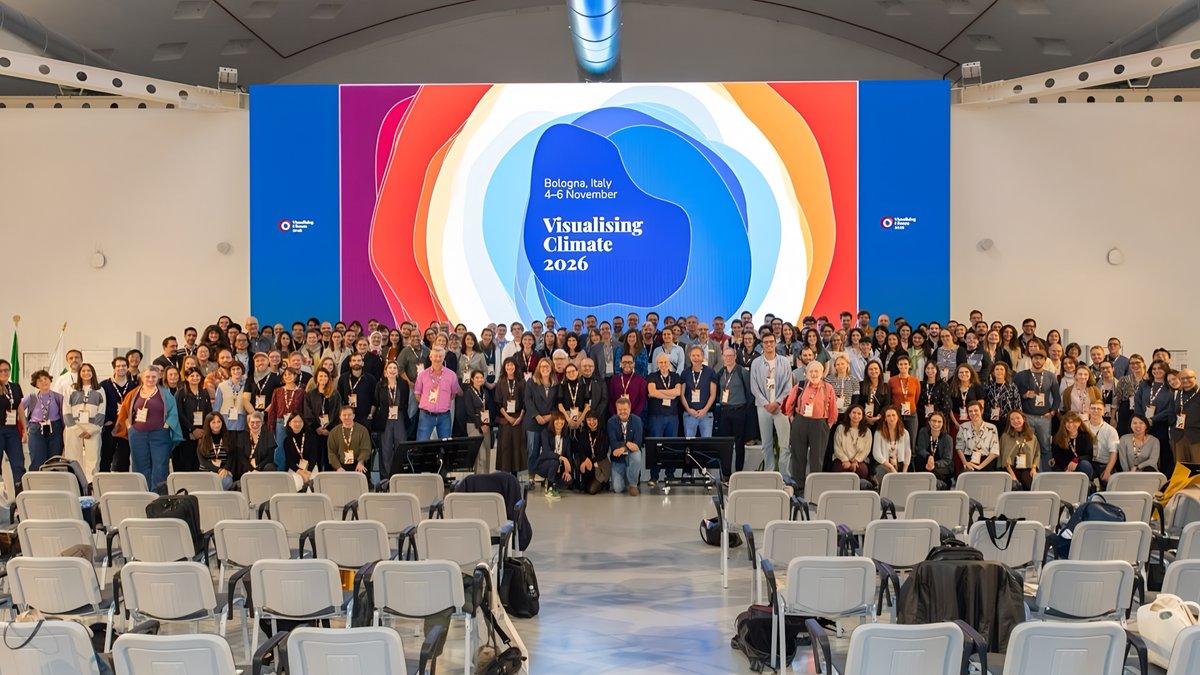
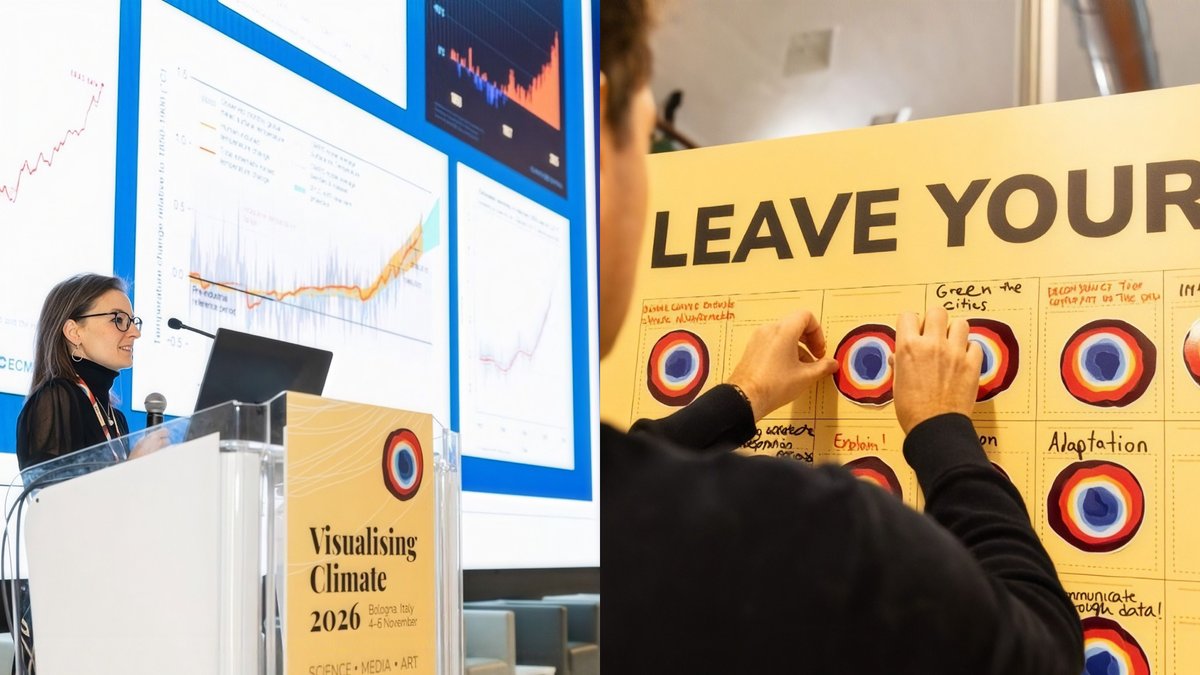
Do you know the story behind Visualising Climate 2026? Discover how the first global conference dedicated entirely to climate & environmental data visualisation came about, and what happens when science, media and art come together.
🔗 https://t.co/YtmHyMNlF4
#CopernicusClimate
What is El Niño, and where can its effects be felt? Discover our new guide to ENSO, covering its phases, the indices used to define the episodes, and its global impacts, including typical responses in Europe.
🔗 https://t.co/vMC8g0QRYV
#CopernicusClimate
11 grants, 1 principle: enhance collaboration between countries & increase #CopernicusAtmosphere data uptake for regulatory needs. Selected through a National Collaboration Programme call for proposals, they cover transboundary air pollution & much more.
🔗https://t.co/Ho9vqBN2my
In the wake of @turkiyecop31, emissions monitoring was central to the climate agenda. Richard Engelen, Deputy Director of #CopernicusAtmosphere, discusses the next steps towards an anthropogenic greenhouse-gas monitoring capacity.
🔗 https://t.co/nCstB0jqW7
Thanks for joining us in Antalya.
As @turkiyecop31 comes to a close, we’re proud to have taken part in several sessions and to have contributed an evidence-based perspective on tools, forecasting, resilience and emissions.
#CopernicusClimate#CopernicusAtmosphere
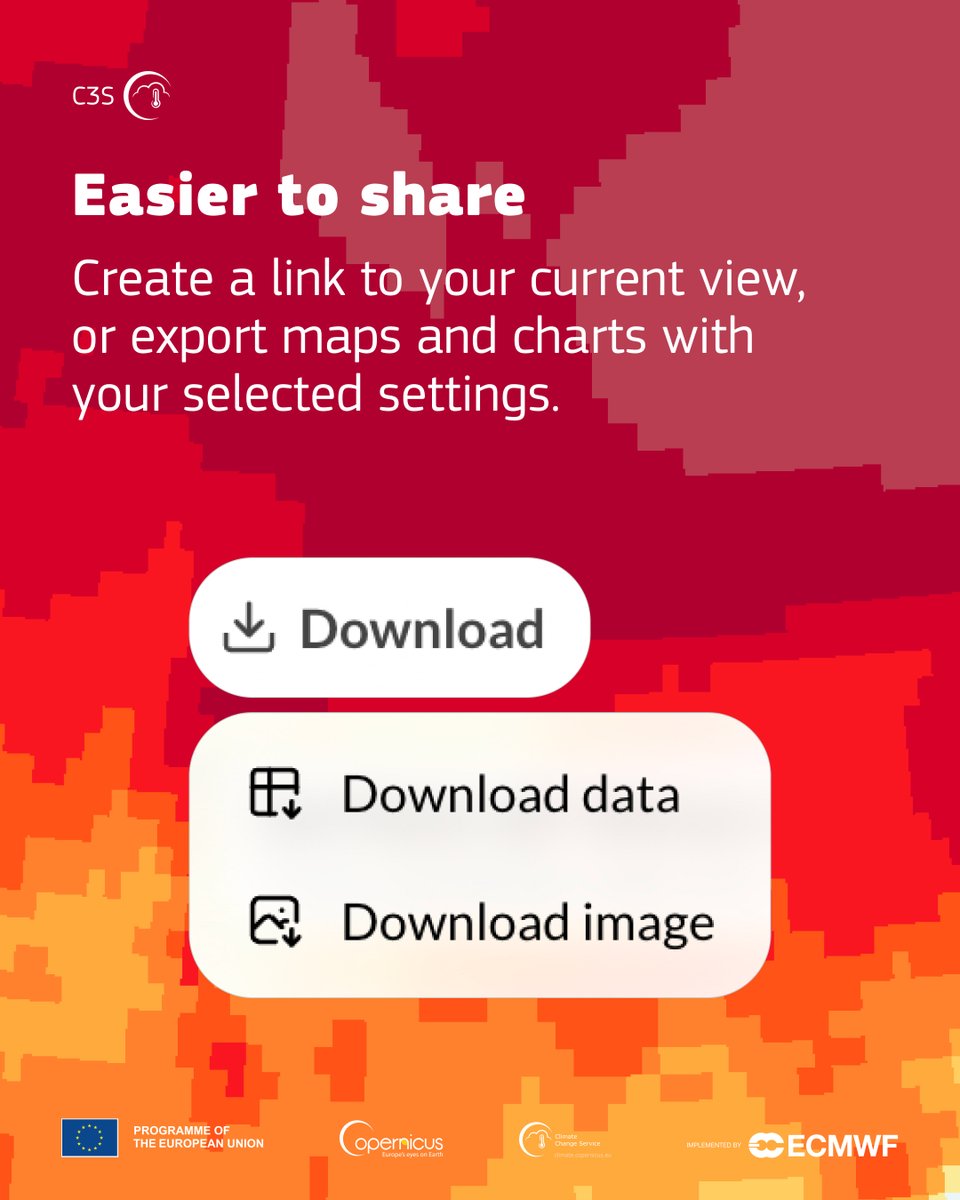
Climate Pulse 2.0 is here. Explore near-real-time data on global surface air and sea surface temperatures, with dedicated monitoring of El Niño conditions.
Explore the update: https://t.co/oh5oNqSe7S
#CopernicusClimate
Visualising Climate in first person! At the first-ever Visualising Climate conference, 200+ people from 28 countries met to discuss how we see & communicate climate change. Co-organiser Anna Lombardi reviews the successful even. Read more: https://t.co/YtmHyMMNPw
Understanding climate data is an online course from the #CopernicusClimate for professionals who want to explore different types of climate data and learn how to use them in their work.
📅 18 January–8 March 2027
💻 Online, self-paced, 25-30 hours
🔗 https://t.co/jpjDHwBUA8
Different types of climate data have different uses and limitations. Learn how to choose information for your needs with Understanding climate data: https://t.co/jpjDHwBUA8
⬇️
At @turkiyecop31, @LaurenceRouil, Director of the Copernicus Atmosphere Monitoring Service, joined the panel “From the sky to the stocktake” to discuss how combining atmospheric observations with inverse modelling can improve greenhouse gas estimates.
#CopernicusAtmosphere
Intensified by El Niño, fires in Indonesia persisted through October & November, bringing prolonged periods of very poor air quality to Southeast Asia. CAMS monitored fire emissions & regional smoke transport, which had major impacts on human health.
🔗 https://t.co/RFyRxERv6b
Today, Laurence Rouil, Director of #CopernicusAtmosphere at ECMWF, will take part in two sessions on atmospheric observations and greenhouse gas emissions at COP31. Explore the programme: https://t.co/YXjeYstZnO
At @turkiyecop31, #CopernicusAtmosphere Director @LaurenceRouil spoke at "Air & Climate: Co-Benefits in Cities". Hosted by Almaty Air Initiative, the session explored how data, research, public engagement & policy can help scale air-pollution solutions across cities.
How can air pollution reduction solutions reach more cities? Laurence Rouil, Director of #CopernicusAtmosphere at ECMWF , joins the discussion.
Watch today’s session: https://t.co/POt4J3Bhm9
#CopernicusAtmosphere
Last day to register for the CAMS User Intelligence Workshop in Warsaw, on 18 November 2026. The workshop will explore Polish user needs & CAMS data use cases, with a focus on air quality, health and solar energy. Institute of Environmental Protection.
🔗 https://t.co/jX2QdKvQdq
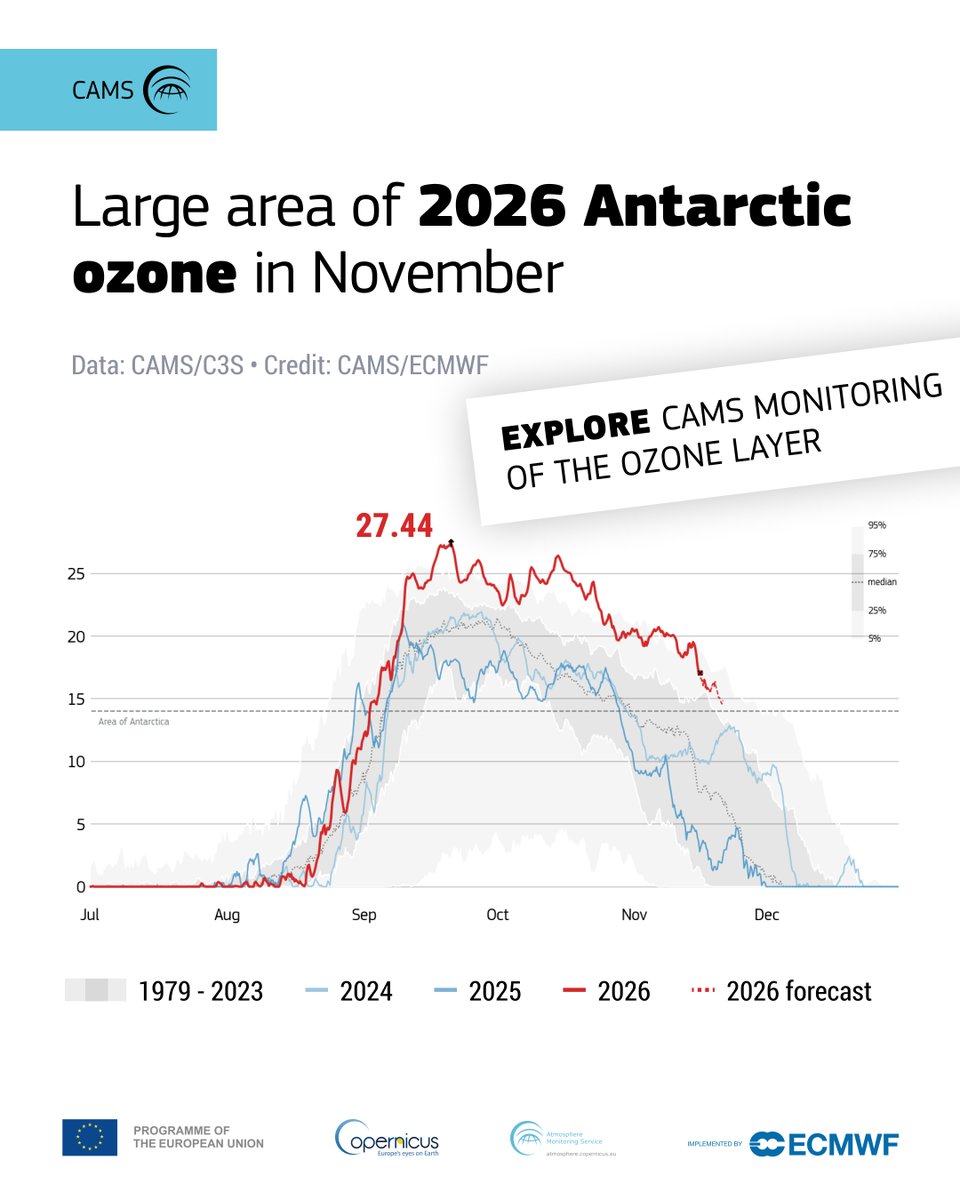
#CopernicusAtmosphere monitoring of the 2026 Antarctic ozone hole shows how it has continued through the first half of November, when it typically starts to close. The current area is about four times larger than at the same time last year.
Access the data https://t.co/ImkHEP5yMI
The conversations explored how better data can support early warnings, informed planning and resilience.
Explore the programme: https://t.co/YXjeYstZnO
Yesterday at @turkiyecop31, @LaurenceRouil, Director of #CopernicusAtmosphere at @ECMWF, took part in discussions at the Japan, Mediterranean and EU Pavilions. From GOSAT-GW observations to climate services and Earth observation.
⬇️