𝐈𝐭’𝐬 𝐚 𝐰𝐫𝐚𝐩!
Thank you to all the researchers who submitted concept notes for our 2024 Coral Accelerator Program.
We received a total of 𝟖𝟓 𝐩𝐫𝐨𝐩𝐨𝐬𝐚𝐥𝐬 involving 600 researchers from 89 countries worldwide. For the first time, we also received submissions from Belgium, Cameroon, Gibraltar, Ireland, Mauritania, Namibia, Puerto Rico, Qatar, Uruguay and Yemen.
The review process is now underway. Our Scientific and Advisory Committee will thoroughly evaluate all submissions, and we’ll be sending invitations for full proposals before the end of the year.
By supporting projects that address diverse and complementary topics, we aim to rapidly advance science, leading to significant discoveries, innovations, and improvements in coral protection and restoration.
This year’s call requested a total of 𝐔𝐒$ 𝟏𝟎𝟗 𝐦𝐢𝐥𝐥𝐢𝐨𝐧 in funding. In our previous two editions, we successfully funded 𝐔𝐒$ 𝟐𝟖 𝐦𝐢𝐥𝐥𝐢𝐨𝐧 worth of research projects. However, there remains a significant funding gap between what research teams request and need, and what CORDAP can deliver.
You can help us bridge this gap by supporting impactful science and innovation that brings us one step closer to securing a safe future for corals.
Learn more about how to directly support the science that will change the future of corals and humans by visiting https://t.co/553F3DR5Lh
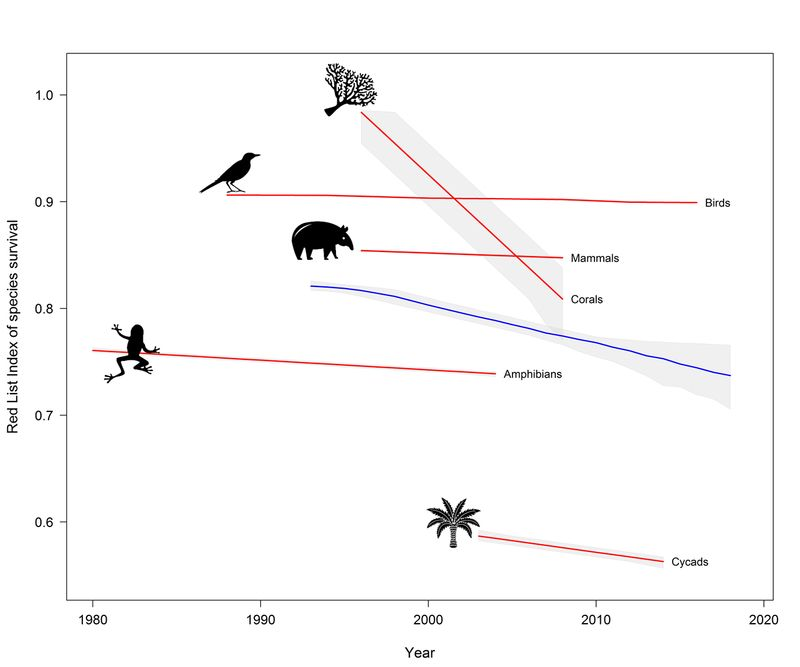
Estimates based on the @IUCNRedList tell us that one million species are currently threatened with extinction.
Parties to the CBD must halt and reverse biodiversity loss to achieve a #NaturePositive world by 2030.
Our updated Issues Brief:
https://t.co/vIX6uFtIrb
via @IUCN
How can we select the best corals for restoration?
On the last episode of “To the Rescue of Corals” we present you the ASSIST project. Led by Sebastian Szereday from @CoralkuMY , ASSIST is redefining how coral nurseries are selected, ensuring the survival and resilience of vital coral ecosystems. The team spans across Malaysia, the USA and Germany and it includes members from Coralku, @TritonOES and @UniKonstanz .
More than 2500 corals from 12 species will be grown across 33 coral nurseries, and the team will compare three distinct restoration procedures, testing the success rate of targeting known heat-tolerant corals for restoration.
CORDAP is supporting numerous research initiatives across the globe through the Coral Accelerator Program (CAP) to save corals from functional extinction. You too can help us secure a safe future for corals. Learn how you can join our mission by visiting https://t.co/HYGGZwYHpl .
___
CORDAP would like to thank the research team for the media contributions
Fieldwork (videos): Khaichuin Sim, Kok Lynn Chew, Sebastian Szereday and colleagues
Drone (videos): Khaichuin Sim
Voice over: Bartolomeu Paes
Elsevier is one of the largest, most hated and most influential academic publishing companies in the world.
How it started & how it's going
A thread🧵
@YiKbnL Tourists are not the reason for coral bleaching, so limiting numbers will not work. But as the article describes, there are many key issues that need to be addressed too, which could be done and many efforts are in place to reduce tourist impacts.
"At Pulau Lang Tengah, Terengganu, surveys found mortality of corals was 49% on average after the heat stress peak, says marine ecologist Sebastian Szereday, founder and lead scientist of Coralku."
https://t.co/u4Kk66Yu1x
Can nutritional supplements help corals thrive?
In this episode of "To the Rescue of Corals," get to know the CoraBoost project. Led by Dr. @emmafcamp from the University of Technology Sydney, this project brings together coral researchers and restoration experts from @UTSEngage , Centre Scientifique de Monaco, Monsoon Aquatics, @CoralkuMY , University of Malaya, Gili Matra Bersama Foundation/Coral Catch, and @SharkGili Conservation.
The team is developing a groundbreaking nutritional supplement called 'CoraBoost' to improve the quality and quantity of nutrients available to corals, helping them delay or mitigate the effects of coral bleaching.
G20 CORDAP's funding call is open until October 21, 2024, with grants of up to USD$ 1.5 million per project. Learn more and submit your proposal at https://t.co/IHAiNckeP3 .
___
G20 CORDAP would like to thank the research team for the media contributions
Laboratory (videos): Emma Camp and colleagues.
Fieldwork (videos) | Boat (videos) | Drone (videos): Rolex and Daphne Boulicault (Proudfoot)
interview on our article "Coral reef protection is fundamental to human rights" explaining our motivation & changes this could instigate, nice background & perspective I think! https://t.co/6VkcvZgsw3 (German only atm) @UniKonstanz
Here’s a wave of GOOD NEWS for corals.
Coral reefs that recover after disturbance; young corals that are resilient in the face of climate change; innovative start-ups that will contribute towards ocean regeneration. Curious to know more?
This monthly wrap-up of good news brings you an extra dose of excitement and hope #ForCoral
Watch the video to unveil the #happyheadlines and follow the links below to read the articles
🪸CORDAP new awardees https://t.co/B6LpbvySVH
🪸Vida et al. (2024) https://t.co/h3kxgCxIDM
🪸Regenerative Blue Economy Challenge https://t.co/Y66v9iDxTB
🪸Miller et al. (2024) https://t.co/rJy5F1AqYk
🪸Uribe-Castañeda et al. (2024) https://t.co/wqWixaJRzu
What's your favourite news? Tell us in the comments!
#oceannews #forcoral #corals #coralrestoration #research #coralreefs #coralbleaching #restoration #researchers #scientists #fisher #heatwave #challenge #blueeconomy #capacitybuilding
Coral reefs = the support system of 1+ billion people. To protect the livelihoods of so many people, shouldn't a healthy reef ecosystem be considered a human right? Our friends & collaborators provide a perspective 👇
Coral reefs support more than 1 billion people, so their loss would have significant ecological consequences as well as serious repercussions for communities worldwide. Check out our perspective on the link between reef consideration & human rights
https://t.co/bq1RKkJj8u
@ProfTerryHughes what about ensuring species survival? i.e., considering that things will continue to get a lot worse (even if all emissions would be stopped right now), how can we keep (a few) species alive in situ without creating genetic bottlenecks? thoughts on this?
@ProfTerryHughes Same news 20 years later: Back-to-back bleaching events in Peninsular Malaysia (2019–2020) selectively affect hard coral taxa across- and within-reef scales | Marine Biology (https://t.co/uR09YTNTqd)
@audreytrp All of Terengganu has experienced record breaking heat stress, and coral reefs in the area are in the worst condition they probably ever been. The region is overfished, and many iconic marine species are locally gone. How can a single whale sighting suggest healthy ecosystems?
On the quest to help secure a safe future for corals, CORDAP is funding research projects around the globe that challenge the science we have today and seek innovative solutions to help corals thrive and overcome some of the many threats they face..
Premiering in September 9, 2024, “To The Rescue of Corals” will take you to unique locations across the planet, showcasing 14 groundbreaking international research projects supported by CORDAP through the Coral Accelerator Program (CAP), each led by passionate scientists dedicated to saving corals and coral reefs.
Join us in this virtual scientific expedition and become part of #TeamCoral.
To learn more about the projects supported by CORDAP visit https://t.co/IHAiNckeP3
#corals #coralreefs #forcoral #CAP2022 #webseries #research #scientists #researcher #saveourseas #ocean #oceanliteracy #innovation #technology #climatechange
1. Corals reefs in northeast PM Malaysia are presently experiencing the worst regional coral bleaching event on record. Our recent study details the first back-to-back bleaching event previously in 2019-2020: https://t.co/p44iQZEit5
by @Szereday@reefgenomics & AYA.
Results 👇:
5. As part of our @CORDAP_ funded project to identify resilient corals for restoration, we are re-surveying the marked transects to monitor the 2024 bleaching event. Such repeated assessments provide rare & crucial insights into the dynamics & outcomes of repeat bleaching events.