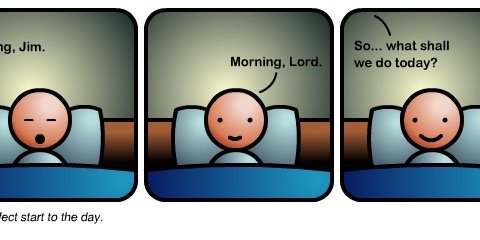
A timeline of one man's cunning inheritance tax scheme.
2008: Buy a thousand acres in Oxfordshire. Tell The Times that dodging inheritance tax is the critical thing. Scheme live.
2009 to 2018: Do absolutely nothing. A villager farms it on contract. Flawless.
2019: The villager retires. Rather than hire another one, decide to farm a thousand acres yourself, having never grown anything.
Also 2019: Invite a film crew.
2020: Rain for nine weeks. Profit on a thousand acres: £144.
2021: Broadcast the £144 to the largest streaming platform on earth, thereby informing the entire planet that farmland makes nothing.
2021: Open a farm shop. Acquire a queue down a lane and the undivided attention of West Oxfordshire District Council.
2022: Restaurant refused. Enforcement notice. Six weeks to take a barn apart.
2023: Lose the appeal. Lose it again.
May 2024: Accidentally get English planning law rewritten. Lawyers name it Clarkson's Clause.
August 2024: Open a pub selling only British food. Sell your own sausage at 74p against 18p imported, and eat the difference on every plate.
October 2024: The Chancellor caps agricultural property relief at a million. Scheme dead.
November 2024: Stand on a platform in Westminster in front of thirteen thousand farmers, drawing maximum national attention to the exact tax break you were supposedly hiding behind.
July 2025: Go down with TB. First calf ever born on the farm destroyed, pregnant with twins. Gate padlocked.
23 December 2025: Government retreats. The threshold goes from one million to two and a half. Five million for a couple.
March 2026: Farm declared clear.
July 2026: Drive four hundred miles to Scotland and buy more cows.
Eighteen years.
Planning law changed. Agricultural degree applications climbing. Cited in the Commons more times than most ministers manage. Half the estates that were going to be caught by the tax are no longer caught by it.
He was accused of buying a farm to dodge inheritance tax, and then spent eighteen months getting the relief raised for everybody else's.
Worst tax dodger in British history.
Best thing to happen to British farming in fifty years.
@fesshole I was 47 when my son was born, he turns 10 this December and I feel younger now than I did before his birth. Don’t stress it and enjoy the experience
@fesshole Worked for a farm feeds company as a delivery driver, after the third cat hitched a lift to our yard I got really good at checking everywhere in the lorry before driving off
Never been more disappointed with @GiveBloodNHS than today - don’t overbook sessions then cancel appointments by text with less than an hours notice BUT tell me when I arrive (already en route) if I’d booked after 6:30pm “those appts are never cancelled” 😡 a slap in the face
@TeresaDriscoll What an inspired partnership - as a family we sit together holding our collective breaths during their dances and there is silence in the room, only couple that happens with
@MathewsAnnika The process is soul destroying - been through it 3 times in 25yrs and rejected at BAP on the last go. So many people saw my call (from age 16) and moved me forward yet the church hyper focussed on academic achievement above that. Now 56 & just attend, going through the motions
On November 7th, 1920, in strictest secrecy, four unidentified British bodies were exhumed from temporary battlefield cemeteries at Ypres, Arras, the Asine and the Somme.
None of the soldiers who did the digging were told why.
The bodies were taken by field ambulance to GHQ at St-Pol-Sur-Ter Noise. Once there, the bodies were draped with the union flag.
Sentries were posted and Brigadier-General Wyatt and a Colonel Gell selected one body at random. The other three were reburied.
A French Honour Guard was selected and stood by the coffin overnight of the chosen soldier overnight.
On the morning of the 8th November, a specially designed coffin made of oak from the grounds of Hampton Court arrived and the Unknown Warrior was placed inside.
On top was placed a crusaders sword and a shield on which was inscribed:
"A British Warrior who fell in the GREAT WAR 1914-1918 for King and Country".
On the 9th of November, the Unknown Warrior was taken by horse-drawn carriage through Guards of Honour and the sound of tolling bells and bugle calls to the quayside.
There, he was saluted by Marechal Foche and loaded onto HMS Vernon bound for Dover. The coffin stood on the deck covered in wreaths, surrounded by the French Honour Guard.
Upon arrival at Dover, the Unknown Warrior was met with a nineteen gun salute - something that was normally only reserved for Field Marshals.
A special train had been arranged and he was then conveyed to Victoria Station, London.
He remained there overnight, and, on the morning of the 11th of November, he was finally taken to Westminster Abbey.
The idea of the unknown warrior was thought of by a Padre called David Railton who had served on the front line during the Great War the union flag he had used as an altar cloth whilst at the front, was the one that had been draped over the coffin.
It was his intention that all of the relatives of the 517,773 combatants whose bodies had not been identified could believe that the Unknown Warrior could very well be their lost husband, father, brother or son...
THIS is the reason we wear poppies.
We do not glorify war.
We remember - with humility - the great and the ultimate sacrifices that were made, not just in this war, but in every war and conflict where our service personnel have fought - to ensure the liberty and freedoms that we now take for granted.
Every year, on the 11th of November, we remember the Unknown Warrior.
At the going down of the sun, and in the morning, we will remember them.