Like a hack writer or a friend rehashing their glory days over and over, artificial intelligence tends to tell the same old story. For AI agents instructed to write fiction, that tale usually involves lighthouses and a keeper named Elias, according to new Cornell research.
Nearly 90% of AI-generated fictional stories written by current large language models (LLMs) like ChatGPT and Claude include at least one of 11 reocurring words, including “lighthouse,” “keeper,” and the names “Elias,” “Mara,” and “Elara,” researchers found when directing LLMs to tell stories. More than half of AI-generated stories featured a lighthouse.
They also found that part of the reason for these reoccurrences may be that many AI developers have trained LLMs on an important dataset created by Cornell researchers.
The team's findings highlight the homogeneous nature of AI-generated text when powerful LLMs are trained on increasingly similar datasets, researchers said.
Read more: https://t.co/7FX7dY0Ica
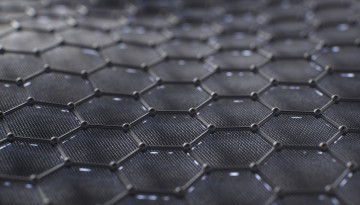
Cornell researchers have found a new way to control the quantum behavior of ultrathin materials.
By using electricity to slide graphene layers against each other, they can switch the material between different magnetic states, and those states remain even after the voltage is turned off.
Read more: https://t.co/saFchNLHwo
Two Cornell engineers set out to recreate lubricin, a slippery glycoprotein that keeps healthy knees, hips and shoulders gliding smoothly against each other for a lifetime. When joints are injured or age, lubricin production drops, friction rises, and cartilage begins to wear away, a process that can lead to osteoarthritis, a disease affecting more than 32 million adults in the United States.
Now, their discovery of a lubricin-inspired polymer has not only led to a start-up co-founded by one of their doctoral students but is also entering two separate first-in-human trials. The team aims to give patients a synthetic stand-in for a natural lubricant when the body stops making enough on its own.
The human trials in Australia will test the synthetic lubricin to treat osteoarthritis in the knees, and trials in Canada will test it as a remedy for dry eye disease. If successful, the innovations could become viable treatment options for sufferers.
Read more: https://t.co/IFCSbywr3P.
Cornell researchers have identified a molecular pathway that contributes to the death of insulin-producing beta cells in the pancreas.
The discovery suggests a new strategy to preserve the cells that regulate blood sugar and potentially treat Type 2 diabetes.
Read more: https://t.co/bbwF2eCb4V
A newly engineered gene editing system addresses some of the limitations of current gene editing tools — with the hope of improving their use for research, for better crops, or to treat diseases.
Read more: https://t.co/yHyJKFDxhA
Thanks to the exponential rise of AI, the rapid construction of large, gigawatt-gobbling data centers across the country has stoked concerns about how the power grid will hold up under this additional strain.
Cornell researchers have proposed a novel way to manage the increased demand for electricity: a credit market that would essentially allow data centers facing required cutbacks to pay flexible energy users to take on their obligations when the grid is strained.
Read more: https://t.co/fGcPXFi45E.
Mathematical models have necessarily reduced distant exoplanets to idealized circles – until now.
Leveraging observations by NASA’s James Webb Space Telescope (JWST) and a new mapping method called “transmission strings,” a Cornell-led international research team has for the first time resolved an exoplanet’s uneven contours.
The resulting shape — circle-like, of course, but slightly egg-shaped, with one more extended side — details how intense heat and whipping winds influence the atmosphere of the “hot Jupiter” WASP-17b, orbiting a star more than 1,000 light-years from Earth.
Read more: https://t.co/fIrHlElbCV.
Big Red will take on Lehigh University for our annual Homecoming game at 2 p.m. on Saturday, October 17, at Schoellkopf Field.
Preview the game at https://t.co/PWl1uupGfk.
Cornell researchers designed a method that could enable quicker screening of new therapeutic treatments. It's a new, faster form of two-photon fluorescence imaging for observing cell metabolism in real time.
Read more: https://t.co/eRkLTk9n5L
Cornell University supports the decision of the Tompkins County District Attorney to provide an opportunity for the victim’s story in the 2024 Chi Phi fraternity sexual assault case to be heard by a criminal grand jury.
Our statement: https://t.co/FIW8I8JYlU
Cornell University supports the decision of the Tompkins County District Attorney to provide an opportunity for the victim’s story in the 2024 Chi Phi fraternity sexual assault case to be heard by a criminal grand jury.
Our statement: https://t.co/FIW8I8JYlU
Scientists found a human genetic element in a poxvirus and discovered it was both an important gene for brain function and a jumping gene capable of moving and inserting itself in genomes.
A study published Sept. 24 in Science reports that the gene, called BC200, combines a mix of characteristics that have never been seen before.
Read more: https://t.co/6WMros5HnL.
The biologic drug interferon-alpha can benefit patients with blood cancers called myeloproliferative neoplasms by forcing mutant blood stem cells to become shorter-lived white blood cells, according to a study by Weill Cornell Medicine investigators.
Because the broad activity of interferon-alpha can induce significant side effects, developing new focused strategies based on these mechanistic findings could meet an important need in cancer therapy.
Read more: https://t.co/2ys2N8AB4X
Two new studies led by Weill Cornell Medicine investigators represent a big step forward in understanding metabotropic glutamate receptors and how they can be targeted effectively to potentially treat conditions such as epilepsy, depression, and anxiety disorders.
Read more: https://t.co/pGrJIf7PaQ
Scientists at Cornell have taken a step toward better understanding how fungi sense and respond to nutrients in the environment, which is critical for engineering fungi for green technologies and for combating fungal pathogens and their resistance to treatments.
https://t.co/HVEjs2EX13
Cornell researchers have developed a portable diagnostic test that can simultaneously detect and distinguish Ebola and Lassa, two serious viruses whose early symptoms can be difficult to tell apart.
https://t.co/Z2Hp3ROmVW