How the ancients remembered.
Whenever we see a documentary or read a history book about the ancient world, one thing that always stands out for me is how the so called “experts”, archeologists, palaeontologists, historians and others, seem to believe that our ancient history is somehow settled.
Yet when we actually look at the evidence,
we see it really isn’t.
Think about it.
The only evidence we ever find of earlier humans, are a few bones, stone tools and pottery fragments, some cave paintings perhaps.
But What we do see are their impressive and massive monoliths, temples, pyramids and ruined sacred sites, and a few distant whispers of old stories and oral folklore, passed on across time and generations.
As modern humans, we are obsessed with data.
Our entire world is data driven. We obsessively store information on hard drives and digital “clouds”. We assume those things will last forever. But they won’t.
All of that collective human memory will be gone.
In 100 years, very few people, if any, will remember we existed. In 1000 years, 5000 years, 10,000 years, 100,000 years, there will be barely any evidence our species even existed at all.
In the post apocalyptic movies we often see visions of our vast cities standing in ruins, claimed back by nature, overgrown with plants, trees and wildlife. But all of that would happen in less than 5 years once humans were no longer there to tend to them.
In a few hundred years, our concrete sky scrapers would be nothing but dust, our “cloud” would be long gone, the essential electrical components reduced to carbon and other base minerals.
Our cars, planes, ships and even our plastics, which we assume to be “forever” aren’t actually forever. All will be gone. Turned back to their base elements.
We live in an entropic system.
All things descend into entropy. All things decay, they get reduced back to their essential components; base minerals, carbon, iron, magnesium, zinc, the very basis of what our entire universe is built from, and it doesn’t take very long for it to happen.
The universe claims it all back.
All of this poses some interesting questions.
What if those massive stone monuments, temples, monoliths, pyramids and structures, are far more than just sacred burial sites, or monuments to track the stars?
What if they were actually deep time data storage devices? What if the land itself acted as anchor points for human knowledge?
When we think about it, all of these monuments and structures, like the great pyramid at Giza, Stone Henge, Gobekli-Tepi in Turkey, Chichen Itza in Mexico and similar other ancient sites, all of them have fascinating sacred, religious and acoustic acoustic qualities, which combine with rituals to honour, mark or remember something.
Ritual is how we enshrine memory. It’s how we remember.
In witchcraft we craft rituals as a way of remembering the dead, marking and remembering certain events, gathering combined knowledge and storing and sharing magickal wisdom. When we ritualise an action, we commit it to routine and memory.
What if all of these structures were meant as memory devices which combined ritual, to enshrine human knowledge and wisdom, across deep time?
Theres lots of ongoing research into this theory and what it can teach us, but every few weeks these important monuments are teaching us more and more.
We are only just scratching the surface of these fascinating monuments. They still have many more secrets to reveal. 💚
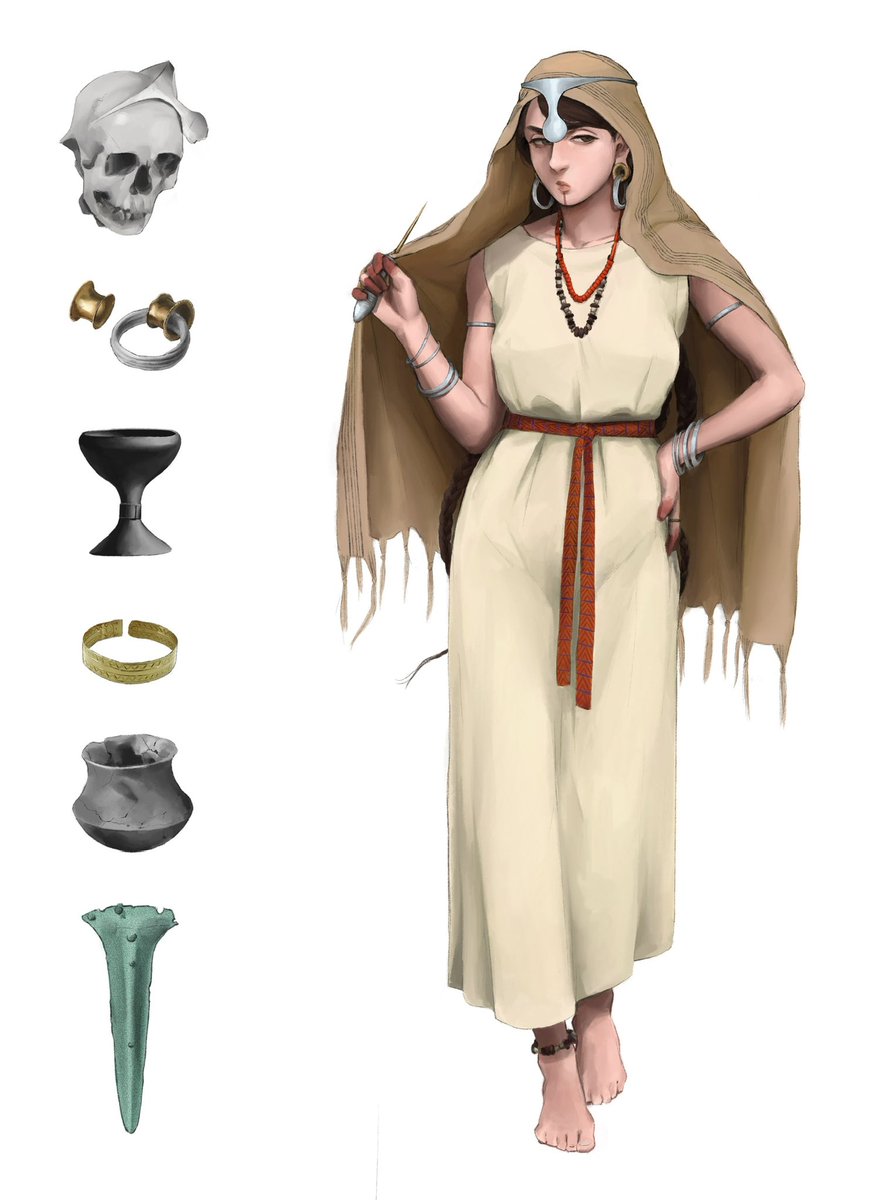
El Argar Culture - one of ancient societies that ruled the Iberian Peninsula in 2200-1550 BC. One of the most prominent features of this culture, which existed long before the Phoenician and Greek colonies settled in the region, is the customs of dead burial.
As in many civilizations, in El Argar (Argaric) culture, the otherworldly faith was the ruler and in this regard funerals would take place. The dead were often placed in coffins and cube-shaped bowls made of stone and boiled clay.
Grave objects can be placed according to the status of the deceased, and they would be allowed to accompany them in the other world. Sometimes these graves would reopen and a second body would be placed inside. It is possible to come across skeletons buried side by side in many graves belonging to El Argar culture.
📷 : The image depicts a burial from the Bronze Age El Argar culture (2200-1550 BC) in southeastern Spain 🇪🇸. This culture practiced a unique form of burial. The skeleton is placed inside a large ceramic vessel, known as a pithos, which was then buried. This type of burial is characteristic of El Argar culture, suggesting specific beliefs about death and the afterlife.
#archaeohistories
The Ardennes Draft Horse is considered one of the oldest breeds of draft horse.
Their history reaches back to Ancient Rome. The Ardennes breed is claimed to be descended from the horse described by Julius Caesar in his Commentarii de Bello Gallico.
https://t.co/0jrvCltivO