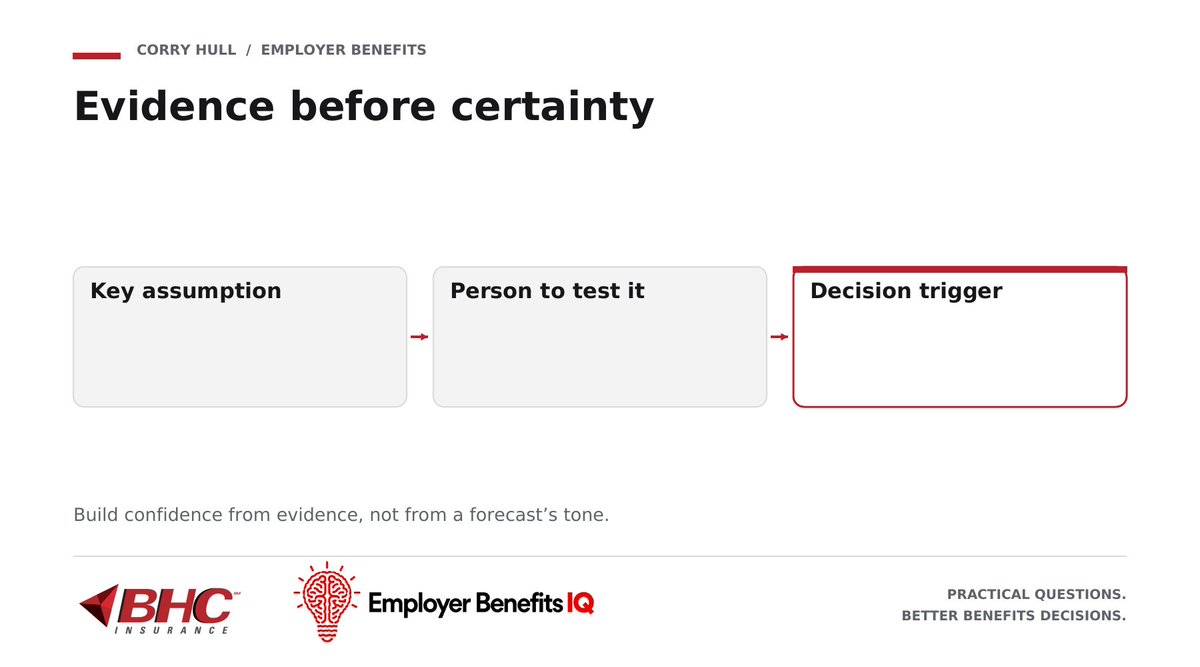
A meeting completed isn't a problem solved. Track benefits issues by owner, next action and verified resolution—not just updates from vendors. What outcome would make your next benefits committee meeting worthwhile?
#BHCInsurance#EmployerBenefitsIQ#BetterBenefits
Having access to claims data is not the same as purchasing control. Ask what contracts permit you to audit, challenge and change. What would you do differently if your employer had real purchasing authority?
#BHCInsurance#EmployerBenefitsIQ
Adding another benefits vendor can create one more handoff for HR to manage. Test who confirms eligibility, coordinates the care appointment and resolves the bill. Who owns the issue until it's finished?
#BHCInsurance#EmployerBenefitsIQ#BetterBenefits
Claims data tells you what happened, not necessarily why. Separate price, utilization, site of care and large-claim timing before choosing an intervention. What decision should your next claims report support?
#BHCInsurance#EmployerBenefitsIQ#BetterBenefits
The lowest stop-loss premium may leave the employer with greater retained exposure. Compare lasers, contract basis, exclusions and reimbursement timing using the same large-claim scenario. What would you test first?
#BHCInsurance#EmployerBenefitsIQ#StopLoss
A captive's first-year illustration is only the opening chapter. Model a bad claims year and an exit: who funds the deficit, what collateral remains, and when is it released? Which term matters most?
#BHCInsurance#EmployerBenefitsIQ#Captives
A 20% renewal increase warrants a funding review, not an automatic move to self-funding. Can finance manage claim volatility—and can HR manage the vendors? Which gap concerns you more?
#BHCInsurance#EmployerBenefitsIQ#SelfFunding
Open enrollment attendance isn't the same as understanding. Can a new hire find help with a confusing claim on a phone, without calling HR? What would that test reveal?
#BHCInsurance#EmployerBenefitsIQ#BetterBenefits
The lowest TPA fee can leave HR carrying the highest service burden. Test each finalist with the same eligibility or billing problem. Who owns the resolution across vendors?
#BHCInsurance#EmployerBenefitsIQ#BetterBenefits
A bigger PBM rebate check does not establish lower net drug costs. CFOs should compare fees, exclusions, specialty rules and actual payments. What evidence would you need before calling the contract a better deal?
#BHCInsurance#EmployerBenefitsIQ#BetterBenefits
Stop managing the renewal. Start managing healthcare. 🎧 Learn how employers can control costs and build better benefits in my audiobook.
https://t.co/m7kDb5aAhv
Employers, educators and community partners gathered at TheatreSquared to hear the proposed direction for our workforce intermediary.
The goal: align NWA around a shared workforce strategy and create stronger pathways to high-wage, high-demand careers.
https://t.co/u2ZXbbJmEH
I’m excited to roll this one out.
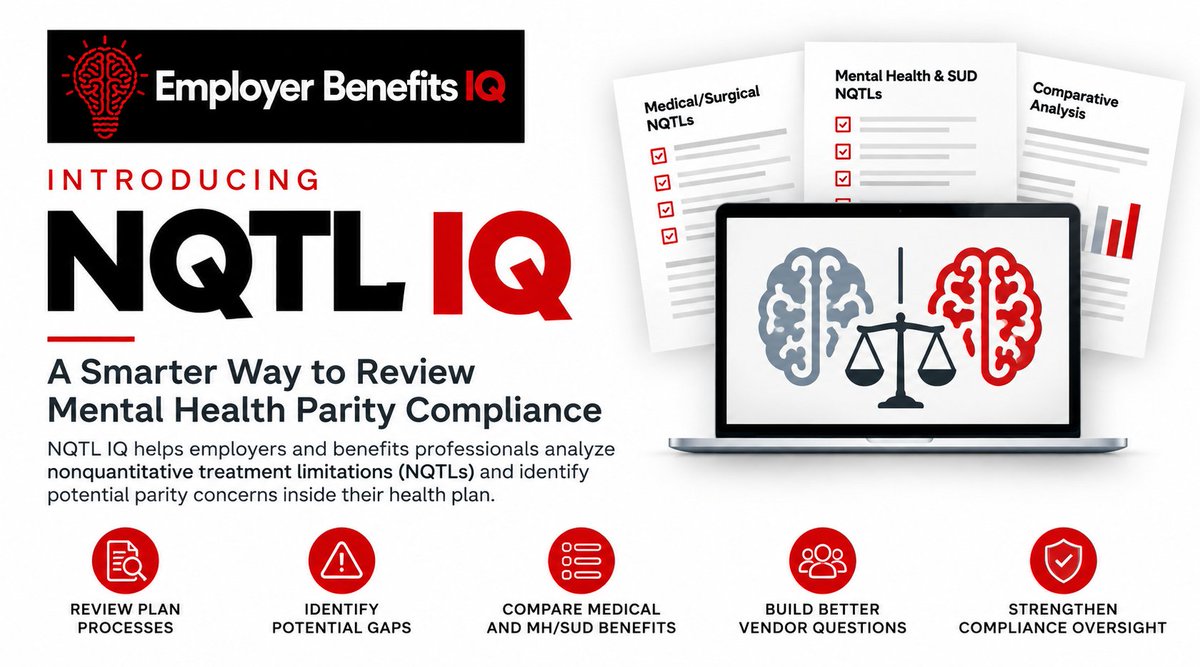
Mental Health Parity is an area where employers are being asked to take on more responsibility, but in many cases they still don’t have a practical way to understand what is actually happening inside their plan.
That’s why we built NQTL IQ at Employer Benefits IQ.
The goal is to help employers and benefits professionals take a closer look at the processes behind the plan — prior authorization, medical necessity, network standards, reimbursement practices, exclusions, and other nonquantitative treatment limitations that can create parity concerns.
This isn’t about creating another compliance document to put on a shelf. It’s about helping employers ask better questions, identify potential gaps, and improve oversight of the vendors managing their health plan.
We’re continuing to build Employer Benefits IQ around one idea: employers need better tools, better visibility, and better information to make better healthcare decisions.
NQTL IQ is another step in that direction.
https://t.co/k7lHRuDv8y
#EmployerBenefitsIQ #MHPAEA #MentalHealthParity #EmployeeBenefits #SelfFunding #Healthcare #BenefitsCompliance