Using autonimus coding work costs alot but it offloads dev work, but can be expensive, using batching in the flow where possible to get savings on infrancing is the way forward! https://t.co/iIoFzJFTGP is the solution to all your cost savings and escape vendor lockin🚀
@realloys yo you need to hire some young savy marketing people as yall need to step up your outreach, and like idk do some cool synk of the domestic metals stuff like colab or so with @themetalsco robots and ev's are the future and its soon gonna popoff real real 😋
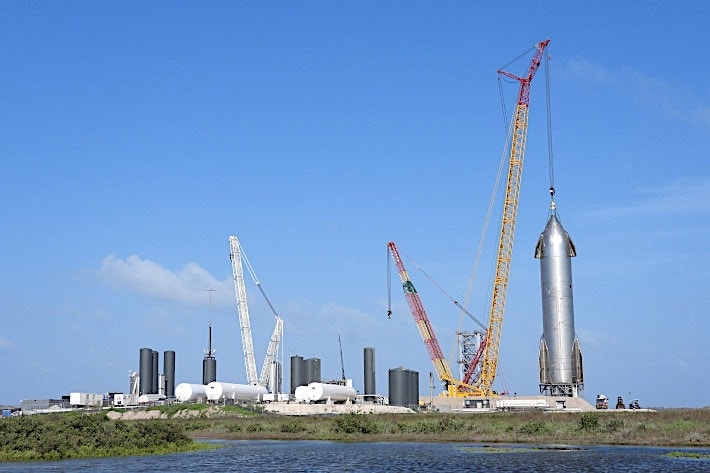
Big cranes and why they matter.
The nine axle Liebherr LTM is the largest mobile crane in the world.
It has:
Lifting capacity of 1,200 metric tonnes (2.6 million lbs)
Hoist height of 188m (616ft)
Working radius of 136m (450ft)
Obviously it is made in Germany, by Germans.
But it is a German success story, and Liebherr ship these things all over the world, and you see them everywhere. They are difficult to miss!
If you want to do big projects you should know some things about cranes. You will want to know where your project activities need a mobile telescoping crane, or a crawler crane, this is a big inflection point in the speed at which you can execute a project and at this scale speed is cost.
On projects this size you carry the full project cost bandwidth for every day of the schedule. More often than not, crane availability is the critical path.
I would estimate 80-90% of construction time is throttled by crane availability. Cranes are critical. The returns on an entire infrastructure project is often purely about the cranes. A fact greatly overlooked.
Cranes are not an afterthought.
If you want to keep your capex discipline in the right place, you need to understand cranes and their capabilities at the outset of designing your program of work.
If you don't understand cranes, or if you defer thinking about them until some later decision point, you will often have a bad day where a construction manager tells you that your assumptions are off, and that the work will actually take much longer than planned, and therefore cost a lot more, and that you will need to talk to the bank.
This is extremely common.
On a $5bn project, having the wrong crane because some early decision precluded the optimal crane will often cost you an extra $1bn in the wash. This might be equivalent to the entire equity funding on the project.
Cranes give you speed and speed is how you come in ahead of schedule and under budget. Schedule and budget are pretty much linear on these projects and crane availability is the the usual decider.
In China they are already using drone lifting, in China projects are increasingly designing for many smaller parallel lifts than needing a strict sequence of big lifts done by one or two very large site cranes.
This is faster.
If the West wants to compete with China, then countries need to look at their legislation around lifting and how we do these things, because in many Western nations there is too much regulation and too much ossified working practices.
We are leaving technology on the table, and our competitors are using it to defeat us (quite fairly) in the global market in ways such as this.
Who would think that the 9 axle Liebherr LTM 11200-9.1 would be challenged by DJI? Not me. But then you think about how the real world actually works and it's so often complex and surprising.
Robotics could learn a lot from physically handicapped people on how they perform complex tasks.
People with less limbs, digits and even blind and deaf can do complex physical tasks. They need tactile feedback, context, and practice.
Tactile is the big unlock for “physical AI”
Spring is apon us in the western Hemisphere, everyone is sun gaesing and the service buissnis is booming as people want to be outside, so the flood! :D
This is Algebrica. A mathematical knowledge base I’ve been building for 2.5 years.
215+ entries, carefully written and structured.
400k+ views over this time. Not much in absolute terms, but meaningful to me.
No ads.
No courses to sell.
No gamification.
No distractions.
Just essential pages, aiming to explain mathematics as clearly as possible, for a university-level audience.
Built simply for the pleasure of sharing knowledge.
Content licensed under Creative Commons (BY-NC).
Best experienced on desktop.
If it helps even a few people understand something better, it’s worth it.
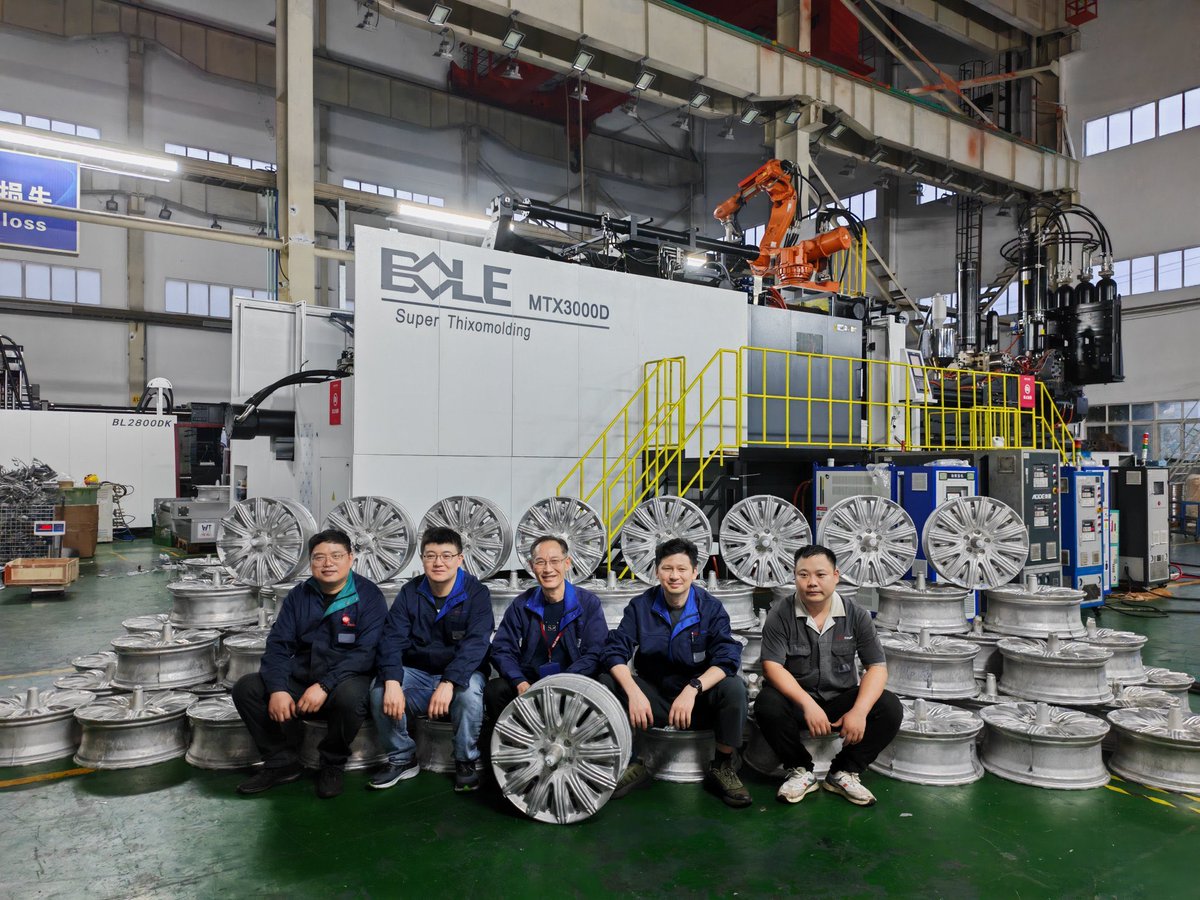
Magnesium thixomodled wheels weigh 35% less than aluminum - and the efficiency gain goes beyond weight alone 💡
The 20" cast aluminum wheels on the Tesla Model 3 and Model Y weigh 13 kg each.
Magnesium wheels of the same size weigh approximately 8 to 8.5 kg.
That's a 5 kg saving per wheel - 20 kg total across four wheels.
But here's what makes the difference disproportionate.
The biggest impact isn't total vehicle mass. It's rotational inertia. Lighter wheels require less energy from the motors to spin, which directly improves efficiency and range.
A Tesla Owners Silicon Valley experiment demonstrated approximately 5% vehicle efficiency increase from this 20 kg wheel savings alone - disproportionate to the mass reduction because of the rotational inertia effect.
The comparison:
-> Aluminum wheel: 13 kg each, 52 kg total
-> Magnesium wheel: ~8.5 kg each, ~34 kg total
-> Weight savings: 18-20 kg across four wheels
-> Efficiency gain: ~5% (amplified by rotational inertia)
The cheapest way to improve an EV's range isn't a bigger battery. It might be lighter wheels.
The market for magnesium thixomolded wheels is already being built in China. The West hasn't started.
Everyone’s calling Terafab a chip factory.
That’s like calling a rocket a metal tube.
What was unveiled is a closed-loop intelligence foundry — masks, chips, testing, iteration — all compressing into a 9-month recursive cycle no one else on Earth can match. And then 80% of it goes to space.
This isn’t about semiconductors. It’s about escaping planetary constraints.
Seed the chips → launch at scale → deploy Optimus → mine, build, replicate → orbital compute unconstrained by heat → exponential expansion.
A factory on Earth… designed to outgrow Earth.
Not a supply chain upgrade. A supply chain extinction event.
If you follow the chain all the way through, this wasn’t a product announcement.
It was the first serious blueprint for a self-expanding, star-powered civilization.