A guide-style series for space beginners is starting! Stay tuned so you don't miss out.🔔
Every time you look up at the sky, you aren't just looking into space—you are looking into a time machine in the night sky. Light travels at a finite speed (300,000\text{ km/s}). Sunlight takes about 8 minutes to reach Earth (meaning if the Sun were to suddenly vanish right now, we wouldn't find out until 8 minutes later). When you look at the Andromeda Galaxy—the most distant object visible to the naked eye—you are seeing its light from 2.5 million years ago! When that light started its journey, modern humans didn't even exist on Earth yet.
#universe #space #spaceexplorers
The Solar System is not an isolated structure that merely rotates on its own axis; it follows a giant spiral path under the gravitational influence of the center of the Milky Way Galaxy. Moving through the vacuum of space at an incredible speed of approximately 800,000 kilometers per hour led by the Sun, this massive system completes one full orbit around the galaxy in about 230 million years. As the planets revolve around the Sun, the Sun drags them along in its wake, meaning our movement through space resembles a soaring vortex rather than a flat circle.
NASA announced that total solar eclipses provide a unique opportunity to study the Sun, and that more information will be gathered by taking to the skies on August 12. In this context, teams funded by NASA will use a high-altitude research jet and scientific balloons to study the eclipse.
#NASA #SolarEclipse #Astronomy
You owe the flawless operation of the navigation on your phone to Einstein! 🤯. Clocks on satellites tick faster than those on Earth due to differences in speed and gravity. If this time difference weren't constantly corrected using Einstein's Theory of Relativity, GPS would drift by kilometers every day, and navigation would take you to completely irrelevant places. Every time you use the map in your pocket, you are experiencing the bending of time!.
#Einstein #GPS #Physics
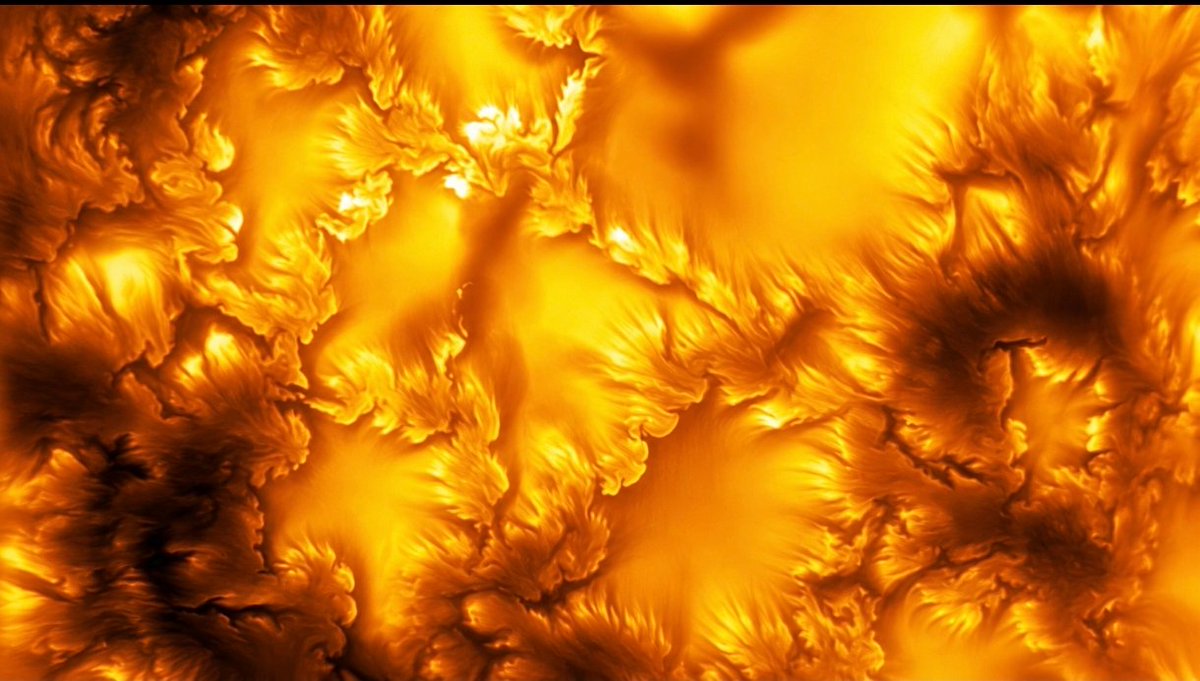
If you think our Sun is yellow, you are in for a big surprise! ☀️
Although it appears yellow or orange from Earth due to an atmospheric illusion (Rayleigh scattering), the Sun actually shines pure white when viewed from space.
In other words, our cosmic giant isn't yellow at all—it's a pure white star!
The coldest stars, around 3,000 °C, appear red.
Stars like our Sun, with a surface temperature of 5,500 °C, actually shine white.
Giants with temperatures reaching up to 30,000 °C are the hottest blue stars in the universe!
The Physics of the Aurora🎑
Solar winds carrying charged particles crash into Earth's magnetic field, channeling them toward the poles where they collide with oxygen and nitrogen molecules to create the breathtaking green, red, and purple dance of the Aurora Borealis.
Jupiter's Icy Secret: Europa
Beneath its thick ice shell lies a hidden liquid ocean larger than the combined volume of all Earth's oceans.
There is strong evidence that Europa spews water vapor and ice particles into space through cracks in its surface.
Why are we studying it?
Because the combination of liquid water, an energy source, and chemical building blocks makes it one of the most likely places in the Solar System to harbor microscopic life.
@nqocahnn_ You are absolutely right; it sounds exactly like a scene from *Interstellar* or *The Martian*, but the information indicates that enough oxygen was produced for a small dog to breathe for 10 hours 🙌
Mars' Hardest-Working Robot: Perseverance! 🚀🔴
Landing Date: February 18, 2021
It is searching for signs of life in a region that was an ancient lake billions of years ago, and it even succeeded in producing oxygen from the Martian atmosphere!
It became the first vehicle to image the disappearance of our home planet behind a moon (Phobos) from the surface of another planet! 📸
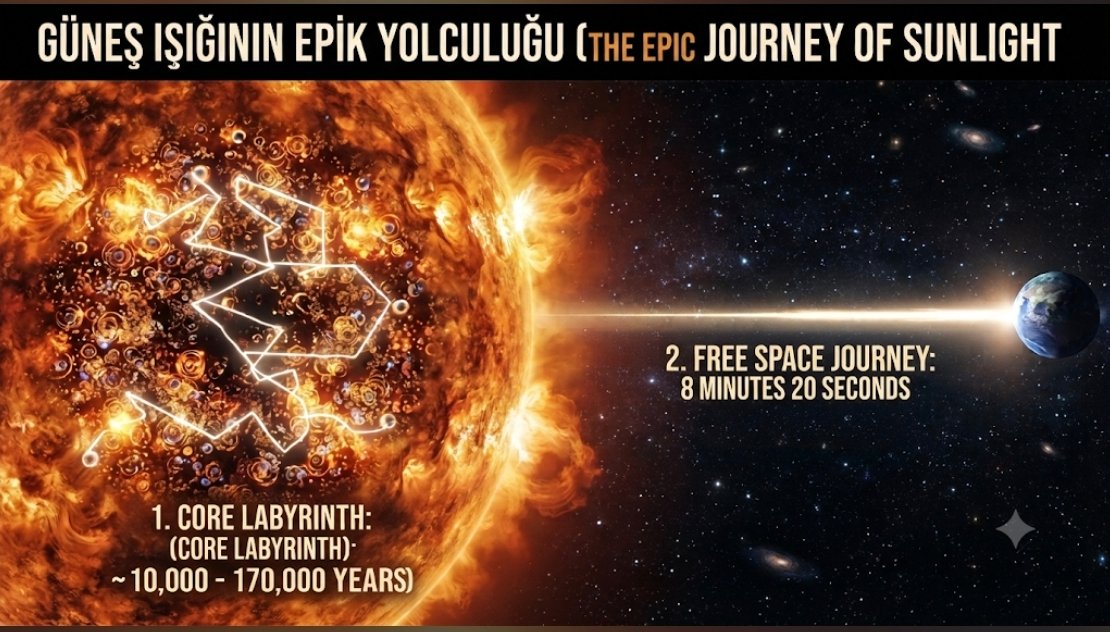
When you look at the Sun, what you see is actually from 8 minutes and 20 seconds ago! ☀️
Did you know that before reaching the surface, that light spends thousands of years getting lost in a labyrinth of atoms inside the Sun's core?
🔸 The Core Labyrinth: ~10,000 - 170,000 years
🔸 Free Sprint in Space: 8 minutes and 20 seconds
The light warming your face is the finale of an epic, centuries-long journey. 🌌✨
#Sun #Space #Science #Astrophysics
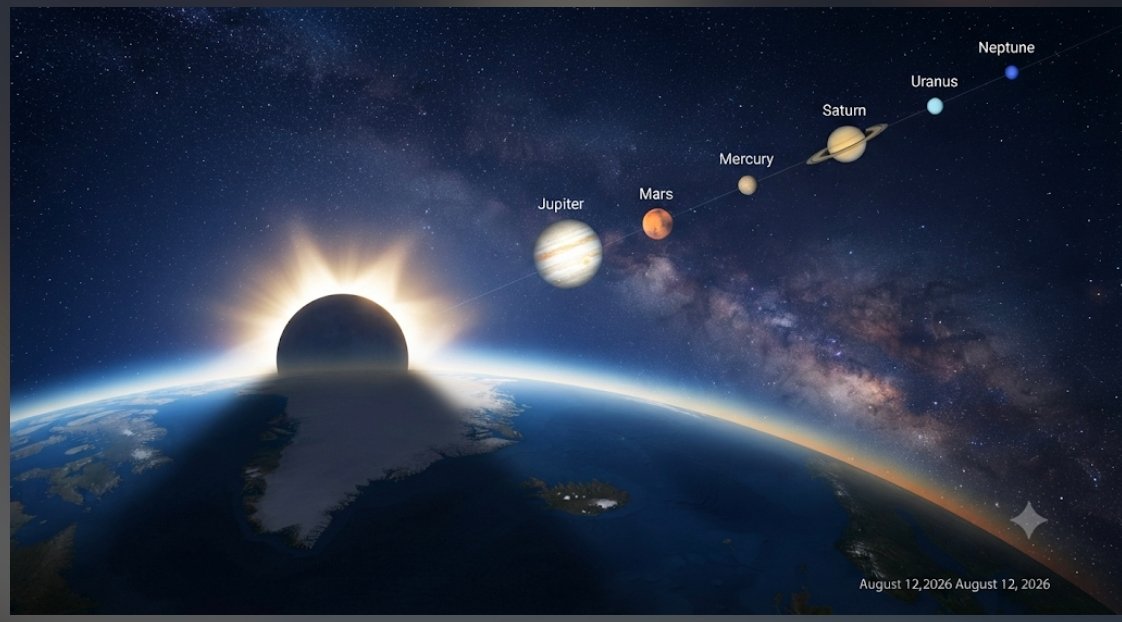
✴️Mega Cosmic Event on August 12, 2026!
A stunning 6-planet alignment and a total solar eclipse will darken the skies over parts of the Earth. Don't miss it!
#Astronomy#SolarEclipse#SpaceNews
SpaceX has set a great example of responsibility by transparently sharing technical challenges and orbital dynamics in lunar missions. 🚀 The fact that such limitations in high-energy missions will soon be completely eliminated is the most exciting part; the era of space debris is officially coming to an end with the fully reusable Starship!
On January 15, 2025, Falcon 9 successfully deployed Firefly Aerospace’s Blue Ghost Mission 1 and ispace’s RESILIENCE lunar landers on a trajectory to the Moon from pad 39A in Florida.
For most of our missions, we plan a controlled deorbit of the Falcon second stage so it safely reenters over the ocean. For higher energy missions like those to a lunar transfer orbit, nearly all performance on the vehicle is devoted to successfully placing the payload in the intended orbit, and a controlled disposal maneuver is not always possible.
We actively work to be as responsible as possible with hardware left in space to ensure space safety, including for more complex missions. In this case, over time, solar activity and gravity led the second stage toward the Moon. Impacts like this are rare, but they can happen with objects in these types of orbits, and we worked with NASA on the optimal disposal solution.
Our focus remains on advancing reliable access to space while working toward even more sustainable operations with Starship in the future. As a fully reusable vehicle, Starship is designed to eliminate expendable upper stages entirely, reducing hardware left in orbit and enabling even more missions to the Moon, Mars, and beyond.
🌍Our home, Earth... We think it's massive, but things change when we see the Sun. And when we move to the giant of the universe? Against UY Scuti, which has a radius 1,700 times and a volume about 5 billion times that of the Sun, even our Sun looks like a microscopic dot! The scale of the universe will blow your mind.
#space #astronomy #universe
All those magnificent stars, galaxies, and even us that we see in the sky... We are only 5% of the universe.
What about the remaining 95%? A mysterious ocean of dark matter and energy that we don't know what it is, yet holds the universe together. 🌌
#astronomy#space#science
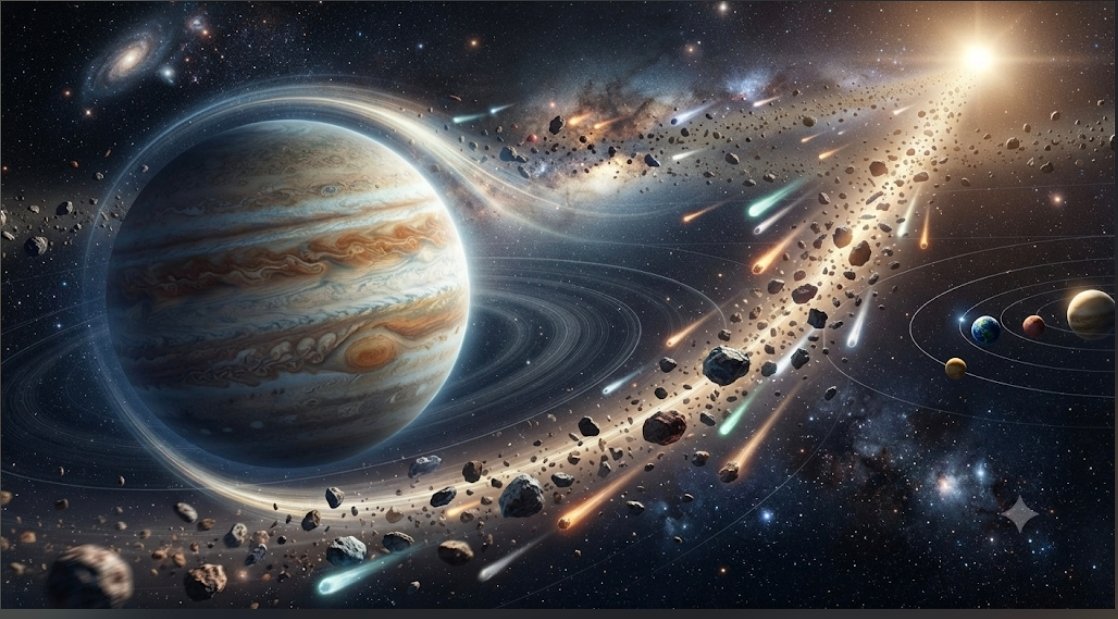
Our Earth has a giant shield protecting it from the dangers of space: Jupiter! 🪐
As the largest planet in our Solar System, Jupiter draws in or deflects dangerous asteroids and comets coming from deep space thanks to its incredible gravitational pull. This massive "vacuum cleaner" role plays a critical part in Earth's safe existence for billions of years.
A closer look at the universe's celestial protector! 🌌✨
#Jupiter #Space #Astronomy