🌟 A planet may be taking shape right before our eyes.
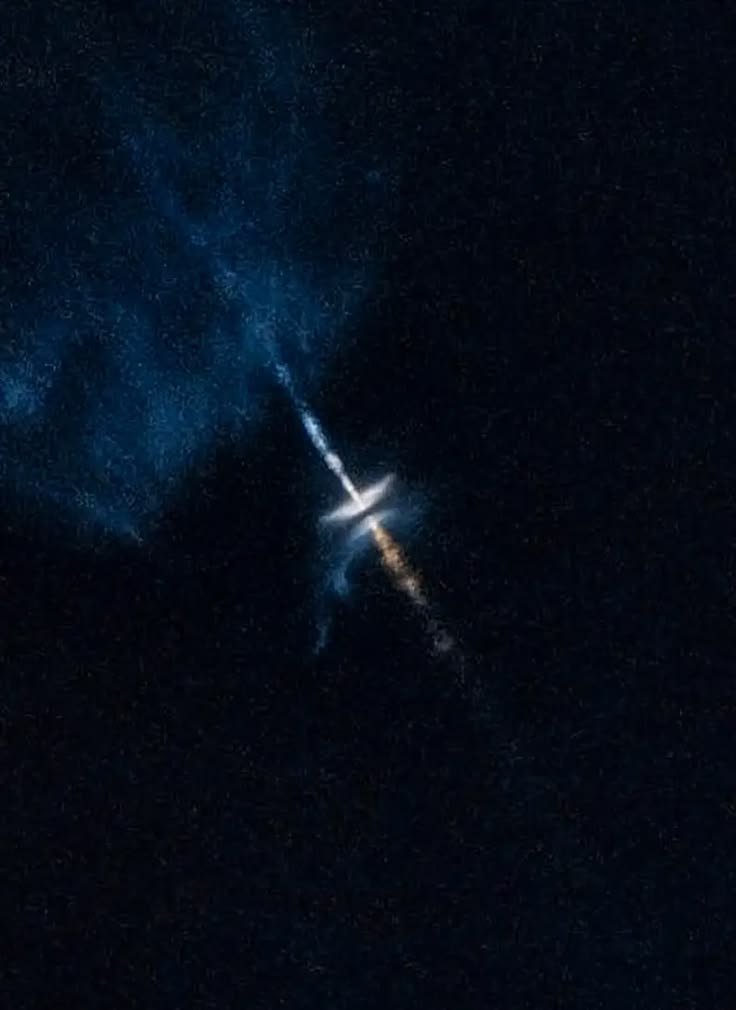
About 450 light-years away, astronomers used Webb, Hubble & ALMA to peer into HH 30, a newborn star system where dust is settling into a thin disk, laying the groundwork for future planets. 🪐✨
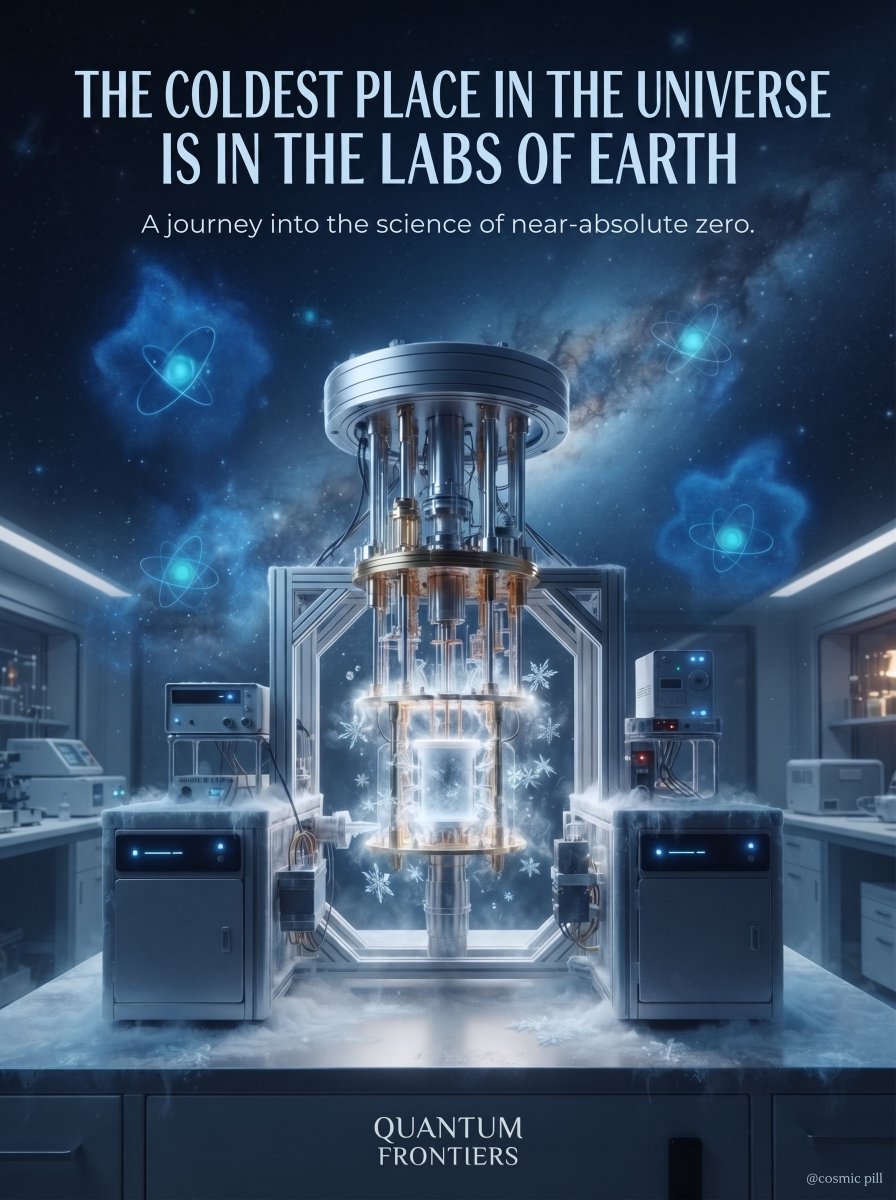
You might expect the coldest place in existence to be somewhere deep in space.
It's not.
The coldest temperature humans have ever created was achieved right here on Earth, inside advanced laboratories.
Scientists have cooled matter to temperatures just a tiny fraction above absolute zero:
❄️ 0 Kelvin (-273.15°C) the lowest temperature possible.
The universe can be unimaginably cold...
But the coldest place we've ever known was built by human hands. 🌌
Are we alone? @NASARoman is expected to discover and study thousands of distant worlds within our galaxy and directly image planets with unprecedented detail. Its coronagraph will block the glare from host stars but allow the light from dimmer, orbiting planets to filter through.
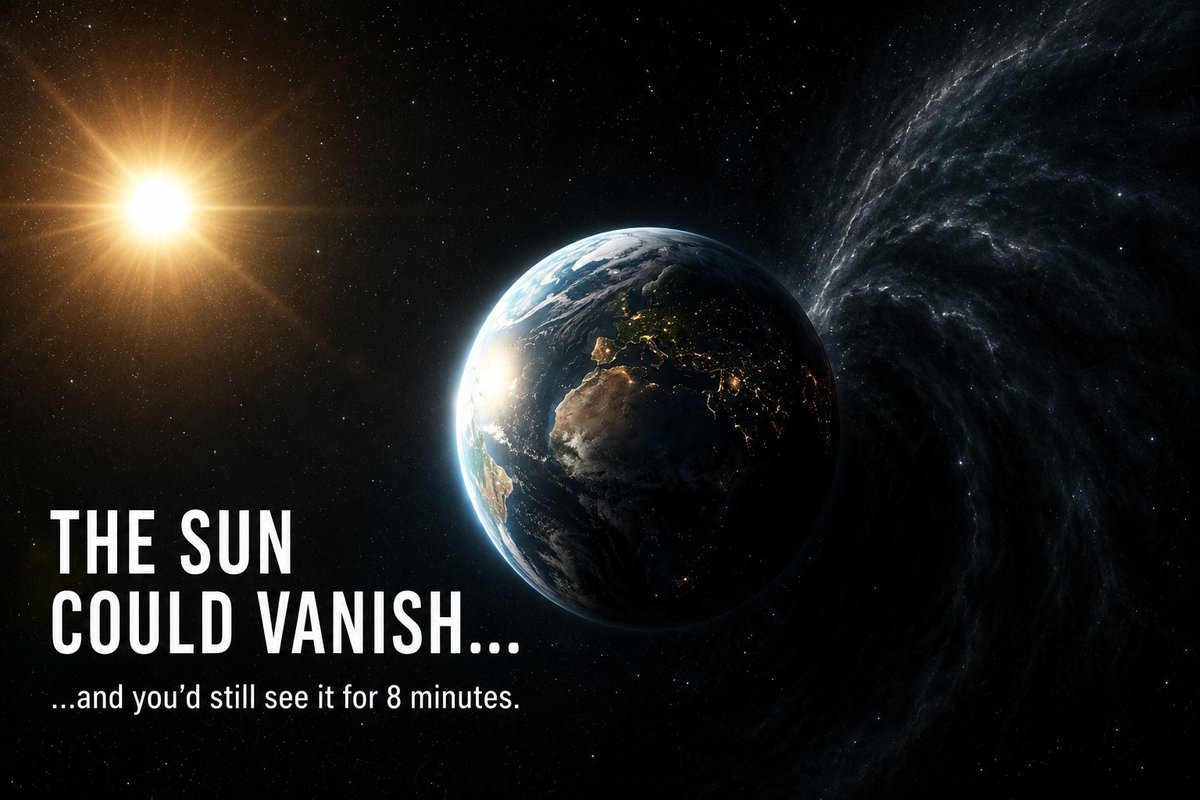
If the Sun vanished this instant, Earth would keep orbiting it... for another 8 minutes. ☀️
Imagine the Sun suddenly disappeared.
Not exploded.
Just... gone.
Would Earth instantly fly off into space?
No.
For about 8 minutes and 20 seconds, nothing would seem different.
The sky would still be bright.
The Sun would still appear exactly where it is.
And Earth would continue orbiting as if the Sun were still there.
Why?
Because light takes 8 minutes and 20 seconds to travel from the Sun to Earth.
According to Einstein's theory of relativity, changes in gravity also travel at the speed of light.
So Earth wouldn't "know" the Sun had vanished until those 8 minutes and 20 seconds had passed.
Only then would darkness arrive...
And our planet would begin drifting into deep space.
The Universe doesn't let information travel faster than light.
Not even gravity.
If you had just 8 minutes before the Sun truly disappeared, what would you do?
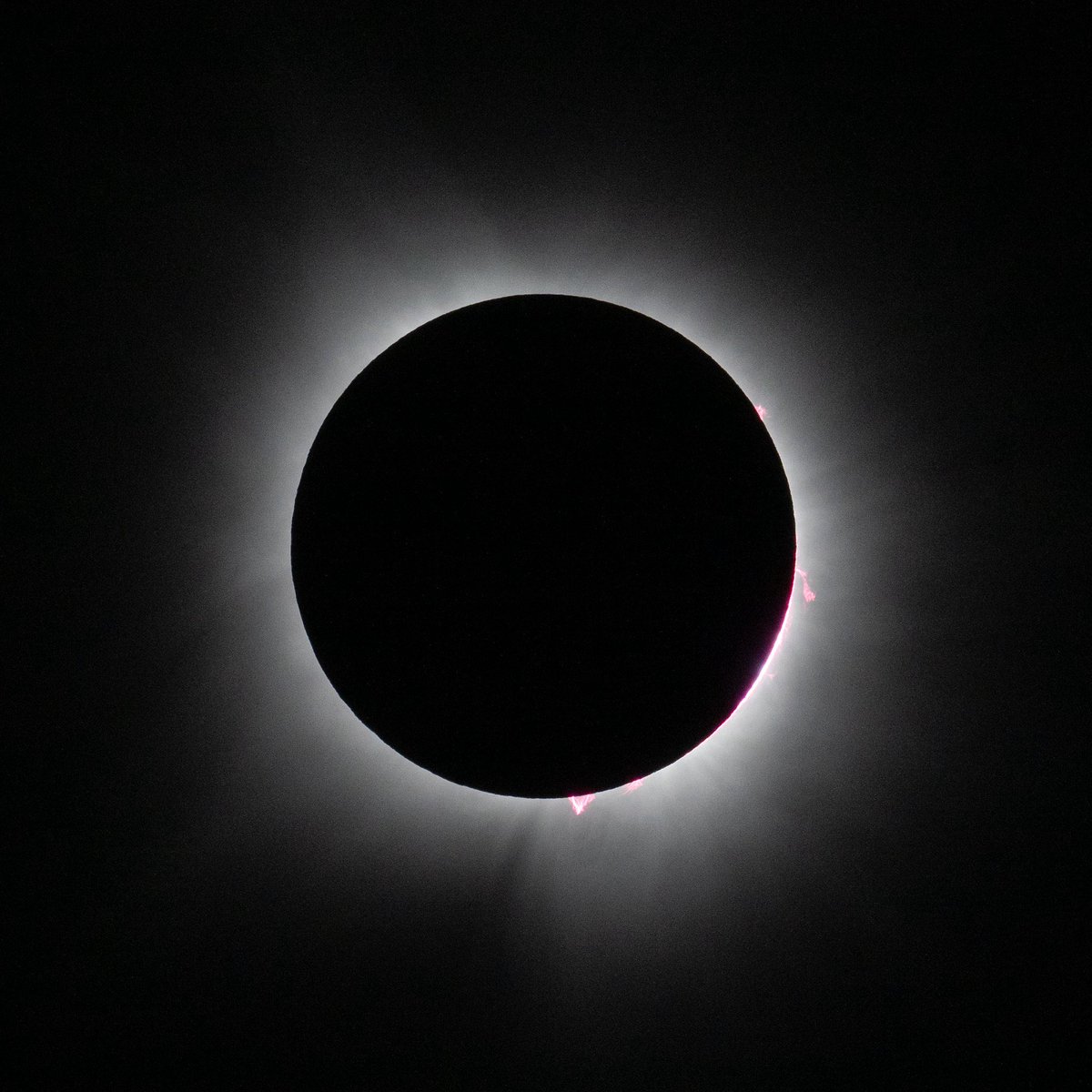
Today, on August 12, 2026, a total solar eclipse will take place.
The Moon's shadow will sweep across Greenland, Iceland, the Atlantic Ocean, northern Spain and a small part of Portugal. In the path of totality, the Sun will be completely covered for up to about 2 minutes and 18 seconds. Much of Europe, parts of Canada, the northern United States and northwestern Africa will see a partial eclipse.
During totality the sky darkens, the temperature drops, and the Sun's corona becomes visible as a white glow around the black disk of the Moon. Outside the path of totality you will only see a partial covering of the Sun.
Safety is essential. Never look directly at the Sun without proper protection, even when it is only partially eclipsed. Use certified ISO 12312-2 eclipse glasses or a solar filter specifically designed for viewing the Sun. Regular sunglasses, camera filters or smoked glass are not safe and can cause permanent eye damage. Only during the brief moments of totality (when the Sun is completely covered) is it safe to look with the naked eye. The moment the first bright bead of sunlight reappears, put your eclipse glasses back on immediately.
If you are not in the path of totality, the entire event must be viewed through proper solar filters. Enjoy the spectacle safely.