@LachesisClotho Αν το βάλεις κάτω καταλαβαίνεις ότι το Αμερικανικό σύστημα απαιτεί καλές τράπεζες και ίση πρόσβαση στο κεφάλαιο για όλους. Αυτό αποφεύγει το ευρωπαϊκό κατεστημένο.
@LachesisClotho Αν είσαι προσεκτικός στη λειτουργία της εταιρείας, μια χαρά ισχύει. Πρώτα απ όλα το limited liability είναι απαραβατο και τα ΑΦΜ δεν μπλεκονται. Μην πιστεύεις την ανάποδη προπαγάνδα, το ευρωπαϊκό σύστημα εκεί είναι σαπιο.
Startup community of Thessaloniki:
Open Coffee is coming up on Fri 22/5 at @TechSaloniki X with:
⚡ Nikos Mylonas – EdenCore
⚡ Andreas Symeonidis – @cyclopt
⚡ Dimitrios Adamos – Cogitat
💬 Thessaloniki VCs: Loggerhead, TECS Capital & THERMI VC
Join! https://t.co/wOn4Ezl1RW
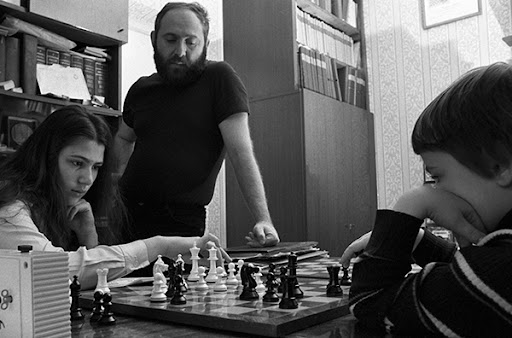
A Hungarian psychologist raised three daughters to prove that any child could become a chess grandmaster through early specialization. He succeeded. Two of them became grandmasters. One became the greatest female chess player who ever lived.
Then a sports scientist looked at the data and found something nobody wanted to hear.
His name is David Epstein. The book is called "Range."
The Polgar experiment is one of the most famous case studies in the history of deliberate practice. Laszlo Polgar wrote a book before his daughters were even born arguing that geniuses are made, not born. He homeschooled all three girls in chess from age four. By their teens, Susan, Sofia, and Judit were dominating tournaments against grown men. Judit became the youngest grandmaster in history at the time, breaking Bobby Fischer's record. The story became the gospel of early specialization. Pick a domain young, drill it hard, and you can manufacture excellence.
Epstein opens his book by telling that story honestly and then quietly demolishing the conclusion most people drew from it.
Chess works that way. Most things do not.
Here is the distinction that took him four years of research to articulate, and that almost nobody who quotes the 10,000 hour rule has ever read.
There are two kinds of environments in which humans develop expertise. Psychologists call them kind and wicked. A kind environment has clear rules, immediate feedback, and patterns that repeat reliably. Chess is the cleanest example. Every game ends with a winner and a loser. Every move is recorded. The board never changes shape. The pieces never invent new ways to move. A child who plays ten thousand games will see most of the patterns that exist in the game, and pattern recognition is exactly what chess mastery is built on.
A wicked environment is the opposite. Feedback is delayed or misleading. Rules shift. The patterns that worked yesterday may be exactly the wrong patterns to apply tomorrow. Most of the real world looks like this. Medicine is wicked. Investing is wicked. Building a company is wicked. Scientific research is wicked. Almost every job that involves a complex changing system with humans in it is wicked.
The Polgar sisters trained in the kindest environment any human can train in. Their success was real and the method was correct. The mistake was generalizing the method to fields where the underlying structure of the environment is completely different.
Epstein's research is what made the implication impossible to ignore.
He looked at the careers of elite athletes outside of chess and golf and found that the pattern was almost the inverse of what people assumed. The athletes who reached the very top of their sports were overwhelmingly people who had played multiple sports as children, specialized late, and often switched disciplines well into their teens. Roger Federer played squash, badminton, basketball, handball, tennis, table tennis, and soccer before tennis became his focus. The kids who specialized in tennis at age six and trained year-round for a decade mostly burned out, got injured, or topped out at lower levels of the sport.
The same pattern showed up everywhere he looked outside of kind environments. Inventors with the most patents had worked in multiple unrelated fields before their breakthrough work. Comic book creators with the longest careers had drawn for the most different genres before settling. Scientists who won Nobel Prizes were dramatically more likely than their peers to be serious amateur musicians, painters, sculptors, or writers.
The skill that mattered in wicked environments was not depth in one pattern. It was the ability to recognize when a pattern from one domain applied unexpectedly in another. That kind of thinking cannot be built by drilling a single subject. It can only be built by accumulating mental models from many subjects and learning to move between them.
The deeper finding is the one that should change how you think about your own career.
Specialists in wicked environments often get worse with experience, not better. Epstein cites studies of doctors, financial analysts, intelligence officers, and forecasters showing that years of experience in a narrow domain frequently produce more confident judgments without producing more accurate ones. The expert builds elaborate mental models that feel comprehensive and turn out to be increasingly disconnected from the actual structure of the problem. They stop noticing what does not fit their framework. They mistake fluency for understanding.
Generalists do better in wicked domains for a reason that sounds almost mystical until you understand the mechanism. They have less invested in any single mental model, so they abandon broken models faster. They are used to being a beginner, so they are not threatened by the discomfort of not knowing. They have seen enough different domains that they can usually find an analogy from one field that unlocks a problem in another. The technical name for this is analogical thinking, and the research on it is one of the most underrated bodies of work in cognitive science.
The single most useful sentence in the entire book is the one Epstein puts almost as a throwaway.
Match quality matters more than head start.
A person who tries six different fields in their twenties and finds the one that genuinely fits them will outperform a person who picked one field at fourteen and stuck to it on willpower alone. The lost years were not lost. They were the search process that produced the match. Every field they walked away from taught them something they later imported into the field they finally chose.
The reason this is so hard to accept is cultural, not empirical. We tell children to pick a path early. We reward the prodigy who knew at six. We treat the late bloomer as someone who failed to launch on time, when the data suggests they were running an entirely different and often more effective optimization process underneath.
The Polgar sisters were not wrong. The conclusion the world drew from them was.
If your environment is genuinely kind, specialize early and drill hard. If it is wicked, and almost every interesting human problem is, then the people who win are the ones who refused to specialize until they had seen enough to know what was actually worth specializing in.
You are not behind. You were running the right experiment all along.
This is utterly fascinating. We’ve known code written by AI is harder to untangle. It appears this is the case with writing as well.
Tricia is an editor and she says that when an author submits work that is written by AI, she has a much harder time editing it. It’s all one interconnected black-box piece of writing that is not amenable to change. Whereas she finds that human writing, while seemingly messier, is actually much more structurally straightforward.
My theory as to why this is is that LLMs think one token at a time. And after every token, they essentially look back and ask, “have I said the thing the prompt wants me to say?” If not, it keeps elucidating.
The result is tight chain of thought writing that requires each preceding token to make sense of the next.
Whereas human writing starts from a pre-language idea in the author’s head, and looks forward many sentences and paragraphs ahead to approximate the author’s intent.
It’s somewhat fuzzy. But I think LLMs fundamentally “think” in a much different way than humans. They are certainly not useless. But I think it’s a grave mistake to equate them with human intelligence.
Το ξεκίνημα από την Αμερική, η επιστροφή στην Ελλάδα και «ευαγγέλιο» του πετυχημένου start upper Κώστα Μάλαμα, CEO της Dataviva https://t.co/MGeSxlKbxt
@GreekAnalyst@GreeceMFA@GreeceInGermany Almost as bad as treatment of legal immigrants in Greece. Stuck in limbo without support against Greek bureaucracy. At least Greeks understand / can deal. Digital services have obviously postponed / delayed real reforms...
Ελληνικά ΑΕΙ
"Από τους 50 τακτικούς καθηγητές της Ιατρικής Σχολής Αθηνών, οι 24 έχουν παιδιά που είναι ήδη μέλη ΔΕΠ. Στο Αριστοτέλειο , μεταξύ των 90 λεκτόρων οι 39 έχουν σχέση με άλλα μέλη ΔΕΠ του ιδρύματος.
Στη Νομική, διδάσκουν παιδιά διδασκόντων.
https://t.co/lCuc2nqCMA
Europe does not need more venture capital for startups. It needs more investable startups for VC.
Sweden has 10 m. people and 48 unicorns. Italy has 6x people and 4x the GDP and 1/3 the unicorns. The difference is not lack of VC money.
With Per Strömberg.
https://t.co/wDJ9NH3uN5
Ο νόμος Τσιάρα προσπάθησε να λύσει το θέμα της γονεϊκής αποξένωσης. Ήταν θετικό βήμα.Στην αιτιολογική του έκθεση μιλούσε για πρώτη φορά για το δικαίωμα του παιδιού να έχει και τους δύο γονείς του στη ζωή του. Δεν άρεσε.Η κυβέρνηση τώρα με τροπολογία αρχίζει να τον ξυλωνει.Για τις βαρωνίες μέσα στο κόμμα τους.Και η αντιπολίτευση σιωπά.Δεν τα βρήκαν πουθενά παρά μόνο σε αυτή την τροπολογία.Μια αηδία σε πιάνει.Κριμα για τα παιδιά εντόνων διαζυγίων.Ομηροι στα χέρια πολιτικάντηδων.Ντροπή σε όλους σας.
@tomfgoodwin Simply put, these are only possible in the UK: density of stores, fast supply chain and an unexplainable appetite for sandwiches in a box.
Very interesting thread.
I am reminded of chess: millions of AI vs AI chess games exist at a higher level than Kasparov or Carlsen ever got to, but we have no interest in those “alien” games and prefer to watch humans play.
Europe Builds. Others Profit.
3D Gaussian Splatting (3DGS) is the perfect case study. It reflects both Europe’s brilliance and its chronic inability to turn that brilliance into business.
Almost everything that made 3DGS possible was born in Europe. From the early breakthroughs in point-based rasterization in Switzerland to the cumulative research from Austria, Greece, and Germany executed in France, Europe built the foundation. No other continent can match that level of scientific collaboration and intellectual strength.
The LichtFeld Studio bounty later confirmed it: the biggest performance leaps came straight out of European labs. The science was here. The innovation was here. The talent was here.
But the business was not.
When 3DGS exploded, my inbox filled with messages from US-based companies, not from Europe. In the United States, Luma AI and Polycam turned the paper into products within weeks. They did not wait for funding programs or EU consortia. They simply built.
Then came China, which not only caught up in research but quickly outpaced everyone in commercialization. XGRID, DJI, and many others built thriving businesses around what Europe invented. Today, most 3DGS papers come from Chinese institutions rather than European ones.
Meanwhile, the usual giants such as Meta, NVIDIA, Google, Netflix, and Tesla continue to iterate, integrate, and push forward. A thriving ecosystem of startups like World Labs leverages this technology to create new products and markets. The innovation cycle in the United States and China is fast, relentless, and market-driven.
Europe, in contrast, remains bureaucratic and slow. We fund excellence and celebrate publications, but we rarely ship, even though some small startups are trying to change the status quo. Our researchers create the breakthroughs; others create the successful products.
Until Europe finds a way to bridge the gap between laboratories and markets, it will remain the world’s research and development department: brilliant, underpaid, and underleveraged.
Research is Europe’s comfort zone. Execution must become its strength.
Video: One of my dynamic 3D Gaussian implementations based on the paper "Representing Long Volumetric Video with Temporal Gaussian Hierarchy."