If you would like to listen to it yourself, here is the link to the high-quality translated interview with Putin:
https://t.co/dCEgA4BRqZ
Also an attempt at classification:
In my opinion, Putin-Russia was looking for a compliant helper from the USA with name recognition and access to international conspiracy channels and found him in Carlson. Carlson was one of the best-known and most successful presenters and commentators on the right-wing and Trump-friendly Fox News channel. However, Carlson himself was kicked off Fox News after he fueled the suspicion that Trump had been cheated out of winning the presidential election on the one hand, and on the other hand clearly stated in private conversations that he knew that this was not the case. So he simply lied and stirred up the country even though he knew better, presumably to please the Trumpists and fuel his career. Lies don't hurt the Trumpists, as we know from the 10,000s documented by Trump himself. So Carlson is still a star among Trumpists and is a star in conspiracy channels internationally.
Bingo, someone like that is ideal for Trump: eager for success, willing to do anything for it, well-known and with access to conspiracy channels.
Putin's target is his own voters and the voters of the USA, who are supposed to vote for Trump.
Fortunately, Putin has not made the most of this great opportunity. He has fallen victim to his own need to communicate and the fact that he doesn't have to listen to anyone, not even his advisors. His target groups don't have a problem if the interviewer chews everything up for them, gives them bumper stickers, confirms them on an ongoing basis, ... However, his target group is not known for listening to long, concentrated contributions and will probably soon drop out. Even if someone did persevere, there was nothing new to hear, apart from Russian state propaganda that was better organized in terms of logic and a distortion of history in their own interests.
However, the interview is being used in Putin's own Russia to promote Putin and his regime. Of course, it is clever to have an American interviewer who fully endorses Putin and his monologues. The interview will even be shown in cinemas and, in addition to fans, there will probably be people who want to show publicly that they are not actually against Putin.
For voters in the USA and the public in the rest of the world, there is a risk that they will only see excerpts or quotes and thus be confirmed or unsettled.
At least to the outside world, an optimally effective interview would have looked different: seemingly objective, seemingly critical, short and snappy, entertaining, ... I think Carlson would easily have been prepared to do 2 interviews for a bit more roubles, one seemingly critical, seemingly objective, ... for the international audience and one adulatory one for the Russians.
@AlpenHofnarr Exactly, it was Orbán who, together with his shady foreign partners, influenced society to suit his own interests. It is likely that there was even illicit, covert, and financially motivated influence from Russia on top of that.
Mit 9 teilweise allein geflüchtet
13jähriger afghanischer Junge erzählt beeindruckend detailliert, in gutem Deutsch, wie er als 9jähriger vor den Taliban nach Deutschland geflohen ist — erst mit den Eltern in den Iran, dann mit seinem damals 12jährigen Bruder in die Türkei, wo sich die 2 Jungs länger alleine durchgeschlagen haben, und schließlich alleine nach Deutschland, weil das Geld nicht für beide Jungs reichte.
Bitte retweeten!
Das sollen sich möglichst viele ansehen, um zu begreifen, was so eine Flucht bedeutet, und dass das niemand aus Spass macht.
https://t.co/830WS29dia
Russia is in danger of losing the war against Ukraine, …
… according to war bloggers linked to the Kremlin. Ukraine is said to now far surpass Russia in both the number and technological sophistication of its drones, and even to have surpassed China in this regard.
A Hormuz Toll for Iran's Reconstruction?
I would argue that if we want to achieve a stable peace in the Persian Gulf, there must be amends for the damage caused in Iran by the U.S. and Israeli militaries. However, I assume that Trump will not finance this with U.S. taxpayer money, but will instead allow Iran to charge a transit fee for ships passing through the Strait of Hormuz. This would mean that Europe and Asia would be significantly more affected, even if all ships paid. But I assume that the Trump administration will negotiate an exemption for U.S. ships—or ships traveling to and from the U.S.—into any agreement. In other words, Trump and Netanyahu have waged a dubious and poorly planned war without consulting others, but in the end, Asia and Europe—or perhaps even just Europe—will foot the bill for the reconstruction. Trump could, in fact, accommodate China on this matter when they meet shortly.
@Weltispeed Ich soll dir übrigens von meinem Freund @Alpenhofnarr ausrichten, dass du ein ziemlicher Traumichnicht bist. Erst zweifelhaft posten und dann blockieren. Das nenn ich "patriotisch und mutig".
🧵(5)
Does it make sense to build a strong, independently deployable European defence — even if the US remains friendly, or if Democrats return to power? Yes. This is not about anti-Americanism. It’s about risk management: US priorities can shift to the Indo-Pacific, domestic politics can paralyse decisions, and timelines may not match Europe’s needs. 👇
🧵(4)
Important nuance: Europe already wastes a lot of money. Fragmentation, incompatible systems, and duplicated national programs cost tens of billions per year. A more integrated European defence would be expensive — but less wasteful than today’s patchwork. 👇
🧵(3)
What would it cost to defend Europe without the US? Serious studies converge on a rough order of magnitude: up to ~€250 billion per year in additional, sustained defence spending, depending on the scenario. This reflects not just weapons, but personnel, training, stockpiles, logistics, space assets, and command systems. 👇
🧵(2)
How is Europe trying to close these gaps? Three main tracks:
1.Joint procurement & industrial scaling (EDIP/ASAP logic): fewer national mini-projects, more shared orders.
2.Readiness & mobility: faster troop movement, dual-use infrastructure, simplified rules.
3.Financing tools: EU-backed defence loans and expanded EIB funding.
This is not an “EU army” yet — but it is systematic capability building. 👇
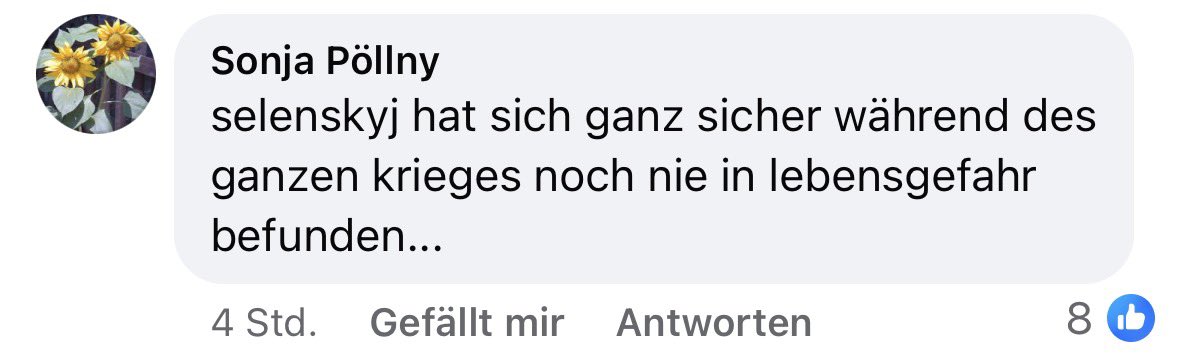
Solche dämlichen Leute gurken in den sozialen Medien rum. Davon abgesehen, dass das Leben jedes Einzelnen Ukrainers immer wieder gefährdet ist, Russland würde Selensky töten oder festsetzen, wenn es könnte.
🧵(7)
The real bottlenecks are not intentions, but execution:
• Time (5–10+ years for many high-end capabilities)
• Coordination (standards, maintenance, logistics)
• Politics (national prestige vs. real burden-sharing)
Bottom line: Europe is finally serious. Not yet sufficient, but clearly moving toward the ability to defend itself — with or without the US. 🔚