@simranrambles I went the same beginner route — Claude wrote my first cut list and it caught a redundant intro I kept missing. The part I still do myself is the audio pass, because it can't hear my mic pops. Did you use it for captions too, or keep those manual?
@chrisdadiva CapCut's auto-captions saved me hours on my last talking-head video, but I still fix the timing by hand — the auto timing always lands a beat late on emphasis words. This looks like a good shortcut for people who only use about 10% of the app so far.
@ShuxBroh I tried using Claude to plan my edits too — it's great for structuring the cut list, but I still do the actual trimming by hand, because it kept cutting my pauses short. Curious which of the two ways you ended up using more?
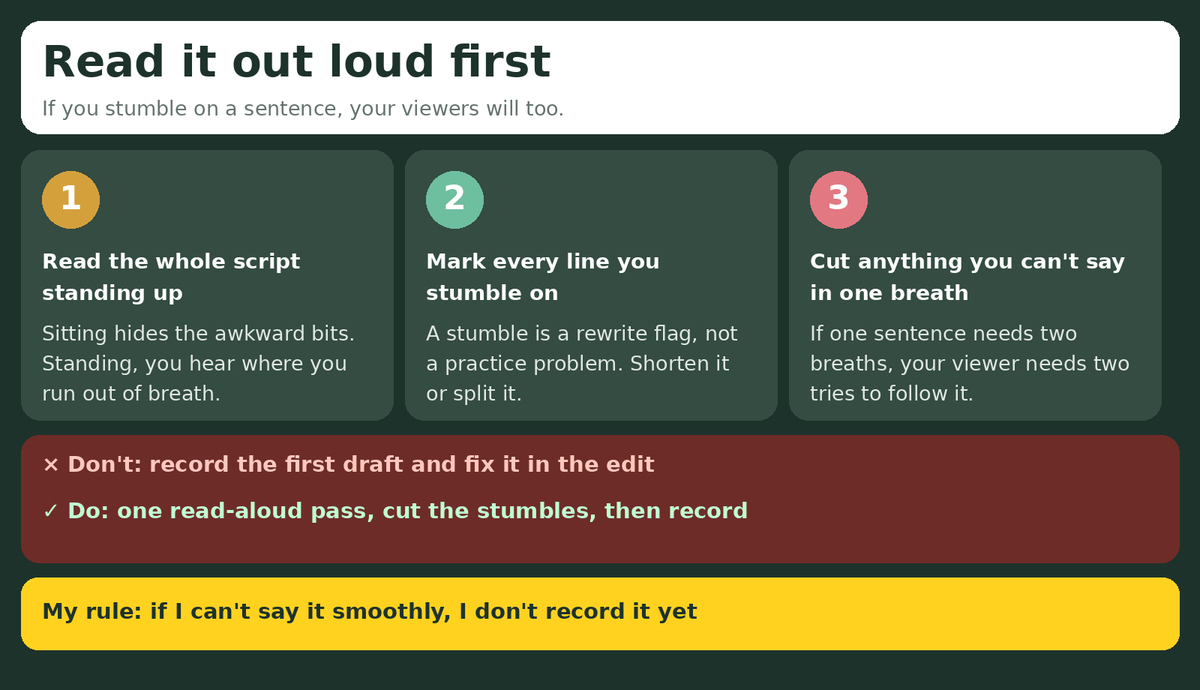
Read your script out loud before you hit record. If you stumble on a sentence, your viewers will too. I cut half my script this way. Three checks, in the image. #VideoTips#VoiceOver#ContentCreator
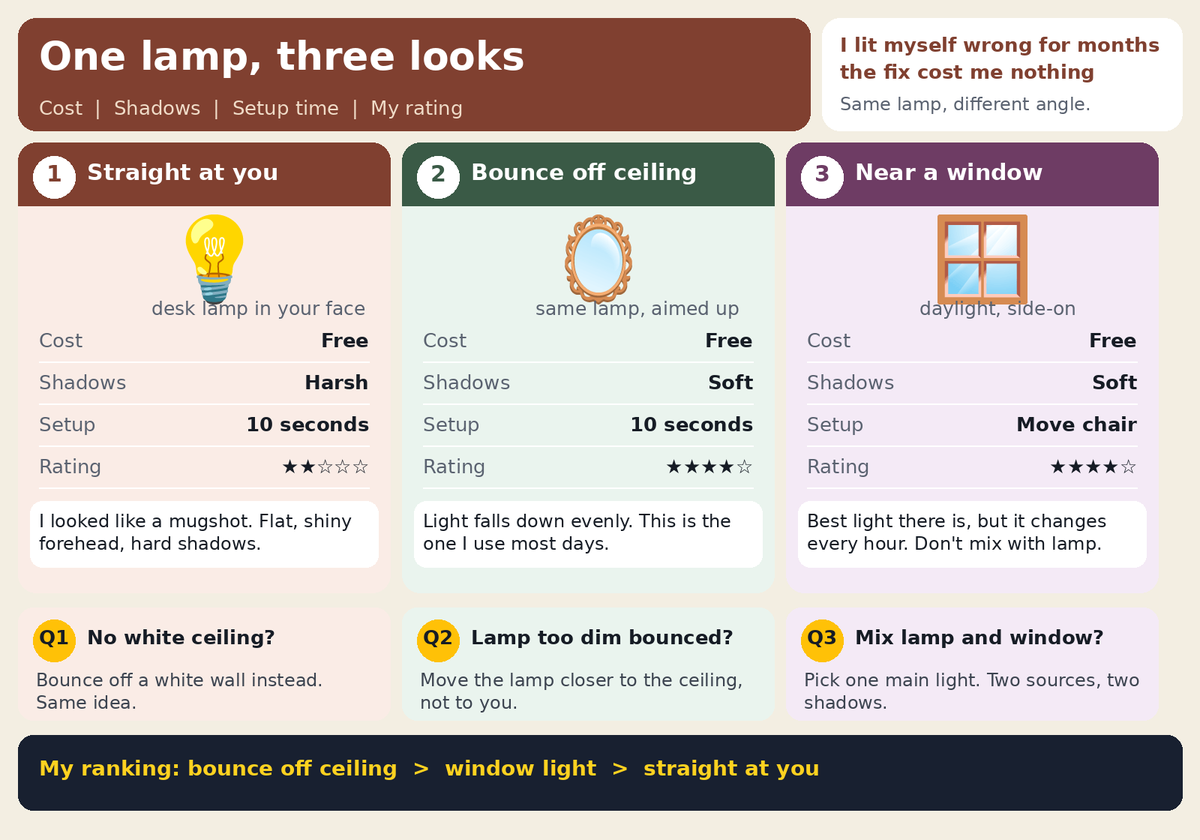
One lamp and harsh shadows? Bounce it off the ceiling. I used to point a desk lamp straight at my face and wonder why I looked like a mugshot. Three setups compared in the image. #VideoTips#Lighting#ContentCreator
@eback_4u@merkworkin So true — I spent longer picking my mic distance, light position and caption style than on any single edit. Once those are fixed as a template, each video really does get lighter. Curious how you lock in the style — presets, or a checklist you run through each time?
@editxshub For me it was pacing — watching how a film holds a shot a beat longer than feels comfortable before cutting. Tutorials taught me the buttons, but films taught me when not to cut. I started leaving a little breathing room in my voiceovers too and they sound way less rushed.
@strrwaii For a first edit, this flows nicely — your cuts land on the music beats, which is the hard part. One thing that helped me early on: trim a few frames off the start of each clip so there's no dead air before the action. It makes the whole thing feel tighter.
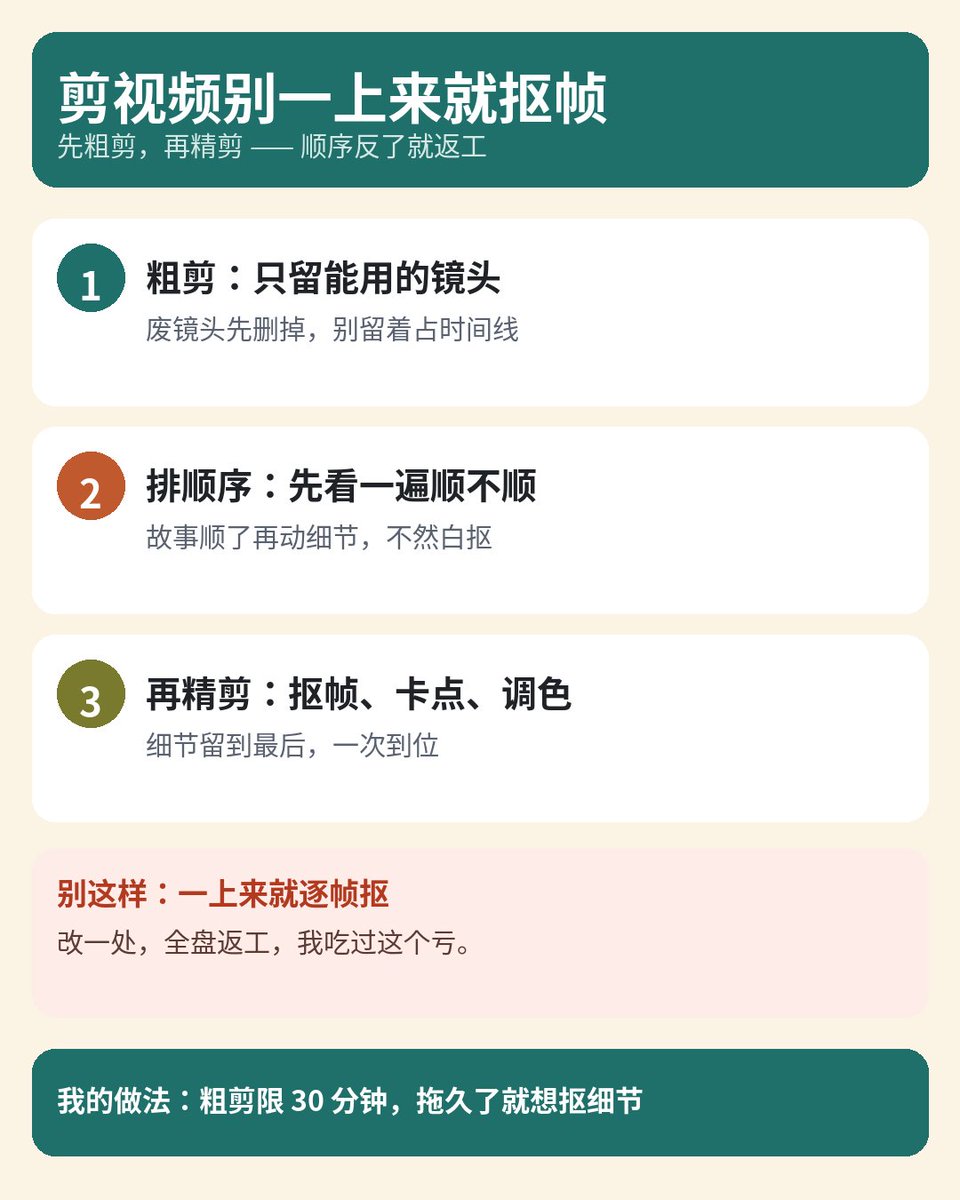
@simple_person19 Proxy media is the big one — edit with lightweight proxies and relink the full-res files for export. I also rough-cut first with only the usable takes, so the timeline stays light. Transcoding to proxies before I start beats fighting lag on every cut.
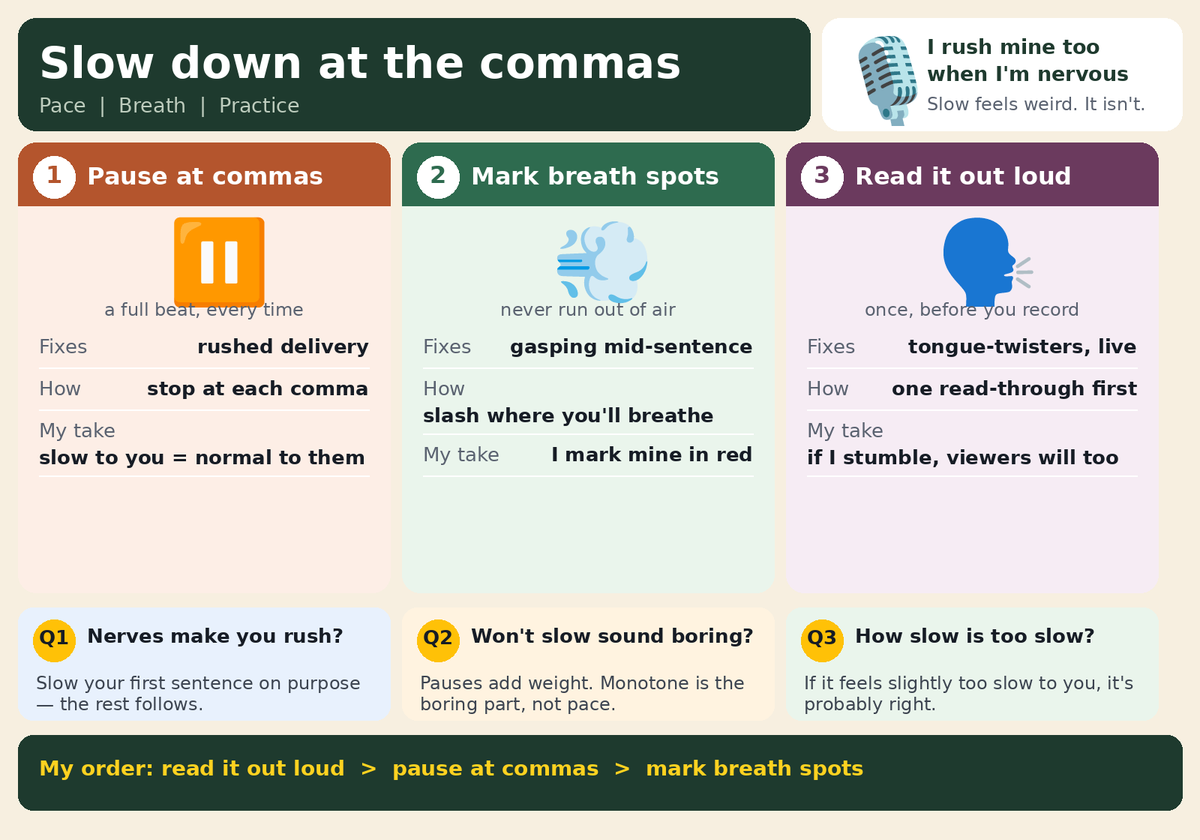
Talking too fast on camera? Slow down at the commas.
Viewers need a beat to catch up — I rush mine too when I'm nervous.
Pause at commas, mark a breath spot, read it out loud once.
It sounds slower to you, normal to them. #VideoTips#ContentCreator
@ShuxBroh Tried AI-assisted editing myself — the assembly is fast, but I still judge the pacing and cut points by eye. The tool can build the rough cut in minutes; deciding which cut actually lands is the part I wouldn't hand over yet.
@lovezihuatanejo The test that matters most to me is what the clips look like cut together — I once mixed 24fps AI-generated clips into a 30fps timeline and the export juddered the whole way through. If ChatCut normalises frame rate on the way in, that's the part that saves the most time.
@FacelessYTGrow This hit home — I once burned a whole evening re-exporting at higher bitrate before realising the title graphic itself was only 400px wide. Now I check the source at 100% before touching any export settings, exactly the diagnostic you describe.