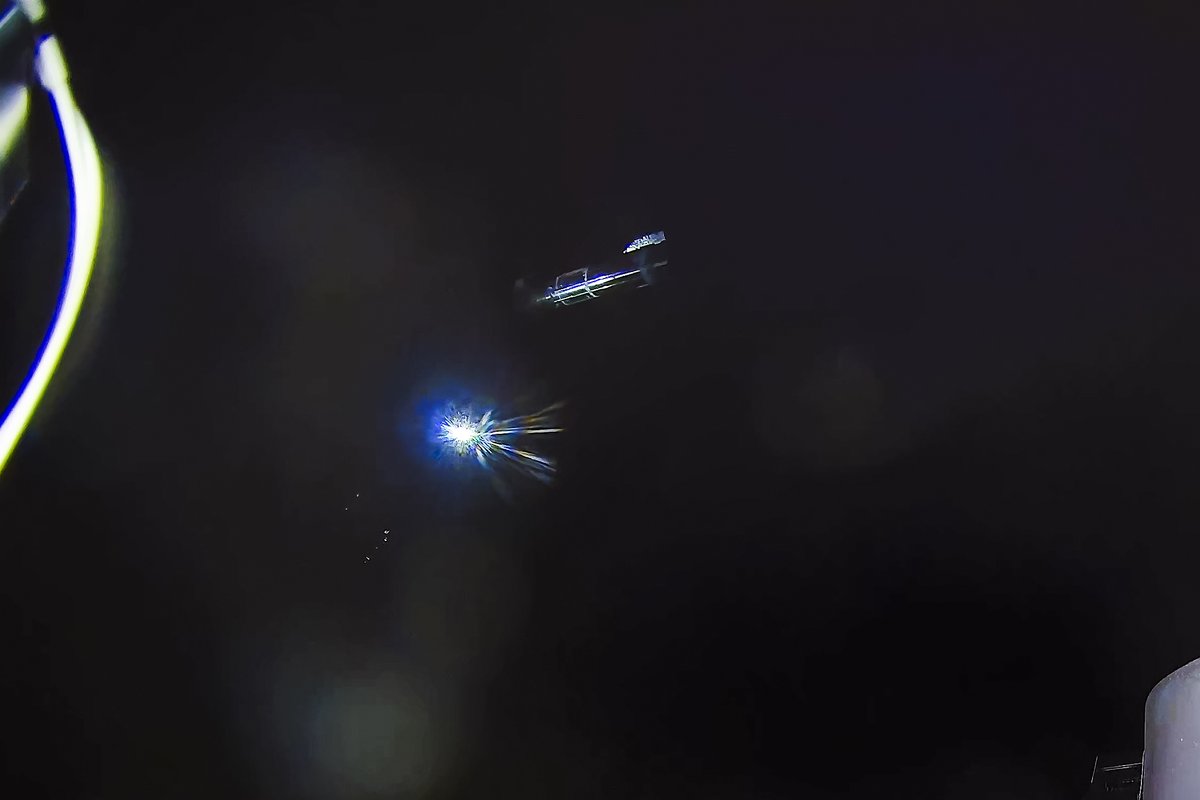
View of Starship in space from a Starlink V3 satellite on Flight 13.
This composite is made of imagery from four separate cameras on a single satellite. Six of the satellites were equipped with cameras to scan Starship’s heat shield and transmit imagery down to operators to continue testing methods of analyzing Starship’s heat shield readiness for return to launch site on future missions
The first Starlink V3 satellites in space successfully deployed their solar arrays, fired their thrusters, established connections with the Starlink constellation using radio frequencies and laser links, and captured imagery of Starship
Stunning first-sat views from @Starlink launch G10-38 on May 1, deployed from @SpaceX's Falcon rocket. Watch as the Starlink sats cruise over an entire orbit, through sunrise and sunset, and slowly separate from each as they complete their post-launch deployment sequence before beginning orbit raise. The satellites are stacked like a deck of cards in the rocket, which slowly spins when dispensing to impart a small velocity difference, ensuring deconfliction. May the @Starlink be with you.
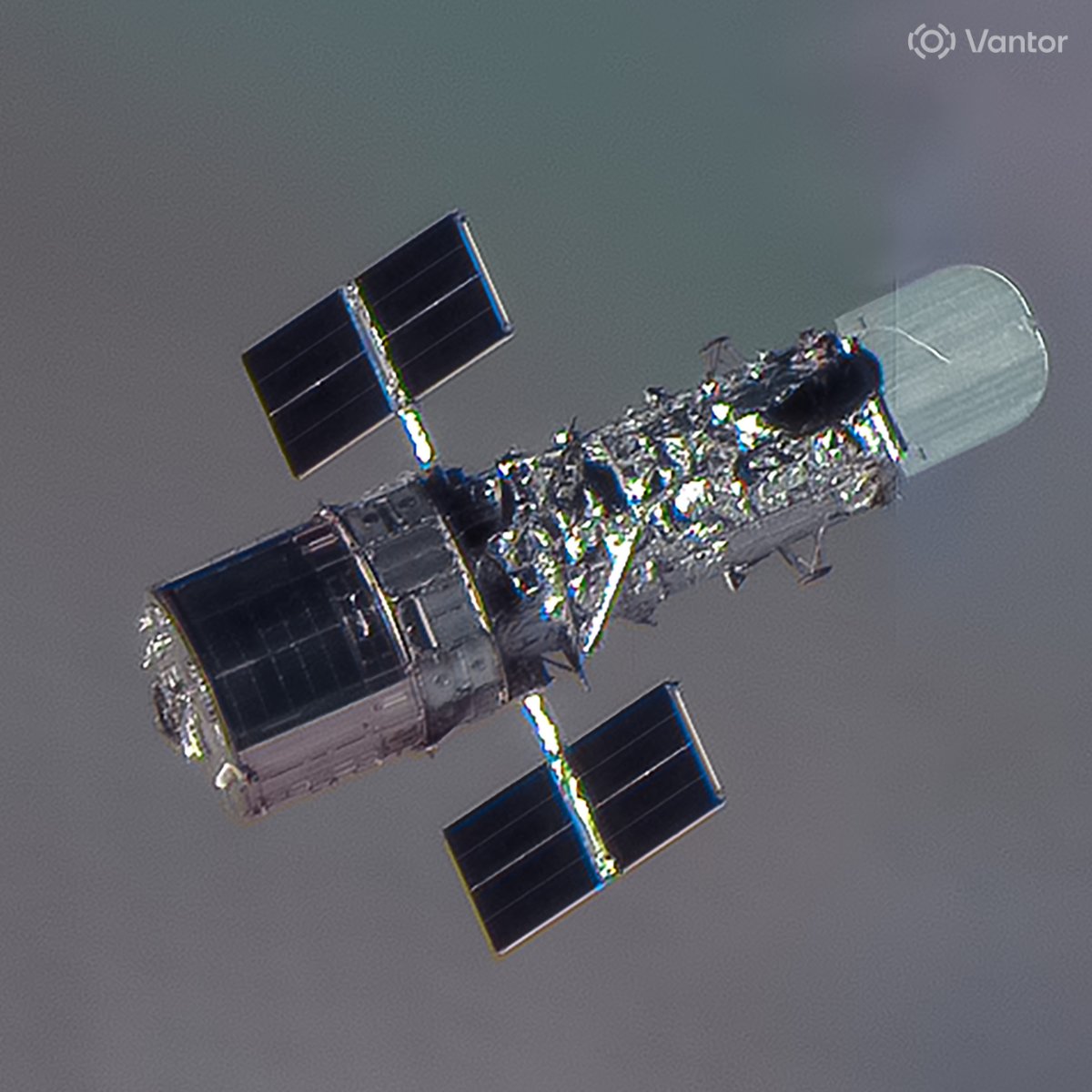
Celebrating 36 years of discovery with the Hubble Space Telescope 🔭
Collected on April 23, 2026, by one of Vantor's WorldView Legion satellites, this remarkable non-Earth image showcases Hubble from just 61.8 km away—an incredible perspective of one of humanity’s most iconic scientific instruments. With a space sample distance of 4.0 cm, Hubble’s signature cylindrical body, gleaming thermal shielding, and extended solar arrays are clearly visible, along with the open aperture door at the front of the telescope.
For over three decades, Hubble has expanded our understanding of the universe—delivering breathtaking imagery and groundbreaking science that continue to inspire.
Proud to support the technologies and teams that make moments like this possible.
Starlink 34343 failed on Mar 29 in a fatal energetic event which raised its apogee by 30 km and generated observed (but so far uncataloged) debris. Since then the orbit has undergone natural decay. Current orbit is 547 x 574 km.
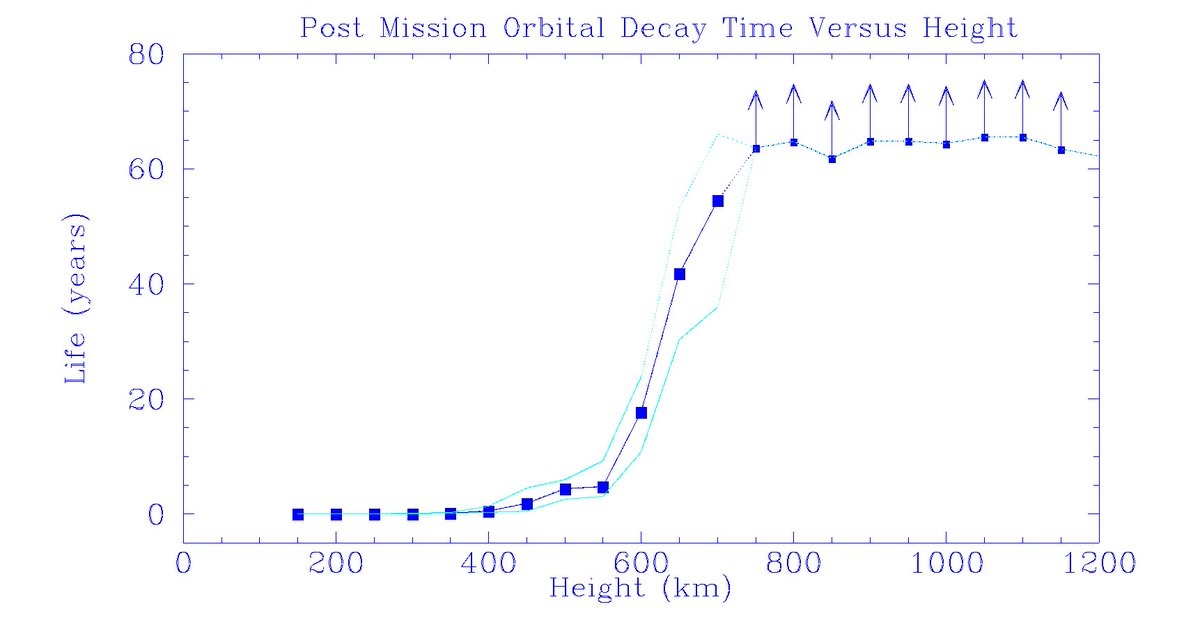
Today's calculation: how long does a satellite in a circular orbit stay up when it stops all reboost burns? Depends on a lot of things, especially solar activity, but let's average over all of that and do a Kaplan-Meier analysis in 50 km height bins on 69 years of actual data.
@planet4589@EspenUrkedal What makes this more impressive is the relative timing: those OneWeb sats were launched around the same time as the Starlink v1.0s, which are far and away the least reliable in SpaceX's fleet.
@planet4589@SpaceX I expect most of the benefit here to come from the cooperative frameworks mentioned, but the sheer quantity of extra data points here is such a big quality of life boost that it can't be understated.
SpaceX has developed a novel Space Situational Awareness (SSA) system, called Stargaze → https://t.co/dZUIfl2xmx
To maximize safety for all satellites in space, @SpaceX will be making Stargaze conjunction data available to all operators, free of charge. By providing this ephemeris sharing and conjunction screening service free of charge, we hope to motivate operators to take similar steps towards ephemeris sharing and safe flight.
According to the US Space Force TIP (Target Impact Prediction) the Starlink 35956 satellite, which suffered an internal failure on Dec 18 and generated as-yet-uncataloged debris, has reentered over N Queensland and Papua New Guinea at about 0713 UTC Jan 17
@planet4589 I'm hopeful that this remains the case going forward, and that other operators join in. Fitting more satellites into less space is definitely a challenge, but the reduction in risk is too significant to ignore.