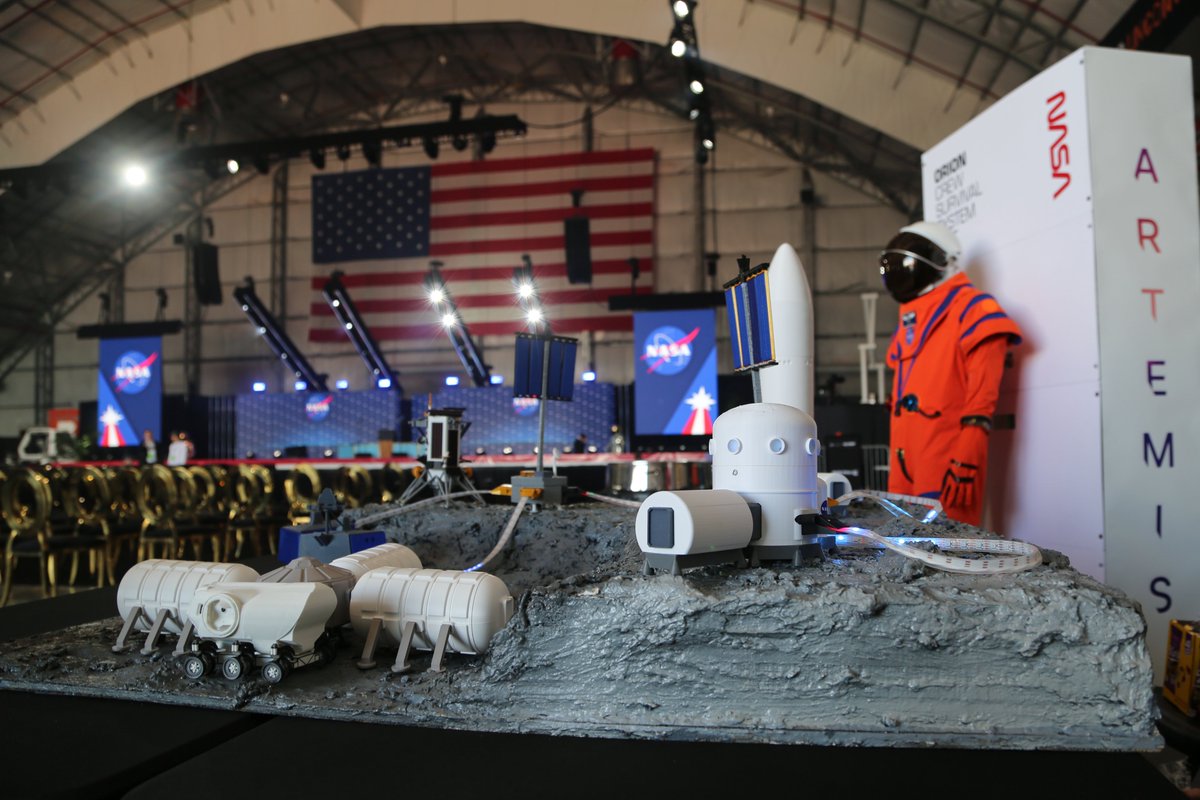
Intuitive Machines reported record Q3 financials: $269M in revenue (+31% QoQ), $33M in positive free cash flow, and $1.9B in backlog across civil, commercial, and national security markets. Strategic acquisitions are expanding our spacecraft manufacturing, mission operations, navigation, communications, and ground infrastructure capabilities.
New NASA contract opportunities strengthen our position as a next-generation space prime supporting NASA’s Moon Base and future exploration.
Explore our Q3 performance and strategic progress: https://t.co/fj2r1KklTc
This kind of work has a long history to it going back to Helo and fixed wing testing JPL did for Mars landing and that we adopted in ALHAT when I was on the multicenter team at NASA. Good papers published on those tests. We did Helo and fixed wing testing before IM-1 but the extra focus on this since IM-2 has really paid off. Support from NASA and JPL has been clutch.
$LUNR - Steve Altemus, CEO of Intuitive Machines: “We’re excited to participate in this next evolution of CLPS, with expanded tasking opportunities to meet NASA’s needs at the Moon, Mars, asteroids, and beyond.”“The broader scope of CLPS 2 builds on our existing leadership in space infrastructure and aligns with investments we're already making while helping to accelerate NASA’s Moon Base initiative and shape new opportunities for customers.”
CLPS 2 is a multiple-award, indefinite-delivery/indefinite-quantity (IDIQ) contract with a combined ceiling of $10 billion across all awardees, potentially increasing to $15 billion if NASA exercises a five-year option.
CLPS 2 significantly expands the services NASA can procure, including complete payload delivery missions, direct lander acquisitions, and funded technology and payload development. Beyond conventional lunar landings, the increased scope includes capabilities such as orbital delivery, launch rideshares, surface mobility, precision landing, and lunar-night survival and payload operations, among others.
Link to official press release: https://t.co/yrgNjBKDoW
New awards. New mission updates. More progress toward a Moon Base.
We're advancing commercial lunar deliveries, a nuclear-powered rover, launch and orbital transfer services, and infrastructure to support a sustained human presence on the Moon: https://t.co/Yt7oqpvLk5
We're kicking Moon Base updates into high gear! 🚀
Tune in today at 5 p.m. ET as agency leaders share the latest progress and new developments in our efforts to establish a sustained human presence on the lunar surface. The event will stream live from MAX POWER at @NASAKennedy.
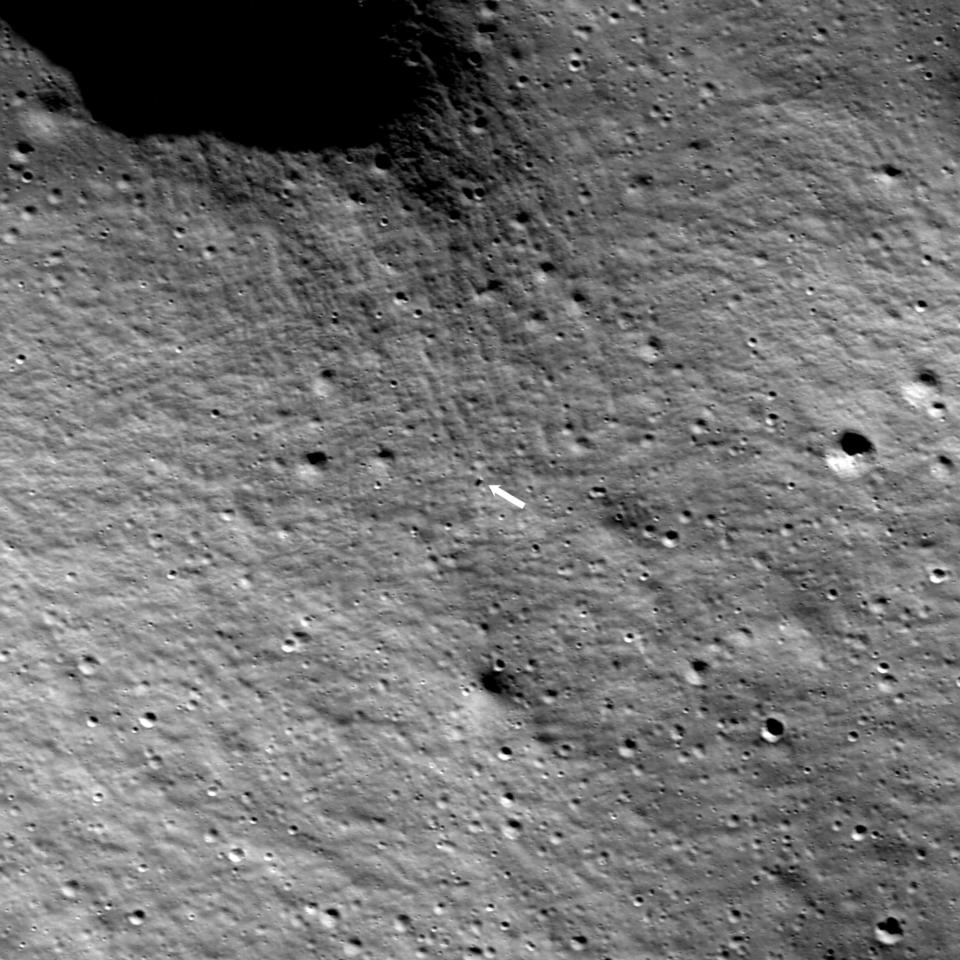
We never officially named the crater near the IM-1 Odysseus (Odie) landing site. But I think there is a bit of poetic symmetry to calling it Penelope. And so I think of it. Like the loyal queen of Ithaca, this crater waited for Odysseus to return to the Moon. Things are coming together for IM-3 Trinity. Maybe I'll think of a feature in near her landing site as Neo. I can almost smell the regolith. #adlunam
We’re partnering with NASA on the Power and Propulsion Element for the SR-1 Freedom mission. We’re taking our IM-1300 platform and repurposing it as the nuclear electric propulsion system for the planned 2028 flight to Mars. Right now, most rockets work like a firecracker, blasting out a huge amount of thrust for a short time, before running out of fuel. That gets you off the ground quickly, but it’s not great for long trips. This new idea is different. It’s like having a tiny nuclear power plant on the spaceship that makes electricity, which can gently push the ship for a very long time allowing us to go farther, carry more stuff, and stay out in space without running out of fuel. This could be a game-changer!
$LUNR - Intuitive Machines has been selected by NASA's Jet Propulsion Laboratory (JPL) to provide the spacecraft platform and system-level integration for FALCON-RADAR, an Earth observation mission that will study clouds and convection from space.
FALCON-RADAR, which is part of the Fleet for the Atmospheric Linking Commercial Observations with NASA, will fly on the IM 300™ spacecraft bus and is targeted for launch in no earlier than 2029. The mission consists of a single polar-orbiting, sun-synchronous satellite carrying a W-Band Cloud Profiling Doppler Radar instrument designed to observe shallow light precipitation and small-scale cloud dynamics. Through the FALCON-RADAR mission, millimeter-wavelength radar technology may support advances towards Moon and Mars applications.
https://t.co/Mv0iHzLNvC
Trinity brings the heat! 🔥🌕
2,500°F. 900 pounds of thrust.
Intuitive Machines' Trinity lunar lander lit up the night during its latest hot fire test, successfully completing engine ignition, main-stage operation, and multiple throttle sequences as we prepare for our third lunar mission, IM-3, targeted for Q1 2027.
Lessons from our first two lunar missions are shaping a more advanced Nova-C lunar lander, with expanded sensing capabilities, precision landing technology, and enhanced navigation systems. From successful NavPod testing this past summer to ongoing payload testing and now Trinity's latest hot fire, our teams are knocking down milestones across the mission. During the hot fire test, our team tested the engine's full throttle range, demonstrating the vehicle's readiness for the lunar landing burn.
IM-3 will deliver 13 payloads to the Moon's Reiner Gamma region, advancing the lunar transportation capabilities and infrastructure needed to support NASA's Moon Base.
#IntuitiveMachines #IM3 #Trinity #LunarExploration
BREAKING:
The first nuclear-powered Mars spacecraft takes another step forward.
Kratos has just confirmed it won NASA’s SR-1 Freedom core hardware contract - designing, manufacturing, and delivering the closed Brayton cycle power conversion system for $33.6 million. The system converts reactor heat into electricity to power the electric propulsion and the entire spacecraft.
SR-1 is targeted for launch in 2028, carrying the SkyFall Mars helicopter. It will be the first U.S. space nuclear reactor since 1965. When it comes to Mars, the U.S. is serious.
There is nothing easy about putting a lunar lander on the Moon. With no air, no lift, and no drag, the only way to brake is to use a rocket. The descent onto the Moon lasts about 12 minutes and the lander's engine burns the whole time as it throttles down. As the lander burns off fuel, its weight constantly shifts, requiring continuous adjustments to the throttle. It's a monstrous challenge that must be handled autonomously. To top it off- just before the lander touches down on the Moon's surface it needs to be moving about 1 meter per second (that's slower than an average walking speed).
Another milestone for Lunar Vertex!
Lunar Outpost’s MAPP rover has been integrated with @Int_Machines' IM-3 Rover Deployment Mechanism. MAPP will explore Reiner Gamma as part of the @JHUAPL-led Lunar Vertex investigation.