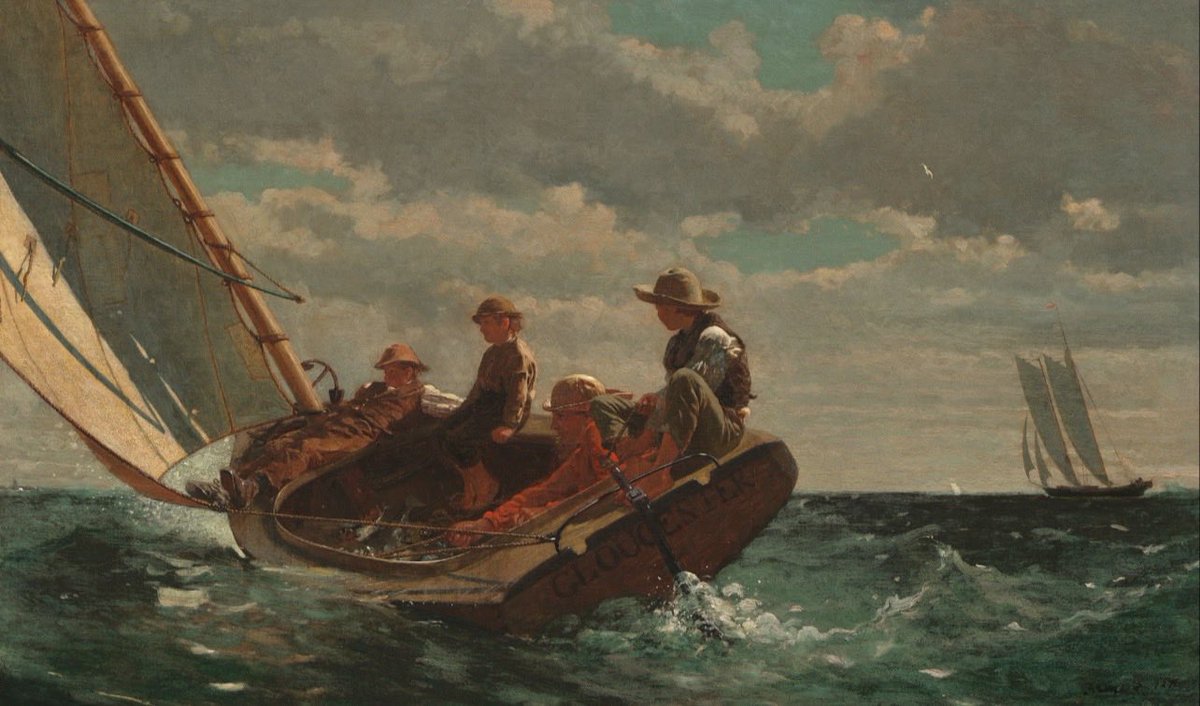
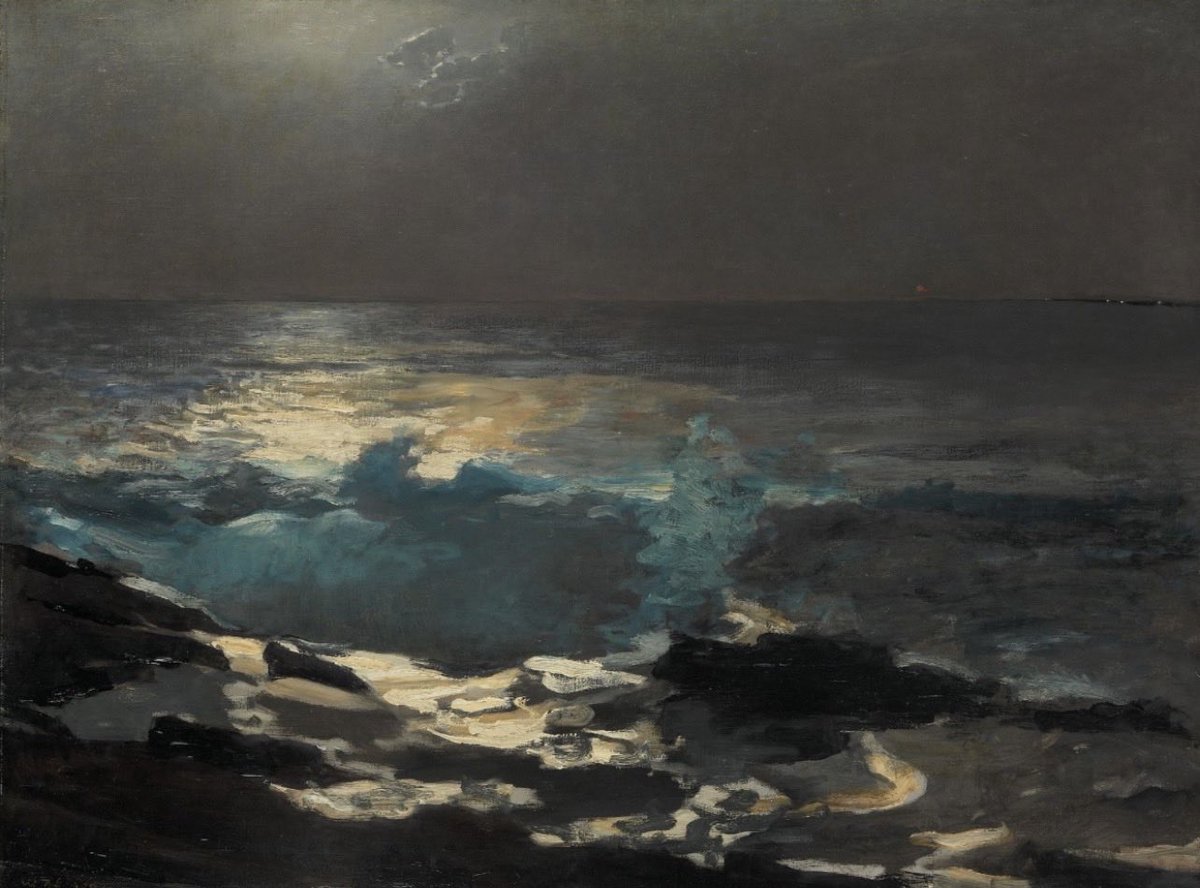
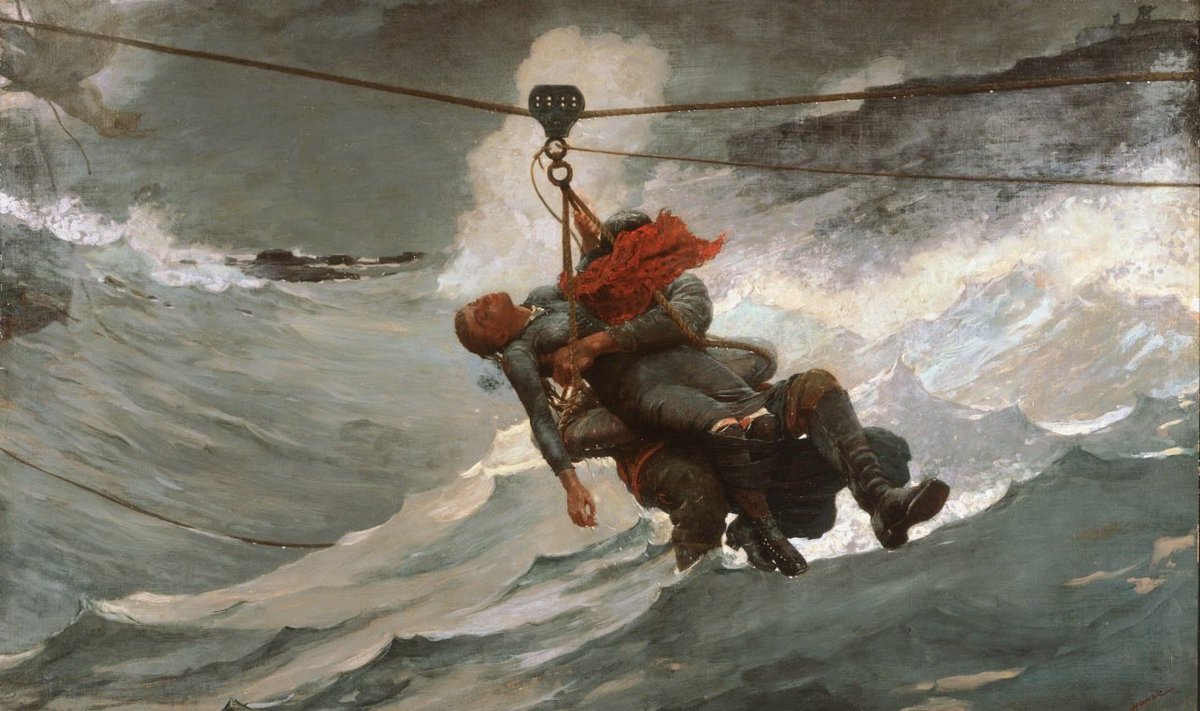
No one painted the sea like Winslow Homer.
Born in Boston in 1836, Homer was mostly self-taught. He made his name as an illustrator for Harper's Weekly, sketching soldiers in the field during the Civil War.
In the early 1880s he spent time in Cullercoats, a fishing village on the English coast, watching fishermen and their families live by the sea. It changed his work. He came back to America and settled at Prouts Neck on the rocky coast of Maine. He spent the rest of his life painting the Atlantic.
His sea is beautiful and unforgiving. Waves crash on the rocks and men in small boats face forces far greater than themselves with steady nerve. In The Gulf Stream, a lone sailor drifts on a broken boat as sharks circle and a waterspout rises in the distance.
Homer died at Prouts Neck in 1910, but his paintings still remind us of the majesty and danger of the sea, and of the courage of the men who go out on it anyway.
English-born, New Zealand-based photographer George Chance was a “pictorialist” who sought to elevate photography to a fine art ~ here he captures the atmosphere of a summer’s day in South Canterbury (c 1933). Click for full effect!
The view of Flask Walk is from Charles Ginner’s desk at 61 Hampstead High Street in north London (1920s). The depiction of the road is much closer than it is in reality; the fronts of the houses in Hampstead High Street have been cut off at the right and cut off at the left.
This entire 1435 Louvre painting is barely 26 inches wide—yet it hides over 2,000 tiny people, squashed rabbits under a marble pillar, and a secret self-portrait.
Every microscopic detail inside Jan van Eyck's masterpiece: 🧵1/
'The Window, Chiswick.' (1929) Mary Potter was a distinctive voice in 20thC British painting. Over a long life she developed a visual language that balanced structural discipline with subtle intensity. Kenneth Clark likened her work to the prose of Virginia Woolf.
'Miss Buchanan.' (c1922) According to a report from a party celebrating her appointment to CBE in 1938, Ethel Walker was introduced as ‘England’s leading woman artist’, she replied: ‘There is no such thing as a woman artist. There are only two kinds of artist, bad and good.'
'London Bridge: Adelaide House and Fresh Wharf' (1913). Charles Ginner's depictions of London are often characterised by a sense of industry, with people and vehicles often emphasising the hustle and bustle of everyday life.
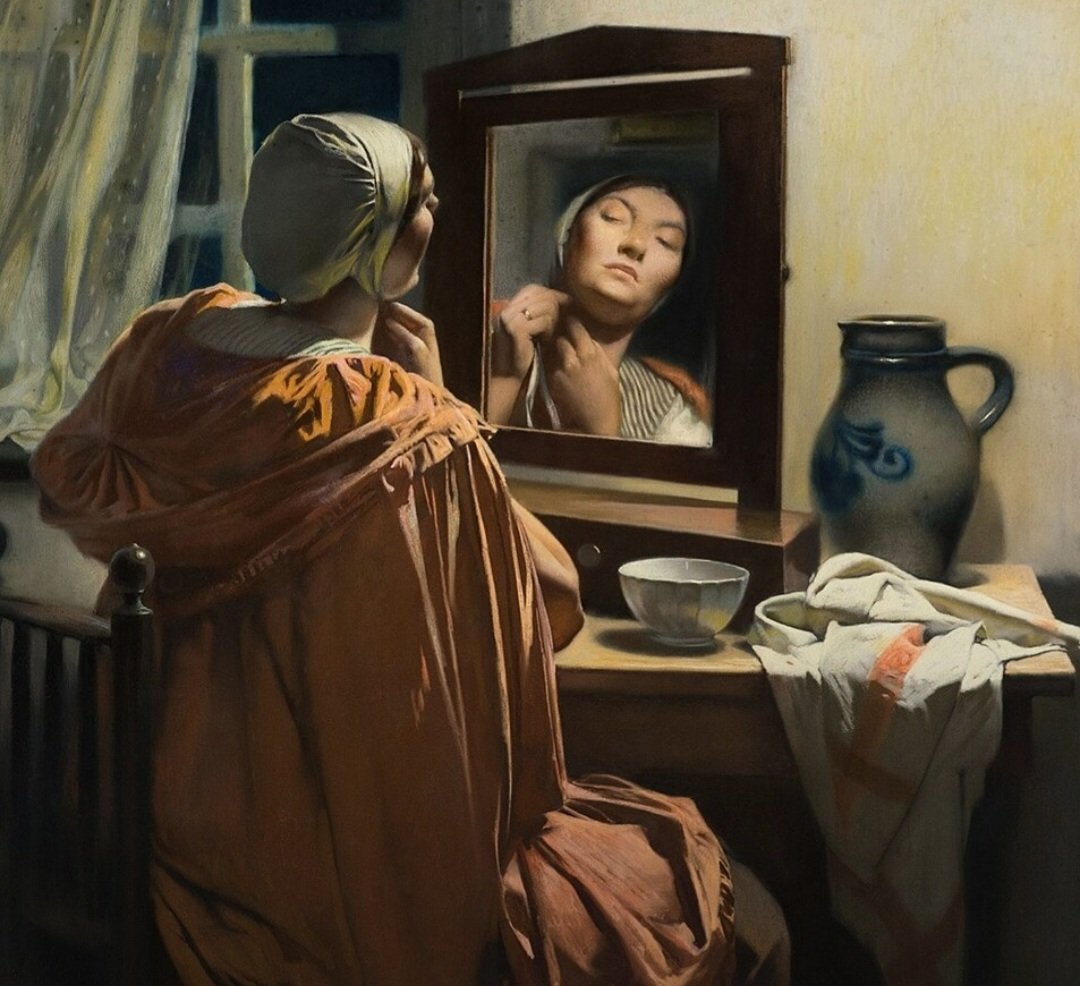
'A Woman at Her Toilet' (1914), Firmin Baes first worked in oils and made large charcoal drawings before turning to pastel, achieving remarkable effects. His hero Chardin turned to pastel late in life because of poor sight, using it to sum up a lifetime of observation.
'Logan's Rock, St Levan,' (c1916) perfectly demonstrates the height of Laura Knight’s development in Cornwall, this work is part of a series of paintings she composed between 1915 and 1919 all sharing an elevated viewpoint, dramatic diagonal composition and vibrant colour.