I was sitting in a crowded coffee shop this morning and witnessed a masterclass in fatherhood that I’ll be thinking about for a long time.
A young boy, maybe 6 years old, accidentally knocked a massive, bright blue ICEE off the table. It was a disaster, sticky syrup everywhere, on the floor, the chairs, the works.
The kid looked up at his dad, shoulders hunched, clearly waiting for the hammer to drop. I’ve seen this play out a thousand times where the parent loses their cool because of the inconvenience.
Instead, the dad didn't even raise his voice. He just looked at the mess and said:
"Hey, it happens, Let's go grab some napkins and I’ll show you how we fix this."
They spent the next five minutes cleaning it up together. No lecturing, no shaming, Just a team effort.
But it was what the dad said while they were throwing away the trash that really hit me. He looked his son in the eye and said:
"You’re going to be a human being for a long time, and you’ve got a smart brain. It’s important to learn how to be aware of your surroundings so we can prevent accidents, but it’s still okay when they happen. As long as you take responsibility, the cleanup is always the easy part."
Then, as they sat back down, he added one more thing: "And remember, big messes can feel overwhelming when you're alone. Never be afraid to ask for help when you need it."
As someone whose own kids are now grown and out in the world, I realized I was watching a man build a person, not just manage a child.
We spend so much time worrying about "discipline" that we forget our main job is to teach them how to handle life when it gets messy.
If that’s the next generation of fathers, we’re going to be just fine.
In the early 1960s, the Nashua River in central Massachusetts was so polluted you could smell it from a mile away.
Marion Stoddart was a stay-at-home mother in Groton, Massachusetts, three-quarters of a mile from the river, with a background in anthropology and education and no particular expertise in environmental science or policy. She moved there in 1962, smelled the river, and decided she was going to fix it.
She gathered signatures, 6,287 of them, from residents in communities along the river. She showed up at the Massachusetts State House with bottles of the river water and made legislators look at what they were allowing.
She organized mayors, selectmen, and paper mill executives into a coalition. She lobbied for legislation. In 1965, Massachusetts passed the first state clean water act in the nation. Federal funding followed. Treatment plants were built. The discharges stopped.
The Nashua River is now swimmable. Salmon and other fish have returned. In 2019, sections of it were designated as Wild and Scenic under federal law, the same designation given to places the country considers worth protecting as national treasures.
Marion Stoddart is 98 years old. She still lives near the river. She's a reminder that the person who fixes a broken thing is usually someone who decided it was their problem too.
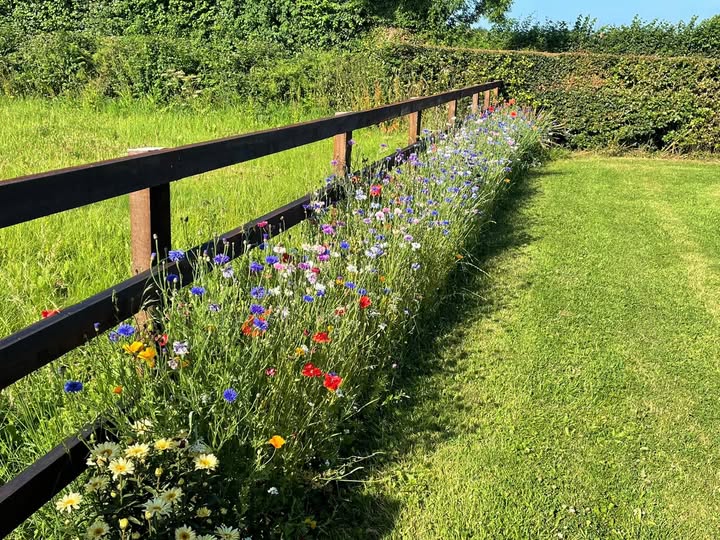
The shape of your pollinator garden matters more than its size.
Most native bees have small foraging ranges. Peer-reviewed research on solitary bees found female flight distances of just 73 to 121 meters from the nest. A small bee born in your neighbor's yard might not reliably reach a flower patch in the middle of your yard if there's a length of mowed grass between them.
What works is linear pollinator habitat. A strip along a fence line, a corridor along the driveway, or a narrow band of natives running the full length of the property is best.
A 2018 study in the journal Ecography found that the length of linear semi-natural habitat was the single strongest predictor of wild bee species richness and connectivity in agricultural landscapes. Bees track edges.
A 2-foot-wide strip running 50 feet does more ecological work than a 10x10 island in the middle of the lawn. The strip gives pollinators a route to follow, something that guides their movement across the landscape.
The effect multiplies when your neighbors do the same. A strip along your fence meets a strip along theirs, and so on.
I'd like you to meet to the Boston Boundless Trail
- 90.9 miles, passing through every city/town that borders Boston
- Over 100 green spaces along the way
- Public transit connections
- Food and drink at many points
Grab maps and directions and WALK HARD
https://t.co/ZK6y9wiISk
@MibshaD We got our rainbow baby after many losses. People told me to stop thinking about the ones we lost and just be grateful for the one we got. They don't realize that it stays with you. We planted a memorial rose bush for our babies and it helped having somewhere tangible to grieve.
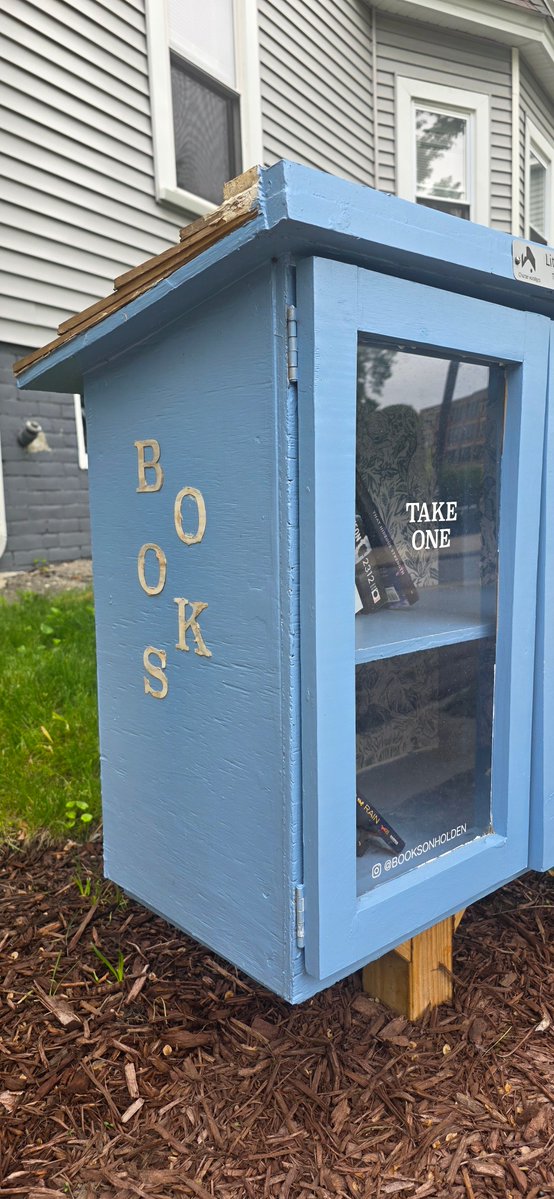
Little Free Libraries started with one tiny book box built in 2009 as a tribute to a teacher and book lover.
Today there are more than 150,000 across 115 countries, including Antarctica.
Take a book.
Leave a book.
Somehow one small idea turned into a worldwide movement.
This is Sadie. She's a service dog who was honored with her own bone diploma at her human's college graduation. Worked very hard in all her classes and is glad her efforts didn't go unnoticed. 14/10
@HillsPet we got one of your measuring cups from the vet years ago and now it's broken. It's been perfect for keeping our pups' portions in control. Where can we get another?
We partnered with @Scholastic to create LIMITED EDITION I Spy tote bags 👀📚
We’re giving 3 away + I Spy book collections to 3 lucky winners 💜
Follow + like + comment your favorite childhood book to enter ✨