Financial markets are constantly evolving. The way markets are studied and analyzed must evolve with them.
There was a time when traders primarily relied on price charts, a handful of technical indicators, and years of accumulated market experience.
Those methods still have value today.
But the trading environment has changed.
There is more data. Information moves faster. Quantitative and algorithmic trading systems are playing an increasingly important role in modern market structure.
So the question is no longer simply:
Should traders rely on manual analysis or use technology?
A more relevant question is:
How can human experience be combined with technology’s ability to process data to build a more consistent analytical process?
🚀 CRAZII AI Edition is here.
Scan up to 50 markets on one screen, get qualified market alerts, analyze charts with AI by rules, and connect price action with market news.
AI doesn’t trade. You decide.
🌐 https://t.co/uq3mP0lNKW
#CRAZII#AITrading#Fintech
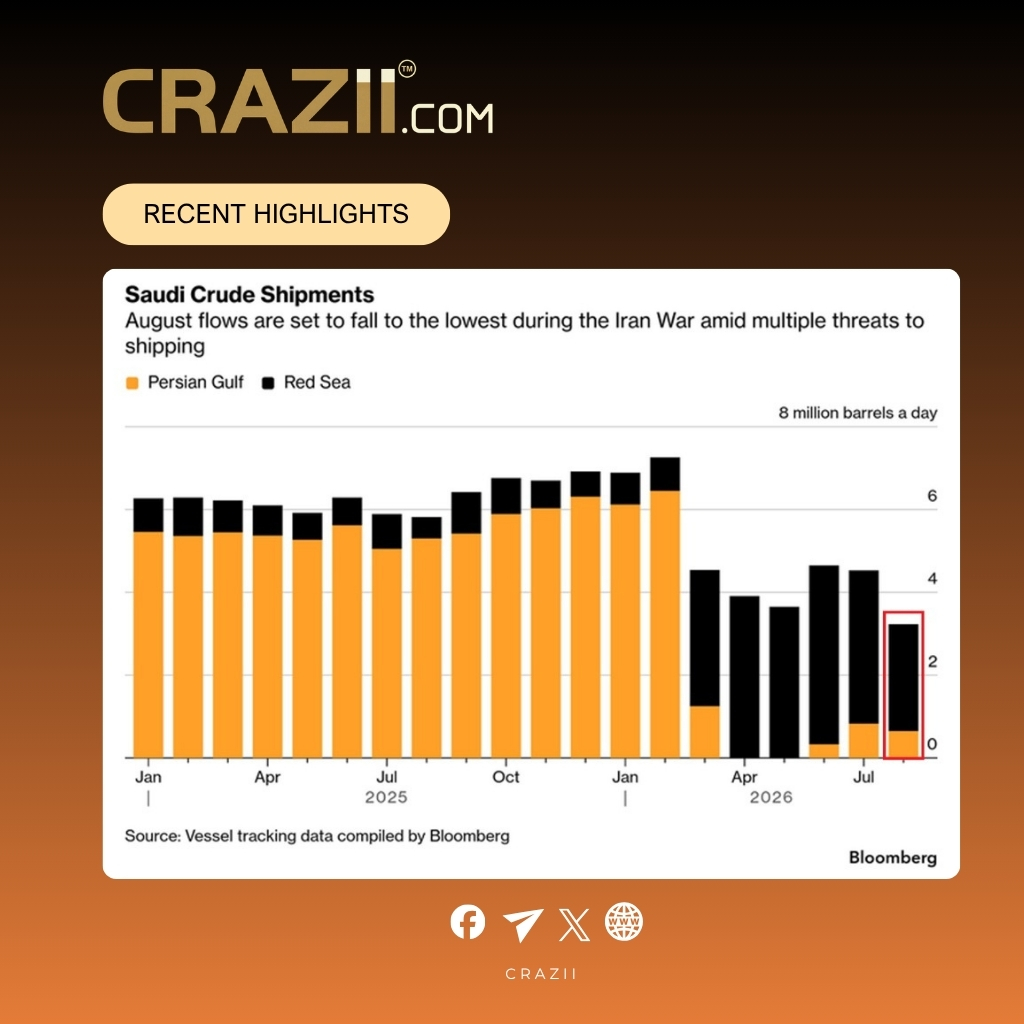
Saudi Arabia is experiencing a significant shift in its crude oil export pathways.
Export Volume Drop: Over the first 23 days of August, combined crude shipments from the Persian Gulf and Red Sea averaged just 3.23 million barrels per day, heading toward the lowest monthly level since the start of the Iran War. This follows the previous low of 3.65 million barrels per day recorded throughout the entirety of May.
The Houthi Threat & Yanbu Shift: This dynamic follows a warning issued last month by Yemen's Houthis stating they could block shipping via Saudi Arabia's Red Sea passage. Consequently, exporters have redirected shipments away from the western Red Sea port of Yanbu. Yanbu is linked to the country's eastern oil fields by a 746-mile pipeline, enabling crude to completely bypass the Strait of Hormuz.
Surge at Ras Tanura: In response, Saudi Arabia has sharply boosted loadings at its primary export channel, the Persian Gulf port of Ras Tanura, registering roughly 7 million barrels of shipping capacity loaded there on Tuesday alone.
Ultimately, Saudi Arabia’s crude exports continue to display high volatility.
The market is currently building a base as it gears up for its upcoming major breakout.
Specifically, the S&P 500 recorded an intraday trading range of only 0.46% on Tuesday, coming close to its lowest point since December. Furthermore, throughout the majority of this month, the index's price fluctuations have stayed below 0.75%.
Since the start of the month, this metric has only crossed the 1.00% threshold twice—on August 3rd and August 4th. Consequently, August stands out as the least volatile month of 2026 thus far based on this measure.
Simultaneously, the $VIX volatility index has held under 17 points for three weeks in a row, marking its longest stable stretch since the final fortnight of 2025 and the opening week of this year. Overall, market volatility has reached unusually low levels throughout this month.
Most people give up because they think it's 'crazy'.
But the ones who send rockets straight to the Moon never follow the crowd. 🚀
Trading is no different: When the crowd panics, we use discipline. When the market is chaos, we rely on intelligence and the precise structure from CRAZII.
The crazy ones create the trend. Are you ready to break your limits?
👉 Try the tool now: https://t.co/aVtNQhPsvF"
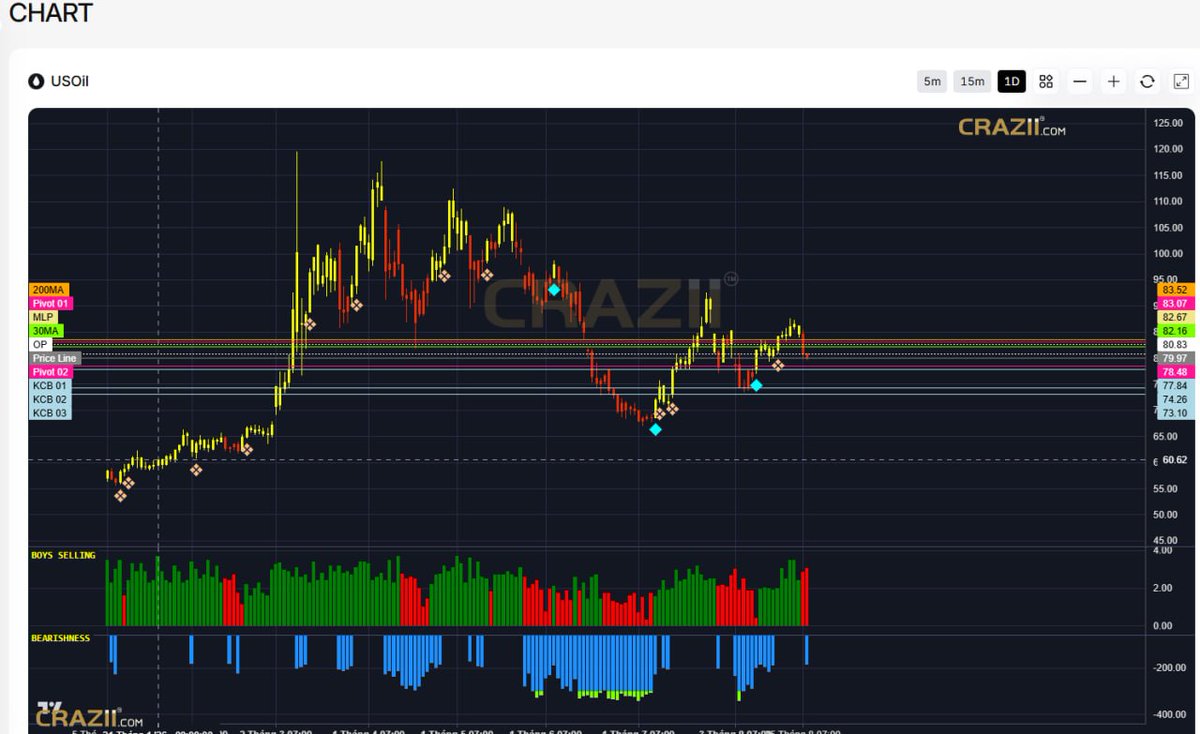
BREAKING: US oil prices extend losses to over -6,55% on the day and drop below $79/barrel.
The move comes even as the US has said there are no ongoing negotiations with Iran.
👉Three key events to watch this week
Wednesday, 7:30 PM: Core PCE inflation data and quarterly GDP figures will be released.
Friday, 9:00 PM: Fed Chair Kevin Warsh is scheduled to speak.
Markets will also be watching revisions to previous Nonfarm Payrolls (NFP) data, which could provide a clearer picture of the U.S. labor market.
From Thursday through Saturday, the Jackson Hole Economic Symposium will take place in Jackson Hole, Wyoming. Hosted annually by the Federal Reserve Bank of Kansas City, it is considered one of the most important economic and financial events of the year for global investors.
Overall, traders should pay particular attention to Wednesday and Friday evening, when market volatility could increase significantly.
It’s time to make America the crypto capital of the world.
@POTUS and the current administration have done an excellent job of moving us towards this. Now we need to get Clarity done.
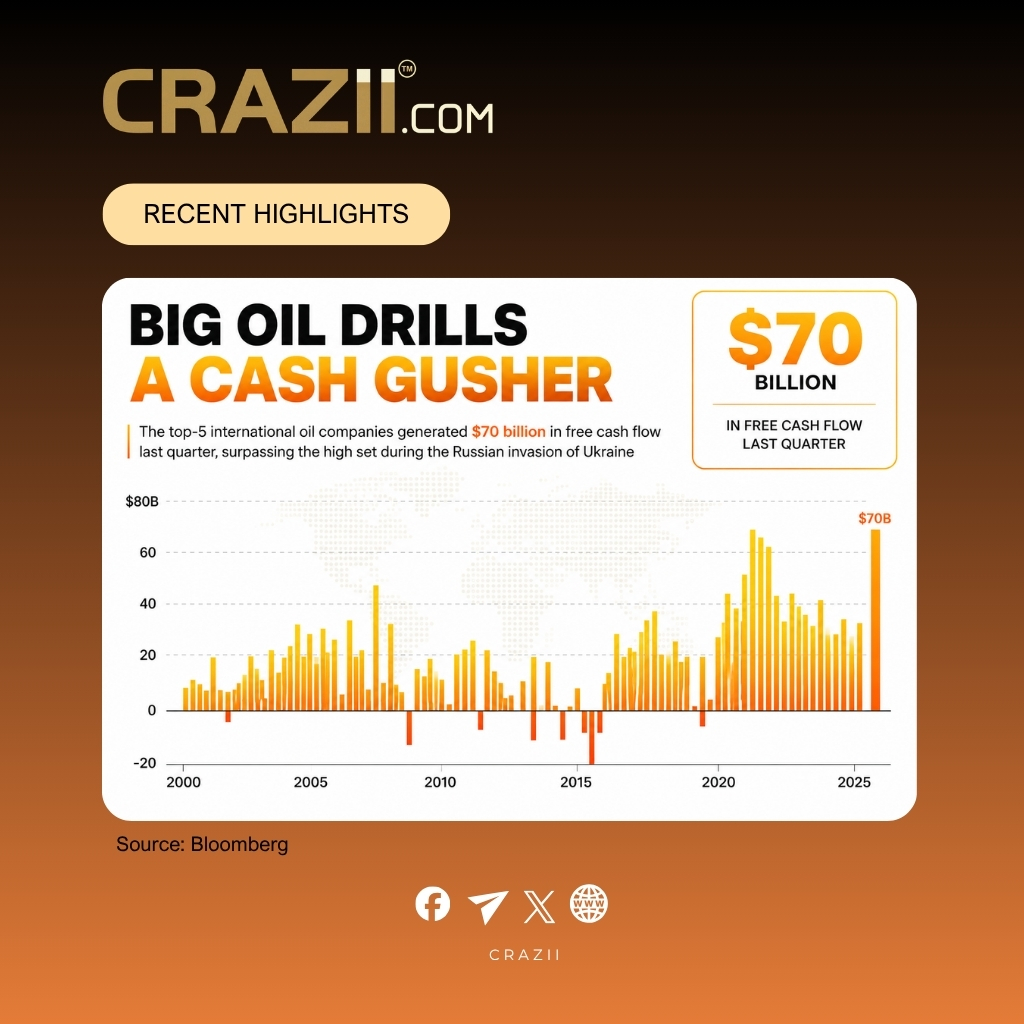
The world’s biggest oil companies are sitting on an unprecedented amount of cash.
In Q2 2026, the five largest international oil majors generated nearly $70 billion in free cash flow, setting a new all-time record.
The group includes ExxonMobil ($XOM), Chevron ($CVX), Shell ($SHEL), TotalEnergies ($TTE), and BP ($BP).
That represents an extraordinary +600% increase quarter-over-quarter.
For context, the previous record was roughly $60 billion in Q2 2022, when energy markets were heavily disrupted following Russia’s invasion of Ukraine.
Profitability also surged.
Combined net income across the five companies reached $47 billion last quarter, up +160% year-over-year and marking the third-highest quarterly total ever recorded.
With geopolitical tensions surrounding the Iran War, major oil producers are accumulating cash at levels rarely seen before.
Big Oil’s cash reserves have entered record territory.