Claude Code Fable 5 is insane.
i know literally NOTHING about coding. ZERO. and i just built 3 fully functioning web apps in 30 minutes.
http://localhost:3000/
http://localhost:5000/
http://localhost:8000/
check it out.
👋 Hola, Ministerio de Transformación Digital, @mintradigital:
👋 Hola, Secretaría de Estado, @SEtelecoGob:
Autofirma es un componente esencial de la Administración Electrónica española. Millones lo utilizamos para relacionarnos con la Administración. No por placer, sino porque es ✨requisito✨.
----8<----8<----8<----8<----8<----8<----
El paquete de Autofirma que distribuís para Mac no cumple las garantías de seguridad modernas (notarización), así que el sistema dice que es malware que puede dañar el sistema y rechaza instalarla. 😃🔫
----8<----8<----8<----8<----8<----8<----
🤦 Para instalarla hay que —ojo al dato— desactivar las políticas de ciberseguridad del sistema operativo. 🤦
¡Hola, @INCIBE! Hacéis campañas fabulosas para concienciar a la ciudadanía de los riesgos de ciberseguridad, pero luego nos enjaretáis —el Estado— marrones como este. ¿Podéis hacer algo, por favor?
Respetado ministro @oscarlopeztwit:
Respetada secretaria de Estado @mariagv:
— Si hacéis software, cumplid los estándares modernos de empaquetado y distribución de software.
— Si no podéis notarizar Autofirma, modernizad la arquitectura del programa para que se pueda.
— Si no podéis modernizar Autofirma, necesitamos un Ministerio para la Transformación del Ministerio de la Transformación Digital.
Esto es lo que ve un usuario al intentar instalar Autofirma en un Mac:
Every time you see a startup with “.ai” in its domain…
someone is getting paid.
Not the founders.
Not the VCs.
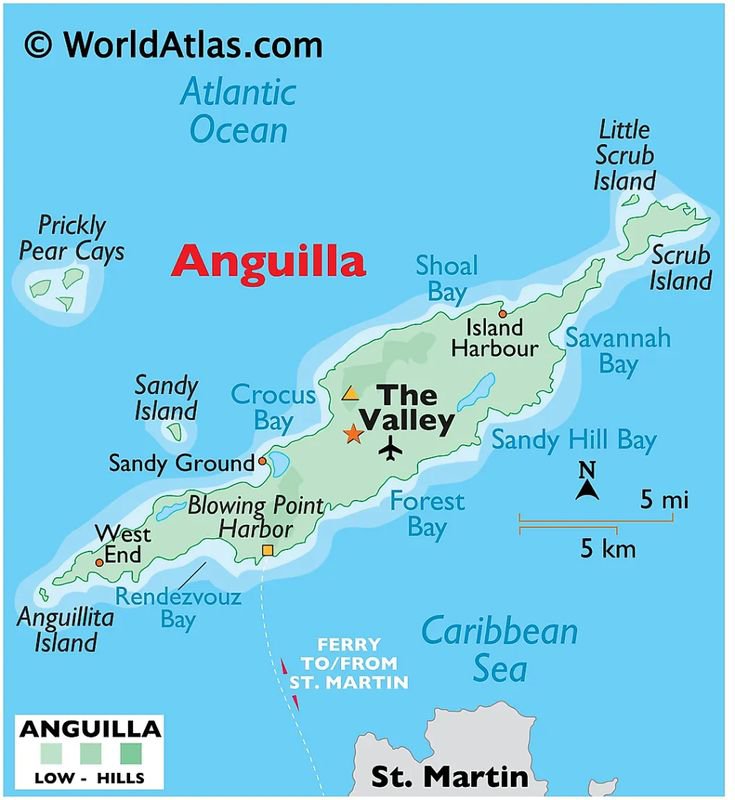
A tiny Caribbean island is.
→ Anguilla
Back in 1995, countries got their domain codes:
> India got .in
> The UK got .uk
> The US got .us
> Anguilla got .ai
At the time, it meant nothing.
No tech scene.
No startups.
Just tourism.
Then ChatGPT happened.
And suddenly:
> .ai started to mean credibility
> .ai started to mean cutting-edge tech
> .ai started to mean something investors take seriously
So every startup rushed to buy it.
The result?
> Domains grew from ~60K to 1M+
> ~2,000 new registrations per day
> ~$130 per domain (2 years)
And here’s the crazy part:
> Nearly HALF of Anguilla’s national budget now comes from .ai domains
That money is funding:
> Lower taxes
> Free healthcare for kids
> A brand new international airport
No strategy.
No master plan.
Just… two letters assigned by chance.
Sometimes, the biggest leverage in the world is pure luck.
No ha defraudadooooo 🤯🤯🤯
Gol del Rochdale en el 95, invasión de campo, celebran medio ascenso.
Pero después de un buen rato se reanuda el partido para dos minutos y…
Gol del York en el 115’.
1-1. Final.
Sube el York.
Ahora os pongo los goles...
Columbus pitched this exact trip to Spain in 1492. He said it was a 3,500-mile journey. The real distance is more than 8,000 miles. He survived only because two entire continents nobody in Europe knew existed happened to be sitting in his path.
The first mistake was a translation problem. Columbus was working off a calculation by a 9th-century Persian geographer named Al-Farghani, who said one degree around the Earth was about 57 miles. That was correct, but Al-Farghani measured in Arabic miles. Columbus assumed Roman miles. Same number, different ruler. Roman miles were shorter, so his version of Earth came out 25% smaller than the real one.
Then he made it worse. He read Marco Polo and decided Asia ran way further east than anyone else thought. So he redrew his maps to match. Japan ended up sitting right next to the Azores, the Portuguese islands in the middle of the Atlantic. The actual Japan is on the other side of the entire Pacific Ocean. He moved a whole country 8,000 miles to make his pitch work.
Spain’s royal experts ran his numbers in 1486 and rejected him. They were right. They told Ferdinand and Isabella that Columbus had badly underestimated the size of the planet. He got funded six years later anyway, but not because his math improved. Spain’s long war at home had just ended, and they wanted in on the Asia trade before Portugal locked it up.
A Greek librarian had already figured out the actual size of Earth in 240 BC. That puts him 1,700 years ahead of Columbus. The librarian was named Eratosthenes. He used a stick, a deep well in southern Egypt, and the angle of the noon sun on the longest day of the year. His answer: about 25,000 miles around. The real number is 24,901. He was off by maybe 1 to 2%, depending on the Greek length unit he was using. He did this with hand tools, almost 2,000 years before anyone built the first telescope.
Columbus knew about that calculation. He just didn’t like it. The bigger number meant the trip was impossible. No 15th-century ship could carry enough food and water to sail 8,000 miles nonstop, let alone the 15,000-plus to actual eastern China. So he picked a smaller number that fit the boat. He got lucky. The Americas were in the way.
The map in this post does work in a literal sense, but it cheats. Flat maps stretch everything sideways. Any east-west line looks straight on them, even when it actually curves on a globe. If you’ve ever flown to Tokyo, you’ve seen the flight path arc up over Russia on the seatback screen. The arc is the actual shortest route. Columbus’s plan was wrong. The map that makes it look possible is wrong in a different way.
Introducing GPT-5.5
A new class of intelligence for real work and powering agents, built to understand complex goals, use tools, check its work, and carry more tasks through to completion. It marks a new way of getting computer work done.
Now available in ChatGPT and Codex.
You can smell rain better than a shark can smell blood. 200,000 times better. Your nose picks up the compound behind petrichor (that smell after rain) at levels so tiny it's like finding one teaspoon spilled across 200 Olympic swimming pools.
That compound is called geosmin. It comes from soil bacteria. And the word "petrichor" itself didn't exist until 1964, when two Australian scientists, Isabel Joy Bear and Richard Thomas, published a paper in Nature trying to figure out why rocks smell after rain. They took the Greek words for stone and "the blood of the gods" and stuck them together. Blood of the stone.
When soil stays dry for weeks, certain plants leak an oil that the clay soaks up like a sponge. At the same time, soil bacteria called Streptomyces start making spores (tiny survival pods that can sprout into new bacteria later) and give off geosmin while they do it. The smell just sits there in the dirt, waiting.
Then rain hits. A 2015 MIT paper figured out the physics of what happens next. Raindrops land on dry soil and trap tiny air bubbles in the soil's pores. The bubbles rise up through the raindrop and pop out the top, flinging thousands of tiny droplets into the air. Each one carries a piece of the oil, some bacterial spores, and some geosmin. Wind does the rest. Light rain releases the most of these droplets. Heavy rain releases very few, which is why a drizzle smells more than a downpour. MIT estimated that rain across the planet throws between 10,000 and 800,000 trillion bacterial cells into the air every single year.
In 2020, scientists in Sweden and the UK published a paper in Nature Microbiology that explained why this smell exists at all. Streptomyces bacteria only release geosmin when they're about to die and make spores. The smell is a bacterial ad. It attracts tiny 1.5mm bugs called springtails, which eat the bacteria. Springtails have evolved enzymes that let them survive the antibiotics Streptomyces produce to kill everything else. In exchange, the bacterial spores pass through the springtail's gut alive and stick to its body, hitching a ride to new soil. This deal has been running for about 400 million years.
Same molecule, different stories. Geosmin is why raw beets taste like dirt. It's why catfish and tilapia taste muddy when raised in bad water. Acid breaks it down, which is why every recipe for muddy fish starts with vinegar or lemon juice.
Your nose catches all of this at parts-per-trillion. You're smelling a 400-million-year-old conversation between soil bacteria and the bugs that eat them.
Only one chance in this lifetime…
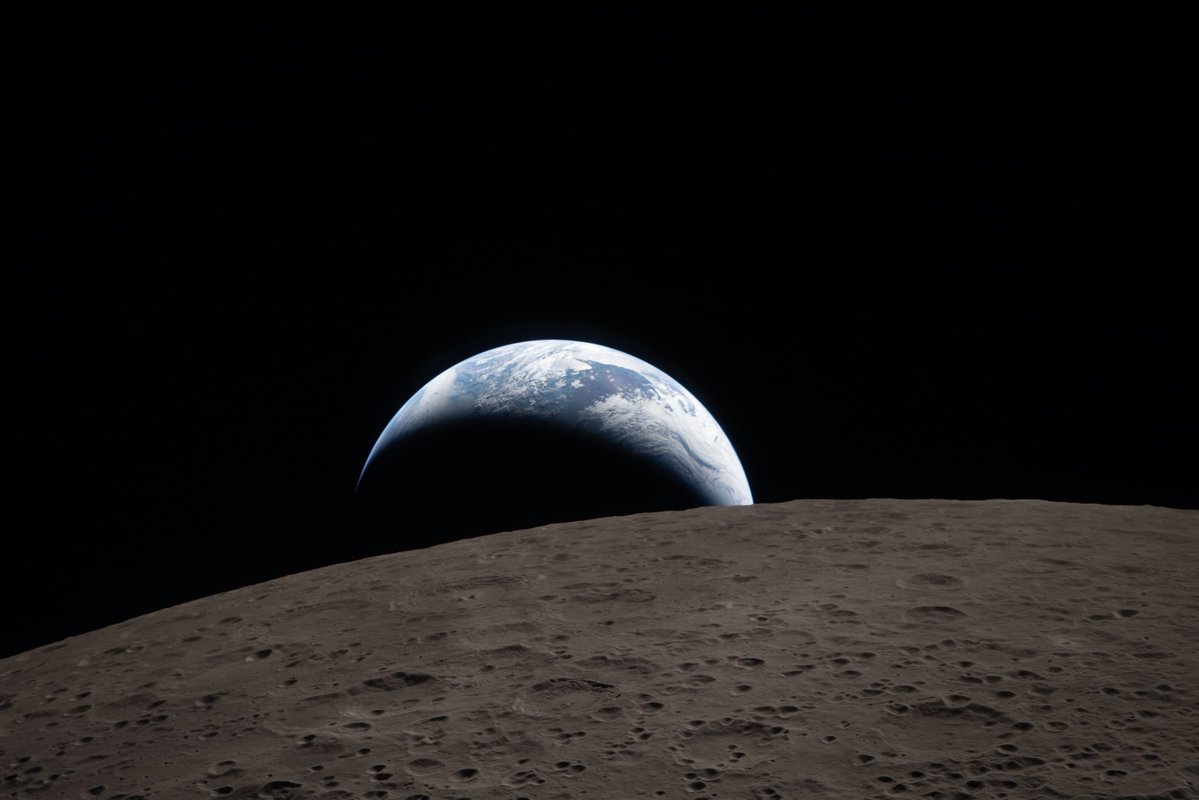
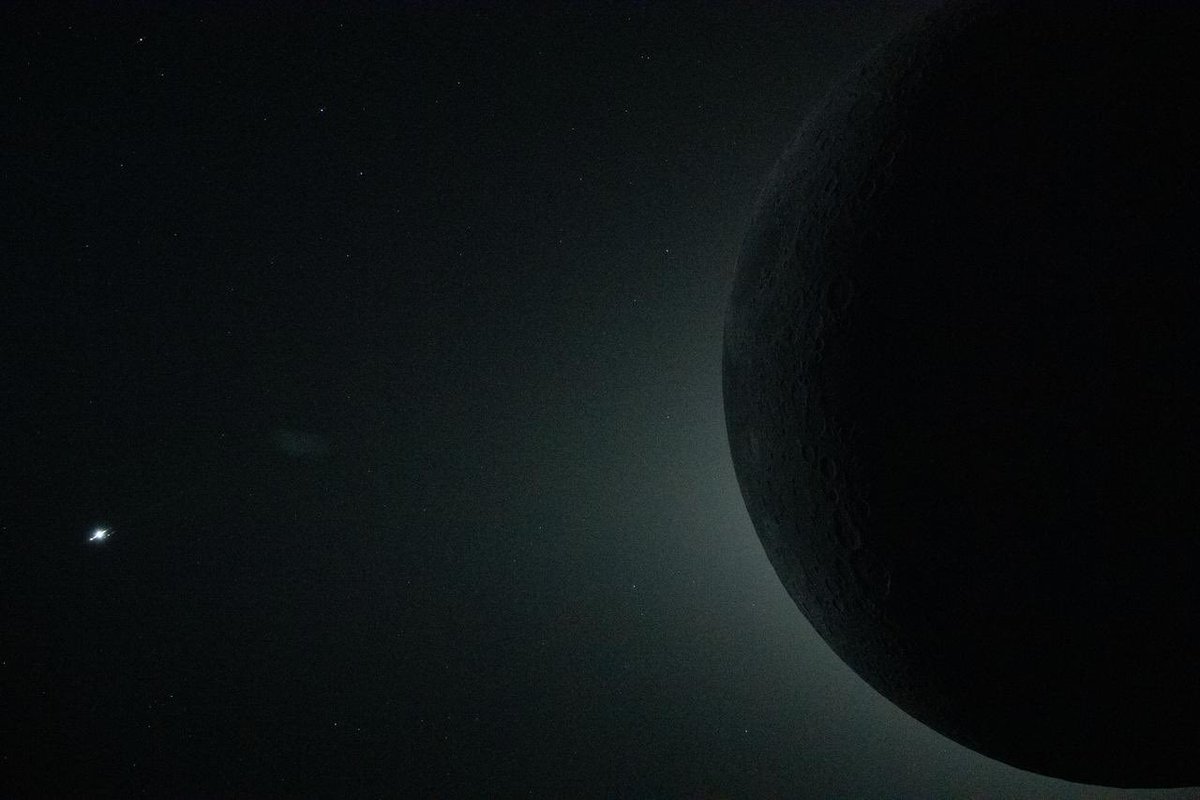
Like watching sunset at the beach from the most foreign seat in the cosmos, I couldn’t resist a cell phone video of Earthset. You can hear the shutter on the Nikon as @Astro_Christina is hammering away on 3-shot brackets and capturing those exceptional Earthset photos through the 400mm lens. @AstroVicGlover was in window 3 watching with @Astro_Jeremy next to him.
I could barely see the Moon through the docking hatch window but the iPhone was the perfect size to catch the view…this is uncropped, uncut with 8x zoom which is quite comparable to the view of the human eye. Enjoy.
Artemis Mission Route in 3D
- This animation visualizes the Artemis mission trajectory in a dynamic 3D perspective, showing how the spacecraft travels through the Earth–Moon system while all celestial bodies are in motion. Instead of a static path, the Sun, Earth, and Moon move simultaneously, revealing the true complexity of orbital mechanics. The result highlights how the Artemis route is not a simple curve, but a constantly shifting trajectory shaped by gravity and motion. This view provides a clearer understanding of how modern space missions navigate through space in real time. Right now, Artemis is on its return path to Earth and is expected to arrive back soon as it completes its mission. The sizes and distances of the Sun, Earth, and Moon are not to scale and are adjusted for visual purposes.