Júlia Pimentel is 11. She just became the youngest person ever published in Brazil's main math teaching journal. The trick she came up with for finding square roots in seconds is older than the Pythagorean theorem.
In math class, she spotted the pattern. Take the square root of 144. Start with 10 times 10, which is 100. Add 10 plus 11, and you reach 121, which is 11 times 11. Add 11 plus 12, and you reach 144, which is 12 times 12. So the answer is 12. She realized every square is the one before it plus the two numbers you just added.
Her teacher, Frederico Ferreira, was impressed enough to write the method up. He sent it to Revista do Professor de Matemática, the Brazilian Math Society's main teaching journal. They published it in September 2023. Júlia became the youngest author in the journal's 44-year history.
The same trick was already in use 2,500 years ago. The followers of Pythagoras in ancient Greece would lay out pebbles in the shape of a square, and to make the next bigger square, they added an L-shaped layer around the outside. They called this L-shape a "gnomon," Greek for "carpenter's square." Each gnomon contains the next odd number of pebbles: 1, 3, 5, 7, 9. It's the exact pattern Júlia spotted at her desk 2,500 years later, only she used numbers instead of pebbles. Fibonacci wrote about it in 1225, and the pattern sits in school textbooks today.
What she did on her own at 11 puts her in good company. Carl Friedrich Gauss is famous for adding the numbers 1 to 100 in his head at age 9 by spotting a shortcut. The shortcut was already centuries old. Ramanujan rediscovered hundreds of known results while teaching himself math from a single textbook in colonial India. We tell those stories because spotting a pattern nobody pointed out to you is what doing math actually feels like.
Most kids stop asking why by middle school. Júlia kept asking, and now her name is in the journal.
I made an astronomical clock for smartwatches (Wear OS only)
Once you learn how to read it, you can tell what time it is everywhere on Earth at once, and find all celestial objects in the sky. It goes counterclockwise because that's how the Earth spins when viewed from north
It's nearly impossible to reach the Sun because you inherit the Earth's inertia when you leave Earth. This means you're going at least as fast as the Earth's orbital velocity, which is 67,000 miles per hour (108,000 kilometers per hour), so you need to slow down. In the frictionless vacuum of space, it takes just as much energy to decelerate as it does to accelerate, so it takes the same amount of fuel to go from 67,000 MPH to zero as it does to go from zero to 67,000.
NASA managed to get the Parker Solar Probe to the Sun by using using gravity from Venus to "tug" it in the direction opposite of Earth's orbit to slow it down. It took seven passes by Venus to accomplish this, orbiting the Sun 24 times. The whole process took seven years. It still didn't really reach the Sun, but now has a highly irregular orbit in which it passes close (in astronomical terms), and the Sun's gravity accelerates it so much that it gets flung back out to the orbital distance of Venus by the slingshot effect before returning. During those close passes, it becomes the fastest man-made object ever made, reaching speeds of 430,000 MPH (692,000 KPH).
A veces el uniforme dice una cosa, pero mis ganas dicen otra... 😈 ¿Te gusta lo que ves desde aquí?
Tengo mucho más que mostrarte si te atreves a seguirme el ritmo. Déjame un "🔥" si quieres ver más.
#Seduccion#Curvas#NightLife
MI NUNERO EN MI BIO.
Every time a German Messerschmitt pilot wanted to escape a Spitfire on his tail, he did the same thing.
He pushed the nose down.
In a dive, the German engine kept running — it used fuel injection. The British Spitfire's engine cut out. For one and a half seconds the Merlin went dead, the aircraft shuddered, and by the time it caught again the German was gone. Worse: if a German was behind a British pilot and the British pilot dove to escape, the German could follow and keep shooting while the British engine was silent.
Pilots were dying because of a carburetor.
The engineers at Farnborough knew about the problem. They were working on a long-term solution — a redesigned carburetor that would take years to perfect and manufacture.
A woman named Beatrice Shilling fixed it with a washer.
She was born in Hampshire in 1909 and was the kind of child who spent her pocket money on Meccano sets and tools. At fourteen she bought her first motorbike. Her mother, with the inspired instinct of someone who understood what her daughter actually was, found the Women's Engineering Society and arranged an apprenticeship at an electrical firm.
She went to Manchester University — one of the first two women ever to study engineering there — graduated with a degree in electrical engineering, stayed another year for a master's in mechanical engineering, and in 1936 joined the Royal Aircraft Establishment at Farnborough as a scientific officer.
By the late 1930s she was one of the best carburetor engineers in Britain. She was also one of only three women to hold the British Motorcycle Racing Club's Gold Star — awarded for lapping the Brooklands racing circuit at over 100 miles per hour on a motorcycle.
She had reportedly told her future husband, an engineer named George Naylor, that she wouldn't marry him until he earned his own Brooklands Gold Star first.
He earned it. They married in 1938.
The problem with the Merlin was specific and lethal. The SU carburetor used a float chamber to regulate fuel flow. Under negative g-forces — the forces experienced in a sudden dive — the fuel flooded to the top of the float chamber and starved the engine for 1.5 seconds. Just enough time for a German pilot to turn the tables entirely.
The RAF had known about this since the Battle of France. The formal solution — a redesigned pressure carburetor — was in development but wouldn't be ready for years.
Shilling was thirty-one years old, working in carburetor research, and she designed a fix in weeks.
A brass thimble with a precisely calibrated hole in the center — later simplified to a flat washer — fitted inline in the fuel line just before the carburetor. It restricted maximum fuel flow to just enough to prevent flooding without cutting off power. The key breakthrough: it could be fitted without taking the aircraft out of service. No downtime. No factory return.
The old guard at the RAE looked at it and called it a plumbing fix. They called her a plumber. The first batch of 5,000 units was made by a Birmingham firm that normally manufactured plumbing fixtures, which they found embarrassing.
The RAF pilots who flew Spitfires with Messerschmitts on their tails called it something else.
They called it Miss Shilling's Orifice. With deep affection.
By March 1941 she had organized a small team and was personally touring RAF fighter stations across England — traveling between bases on her old racing motorcycle — fitting the device to every Merlin engine they could reach. Squadron leaders all over the country were demanding installations. The word spread faster than the official channels could keep up with.
The Germans noticed. They couldn't explain why British fighter pilots had suddenly started following them into dives. They were baffled by the new aggression. They didn't know about the washer.
(More story replies)
NEW: Astronaut Reid Wiseman shares a video of ‘Earthset’ that was taken with his iPhone
“This is uncropped, uncut with 8x zoom which is quite comparable to the view of the human eye…” Wiseman said.
This has to be the greatest iPhone video of all time.
More Vintage Computing museums should rent out cloud access to their rare hardware.
SDF (Super Dimension Fortress) does it, and it’s freaking awesome.
I’m literally logged into a Sun SPARCstation…anyone can do this for free, right now. Just SSH in.
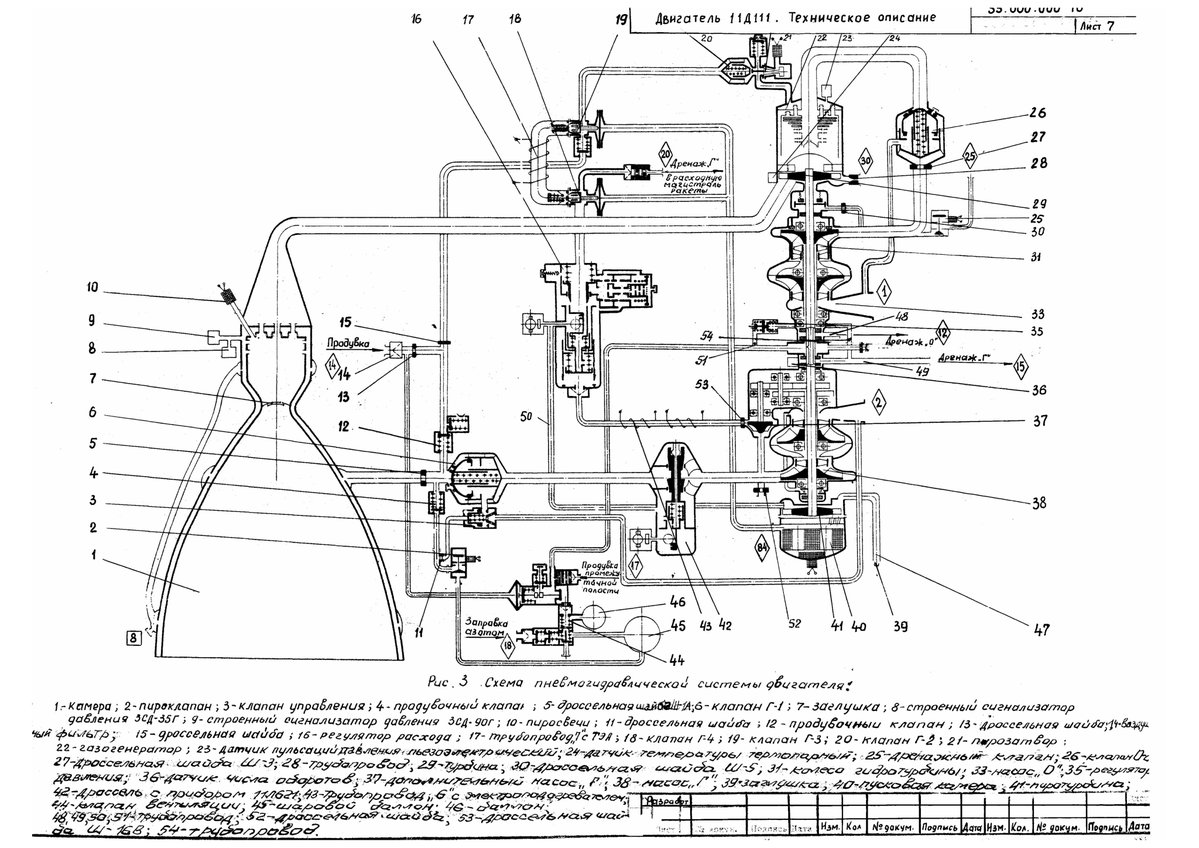
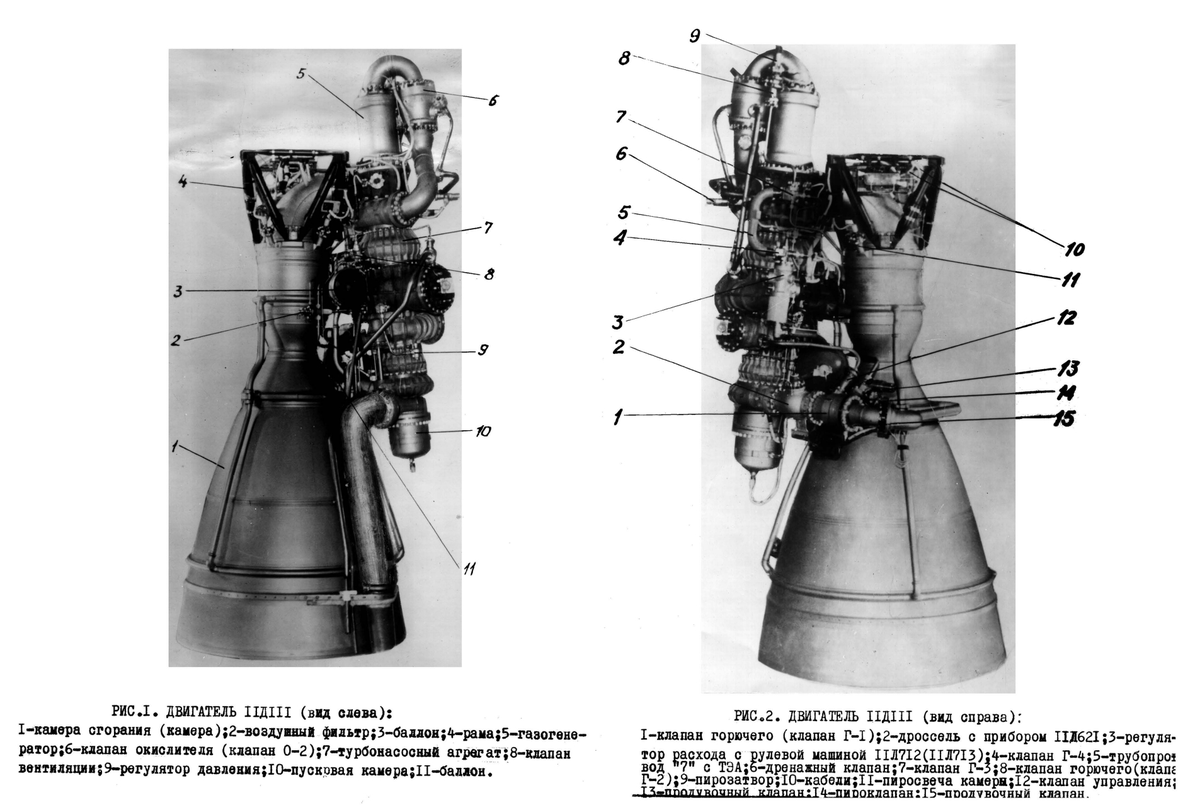
A rather rare album of nearly 100 pages from the USSR Ministry of Aviation Industry, dedicated to the NK-33 (11D111) rocket engine.
It contains diagrams, technical drawings, electrical schematics, and, of course, photographs.
Link:
https://t.co/5TaFaLG2ZD
🇫🇷 Paris, 1931
“Masterpieces of Decadence”
They did not come dressed to be understood.
They came dressed to be seen, and perhaps even remembered. On a Parisian boulevard where convention still walked in sensible coats and lowered eyes, these two women arrived in leather, in towering boots, and in the kind of fearless companionship that turned public space itself into a declaration.
The scandal, for some, is not only in the height of their boots or the audacity of their silhouettes. It is in the fact that they do not hide. Their love, their taste, their shared delight in extravagance and leather craftsmanship are carried openly, proudly, almost ceremonially. And the boots, those astonishing works of art in black and burgundy, strapped, laced, sculpted, and impossibly high, do not merely complete the image. They reign over it.
Around them, Paris pauses. Faces turn. Judgments gather. But the women do not bend toward any of it. They stand as if the crowd were nothing more than background to their own exquisite certainty. And perhaps that is the deepest decadence of all: not excess, but the courage to wear one’s truth beautifully in public.
With respect,
❤️ Clotilde — Manager, Vintage in Leather Project
#VintageInLeather #ParisianDecadence #LeatherBoots #LeatherGloves
Two guys ran an entire hacking operation in a PRISON for months
In 2015, two prisoners in Ohio were assigned to a recycling program where they dismantled old computers
Instead of scrapping the parts, they started stealing them
Carried components over 1,100 feet past guards, metal detectors, and multiple security checkpoints
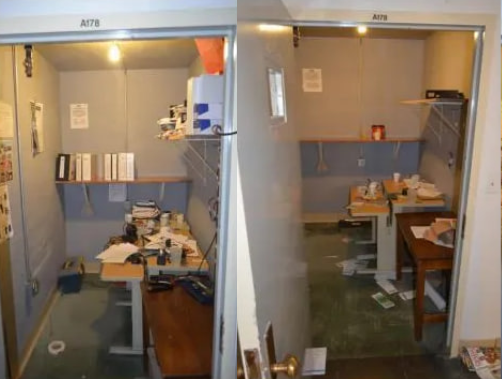
Then built two working PCs and hid them behind a plywood board in the ceiling of a training room closet
They ran cables from the ceiling into the prison's own network
Stole login credentials from an employee by watching him type his password
Set up Bitcoin wallets, Stripe accounts, bank accounts and credit card applications using another inmate's stolen identity
Downloaded VPNs, the Tor browser, password cracking tools and what investigators called "a large hacker's toolkit"
Created fake security passes to access restricted areas of the prison
This entire operation ran for months
They only got caught because one of the computers used so much bandwidth it triggered an automatic alert
The Inspector General said it was "almost as if it's an episode of Hogan's Heroes"
Two guys with recycled computer parts and a ceiling tile built a cybercrime operation inside a state prison