"Everything that there is to know about an imaginary person is available in the literary corpus that produces and sustains the imaginary person."
From our Autumn 2007 issue, read Candace Vogler's "The Moral of the Story": https://t.co/nWcfYmEjxQ
"How can one conceive of an image regime (an 'iconomy,' as Szendy has it), that not only decenters the human but is truly autonomous?"
New in review, Kyle Sossamon on Peter Szendy's For an Ecology of Images, translated by Marco Roth: https://t.co/ktqvmMT1hZ
"For a photograph to be truly antitheatrical for Barthes it must somehow carry within it a kind of ontological guarantee that it was not intended to be so by the photographer."
From our Spring 2005 issue, read Michael Fried's "Barthes’s Punctum": https://t.co/9gLU55i8Cu
"Another Humanity is remarkable for its sustained passages of close reading, where Davis thinks with and against the critical theorists to envision decolonial approaches to humanism."
New in review, Santasil Mallik on Benjamin P. Davis's Another Humanity: https://t.co/OY5m7vq93J
"What kinds of new soundscapes are created by acoustic technologies and how are they listened to, explored, and made sense of by scientists through the mediation of technology?"
From our Winter 2009 issue, read Sophia Roosth's "Screaming Yeast": https://t.co/mXIxvRm93W
Uncovering hidden links between botface (humans performing as machines) and blackface, this article from Critical Inquiry theorizes the two as similarly metatheatrical practices in the realm of the infrahuman. https://t.co/bXlQjMEFbL. @CriticalInquiry
"Alaimo’s exempla stretch across a fascinatingly heterogeneous array of genres, from photography and film to gallery and website exhibits to memoir, journalism, speculative fiction and much more."
Lawrence Buell on Stacy Alaimo's The Abyss Stares Back: https://t.co/HVJdEtZUFw
"Tobacco in 1604 embodies the interpretive response that Othello continues to elicit."
From our Autumn 2003 issue, read Dennis Kezar's "Shakespeare’s Addictions": https://t.co/8n4MLORBPq
"The voice of an orator, or documentarian, enlists and reveals desires, lacks, and longings."
From our Autumn 2008 issue, read Bill Nichols's "Documentary Reenactment and the Fantasmatic Subject": https://t.co/TiuKL2hRHM
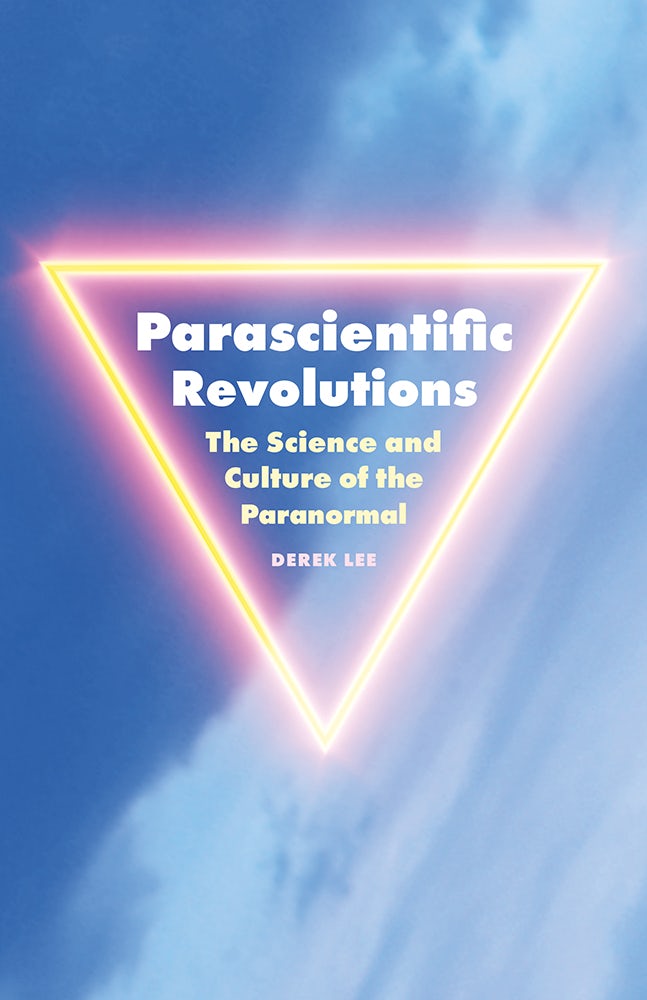
"For Lee, parascience is not just a cultural curiosity but a Foucauldian counter-discourse that 'produces new types of knowledge.'"
New in review, Wolfgang Boehm on Derek Lee's Parascientific Revolutions: https://t.co/1w4KDyPZ6t
"The stories are about how the oppressed, from the standpoint of ethics, should respond to the injustices that weigh so heavily upon them."
From our Spring 2012 issue, read Tommie Shelby's "The Ethics of Uncle Tom's Children": https://t.co/OSyzNQQeqW
"A Movement’s Promise is thus both an institutional history of a theater movement under occupation and a reconstruction of its style, methods, aesthetics, and innovations."
New in review, Marissa Fenley on Samer Al-Saber's A Movement’s Promise: https://t.co/J2gPyzaCNG
“Life is made for earnest action!” –Frances E.W. Harper, “Something To Do”
Join us in preserving an essential voice from the past this Thursday, 4/30, from 6-8 pm at The Ruby in San Francisco!
RSVP for FREE!
https://t.co/1SLVyq4tGO
"Colossal’s projects bring to the fore a curious phenomenon of the social world and the contemporary social imaginary of science." Read Veronika Reichert's "De-Extinction, Scientific Enchantment, and Technosalvation" on the CI blog.
https://t.co/u0jz0Ablam
"From a biometric perspective, an ideology is nothing but a tool to keep the mechanism of control in place."
From our Summer 2015 issue, read Nitzan Lebovic's "Biometrics, or The Power of the Radical Center": https://t.co/U4i4kULlBE