Every team needs the same specialists. There aren't enough to go around. How would you decide who gets them first?
Watch the full video walkthrough to compare the choices, see why some fixes fall short, and understand what makes the best answer stronger.
https://t.co/m44xCJufp2
In this scenario analysis, an equipment-maintenance network must deploy specialists across service hubs for a six-week emergency repair operation. Following an algorithmic error that excluded qualified staff, the HR director must recommend a governance structure that restores...
You got it wrong. Do you know why?
Did you miss a key fact?
Forget a rule?
Choose a good action at the wrong time?
That difference matters when you decide what to study next.
CriticalThink HR pairs practice questions with clear explanations, video walkthroughs, and feedback to help you understand your mistakes.
Build your HR knowledge. Practice applying it. See what needs more work.
Get access to both SHRM-CP and SHRM-SCP prep for $47/month. Cancel anytime.
Take a closer look:
https://t.co/h8OHyaPRR2
"Just tell me if we can fire them."
The manager wants an answer.
The facts are incomplete.
And everyone is waiting on HR.
What would you do first?
These are the moments worth practicing before your exam and before they land on your desk.
CriticalThink HR combines HR knowledge with practice making tough people decisions. Work through the facts, weigh your choices, and learn why one next step makes more sense.
Preparing for SHRM-CP or SHRM-SCP?
See how it works:
https://t.co/h8OHyaPRR2
You narrowed it down to two answers.
You read them again.
Changed your mind.
Then guessed.
Sound familiar?
Knowing HR terms helps. But when two answers sound right, you need to understand what makes one better.
CriticalThink HR helps you practice that skill with SHRM-CP and SHRM-SCP questions and video walkthroughs that explain the choices.
Bring the question you got wrong. Leave with a clearer way to think through the next one.
Explore the preview:
https://t.co/fn6u9lEII0
Would your approach fix the underlying bias, or leave it in place?
Watch the full question walkthrough to see which choice is most defensible, why the alternatives fall short, and how to apply the reasoning to real hiring decisions.
https://t.co/F9SFsBPiEB
Automating candidate screening with past hiring decisions often just automates past bias. If historical offers favored prestige schools over validated job performance, blinding school names won't fix the algorithm. You must fix the target outcome itself.
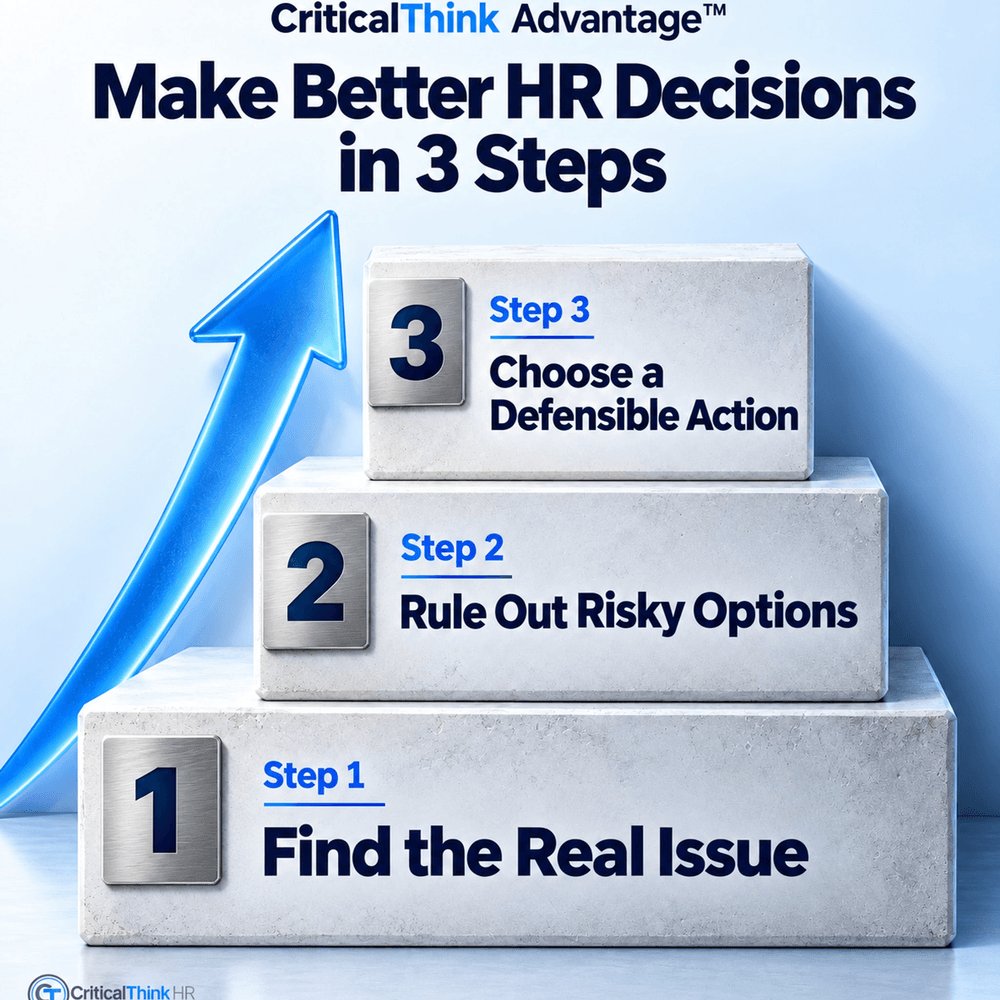
4/4 Then choose the action that holds up afterward. Could you explain it to the employee, manager, executive, Legal, and the exam rationale? That is the shift from knowing HR to applying judgment under pressure.
1/4 When two HR answers both sound plausible, stop comparing the wording. Ask what decision the scenario actually requires. Urgency, emotion, and title pressure can make a secondary issue look like the main one.
3/4 Set the priority before choosing the tactic. Depending on the scenario, that may be law, policy, employee trust, documentation, business continuity, or stakeholder alignment.
Watch the full-length question walk-thru video: https://t.co/ySsrPGslWf
Explore how to evaluate high-stakes people decisions with structured business acumen: https://t.co/sBO30Ym3Sm
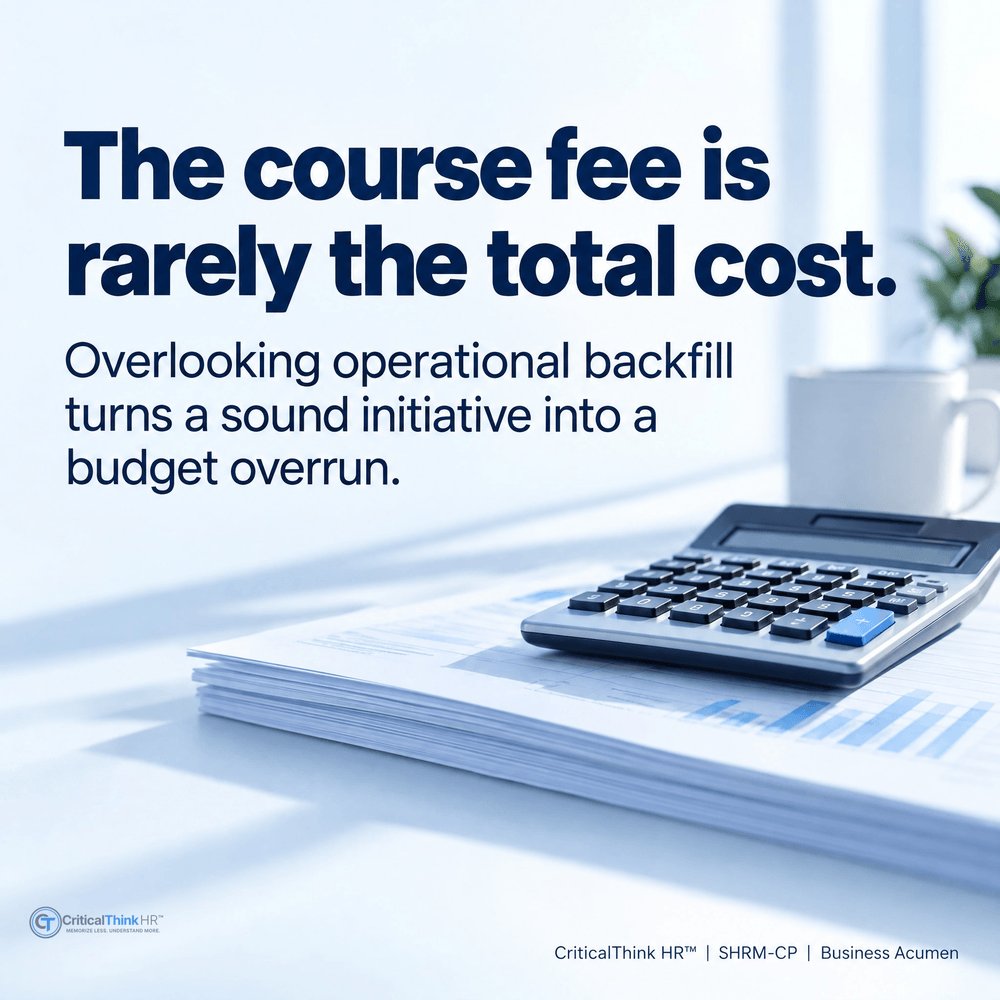
Evaluating 2 training formats: $2.5k (2 shifts) vs $4.5k (1 shift). Both save $12k. Budget cap is $8k. But paid shift coverage is still uncalculated. Do you run ROI now, negotiate vendor fees, or wait for coverage data? Sound HR requires full costing.
Two SHRM answers can both sound professional. The exam still asks for the most effective action. A score shows the miss; it may not show the decision pattern causing it. The video breaks down the pattern to train. #SHRMCP#SHRMSCP
Read the full case breakdown and master defensible HR governance: https://t.co/sBO30Ym3Sm
Here is the link to the full question walk-thru video: https://t.co/BCThZkx3lU
A COO under board investigation demands full witness transcripts to clear their name. The reporting managers still report to them, and unique project details will expose their identities.
How do you guarantee executive due process without burning your whistleblowers?
When enterprise strategy clashes with daily dispatch realities, escalating every conflict to the executive council creates a bottleneck. Effective HR leaders build bounded decision frameworks for local leaders. Know it. → Understand it. → Apply it under pressure.
The useful practice is not just choosing B. Explain why B is stronger than A from the facts provided.
Know it. Understand it. Apply it under pressure.
Explore the 3-day preview: https://t.co/pfZeSX9vAH
A manager wants an employee terminated today for falsifying time records. The employee says the supervisor directed the crew to round start times. Two coworkers confirm it, and payroll closes in two hours. What should HR do first?
Best answer: B. The corroboration means individual intent is not established. B pauses an irreversible decision and addresses the urgent pay record. A adds an unsupported consequence. C assumes misconduct. D risks pressure and weaker fact-finding.