"The problem secularists have with devout Catholics is that we would rather participate in the sacramental life of the Church, often at the expense of participating in liberalism’s various public liturgies."
Me in the Nov issue of the @CatholicHerald
https://t.co/TzquhN02nE
Great to see Australian Socceroos coach Tony Popovic acknowledging God in his sign of the cross at yesterday’s World Cup game. The sporting field can be an important place to bear witness to Jesus Christ https://t.co/bnrfZlO99b
3 ANGLES of absolute Fed Square pandemonium! 🤯🎬
You’ve seen the goal, now look what it did to the heart of Melbourne!
🏆 #FIFAWorldCup | June 12 - July 20 | Every Match on SBS 📺
Felaket oynuyoruz, tam da Avustralya’nın istediği gibi.
Yavaş.
Avustralya beşli savunmayla oynuyor, biz ise en yaratıcı oyuncumuzu sağ kanatta oynatıyoruz.
Orkun Kökçü ve Barış Alper Yılmaz felaket oynuyor. İkisi de her topu kaybediyor.
Lütfen ikisi de çıksın.
Hiçbir oyuncumuz ikili mücadelelere girmiyor, sanki hazırlık maçı oynuyormuşuz gibi oynuyoruz.
Bu gruptaki en zayıf rakip ve biz onlardan bile daha zayıf oynuyoruz.
The Protestant mind struggles to comprehend the profound beauty of this moment:
A Catholic Queen, in humble reverence, bowing before the Successor of Peter, while the majestic bells of the Church chime in the background.
Pope Leo just gave a major catechesis on the place of religion in the public square in Spain -- celebrating Mass in front of the city's town hall, Palacio Cibeles -- and the impact that Catholic heritage of the Spanish people can have on the common good and human relationships.
This is precisely what Spaniards were hoping for, which we learned in Madrid before the papal trip -- that Pope Leo would encourage Catholics in the country to be signs of hope and have courage to speak up about their faith in public.
During his homily Pope Leo emphasized that a remedy for Spain's problems and wounds today is the Catholic faith lived truly and publicly by Spanish people.
"The task of Spain today and in the future," Pope Leo said, is "to ensure that the religiosity which has shaped and defined this country for centuries is not a museum of the past to be visited, but a school of faith from which to draw even today."
He said it's a "school that teaches us to kneel before God and before our neighbor, because no one can kneel before the Lord and despise their brother; A school that teaches us of the gratuitousness of love that becomes a gift, so that it may flow among us and break the chains of all selfishness; A school from which we learn that God is a real presence and that we too are called to be present in the realities and challenges of society, not shying away, but personally committing ourselves to the building of the common good."
The historical memory of the Corpus Christi processions, he said, "is not confined to wistful nostalgia."
"Instead, it stands as an invitation in the present moment, in our daily lives, in our relationships, in society, and in the building of the future," Pope Leo said before he will take to the streets to walk with the monstrance on the Solemnity of Corpus Christi in Spain.
"It is not merely a matter of bringing out the monstrance, but of allowing ourselves to be brought out of our selfishness and indifference, of a comfortable, private faith, so as to respond to his invitation to conversion, to change our perspective, and to welcome his presence which transforms us and makes us builders of a new world," Pope Leo said.
"Here in Madrid, as in many other parts of Spain, Corpus Christi is more than just another celebration on the liturgical calendar. It is a way of returning to the heart of the faith to renew our love and fidelity to God."
"It is a profession of faith in the presence of the risen Lord, who is alive and continues to walk among us, who becomes bread to satiate our hunger for life, and visits the recesses of our hearts and history, even those shrouded in darkness."
"Just as Christ gives himself as food in the Eucharistic celebration," he said, "the procession shows that he is not confined to the church, but comes out to meet us."
"Jesus travels the streets, crosses the squares and visits our neighborhoods, dwelling in the settings of our daily lives. He is a God who is close to us, who walks with his people, the Lord of history. He is comfort to the weak, light for families, hope for the sick and peace for those who suffer. The Christ who processes through the streets in the monstrance is the same one who identifies with the poor, the downtrodden, those who are alone and forsaken. It is no coincidence that the Church here in Spain has long combined the Solemnity of Corpus Christi with the Day for Charity," Pope Leo said at Plaza de Cibeles.
The appeal he gave at the end of Mass is in the video below:
"Let us drink anew from this Eucharistic spring, which does not enclose us in private devotion, but sends us out to refresh our brothers and sisters, our families, the poor, the suffering, and those who have lost hope. Eucharistic grace transforms us and makes us protagonists of the transformation of history, a sign of hope for those we meet."
"May the Lord Jesus, present in the Eucharist, transform you into bread that is broken, given, and offered, so that a life of fullness may spring forth for you, for your families, and for your country."
Video: Vatican Media.
It is with deep sorrow that we share the passing of one of our seminarians, Tom Kloucek, who passed away unexpectedly following medical complications.
We are grateful that Tom spent five days on retreat with his brother seminarians just prior to his passing, and thankful for the time of prayer and fraternity they shared together.
Tom was a man of great faith who loved Jesus Christ and the Church. Reflecting on his vocation, he once wrote:
“Praying in front of the Blessed Sacrament was where I finally understood Jesus’ sacrifice of Himself at the crucifixion… He died on the cross for you and for me. Jesus loves me.”
Those who knew Tom encountered in him a sincere love for the Lord, a thoughtful and searching faith, and a genuine desire to give his life in service to the Church as a priest.
Please join us in praying for the repose of Tom’s soul, for his family and loved ones, his brother seminarians, and all who mourn his passing.
Eternal rest grant unto him, O Lord,
and let perpetual light shine upon him.
May he rest in peace. Amen.
Woe to those who manipulate religion and the very name of God for their own military, economic, and political gain, dragging that which is sacred into darkness and filth. #ApostolicJourney#Cameroon https://t.co/bKteFZ3iWE
Pius IX, Leo XIII, Pius X, Pius XI published thousands of words against this sentiment.
But it isn’t ancient history — even Vatican II condemns it:
“At all times and in all places, the Church should have true freedom to preach the faith, to teach her social doctrine... and to pass moral judgment even in matters related to politics, whenever the fundamental rights of man or the salvation of souls requires it.” (Gaudium et Spes, 76)
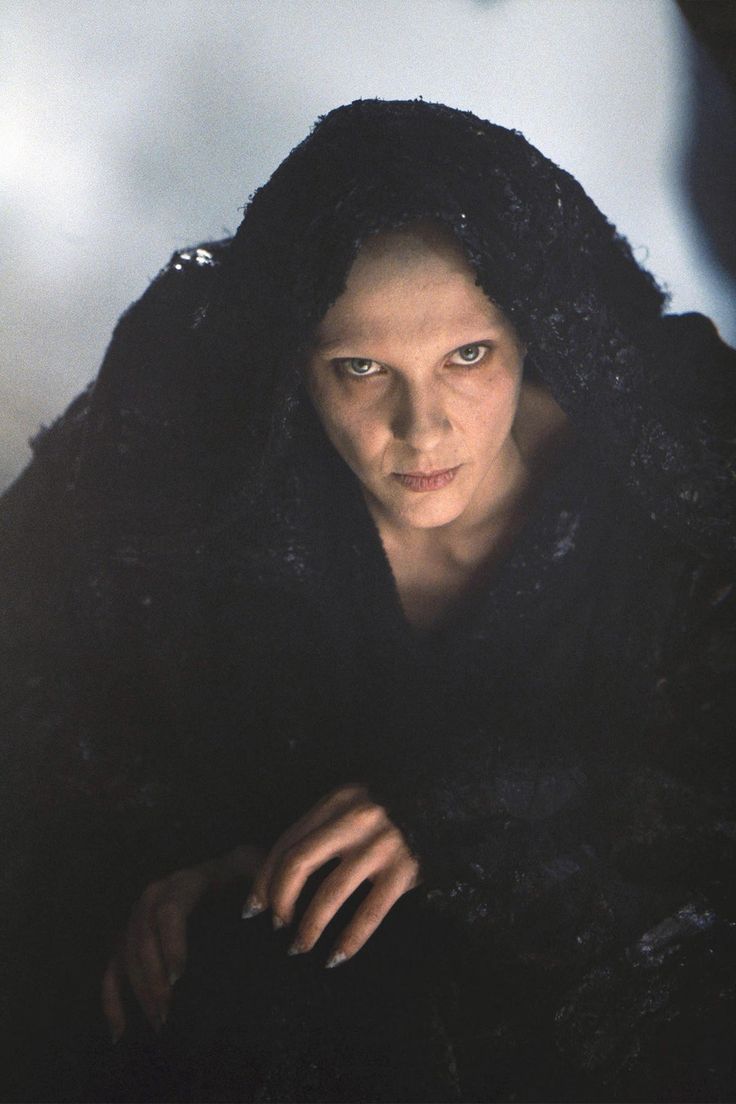
La Pasión de Cristo de Mel Gibson. Satanás quiere que Cristo se salve.
La clave teológica de La Pasión de Cristo de Mel Gibson es algo que la mayoría del público no percibe y es que el diablo no quiere que Cristo muera. En Getsemaní, la figura andrógina que Gibson presenta como Satanás no incita a la violencia ni empuja hacia la cruz, sino que susurra a Cristo que abandone, que ningún hombre puede cargar con el peso de los pecados de la humanidad, que salvar sus almas "es demasiado." La tentacion no es al pecado, es a la compasión por sí mismo, porque si Cristo se rinde antes de completar el sacrificio la Redención no se consuma y el dominio de Satanás sobre la humanidad sobrevive.
Gibson construyó Getsemaní como un nuevo Edén. La serpiente que emerge del manto del diablo y se desliza hacia Cristo reproduce el Génesis, y cuando Cristo la aplasta con el pie cumple el Protoevangelio (Gn 3,15). Donde Adán cedió a la tentación en un jardín, el segundo Adán resiste en otro. Es tipología bíblica pura traducida a imagen. El Heliand, el poema sajón del siglo IX que narra la vida de Cristo en clave germánica, recoge la misma idea: Satanás teme que si Cristo muere el Infierno quede vacío. Gibson conocía esta tradición.
La escena del bebé demoníaco durante la flagelación responde a la misma lógica: es una inversión deliberada de la Virgen con el Niño que Gibson explicó en EWTN como la capacidad del diablo de tomar "forma inofensiva" para engañar. Donde María sostiene al autor de la vida Satanás sostiene una criatura grotesca que sonríe ante el sufrimiento de Cristo, la maternidad invertida, la compasion convertida en espectáculo. María y Satanás son los dos polos de la película, obediencia total al plan de Dios frente a rechazo total, la Inmaculada Concepción frente al enemigo del género humano, y la tensión entre ambos es la que sostiene toda la estructura narrativa de la Pasión.
El hilo que conecta todo es la compasión como arma del diablo. Satanás no tienta con placeres ni con poder, lo intentó en el desierto y fracasó, tienta con piedad, con piedad por uno mismo en Getsemaní, piedad mal dirigida en el sueño de Claudia Prócula que busca que Pilato libere a Cristo antes de que se complete el sacrificio. La tradición patrística occidental (Rábano Mauro, Beda, Bernardo de Claraval) interpretó ese sueño como una maniobra del diablo para detener la crucifixión, y el propio Tomás de Aquino integró ambas lecturas (la oriental que lo ve como gracia profética y la occidental que lo ve como tentacion diabólica) señalando que el diablo actuó por miedo a perder su dominio sobre la muerte. El paralelo con Pedro en Mt 16,23 es directo: cuando Pedro intenta disuadir a Cristo de su Pasión por compasión genuina, Cristo le responde "apártate de mí, Satanás." La compasión que busca evitar la cruz, por bienintencionada que sea, trabaja objetivamente contra la Redención.
El grito de Satanás al morir Cristo no es triunfo sino derrota. Todo lo que hizo durante la pelicula estaba orientado a impedir que la Pasión llegase a su fin, y fracasó porque la soberbia le impidió concebir que alguien aceptase voluntariamente un sufrimiento así por amor.
Bibliografía recomendada:
– Decent Films (SDG Reviews): "Understanding the Catholic Meaning of The Passion of the Christ."
– The Catholic Talks: "Inside The Passion of the Christ", partes 1-3.
– Brown, R.E.: The Death of the Messiah, Doubleday, 1994.
It just got worse.
The lawyer for Noelia Castillo Ramos' father has allegedly stated:
"Noelia requested a 6-month postponement of her euthanasia to take the time to think, which was denied to her."
Straight up execution.