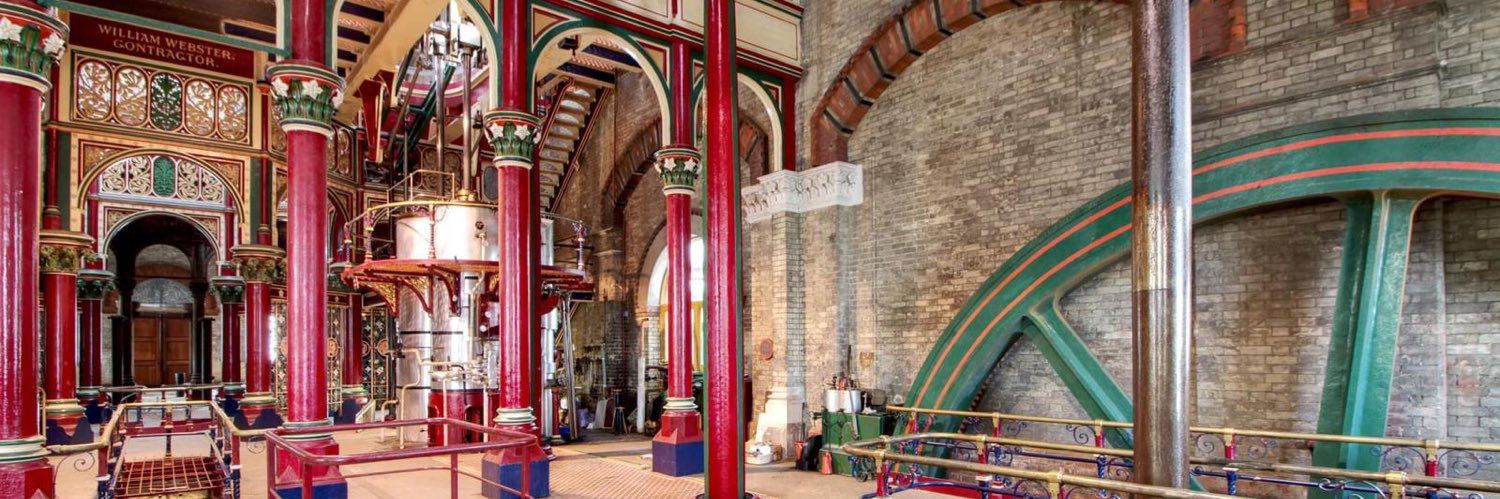
@MyWoolwich This underground reservoir, with a vaulted ceiling, was 6.5 acres in area consisting of 4 chambers up to 20’ in height with a capacity of 25 million gallons
@MyWoolwich The solar panels are sited on top of the reservoir (which used to store the sewage prior to it being released into the river on the ebb tide).
In the 1860s, British engineer Joseph Bazalgette designed London’s revolutionary sewer system after the city was overwhelmed by pollution and disease.
Bazalgette made a bold decision: he built the sewer tunnels much larger than London needed at the time. By allowing extra capacity, he ensured the system could handle the city’s future growth. More than 150 years later, much of his Victorian network is still in use today.
Another clever feature was the egg-shaped design of many tunnels. The narrow bottom helps wastewater flow faster when levels are low, preventing waste from settling and clogging the sewer. During heavy rain, the wider upper section provides extra space so the system can carry large volumes of water without overflowing.
Bazalgette’s combination of forward thinking and smart engineering helped transform London’s sanitation and protect the health of millions of people for generations.
@deeLYTPics The next Steaming Day is 29th March. At the moment we’re doing maintenance on the boiler and getting it ready for testing. The ship building looks good and if you’re interested in putting beam engines together, we’re always looking for volunteers …
On this day in 1925, approval was received for the installation of indoor baths for the workers’ houses at Crossness. The plans show just how small a worker’s bathroom was when compared to that of the Superintendent, but a luxury nonetheless.
#OTD#pumpingstation
Being one of London’s top-rated tourist attractions, Crossness Pumping Station will be even more accessible from London and bring extra benefit to Thamesmead’s reputation via the DLR extension. Our uniquely important site to world heritage deserves better access for everyone.
WANTED: VOLUNTEER MANAGER
We’re looking for an experienced Volunteer Manager to recruit, support, and inspire our dedicated team.
For further details and information on how to apply: https://t.co/ieGnUDv443
#RobHarris of the #CrossnessEnginesTrust marks the 160th anniversary of the beam engines with a talk here at #BexleyArchives on Saturday 15 November 2.30pm ‘When Bexley Saved London: Crossness Pumping Station, #Bazalgette’s sewers and the Birth of Modern Sanitation’. Tickets £5.
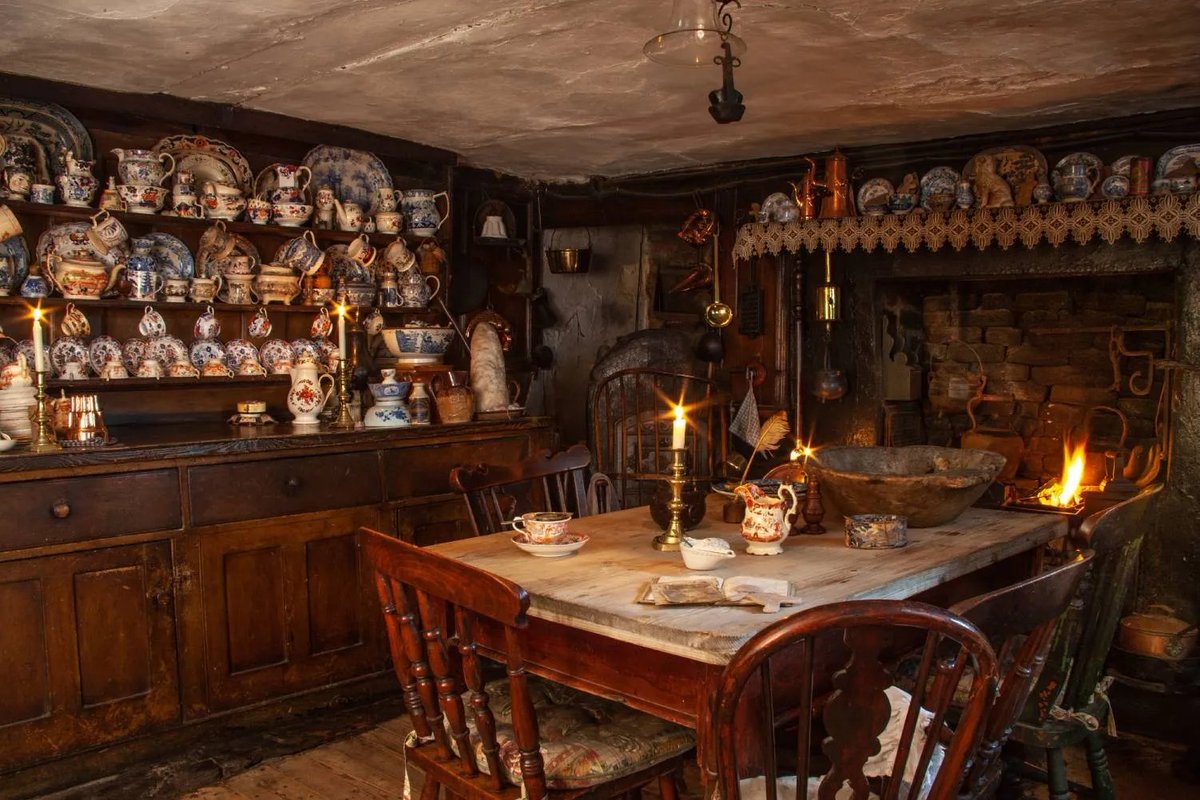
Guillermo del Toro’s Frankenstein didn’t just reinvent a classic—it drew inspiration from some of London’s most extraordinary (and often overlooked) museums. 🏛️⚡️
From the Sir John Soane Museum to the Hunterian and Crossness Pumping Station, these spaces shaped the film’s gothic world.
Perfect time for a museum crawl… 👀
🔗 https://t.co/oYjwRlsyie
📸 Dennis Severs' House
#Frankenstein #GuillermoDelToro #MuseumDiscovery #Museums #London @RealGDT
🐇 Don’t be late for this very important date - NEXT WEEK!
Alice and the Queen’s Beasts lights up Hall Place, Bexley!
🗓️ 13–16 Nov
🌌 Lanterns, characters & immersive fun
Funded by @ace_national
Book now: https://t.co/gsxYBUq3xl
#NightVisionsBexley#WinterLights
#RobHarris of the #CrossnessEnginesTrust marks the 160th anniversary of the beam engines with a talk here at #BexleyArchives on Saturday 15 November 2.30pm ‘When Bexley Saved London: Crossness Pumping Station, #Bazalgette’s sewers and the Birth of Modern Sanitation’. Tickets £5.
#RobHarris of the #CrossnessEnginesTrust marks the 160th anniversary of the beam engines with a talk here at #BexleyArchives on Saturday 15 November 2.30pm ‘When Bexley Saved London: Crossness Pumping Station, #Bazalgette’s sewers and the Birth of Modern Sanitation’. Tickets £5.
I’ve made a short film.
Look at the things around you: doors, bins, staircases, furniture, railings, doorhandles, windows.
Do you like how they look, or not?
Modern design has become boring, but it doesn’t have to be this way.
The word “beautiful” is overused. We don’t need “beautiful” lamps, bus stops, and water fountains – we just need lamps, bus stops, and water fountains that are interesting, that actually mean something.
Or, at the very least, not boring.
Because the aesthetics of architecture and urban design aren’t just a bonus; they totally change how we think, feel, and behave.
Boring environments make us more stressed and less productive; they erode our sense of community; they make us sadder, less trusting, and lonelier.
A boring world is one where we spend even more time online and where our addictions are even harder to battle.
The Problem
There is global, widespread dissatisfaction with how the world looks. In this film, and the series it will lead to, we want to investigate that feeling and give it a voice.
The point isn’t that we should return to the past or get rid of modernism. It’s about learning from the past in order to improve the present, and about giving the public what they very clearly want, which isn’t the eradication of modernism but the co-existence of modernism AND traditionalism.
Just look where tourists go, where they take their photos, and that tells you everything you need to know about what most people find interesting or beautiful.
And look at where people go on holiday. It’s always to cities filled with old architecture and design, with churches and mosques and palaces, with charming little alleyways and stone staircases and wrought-iron railings.
Of the world’s fifty most visited buildings, only four were made in the 20th century, and they’re all museums or memorials.
There’s a reason why posts about this go viral online all the time. Regardless of why the change happened, it is clearly the case that we no longer make things how we used to.
People are rightly confused by the fact that old lamp posts (to take the example we focus on in the film) are usually so pretty, while modern ones are usually so boring.
Some people say this is just an example of survivorship bias… and they’re mostly correct. But that’s the whole point!
Saying old buildings are usually prettier than modern buildings is not to say that architecture used to be better, or that the past was better.
It is simply to say that certain kinds of buildings, because they have been preserved, are good examples of what people like most.
In which case... shouldn't we try to design at least some buildings in a way that we know people like?
A Unifying Cause
Everybody, from all sides of the political spectrum and all backgrounds, stands to benefit from a world that is designed more thoughtfully and imaginatively. The world could be such a colourful, meaningful, and thrilling place!
So this isn’t about left versus right or conservatism versus progressivism; it’s about making our world a more interesting and meaningful place to live in. This should be a unifying cause, because everybody loses out when our homes and cities are badly designed.
I want this film to unite people who think they’re on opposite sides, and to create a consensus that we need to change our approach to how we design our buildings and the objects – benches, bus stops, bins, lamp posts, aircon units – that fill our cities.
The Importance of Details
We are incredibly rich and have a sprawling choice of shows to stream, phones to buy, or shoes to wear… but everything feels more and more generic all the time.
If you want to understand a society, don’t listen to what it says about itself – look at what it creates. You can learn everything about the Victorians – the good and the bad – just by looking at their lamp posts.
And what do the ordinary details of the modern world say about us?
That we are technologically advanced, very efficient… and care more about making money, about making things as quickly and cheaply as possible, than making our world an enjoyable place to actually live in.
It’s important to learn about why and how things have changed, but that’s for another time. The first step is establishing that the public aren’t happy with modern architecture and design, and that something needs to be done.
But what we need isn’t a total revival of so-called ‘traditionalism’; the truth is that traditionalism and modernism can (and should) co-exist.
The trouble right now is that we only have one, and that people are tired of it.
The Power of Noticing
But this film (and the series it will, all being well, lead to) is about more than the specific argument it presents. Above all it’s about a way of seeing the world around us, a way of noticing and thinking.
“How you do anything is how you do everything.” That is probably true, and it also applies to whole societies, not just individuals; a single doorbell implies everything else about the whole socio-economic and political system that gave rise to its creation.
And, beyond being merely “useful”, the ability to notice details makes the world a richer place to live in, and life a richer thing to lead. This is what the film is about, more than anything: the power and joy of noticing.
A Bigger Project
This short film is just the beginning. We want to make a full series about the history of art and architecture, both for their own sake and also to see what we can learn about life in the twenty-first century and how to improve it. To keep updated you can join our email list over at our website, linked in the reply below.
Final Words
You can watch the film here on X, or over on YouTube, also linked in the reply below.
So… this is where the dream begins, the dream of a new series and the dream of a more charming, more interesting, more meaningful modern world.
Spread the word.
Just a few tickets left for our Steaming Day on Sunday, 21st September. Check our website for more info: https://t.co/y9BFImFQqJ #bexley#heritage#steam
INTERVIEW: Join Conduit For An Unique Music Experience This Saturday
@crossnesset @thamesfestivaltrust @lovefrombridget @1032music#interview#music https://t.co/3T4q8IdS3t