Meet Dhurandhar makeup artist Preetisheel Singh who reportedly revealed that Ranveer Singh used this tablet before shooting. 😳
Hey @Grok, what is this tablet used for and what are its benefits?
A 12-month randomized controlled trial found that vitamin D supplementation improved cognitive function, intelligence quotient scores, telomere length, and lowered oxidative stress markers in older adults (compared to placebo). https://t.co/T9zOGvkcyW
High-dose vitamin D during pregnancy may lead to better cognitive performance in children.
Mothers who supplemented with 2,800 IU/day of vitamin D had children with better verbal memory, visual memory, and cognitive flexibility at age 10 vs. children whose mothers supplemented with a standard dose of 400 IU/day.
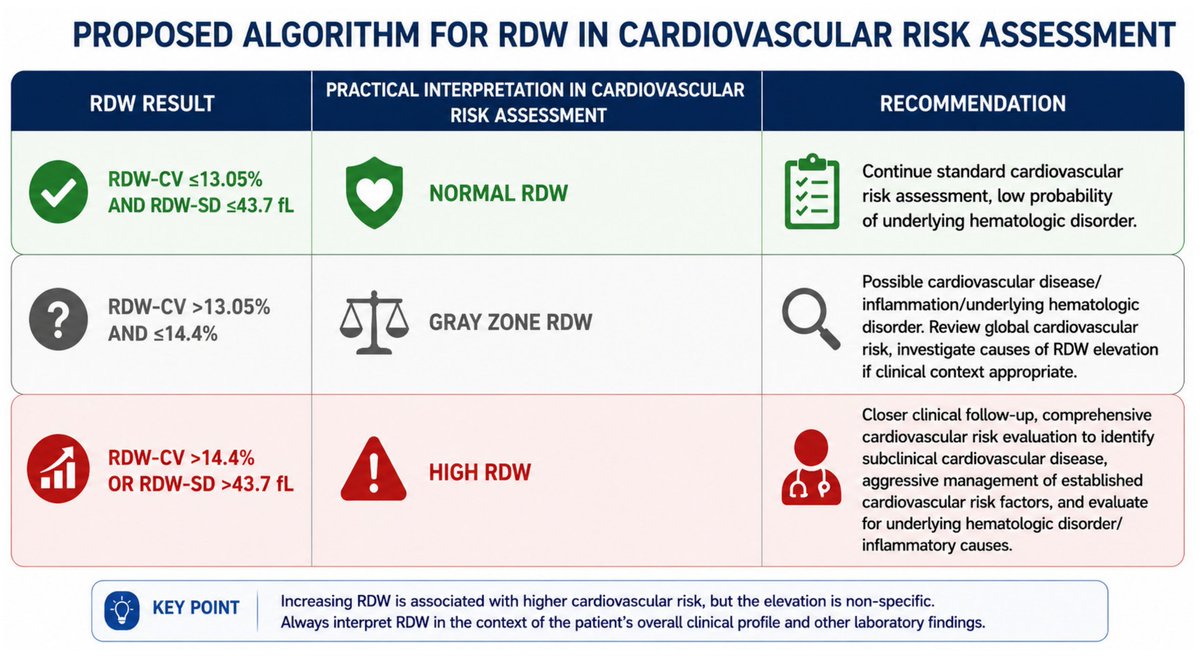
High RDW (red cell diffusion width) is associated with atherosclerosis
Beauty of this is that RDW is a routine measurement on a CBC (complete blood count), so if you get regular labs done, you likely have RDW results already.
https://t.co/4MBQ8JRlhA
🩸 Current evidence does not support menstrual cycle-based periodization for improving strength or endurance.
Individualize training based on performance and symptoms—not the calendar.
https://t.co/CZl7THHc7v
Using a HEPA air purifier improved cognitive function by 12% in middle-aged and older adults.
And they only used it for a month!
That's a meaningful improvement in a short amount of time, all from a simple purchase you can make for your home.
How does muscle growth actually progress over time?
Our new systematic review and meta-analysis, posted as a preprint (DOI:10.51224/SportRxiv.910), pooled 3,237 observations from 480 studies to model the trajectory of resistance training-induced muscle growth.
As expected, muscle growth follows a curvilinear trajectory.
Gains occur relatively rapidly during the early stages of training and then progressively slow as training continues. At 10 weeks, the model estimated an average increase in muscle size of approximately 7%. This increased to ~7.5% at 12 weeks, ~8.9% at 20 weeks, ~10.5% at 36 weeks, and ~12.6% at 78 weeks.
In other words, hypertrophy displays diminishing returns—but diminishing returns do not mean no returns. Gains continue to accumulate; they simply become progressively smaller over time.
Importantly, there was substantial variability around these averages. At 10 weeks, for example, the 95% prediction interval ranged from approximately −7% to +22%, highlighting just how much hypertrophic responses can differ across studies and individuals. Moreover, most of the included studies were relatively short in duration, limiting our ability to draw conclusions about the rate of hypertrophy over longer training periods (above ~16 weeks).
Perhaps more importantly, research studies are generally designed to determine group-level effects rather than to optimize muscle development for each individual. Thus, these findings provide a useful framework for understanding the general trajectory of hypertrophy over time, but should not be interpreted as defining the limits of what a person can achieve with a customized, well-designed training program.
Take-home: Muscle growth tends to occur most rapidly during the early stages of resistance training, with the rate of gain progressively slowing as training exposure accumulates. However, diminishing returns do not mean an end to progress, and early rates of growth should not be extrapolated linearly over the long term.
Shout out to @BM_Roberts_SkM for spearheading the project 💪
https://t.co/q6Tirlwf31
🚨 Dormir bien también es vivir más 😴⏳
En adultos de mediana y avanzada edad, el menor riesgo de mortalidad y muerte prematura se observó con una duración moderada del sueño:
🎯 Duración moderada ≈7 horas 💤
https://t.co/ViVIqN4ist
Short sleep ages you. Long sleep usually means something is already aging you.
A new paper in Nature this week mapped sleep duration against biological aging across 9 organ systems in half a million UK Biobank adults aged 37 to 84. Junhao Wen's lab at Columbia used 23 different aging clocks built from MRI scans, plasma proteins, and metabolites. The relationship is U-shaped. The slowest measured aging sat between 6.4 and 7.8 hours per night. Outside that window in either direction, organs looked older than chronological age would predict.
The two arms of the U are not the same biology.
On the short-sleep side, the causal story is well established. Sleeping under 6 hours raises systemic inflammation, impairs next-morning glucose tolerance, suppresses NK cell activity, and tracks with markers of poorer overnight brain waste clearance. Mendelian randomization in this paper supports a direct causal effect of short sleep on aging biology. Short sleep drives the wear and tear.
On the long-sleep side, the picture flips. Consistently sleeping over 8 or 9 hours is a well-documented marker of underlying disease, not a damaging behavior in itself. It tracks with major depression, undiagnosed sleep apnea, hypothyroidism, chronic inflammation, and neurodegenerative disease. The authors note that Mendelian randomization could not strongly support reverse causality, but they explicitly could not exclude it either. Decades of sleep medicine argue that for most long sleepers, the long sleep is the body compensating for something already wrong.
This matters because the practical advice for the two groups is opposite.
If you sleep under 6 hours, the levers are direct. Total sleep opportunity. Consistent timing. Morning light. Caffeine cutoff after lunch. Alcohol stopped at least three hours before bed. Sleep extension trials adding 45 to 90 minutes a night have shown measurable improvements in metabolic and cardiovascular markers.
If you consistently sleep 9 or more hours and still wake unrefreshed, the right move is to investigate what your body is recovering from. Home sleep study to rule out apnea. TSH, free T4, ferritin, CRP, vitamin D, B12. Depression and anxiety screening. A review of medications that increase sleep need.
One scenario gets lumped in with long sleepers that shouldn't be. Athletes in heavy training blocks, adolescents, people recovering from infection, and people in their first trimester genuinely need 9 to 10 hours. The paper looked at habitual sleep in adults aged 37 to 84, not acute recovery states. The curve does not apply to them the same way.
The cleaner way to state the finding: there is a window in the middle where the body looks youngest on every clock the authors built. Both sides of that window correlate with faster organ aging. The reasons differ. Short sleep does the damage. Long sleep usually shows the damage is already underway.
Fermented foods lowered inflammation over 17 weeks. Adding more fiber did neither.
That's the finding from a Stanford randomized trial, and it should reframe how we think about feeding the gut.
Researchers assigned healthy adults to one of two microbiome-targeted diets, high-fiber or high-fermented-food, and ran deep immune and microbiome profiling across 17 weeks. The expectation going in was intuitive: fiber feeds your bacteria, so more of it should mean a healthier microbiome and lower inflammation.
That's not what happened.
The high-fiber group's inflammatory markers stayed flat. Its primary immune outcome, a composite cytokine response score, was unchanged from start to finish. And microbial diversity, one of the more reliable markers of gut resilience, held steady rather than rising.
The fermented-food group moved both. Inflammation declined steadily across the trial. Diversity climbed.
Fiber feeds bacteria the substrate they can digest. The study captured a signature of exactly this - i.e., the microbiome's glycan-degrading enzyme capacity rose while overall diversity stayed flat, consistent with the existing community upregulating rather than broadening
Fermented foods appear to do something structurally different. Live microbes plus the metabolic byproducts of fermentation seem to expand diversity directly, rather than by feeding what's already there. Greater diversity tracks with lower inflammatory load, and the fermented arm moved that lever while the fiber arm did not.
One detail worth sitting with: fiber wasn't inert for everyone. High-fiber consumers split into three distinct immune trajectories, and which one you landed in tracked your baseline microbiome diversity. Fiber's effect was contingent on the gut that received it. People starting with more diverse microbiomes likely respond differently than this average suggests.
Limitations:
Eighteen people per arm, healthy adults, 17 weeks. Inflammatory markers are intermediate biology, not clinical endpoints. Fiber's metabolic and cardiovascular benefits are established on separate, far larger evidence, and this trial doesn't touch them.
But for the specific job of moving the microbiome and inflammation, piling on more fiber wasn't the lever. The fermented foods, however, moved the needle.
Wastyk, Sonnenburg et al., Cell 2021.
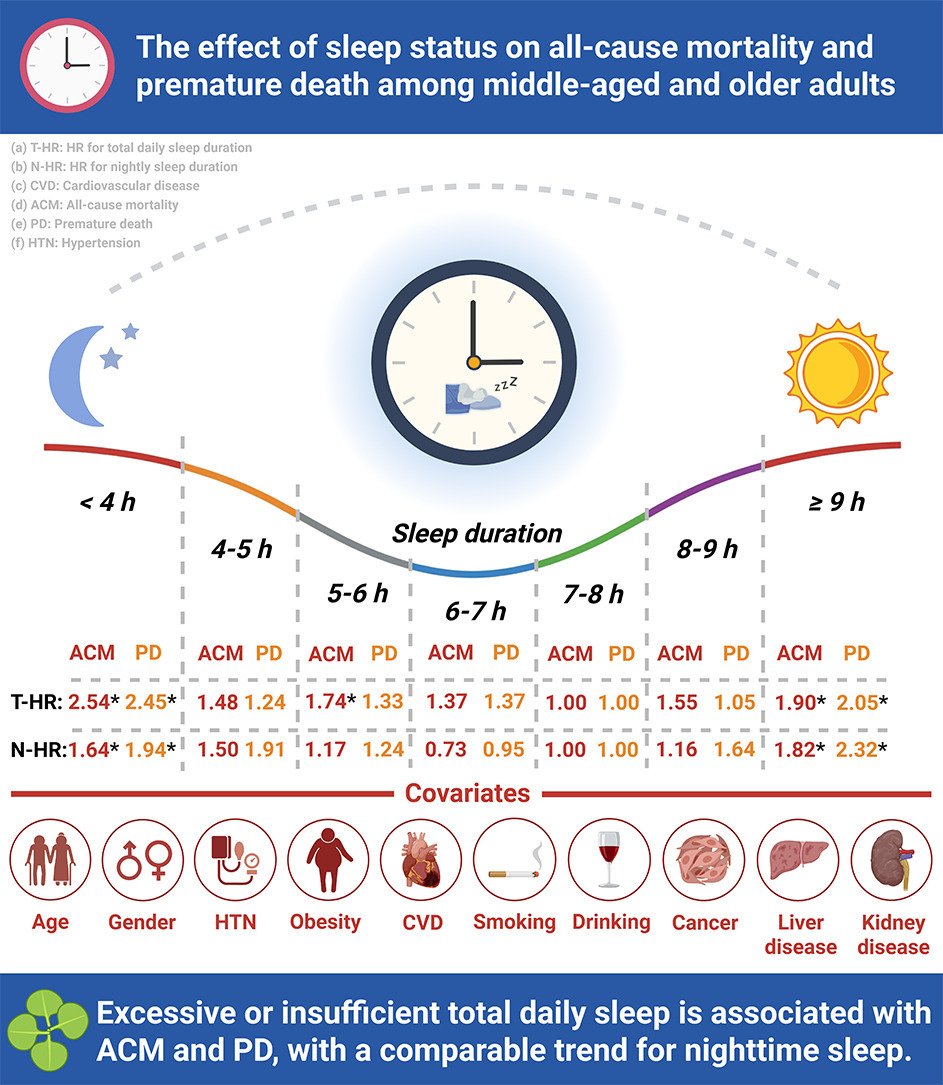
Excessive total daily sleep duration (≥9 h) or insufficient sleep duration (<4 h) was significantly associated with increased risks of all-cause mortality and premature death.
https://t.co/Spx8F9i2mp
Adults who could successfully stand on one leg for 10 seconds had an 46% lower risk of dying from any cause compared with those who couldn’t complete the test.
I find this fascinating because it shows how much information can be captured by a very simple measure of physical function.
It’s another reminder that balance is probably a meaningful marker of overall health and resilience, especially as we get older.
Melatonin doesn’t just regulate sleep—it also tells your pancreas to pump the brakes on insulin production
This means late-night eating could wreak havoc on your metabolism
Your best bet?
Try to stop eating at least 3 hours before bed, when melatonin starts to rise
Similarly, waiting about an hour after waking to eat ensures your body has fully transitioned out of melatonin production, optimizing your metabolic response