CONTAINER SHIPPING RATES HAVE SURGED OVER THE LAST THREE WEEKS, PUSHING THE DREWRY COMPOSITE INDEX UP 22% TO A 10-MONTH HIGH OF $2,711 PER 40-FOOT CONTAINER.
Trump on the Epstein files: “I think it's really time for the country to get onto something else. Now that nothing came out about me other than it was a conspiracy against me, literally by Epstein and other people.”
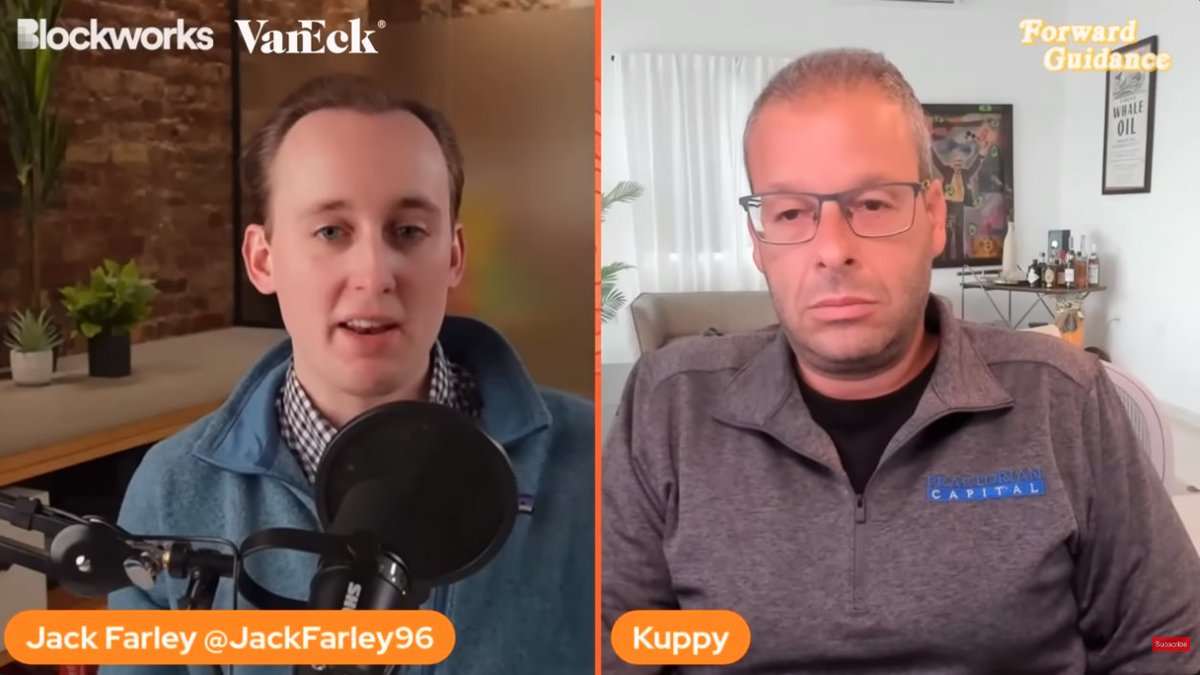
Recently, @hkuppy was interviewed by @JackFarley96, discussing his views on #uranium. His strategy: direct exposure to physical uranium, a solid approach.
However, his analysis of the miners relies on flawed assumptions. This thread will present a few counterarguments.
1/14 🐸
YELLEN: IT SEEMS UNLIKELY THAT INTEREST RATES WILL RETURN TO LEVELS AS LOW AS BEFORE COVID-19 PANDEMIC
2 years later, the admissions begin that 2% inflation target is dead
https://t.co/WxgZJjmHIW
🔸 SENATE MINORITY LEADER MITCH MCCONNELL AND OTHER REPUBLICAN SENATORS ADVOCATE FOR SIGNIFICANT COSTS TO IRAN, CALLING FOR MILITARY RETALIATION AGAINST IRAN'S FORCES, BOTH INSIDE THE COUNTRY AND ACROSS THE MIDDLE EAST
Out now - @Johncomiskey77, engineer, forecasts U.S. Treasury borrowing with greater accuracy than some Wall Street bank research teams.
Here's how this market plumbing autodidact is viewing upcoming Treasury issuance & Fed policy:
- interest expense on U.S. debt is growing
- high capital gains + states finally paying their taxes to be a downward force on U.S. deficit in 2024
- seasonal factors *could* be volatile as flood of money coming into the Treasury could cause bill issuance to collapse. However John does not expect Treasury to "slam on the brakes"
- Fed's will be able to run Quantitative Tightening for "quite a bit longer" before it becomes a reserves problem
- John has a quantitative model he built that has accurately forecasted Treasury issuance in Q4 2023
- John's model predictions for this year appear validated by today's release from Treasury: we did this interview a week ago (Jan 24 2024) and John's was -36 Billion off for Q1 & Q2 combined. Whereas Deutsche Bank was +307B over. Not bad for a guy who does this as a hobby.
This interview is brought to you by @vaneck_us, a global leader in asset management since 1955. I'm very proud to say that VanEck is @ForwardGuidance's exclusive sponsor - check them out!
As always this episode is available everywhere 📽️📷
Enjoy 🔥
Over the past decade renewable investments have made bigger profits for shareholders than oil investments, and with COP28 behind us, energy executives should consider a portfolio review
https://t.co/rXQL2gxwNa
COSTCO SOLD OVER $100 MILLION DOLLARS IN GOLD BARS OVER THE LAST 3 MONTHS
THE ONE OUNCE GOLD BARS THEY SELL ARE SELLING OUT WITHIN A FEW HOURS AFTER BEING LISTED
$COST
OPEC+ VS SPECULATORS
Why do Saudi Arabia and ABS (Abdulaziz bin Salman) focus so much on speculators? Media often brushes it off as unfounded concern and a usual “bull” complaint, but there is actually a deeper logic there:
Before the shale era, oil price included “geopolitical premium” – i.e. prices were high vs inventories. For instance, in 2003-07 despite oil prices surging 3x, market was oversupplied almost the entire time.
Recently @FlipperMsc reminded that back in the days brokers and research houses were estimating the "premium" to be between 10 and 20 dollars per barrel (closer to 20).
In 2006, Goldman’s Jeff Currie explained a similar phenomenon via his now famous “Long-term shortages create Near-Term Surpluses” thesis (which is essentially the same thing – if the market believes in future shortage, prices will rise, hurt demand and incentivize more immediate supply – even if long-term concerns are unresolved and still support the prices).
Now we are in a very different world: expectations of demand growth went down dramatically, supply keeps outperforming. As a result, aside from a brief period in 2022, there were and are few concerns about long-term supply (and between pretty strong non-OPEC+ pipeline and OPEC+ spare capacity, it is not wrong).
[Note – this is not a “structural bear” thesis – i.e. one - as I do - could believe that the prices that would be needed to balance the market could be fairly high – but in my mind the question is whether extra demand will require higher OPEC+ supply than now (this is what I think – and it will mean decent prices) or not.]
Moreover, high interest rates strongly disincentivize keeping “extra” inventory and force additional destocking.
What can OPEC do? Ideally, they want their risk premium back. But there is no “peak supply” or “uncontrollable EM demand growth” story – at least not in the form that prevailed 15-20 years ago.
Their solution is to make inventory really tight, force the premium for “getting oil now” – which manifests itself in futures' curve backwardation and larger physical differentials. In addition, backwardation would make rolling short positions negative carry, creating a headache for those who try it.
BUT: overdoing it results in demand slowdown (it happened a number of times and in different forms – from a rollout of higher efficiency ICE vehicles to faster EV adoption and to short-term demand responses like last year) and – more importantly – in non-OPEC supply response.
And the problem is that with lower inventories coupled with longer supply routes / markets’ fragmentation (which require *more* inventory), walking the line between too much and too little becomes quite difficult. Saudis were trying to manage the market this way since 2017 (when OPEC+ was formed), but more recently interest rates increase + trade fragmentation made their job more complex.
Here is the most recent example: In August-September a combination of OPEC+ cuts, seasonality and low Cushing stocks made the markets really nervous. Part of it was due to positioning changes, but physical premiums were also significantly above normal: DFL = Dated Brent to frontline ICE Brent future) was above $2.5, specific grades went up $1-4 (vs Dated for European grades) vs normal levels.
So the futures price quickly rallied to almost $100 (and physical went even higher). OPEC+ responded with higher exports (some – due to seasonality, some – due to destocking) and some moderate cheating. 2 month forward, in a seasonally weak November with some (but not huge) extra weakness in demand, OPEC+ finds itself against the wall and re-energized bearish narratives (and positions), looking into potentially a surplus Q1 – and again – in need to force the shorts out of their happy place via tightening the physical market.
I.e. the market – at least for now does not allow large builds, but inventory is so tight that overdoing it even for 2 months creates stress on the other side.
What is the lesson here? To me the lesson is that this new framework will result in higher price volatility.
Few months of looser market balances will result in prices quickly coming and on the other hand OPEC+ keeping the market on a starvation diet for a longer period of time would definitely drive the prices high enough to incentivize increased US (and perhaps others’) response (especially that larger part of the assets are now in the hand of bigger players, who do not need to hedge as much as before, losing $10-15 on backwardation – that would occur in the markets akin to September ones).
Basically – the point is that “keeping prices high, but not too high” would be difficult, OPEC would end up overshooting on both sides (overshooting only on the upside would make things too comfortable for shale).
#OOTT, #OPEC+
If you are an oil & gas business leader and you're not buying back your stock aggressively here....you are failing your shareholder community. #EFT#OOTT#ONGT
Don’t forget $TECK is selling their Crown Jewels for ~3x EBITDA for the *hope* that the remainder of their book which trades at ~5x trades at ~7x post transaction… THAT is the power of ESG stupidity…
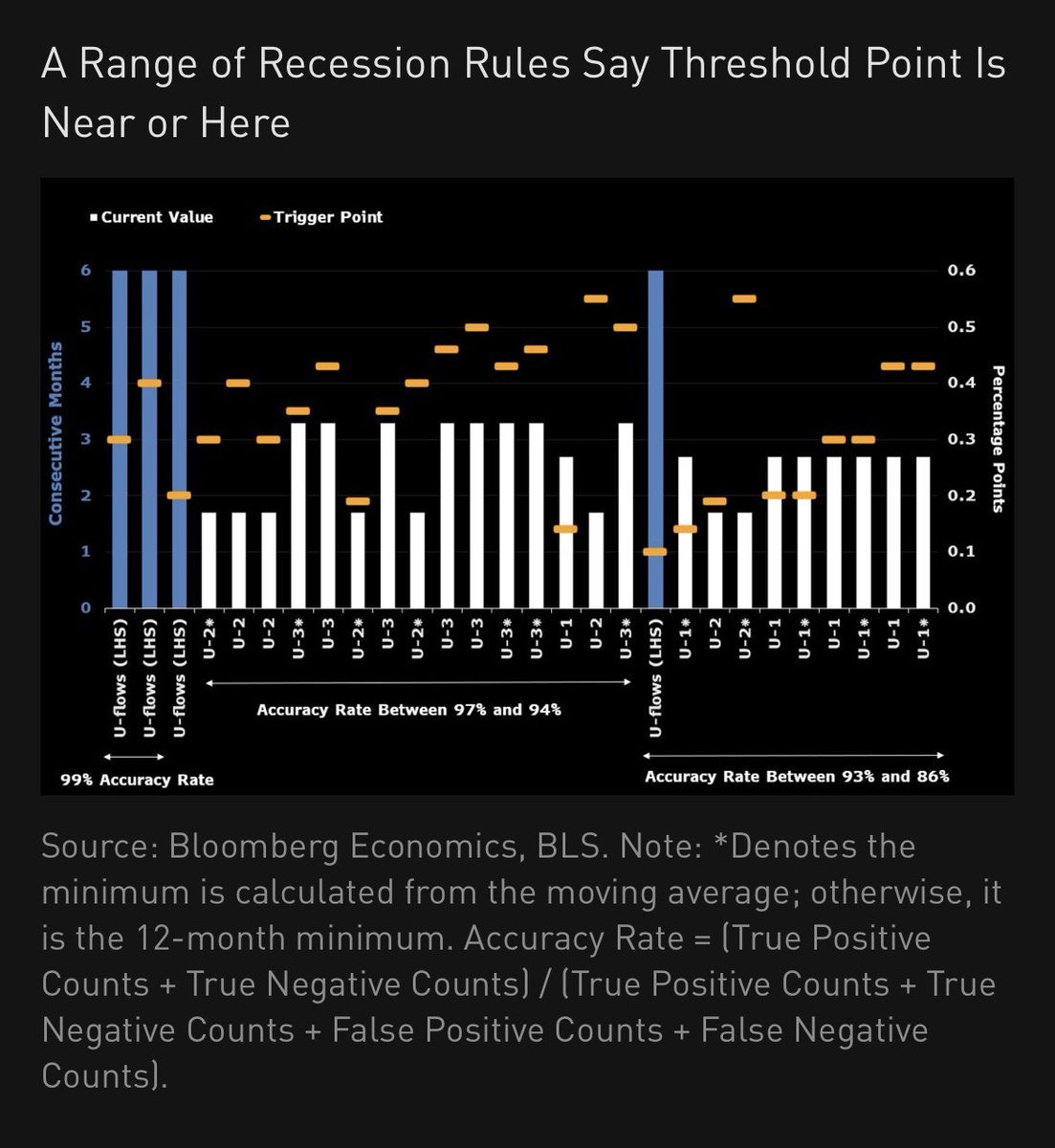
A 🧵 to add to the debate on whether this time is different when it comes to recession. In a piece with Bill Dudley today, we looked into reasons why or why not recession rules will hold in this cycle. First, U-1, U-2, U-3, Uflows say recession trigger is either near or here. 1/5