$24,000,000,000,000 IN US BANKING ASSETS IS WATCHING ONE CEO LOSE HIS COMPOSURE.
🇺🇸 JPMorgan CEO Jamie Dimon today:
"He's full of shit."
"If he wants to be a bank, be a bank."
"We'll fight it. If we lose, we lose, and we'll live."
The target: Coinbase CEO Brian Armstrong.
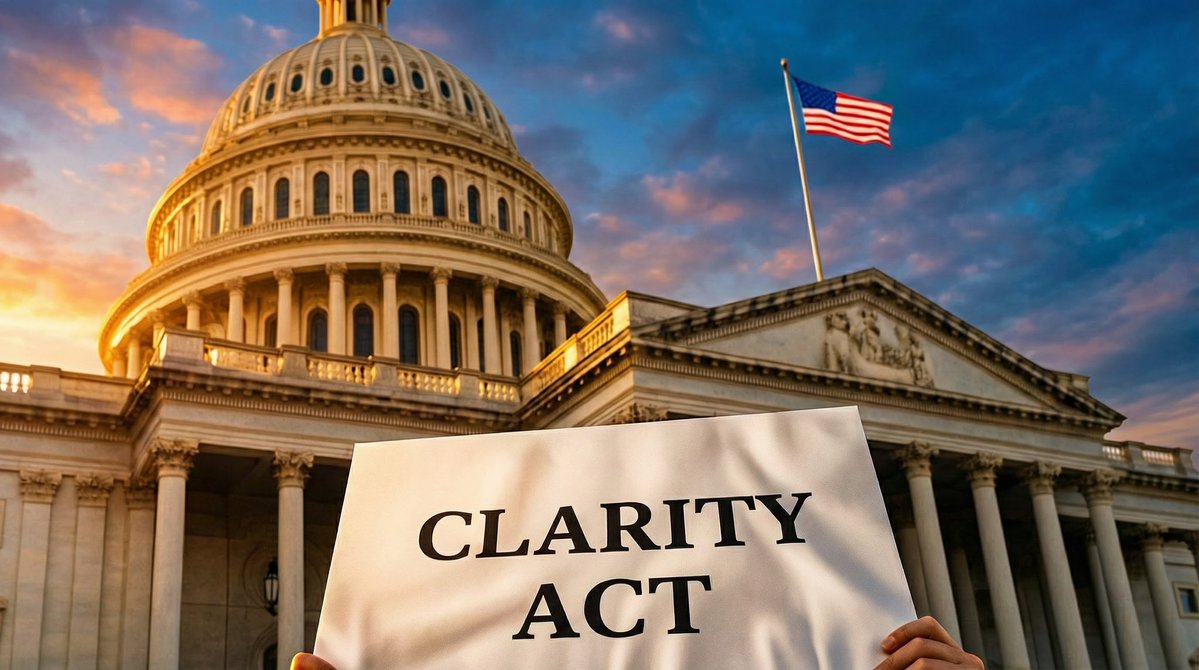
The fight: CLARITY Act stablecoin yield rules.
The Senate Banking Committee already advanced it 15-9.
The largest US bank just confirmed publicly: they're losing the framework war.
Trillions follow the rules.
The rules just got written without them.
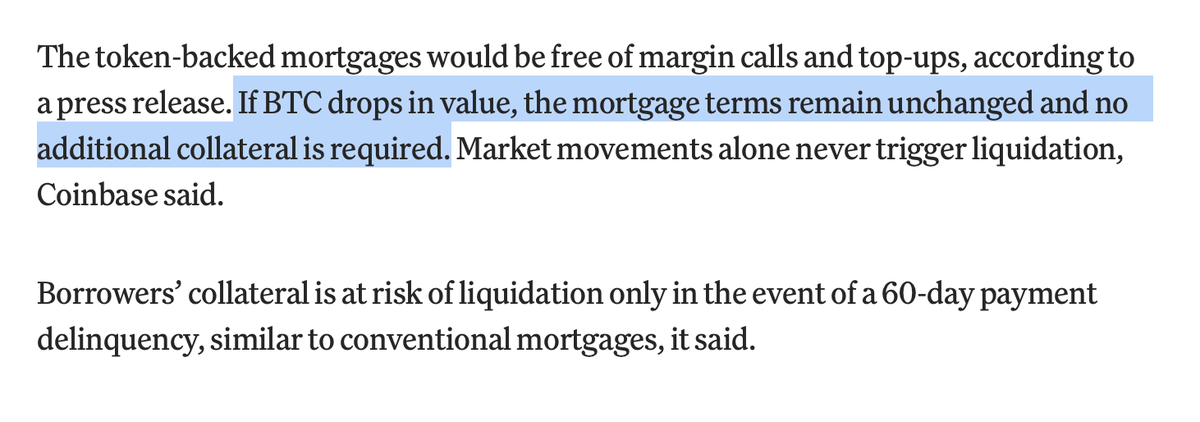
COINBASE: NO MARGIN CALLS FOR BITCOIN-BACKED MORTGAGES
Coinbase says its crypto-backed mortgages will carry rates around 0.5% to 1.5% higher than a standard 30-year, depending on borrower profile.
Loans feature no margin calls or collateral top-ups.
BTC price drops do not change loan terms or trigger liquidation.
Collateral is only at risk after 60 days of missed payments, aligning with traditional mortgage standards.
Will be a long and drawn out battle. Banks won’t give up control of their system voluntarily. They are obviously trying to play catch up with BTC backed products-although none will be able to compete.
Hope this doesn’t mean slow BTC retail adoption and slow price mvmts
https://t.co/cGME8TB1ql
Banks don't like what MSTR is doing with $STRC
They want to liquidate MSTR's Bitcoin and take it for themselves
They want to issue their own credit products backed by Bitcoin
This is going to be like GME but the shortsqueeze will be DISASTROUS for anyone shorting MSTR or BTC
Nothing was supposed to be able to compete with the banking system
The Fed made sure of that by confiscating gold
But they can't stop Bitcoin backed credit
They can't stop bitcoin
Strategy can't be liquidated
Strategy has enough cash to cover over 2 years of dividend payments, and it can generate more at any time
While the banks mess around with fiat games, Strategy is innovating and buying thousands of coins a day
STRC is the perfect fit for short term credit
It wouldn't exist without Bitcoin
And banks can't do anything to kill it
There's too much demand for a product like this
For the record.
Jamie Dimon says he wants a “level playing field” for stablecoins. What he really wants is to make sure nobody can offer you a better deal on your own money than tradtional banks can. The president is right to call the banks out on this.
We’ve seen this before. In the 1970s, money market funds started paying real yields while banks were locked under deposit caps. Banks cried “unfair” and “unsafe,” lobbied furiously, and lost. Policymakers chose competition over protection; savers got paid, and banks had to adapt instead of suffocating the threat.
Today’s script is the same, just with better technology. Stablecoin issuers now operate under licensing, 1:1 high‑quality reserves, liquidity and risk rules, audits and strict AML standards. This is not the Wild West. Yet Dimon still talks as if they exist with “no reserves, no compliance, no oversight.” He’s not describing reality; he’s describing a story that justifies shutting down a rival funding system.
The Clarity Act is the real battlefield. On paper, it’s about integrating crypto into U.S. market structure. In practice, the big banks are fighting to ensure that anything that looks like a deposit with yield must either become a bank product or be regulated into irrelevance. “Level playing field” in their vocabulary means: everyone wears the bank straitjacket, or no one plays.
Why? Because yield‑bearing stablecoins blow up the quiet cartel behind record profits. Banks live on deposits that pay close to nothing even when risk‑free rates are high. They earn a clean spread and interest on balances parked at the Fed, while passing little of it through. Savers get crumbs; banks get the margin; inertia does the rest. A credible, regulated stablecoin that passes through money‑market yields detonates that racket: with a few clicks, your cash can leave the cartel.
The president’s critique goes straight at this arrangement: Americans should “earn more money on their money,” and banks should not be allowed to undermine laws designed to make that possible or to stall a market‑structure bill so the whole “powerful Crypto Agenda” decamps overseas. He’s not attacking banking; he’s attacking a model that treats low‑yield deposits as an entitlement and regulation as a weapon.
Crypto‑native firms, for all their flaws, behave like they live in a real market: they build new instruments, disclose, and pay up to attract capital. The banks build talking points and hire lobbyists. Stablecoins don’t just threaten their funding; they threaten their chokehold on payment rails and transaction data.
Call this debate what it is: not a fight over “safety,” but a fight over whether a protected deposit cartel gets veto power over technologies that finally let savers earn something closer to the risk‑free rate. In the 1970s, policymakers chose competition.
In the 1970s, banks were forced to stop hiding behind regulation and compete. If Jamie Dimon wants a level playing field, he should stop complaining and start doing the same.
A historic moment for crypto.
Kraken Financial has been granted a Federal Reserve master account, making us the first digital asset bank with direct access to the U.S. payments system.
A major step toward connecting crypto infrastructure with the core rails of global finance.
https://t.co/yVgwuJDZge
We've had to work through a lot of difficult issues in the debate over market structure in Congress (token classification, yield, shared agency authority). But we are now getting to the heart of the matter in the Senate:
Whether Americans will be allowed to build and use permissionless private infrastructure in the US free from unwarranted prosecution (protected by the BRCA provisions in Clarity) or whether "national security interests" and "ease of prosecution" will trump those rights and protections.
Another way to put this:
Do you want the underlying pipes for all financial transactions to look like they have for decades: wholly owned and controlled by large banking interests and freely surveilled without warrants or reasonable suspeicion by corporations and the government?
Or do you think that money and assets should travel safely and privately on free and open infrastructure that's built and maintained by the people for the people?
Watch carefully who comes out on which side.
Do you want some Republican to instantly know that you paid for an abortion? Do you want some Democrat to instantly know you bought a gun? Do you want either to be able to freely and arbitrarily cut you off from the global economic rails without trial or oversight?
Or do you still believe in American values: privacy, liberty, and the rule of law?
🚨 HERE’S WHY BITCOIN IS NONSTOP DUMPING RIGHT NOW
If you still think $BTC trades like a supply-and-demand asset, you MUST read this carefully.
Because that market no longer exists.
What you’re watching right now is not normal price action.
It’s not “weak hands.”
It’s not sentiment.
And it’s definitely not retail selling.
Most people are completely unaware what’s happening.
And by the time it becomes obvious, the damage is already done.
This move didn’t start today.
It’s been building quietly under the surface for months.
And now it’s accelerating.
Here’s the truth:
The moment supply can be synthetically created, scarcity is gone.
And when scarcity is gone, price stops being discovered on-chain and starts being set in derivatives.
That is exactly what happened to Bitcoin.
And it’s the same structural break that already happened to:
→ Gold
→ Silver
→ Oil
→ Equities
Once derivatives took over.
The original Bitcoin thesis is broken.
Bitcoin’s valuation was built on two ideas:
→ A hard cap of 21 million
→ No rehypothecation
That framework died the moment Wall Street layered this on top of the chain:
→ Cash-settled futures
→ Perpetual swaps
→ Options
→ ETFs
→ Prime broker lending
→ Wrapped BTC
→ Total return swaps
From that point forward Bitcoin supply became theoretically INFINITE.
Not on-chain.
But in price discovery, which is what actually matters.
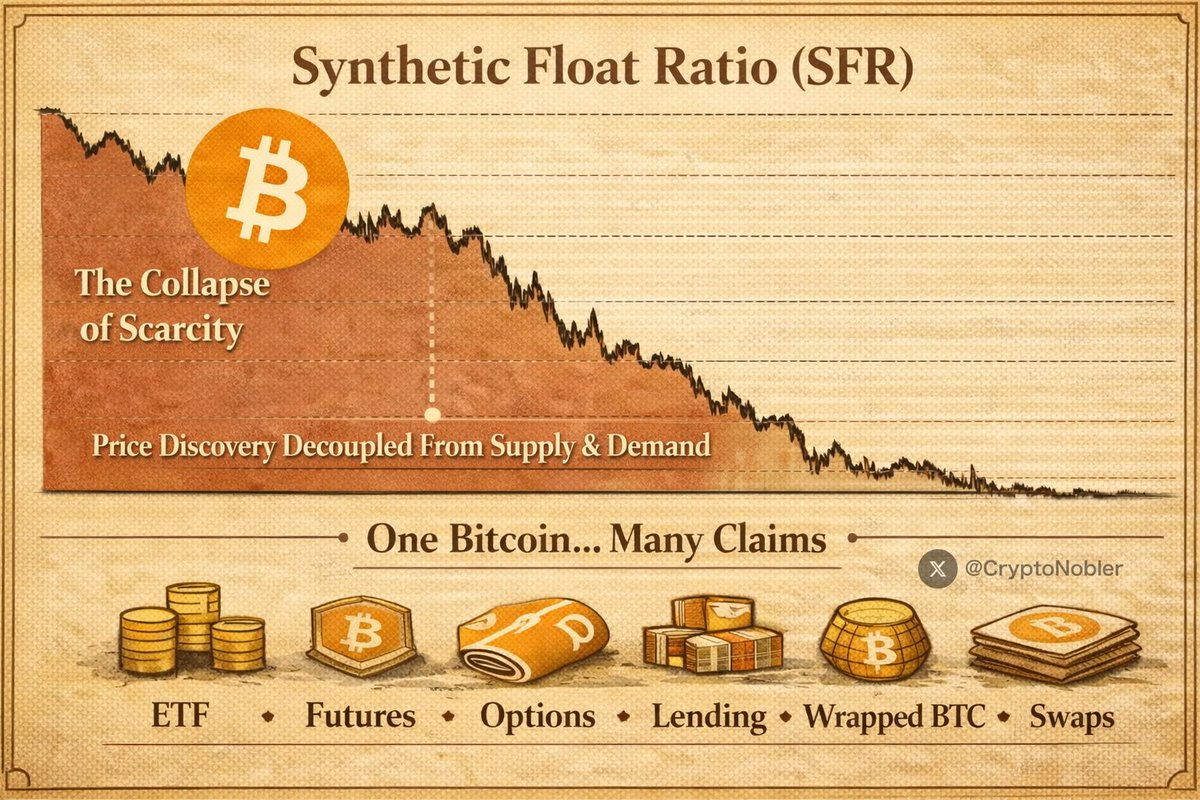
Synthetic Float Ratio (SFR).
The metric that explains everything.
Once synthetic supply overwhelms real supply, price no longer responds to demand.
It responds to positioning, hedging, and liquidation flows.
Wall Street can now trade against Bitcoin.
They’re not guessing direction.
They’re doing what they do in every derivatives-dominated market:
1⃣ Create unlimited paper BTC
2⃣ Short into rallies
3⃣ Force liquidations
4⃣ Cover lower
5⃣ Repeat
This isn’t “betting.”
It’s inventory manufacturing.
One real BTC can now simultaneously back:
→ An ETF share
→ A futures contract
→ A perpetual swap
→ An options delta
→ A broker loan
→ A structured note
All at THE SAME TIME.
That’s six claims on one coin.
That is not a free market.
That is a fractional-reserve price system wearing a Bitcoin mask.
Ignore it if you want, but don’t pretend you weren’t warned.
I’ve been calling Bitcoin tops and bottoms for over a decade now, and I’ll do it again in 2026.
Follow and turn on notifications before it's too late.
53 banking associations just wrote themselves a $6.6 trillion protection bill.
They called it the CLARITY Act.
Here is what they do not want you to understand.
Banks pay depositors 0.1% interest. Stablecoin issuers hold Treasury bills earning 4.5%. If stablecoins could pass that yield to users, banks lose the deposit war. They cannot compete. The math is fatal.
So they made competition illegal.
The Kansas City Fed calculated what happens if stablecoins pay competitive rates. Banks lose 25.9% of deposits. $1.5 trillion in lending capacity vanishes. The entire community banking model collapses.
Their solution was not innovation. Their solution was legislation.
The CLARITY Act everyone is celebrating contains Section 404 prohibiting yield payments through any mechanism. Not just from issuers. From exchanges. From affiliates. From partners. Every single pathway to competitive returns, closed by statute.
Brian Armstrong reviewed the 278-page draft for 48 hours. He withdrew Coinbase support at 11pm. The markup was postponed by morning. He saw what Wall Street analysts missed entirely.
This is not crypto regulation.
This is Dodd-Frank for digital assets. Incumbents writing rules that crush competitors. Regulatory capture so brazen they published the lobbying letters on their own websites.
The American Bankers Association. 52 state banking associations. The Community Bankers Council. All coordinating to eliminate an industry they cannot beat in open markets.
Meanwhile China made e-CNY interest-bearing on December 29.
America is banning stablecoin yield while Beijing is paying it.
The crypto industry spent years begging for regulatory clarity.
They got it.
Clarity that $6.6 trillion in deposits will be protected at any cost. Clarity that banks write the rules. Clarity that if you cannot win in markets, you win in Congress.
This is the largest regulatory capture event in American financial history.
And it is being sold as innovation policy.
Investing only 4% leaves room for big banks/institutions to continue their mass adoption without instant shock to price. I bet these same banks are investing more than 4%.
I have a feeling some if not all of this was US taxpayer money funneled through politicians.
May prove difficult to take possession of the BTC as it is not easy to confiscate.
JUST IN: CNBC says "Venezuela may have quietly amassed a Bitcoin reserve worth tens of billions of dollars." 👀 🇻🇪
"If the US seizes those coins and adds them to its own strategic reserve, you're looking at potentially substantial supply of BTC getting locked up for years." 🚀
112 years ago, the Federal Reserve was born in secrecy.
Here’s an exclusive preview from MONEY DISRUPTED, breaking down the real story behind its creation.
The end of fiat currency is upon us...
COMING SOON
▶️ Watch
🧾 Pre-order
https://t.co/ACeiswvm6M
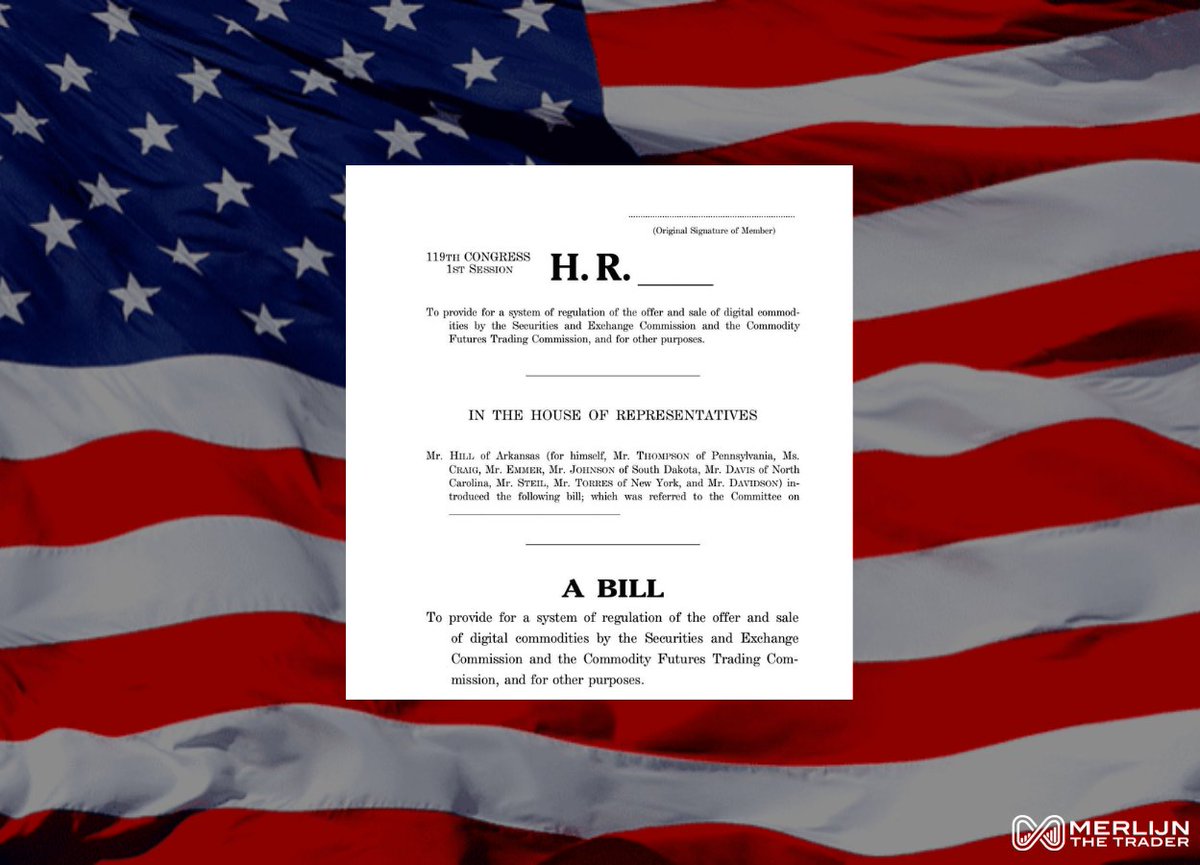
JUST IN: CFTC Chairman says "Congress is poised to send digital asset market structure legislation that will cement the U.S. as the Crypto Capital of the World to the President’s desk." 🙌
JUST IN: $410 billion PNC Bank partners with Coinbase to offer direct Bitcoin trading for clients.
The first bank to market such an offering among major US banks.