How to Protect Your Crypto with Multiple Layers of Security
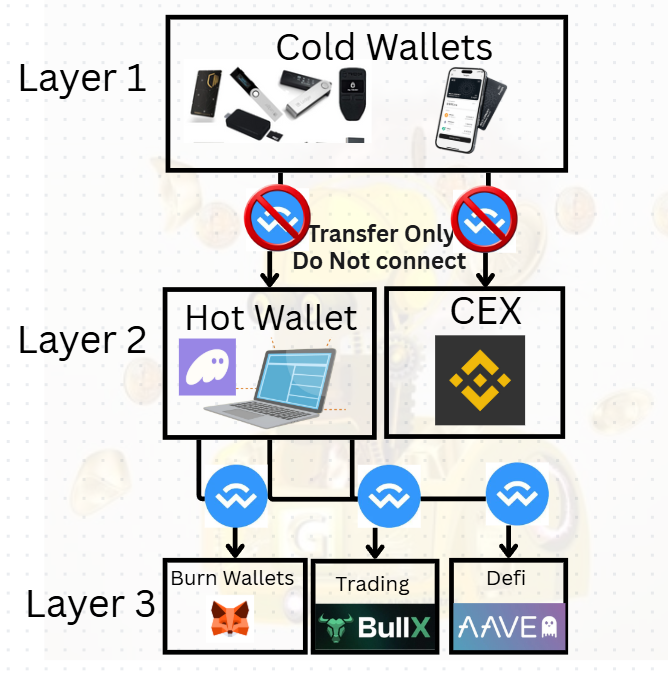
Layer 1 – Cold Wallet (Long-Term Storage)
--Store the majority of your funds here.
--Keep it on a separate device (PC or phone) with your seed phrase hidden and secured.
--Only transfer assets in/out when moving to Layer 2 or a CEX.
--Never connect your cold wallet directly to dApps, DEXs, or protocols — this prevents the risk of it being drained.
Layer 2 – Hot Wallets (Daily Use) Examples: MetaMask, Phantom.
--Use a separate device + seed phrase for each wallet.
--Keep balances to a minimum — unused funds should always go back to cold storage (Layer 1).
--From here, you can connect safely to trading platforms, DEXs, and DeFi protocols.
Layer 3 – Trading Platforms & DeFi Protocols
--Always use a burn wallet for testing or high-risk activities.
--Treat this as your “expendable” layer — never keep more than you’re willing to lose.
Sorry to hear that. I had my wallet hacked as well, but I only lost five dollars thanks to using multiple layers of protection. I’ve explained everything in detail in a post pinned to my profile. If it helped, please repost it to help others and follow me—I regularly share security updates and useful tips. https://t.co/U6W5amUhAO
How to Protect Your Crypto with Multiple Layers of Security
Layer 1 – Cold Wallet (Long-Term Storage)
--Store the majority of your funds here.
--Keep it on a separate device (PC or phone) with your seed phrase hidden and secured.
--Only transfer assets in/out when moving to Layer 2 or a CEX.
--Never connect your cold wallet directly to dApps, DEXs, or protocols — this prevents the risk of it being drained.
Layer 2 – Hot Wallets (Daily Use) Examples: MetaMask, Phantom.
--Use a separate device + seed phrase for each wallet.
--Keep balances to a minimum — unused funds should always go back to cold storage (Layer 1).
--From here, you can connect safely to trading platforms, DEXs, and DeFi protocols.
Layer 3 – Trading Platforms & DeFi Protocols
--Always use a burn wallet for testing or high-risk activities.
--Treat this as your “expendable” layer — never keep more than you’re willing to lose.
Sorry to hear that. I had my wallet hacked as well, but I only lost five dollars thanks to using multiple layers of protection. I’ve explained everything in detail in a post pinned to my profile. If it helped, please repost it to help others and follow me—I regularly share security updates and useful tips. https://t.co/U6W5amTJLg
How to Protect Your Crypto with Multiple Layers of Security
Layer 1 – Cold Wallet (Long-Term Storage)
--Store the majority of your funds here.
--Keep it on a separate device (PC or phone) with your seed phrase hidden and secured.
--Only transfer assets in/out when moving to Layer 2 or a CEX.
--Never connect your cold wallet directly to dApps, DEXs, or protocols — this prevents the risk of it being drained.
Layer 2 – Hot Wallets (Daily Use) Examples: MetaMask, Phantom.
--Use a separate device + seed phrase for each wallet.
--Keep balances to a minimum — unused funds should always go back to cold storage (Layer 1).
--From here, you can connect safely to trading platforms, DEXs, and DeFi protocols.
Layer 3 – Trading Platforms & DeFi Protocols
--Always use a burn wallet for testing or high-risk activities.
--Treat this as your “expendable” layer — never keep more than you’re willing to lose.
Sorry to hear that. I had my wallet hacked as well, but I only lost five dollars thanks to using multiple layers of protection. I’ve explained everything in detail in a post pinned to my profile. If it helped, please repost it to help others and follow me—I regularly share security updates and useful tips. https://t.co/U6W5amUhAO
How to Protect Your Crypto with Multiple Layers of Security
Layer 1 – Cold Wallet (Long-Term Storage)
--Store the majority of your funds here.
--Keep it on a separate device (PC or phone) with your seed phrase hidden and secured.
--Only transfer assets in/out when moving to Layer 2 or a CEX.
--Never connect your cold wallet directly to dApps, DEXs, or protocols — this prevents the risk of it being drained.
Layer 2 – Hot Wallets (Daily Use) Examples: MetaMask, Phantom.
--Use a separate device + seed phrase for each wallet.
--Keep balances to a minimum — unused funds should always go back to cold storage (Layer 1).
--From here, you can connect safely to trading platforms, DEXs, and DeFi protocols.
Layer 3 – Trading Platforms & DeFi Protocols
--Always use a burn wallet for testing or high-risk activities.
--Treat this as your “expendable” layer — never keep more than you’re willing to lose.
Sorry to hear that. I had my wallet hacked as well, but I only lost five dollars thanks to using multiple layers of protection. I’ve explained everything in detail in a post pinned to my profile. If it helped, please repost it to help others and follow me—I regularly share security updates and useful tips. https://t.co/U6W5amTJLg
How to Protect Your Crypto with Multiple Layers of Security
Layer 1 – Cold Wallet (Long-Term Storage)
--Store the majority of your funds here.
--Keep it on a separate device (PC or phone) with your seed phrase hidden and secured.
--Only transfer assets in/out when moving to Layer 2 or a CEX.
--Never connect your cold wallet directly to dApps, DEXs, or protocols — this prevents the risk of it being drained.
Layer 2 – Hot Wallets (Daily Use) Examples: MetaMask, Phantom.
--Use a separate device + seed phrase for each wallet.
--Keep balances to a minimum — unused funds should always go back to cold storage (Layer 1).
--From here, you can connect safely to trading platforms, DEXs, and DeFi protocols.
Layer 3 – Trading Platforms & DeFi Protocols
--Always use a burn wallet for testing or high-risk activities.
--Treat this as your “expendable” layer — never keep more than you’re willing to lose.
Sorry to hear that. I had my wallet hacked as well, but I only lost five dollars thanks to using multiple layers of protection. I’ve explained everything in detail in a post pinned to my profile. If it helped, please repost it to help others and follow me—I regularly share security updates and useful tips. https://t.co/U6W5amUhAO
How to Protect Your Crypto with Multiple Layers of Security
Layer 1 – Cold Wallet (Long-Term Storage)
--Store the majority of your funds here.
--Keep it on a separate device (PC or phone) with your seed phrase hidden and secured.
--Only transfer assets in/out when moving to Layer 2 or a CEX.
--Never connect your cold wallet directly to dApps, DEXs, or protocols — this prevents the risk of it being drained.
Layer 2 – Hot Wallets (Daily Use) Examples: MetaMask, Phantom.
--Use a separate device + seed phrase for each wallet.
--Keep balances to a minimum — unused funds should always go back to cold storage (Layer 1).
--From here, you can connect safely to trading platforms, DEXs, and DeFi protocols.
Layer 3 – Trading Platforms & DeFi Protocols
--Always use a burn wallet for testing or high-risk activities.
--Treat this as your “expendable” layer — never keep more than you’re willing to lose.
Sorry to hear that. I had my wallet hacked as well, but I only lost five dollars thanks to using multiple layers of protection. I’ve explained everything in detail in a post pinned to my profile. If it helped, please repost it to help others and follow me—I regularly share security updates and useful tips. https://t.co/U6W5amUhAO
How to Protect Your Crypto with Multiple Layers of Security
Layer 1 – Cold Wallet (Long-Term Storage)
--Store the majority of your funds here.
--Keep it on a separate device (PC or phone) with your seed phrase hidden and secured.
--Only transfer assets in/out when moving to Layer 2 or a CEX.
--Never connect your cold wallet directly to dApps, DEXs, or protocols — this prevents the risk of it being drained.
Layer 2 – Hot Wallets (Daily Use) Examples: MetaMask, Phantom.
--Use a separate device + seed phrase for each wallet.
--Keep balances to a minimum — unused funds should always go back to cold storage (Layer 1).
--From here, you can connect safely to trading platforms, DEXs, and DeFi protocols.
Layer 3 – Trading Platforms & DeFi Protocols
--Always use a burn wallet for testing or high-risk activities.
--Treat this as your “expendable” layer — never keep more than you’re willing to lose.
Sorry to hear that. I had my wallet hacked as well, but I only lost five dollars thanks to using multiple layers of protection. I’ve explained everything in detail in a post pinned to my profile. If it helped, please repost it to help others and follow me—I regularly share security updates and useful tips. https://t.co/U6W5amUhAO
How to Protect Your Crypto with Multiple Layers of Security
Layer 1 – Cold Wallet (Long-Term Storage)
--Store the majority of your funds here.
--Keep it on a separate device (PC or phone) with your seed phrase hidden and secured.
--Only transfer assets in/out when moving to Layer 2 or a CEX.
--Never connect your cold wallet directly to dApps, DEXs, or protocols — this prevents the risk of it being drained.
Layer 2 – Hot Wallets (Daily Use) Examples: MetaMask, Phantom.
--Use a separate device + seed phrase for each wallet.
--Keep balances to a minimum — unused funds should always go back to cold storage (Layer 1).
--From here, you can connect safely to trading platforms, DEXs, and DeFi protocols.
Layer 3 – Trading Platforms & DeFi Protocols
--Always use a burn wallet for testing or high-risk activities.
--Treat this as your “expendable” layer — never keep more than you’re willing to lose.
Sorry to hear that. I had my wallet hacked as well, but I only lost five dollars thanks to using multiple layers of protection. I’ve explained everything in detail in a post pinned to my profile. If it helped, please repost it to help others and follow me—I regularly share security updates and useful tips. https://t.co/U6W5amUhAO
How to Protect Your Crypto with Multiple Layers of Security
Layer 1 – Cold Wallet (Long-Term Storage)
--Store the majority of your funds here.
--Keep it on a separate device (PC or phone) with your seed phrase hidden and secured.
--Only transfer assets in/out when moving to Layer 2 or a CEX.
--Never connect your cold wallet directly to dApps, DEXs, or protocols — this prevents the risk of it being drained.
Layer 2 – Hot Wallets (Daily Use) Examples: MetaMask, Phantom.
--Use a separate device + seed phrase for each wallet.
--Keep balances to a minimum — unused funds should always go back to cold storage (Layer 1).
--From here, you can connect safely to trading platforms, DEXs, and DeFi protocols.
Layer 3 – Trading Platforms & DeFi Protocols
--Always use a burn wallet for testing or high-risk activities.
--Treat this as your “expendable” layer — never keep more than you’re willing to lose.
Sorry to hear that. I had my wallet hacked as well, but I only lost five dollars thanks to using multiple layers of protection. I’ve explained everything in detail in a post pinned to my profile. If it helped, please repost it to help others and follow me—I regularly share security updates and useful tips. https://t.co/U6W5amUhAO
How to Protect Your Crypto with Multiple Layers of Security
Layer 1 – Cold Wallet (Long-Term Storage)
--Store the majority of your funds here.
--Keep it on a separate device (PC or phone) with your seed phrase hidden and secured.
--Only transfer assets in/out when moving to Layer 2 or a CEX.
--Never connect your cold wallet directly to dApps, DEXs, or protocols — this prevents the risk of it being drained.
Layer 2 – Hot Wallets (Daily Use) Examples: MetaMask, Phantom.
--Use a separate device + seed phrase for each wallet.
--Keep balances to a minimum — unused funds should always go back to cold storage (Layer 1).
--From here, you can connect safely to trading platforms, DEXs, and DeFi protocols.
Layer 3 – Trading Platforms & DeFi Protocols
--Always use a burn wallet for testing or high-risk activities.
--Treat this as your “expendable” layer — never keep more than you’re willing to lose.
Sorry to hear that. I had my wallet hacked as well, but I only lost five dollars thanks to using multiple layers of protection. I’ve explained everything in detail in a post pinned to my profile. If it helped, please repost it to help others and follow me—I regularly share security updates and useful tips. https://t.co/U6W5amUhAO
How to Protect Your Crypto with Multiple Layers of Security
Layer 1 – Cold Wallet (Long-Term Storage)
--Store the majority of your funds here.
--Keep it on a separate device (PC or phone) with your seed phrase hidden and secured.
--Only transfer assets in/out when moving to Layer 2 or a CEX.
--Never connect your cold wallet directly to dApps, DEXs, or protocols — this prevents the risk of it being drained.
Layer 2 – Hot Wallets (Daily Use) Examples: MetaMask, Phantom.
--Use a separate device + seed phrase for each wallet.
--Keep balances to a minimum — unused funds should always go back to cold storage (Layer 1).
--From here, you can connect safely to trading platforms, DEXs, and DeFi protocols.
Layer 3 – Trading Platforms & DeFi Protocols
--Always use a burn wallet for testing or high-risk activities.
--Treat this as your “expendable” layer — never keep more than you’re willing to lose.
Sorry to hear that. I had my wallet hacked as well, but I only lost five dollars thanks to using multiple layers of protection. I’ve explained everything in detail in a post pinned to my profile. If it helped, please repost it to help others and follow me—I regularly share security updates and useful tips. https://t.co/U6W5amUhAO
How to Protect Your Crypto with Multiple Layers of Security
Layer 1 – Cold Wallet (Long-Term Storage)
--Store the majority of your funds here.
--Keep it on a separate device (PC or phone) with your seed phrase hidden and secured.
--Only transfer assets in/out when moving to Layer 2 or a CEX.
--Never connect your cold wallet directly to dApps, DEXs, or protocols — this prevents the risk of it being drained.
Layer 2 – Hot Wallets (Daily Use) Examples: MetaMask, Phantom.
--Use a separate device + seed phrase for each wallet.
--Keep balances to a minimum — unused funds should always go back to cold storage (Layer 1).
--From here, you can connect safely to trading platforms, DEXs, and DeFi protocols.
Layer 3 – Trading Platforms & DeFi Protocols
--Always use a burn wallet for testing or high-risk activities.
--Treat this as your “expendable” layer — never keep more than you’re willing to lose.
Sorry to hear that. I had my wallet hacked as well, but I only lost five dollars thanks to using multiple layers of protection. I’ve explained everything in detail in a post pinned to my profile. If it helped, please repost it to help others and follow me—I regularly share security updates and useful tips. https://t.co/U6W5amUhAO
How to Protect Your Crypto with Multiple Layers of Security
Layer 1 – Cold Wallet (Long-Term Storage)
--Store the majority of your funds here.
--Keep it on a separate device (PC or phone) with your seed phrase hidden and secured.
--Only transfer assets in/out when moving to Layer 2 or a CEX.
--Never connect your cold wallet directly to dApps, DEXs, or protocols — this prevents the risk of it being drained.
Layer 2 – Hot Wallets (Daily Use) Examples: MetaMask, Phantom.
--Use a separate device + seed phrase for each wallet.
--Keep balances to a minimum — unused funds should always go back to cold storage (Layer 1).
--From here, you can connect safely to trading platforms, DEXs, and DeFi protocols.
Layer 3 – Trading Platforms & DeFi Protocols
--Always use a burn wallet for testing or high-risk activities.
--Treat this as your “expendable” layer — never keep more than you’re willing to lose.
Sorry to hear that. I’ve been there too — my wallet was hacked, but I only lost $5 thanks to using multiple layers of protection.
I’ve broken down exactly what I did in a pinned post on my profile. If it helps, please repost it to spread awareness and follow me for regular security updates and tips.
https://t.co/U6W5amUhAO
How to Protect Your Crypto with Multiple Layers of Security
Layer 1 – Cold Wallet (Long-Term Storage)
--Store the majority of your funds here.
--Keep it on a separate device (PC or phone) with your seed phrase hidden and secured.
--Only transfer assets in/out when moving to Layer 2 or a CEX.
--Never connect your cold wallet directly to dApps, DEXs, or protocols — this prevents the risk of it being drained.
Layer 2 – Hot Wallets (Daily Use) Examples: MetaMask, Phantom.
--Use a separate device + seed phrase for each wallet.
--Keep balances to a minimum — unused funds should always go back to cold storage (Layer 1).
--From here, you can connect safely to trading platforms, DEXs, and DeFi protocols.
Layer 3 – Trading Platforms & DeFi Protocols
--Always use a burn wallet for testing or high-risk activities.
--Treat this as your “expendable” layer — never keep more than you’re willing to lose.