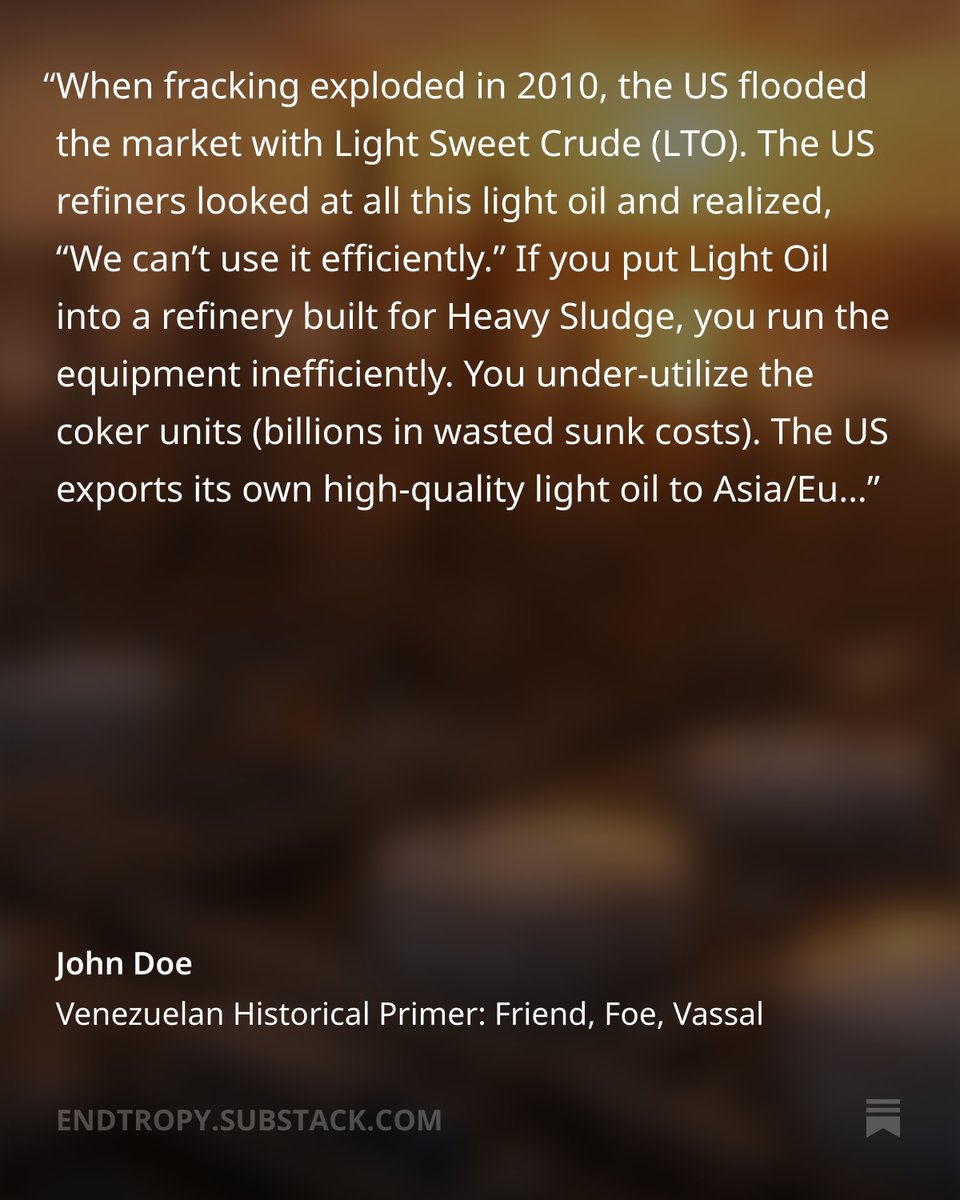
This is a terrific, tragic history of the Venezuelan oil saga, with US involvement. Puts the events of this weekend into an honest, informed perspective that will wow your friends and family.
This is free, not mine, and I don't know the author, but it is really good, very helpful.
Venezuelan Historical Primer: Friend, Foe, Vassal
https://t.co/lVMvvhZnNF
$PYPL / $NET
Crazy partnership idea: PayPal + Cloudflare.
You may ask why these companies would partner. I'm glad you asked.
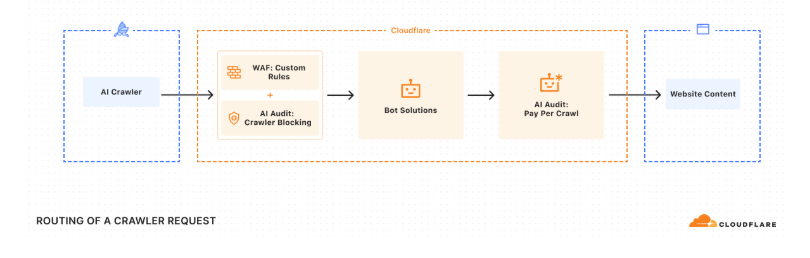
@eastdakota and his team have launched Pay Per Crawl, a service dedicated to prevent rampant AI scraping from content creators by forcing them to provide a micro-transaction for each instance. As an aside, I LOVE what they're doing, and Mr. Prince is well worth a listen on this vital topic.
Cloudflare already has a significant number of major media partners, including The Atlantic, ADWEEK, StockTwits, and Fortune.
Here is where @acce and his team at PayPal comes in: $NET is currently doing microtransactions via traditional payment rails. That's inefficient at best, given constraints of settlement time, cost, fractionalization, and lacking the benefits of programability.
However, per their spokesman via TechCrunch, they are looking at either launching their own stablecoin or partnering with existing stablecoin networks.
PayPal is a significantly better alternative. So what does this partnership look like, theoretically, and why PayPal?
PayPal facilitates the microtransactions using their trusted payment network. For much of these, $PYUSD would be the primary vehicle. As a prudentially regulated stablecoin it checks all the right boxes (except for one - detailed below).
For areas where $PYUSD is not available (see the EU due to MiCA), or depending on the merchant, the microtransaction could still be carried via PayPal.
Why PayPal?
- Both $NET and $PYPL are trusted parties
- Both use MCP and have their own MCP servers.
- Both are very focused on AI agents and automation.
- Both are massive global entities. 20% of e-commerce flows through $PYPL, while about 20% of internet traffic flows through $NET.
$NET doesn't have to focus on building their own stablecoin (the building is the easy part btw - regulation is harder), and $PYPL scales their $PYUSD in a vital real world scenario. Win-win.
@wmata put some effort into fixing this or I will coordinate protests across DC against the Metro. Whole stations or portions of an entire Metro Line shouldn’t fail during Rush Hour, yet it’s every week. Poor performance across the board. Worst it’s ever been, lifelong resident.
@wmata awful service on the red line today, both in and out of DC. Trains shouldn’t take 15-20 btwn doors open at stations. Note the doors open part, b/c these trains sit at the stations for 5-10 mins before doors open. Max enshitification of the local transport infrastructure
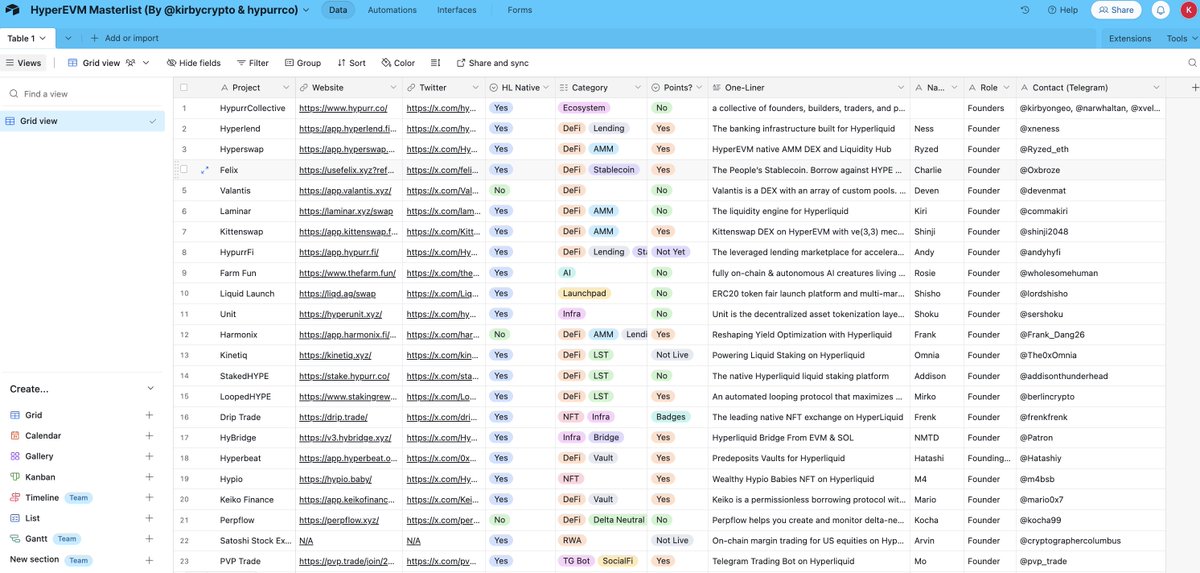
After spending 20+ hours building this, I’m excited to share the ultimate HyperEVM Masterlist
Feel free to RT and share with frens!
Originally built for personal use to:
Track founder contacts
Identify which protocols are native to Hyperliquid
Monitor which projects are running points programs
But since Hyperliquid’s ethos is all about openness and sharing, figured it’s only right to open it up to all.
With this Airtable, you can:
✅ Find key founder contacts
✅ Filter by Hyperliquid-native projects
✅ See which protocols have active points programs
📎 Link: https://t.co/wZ6tp22sIh
If you find this helpful, a RT would mean a lot! 🙏
So Tether, Softbank, and Cantor Fitzgerald are forming 21 Capital with CEO Jack Mallers.
Let's be real:
This is a corporate exoskeleton for Tether's global liquidity machine to operate inside U.S. equity markets and hoard the scarcest asset on Earth without regulatory speedbumps.
It’s like giving a cartel diplomatic immunity, then asking it to do quarterly earnings calls.
SoftBank didn't join for fun. They saw MSTR mint a 2,000+% return on BTC purchases and said, “Cool, now let’s do it ourselves."
This company is launching with $585M in PIPE funding, $385M of it in convertible notes backed by Bitcoin at a 3:1 collateral ratio.
That’s financial LSD for every structuring desk on the Street.
The moment BTC rips, they release collateral, unlock capital, and buy more. Recursive BTC compounding inside a public vehicle.
This is Saylor with a global stablecoin treasury, a high-frequency derivatives desk, and a Tokyo war chest.
They literally measure success in Bitcoin Per Share (BPS) and Bitcoin Rate of Return (BRR) - not fiat cash flow, not EBITDA, not shareholder yield. Bitcoin. Per. Share. That’s the KPI. That’s the religion.
And here’s the kicker: Tether will own majority control.
That’s like OPEC launching a public oil ETF that owns half the oil and pricing it at NAV.
And Wall Street’s fine with this. Why? Because the fees are good, the volatility is tradable, and the suckers at home still think we’re “early.”
This isn’t the institutional adoption phase anymore.
This is the corporatized colonization of the Bitcoin protocol, executed through a Cayman shell and priced in your grandchildren’s tears.
You’re not front-running Wall Street anymore.
You’re being front-fed the illusion that you are.
And the price?
You’ll watch it go vertical while CNBC blames inflation and 7 sovereign ETFs pretend they understand what just happened.
Bitcoin’s next leg up won’t be demand-driven. It will be capital-structured. Engineered. Manufactured. Monetized.
Mega corporations are now turning Bitcoin it into the new global collateral standard - and selling you the derivative.
Welcome to the great absorption.
Hope you brought a chart.