$NBIS is showing what happens when AI compute demand meets pricing power.
Nebius grew Q2 revenue 454% YoY to $582M, while costs grew 251% a huge gap that shows how quickly the business is scaling.
A big part of the story is monetization. Nebius is renting out 12 of its 16 sites, helping it avoid expensive conversions and bring capacity online faster. GPU rental prices also rose around 20% this month, giving the company another boost.
The company is still dealing with heavy depreciation and CapEx, so profitability isn’t here yet. But the trajectory is getting interesting as compute remains scarce.
Hyperscalers building more of their own AI capacity.
For now, the market is clearly paying attention. $NBIS is around $235.57, up 1.42%, with 81% buy orders on Pluang and a roughly $63.15B market cap.
$CRWV CEO Michael Intrator just sold $26.7M worth of shares but the filing comes with important context.
Intrator sold 297,692 Class A shares on September 29 at prices between $85.86 and $90.26, with the transactions executed under a Rule 10b5-1 trading plan adopted in November 2025.
The sale included 190,000 shares held directly and another 107,692 shares through Omnadora Capital.
That second block came alongside the conversion of 107,692 Class B shares into Class A shares, on a one-for-one basis.
More importantly, Intrator still has substantial exposure to CoreWeave through direct and indirect holdings, including 22M+ Class B shares through Omnadora Capital and other holdings tied to trusts and derivative securities.
$CRWV is trading around $88.57, well below its $153.20 52-week high.
So the headline is definitely worth watching, but the 10b5-1 structure and the CEO’s remaining holdings provide important context.
Micron’s tokenized stock is getting another boost as crypto meets traditional equities.
$MU is benefiting from Micron’s Q4 earnings beat, stronger crypto sentiment and growing momentum around tokenized equities.
But the more interesting catalyst may be the SEC sandbox, which is helping create a broader narrative around bringing real-world assets onchain.
For the short-term setup, traders are watching $1,080 support and $1,120 resistance. Holding above support could keep the current momentum intact, while a break below it could signal consolidation.
The key macro trigger is the U.S. September jobs report on October 2, which could influence risk appetite across both crypto and tokenized equities.
$PLTR is pushing sovereign AI beyond software and into the physical infrastructure layer.
Palantir has teamed up with Armada, naming it the company’s first Certified Modular Data Center Partner.
The setup combines Armada’s Galleon modular data centers with Palantir’s Sovereign AI Operating System, giving enterprises and governments a way to run AI models on infrastructure they directly control.
These modular systems can support open-weight AI models and potentially be deployed in months rather than years, which matters for customers facing data-sovereignty, security and local-compute requirements.
Financial terms weren’t disclosed, but strategically this expands Palantir’s reach from the AI software layer into the infrastructure layer.
$PLTR closed at $190.04, up 1.6%, with early trading reportedly adding another ~1%.
The AI trade keeps treating power like a footnote. Huang’s comment is basically the opposite chips and memory get sorted, energy doesn’t.
$IREN ’s sitting on the thing that takes the longest to replicate and the market cap still doesn’t reflect how tight the grid’s getting.
$CRWV and $NBIS signing those deals just makes the gap more obvious. Interconnects and transformers can’t.
$NBIS just made another move to squeeze more value out of its GPU infrastructure.
Nebius shares slipped 1.5% after the company announced its acquisition of Israeli AI startup Inferize, with the financial terms undisclosed.
The strategic angle is interesting: Inferize develops software designed to reduce AI inference cold starts, helping GPUs spend less time sitting idle as workloads shift.
Nebius plans to integrate the technology into Token Factory, aiming to make its computing resources respond faster to changing customer demand and improve GPU utilization.
This follows Nebius’ broader push into inference and AI optimization, including its $643M acquisition of Eigen AI and its acquisition of Clarifai.
$IREN is down 18% in a week but AI demand isn’t the main concern. The $30B spending plan is.
IREN says its 2026 AI capacity is largely sold out, with $4B in contracted ARR, including $1B already operational. Recent three-year contracts are also pricing above $20M per MW.
IREN plans $25B–$30B of FY2027 CapEx, while about $14B is covered by cash, committed GPU financing and customer prepayments. Management is targeting another $8B from GPU financing and prepayments, leaving additional funding still to be secured.
At the same time, H100 rental prices have fallen 11.1% in seven days to $2.71/GPU-hour, raising questions about how durable AI compute pricing will be.
One trade can do more than move your PnL.
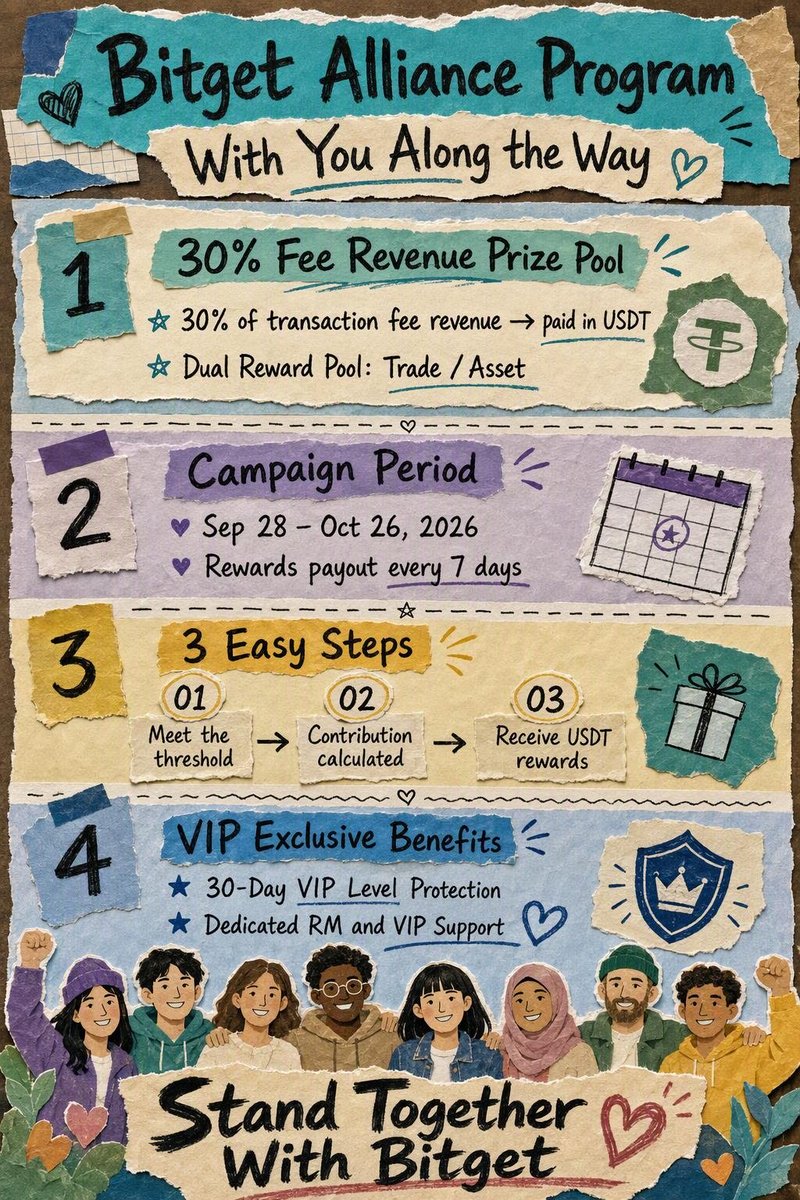
$MU gave me a setup, while trading on Bitget can also contribute to the Alliance reward pool.
Trade the setup, manage the risk, and let the activity count toward something extra. 🫡
#BitgetAllianceBingo#BitgetAlliance
Bloom Energy keeps showing up as a supply chain partner on these Nebius sites. The overlap between $NBIS and $BE is getting harder to dismiss.
When the same names keep appearing on the power side of the datacenter builds, it usually means the relationship is deeper than a one-off supplier mention.
$MU post-earnings gave me another setup to work with, and I’m glad I waited for the market reaction instead of trying to predict the first candle.
What makes this one even more interesting is that the trading activity doesn’t just stay with my own trade it also contributes to the overall Alliance reward pool.
I’m also keeping an eye on that pool as it grows. If you’re already trading or holding on Bitget, the Alliance Program gives you a chance to earn additional rewards from the platform’s activity.
So yeah… another trade, another box checked, and hopefully another Alliance reward coming my way.🫡
#BitgetAlliance
$BE is becoming one of the clearest plays on the AI power bottleneck but even Jim Cramer says don’t chase it.
Bloom Energy is up 219% this year and 34% this month as AI data-center demand drives interest in its behind-the-meter fuel-cell systems.
The fundamentals are getting attention too. Q2 revenue jumped 166% to $1.07B, adjusted EPS came in at $0.78, and management raised FY2026 revenue guidance to $3.9B–$4.2B.
Cramer says Bloom remains his preferred way to play the electricity infrastructure needed for AI, pointing to its ability to deliver power faster than waiting years for traditional grid connections.
At roughly 108x expected 2026 earnings and 59x 2027 earnings, Cramer argues patience could make more sense after the massive run.h
$NBIS buying Inferize feels like the first time the story actually matched the pitch.
Everyone’s been screaming about capacity and power and Nvidia allocations for a year. This is them quietly paying up for the part that decides how much of that capacity actually prints.
Model loads, demand spikes, new instances coming online, and the GPUs just sit there burning cash while they warm up. Inferize’s whole job was cutting that idle tax.
Either this starts showing up in utilization and token economics over the next couple quarters, or it’s another software layer that never quite moves the needle.
I Keep trading and holding on Bitget while the Alliance reward pool grows from platform fees. Your normal activity can potentially contribute toward rewards.
Worth checking out if you’re already on Bitget.
Another Bingo box checked. 🩵
#BitgetAllianceBingo
I noticed people still treat $CRWV like a leveraged GPU rental shop. The Ennoble Care putting clinical AI inference on CoreWeave Blackwell nodes is sticky, regulated, high-value work.
Cognition running live workloads on Vera Rubin and posting 3.8x more output tokens is the performance proof.
The new Partner Network is the glue that keeps customers from leaving. When you stack those three together you get utilisation, pricing power and switching costs all moving in the same direction.
That is why I still like the $CRWV / $NVDA pairing even after the recent chop.
Good deal, good write-up. $NBIS gets capacity online faster because $AIB already locked the power. 12-year term, optional renewals, two halls, Southeast site.
Nate walking through the $1B–$1.25B revenue case based on recent pricing is the part I needed. Not financial advice, just why this name still sits at the top of my book.
I feel $NBIS does not need this deal to look large. The Microsoft and Meta contracts already did that job.
What this rumor does is show they are still in acquisition mode after Tavily instead of pausing to digest.
A mid-size Israeli target fits the same logic: buy capability, keep the team, fold it into the cloud stack.
If the report is right, they are treating M&A as product development, not as a victory lap.
$BE and $NBIS are riding the same AI infrastructure boom but from opposite ends of the stack.
Bloom Energy is tackling the power bottleneck, while Nebius is tackling the compute bottleneck. That difference has made both major 2026 AI-infrastructure beneficiaries, with $BE up 234% and $NBIS up 188% YTD.
Bloom has expanded its AI infrastructure opportunity through Brookfield’s framework, increased from $5B to $25B, while its Oracle agreement covers deployments of up to 2.8GW. Its 800V DC architecture could also reduce non-compute CapEx by an estimated $3.6B for a 1GW AI site.
Nebius is attacking the other side with Nvidia-powered AI cloud capacity. Meta committed to $12B of dedicated capacity, with the potential total reaching ~$27B, while Palantir named Nebius its preferred sovereign AI infrastructure partner. Nebius has also raised selected Nvidia GPU prices by 17–21%, suggesting tight demand.
And there’s an interesting link between them: Bloom is supplying behind-the-meter power for Nebius data centers in the U.S.
Fuel-cell stocks just staged a sharp rebound after the Oracle data-center selloff.
$BE jumped around 11%, while $FCEL gained 7% and $PLUG added 3% as investors reassessed concerns around delays tied to Oracle’s Project Jupiter.
Bloom Energy is leading the move, trading around $296.86 with a reported 12.93% daily gain on Pluang, while FuelCell Energy and Plug Power were also firmly higher.
The bigger takeaway is that the move looks sector-wide rather than company-specific.
But Project Jupiter remains the key catalyst to watch. Any update from Oracle or Bloom on the project timeline could quickly influence sentiment again.