Absolutely spot on, Qubic!
Energy was never meant to be wasted, and you're proving it by transforming proof-of-work into genuinely purposeful computation that trains AI and delivers real value, uPoW.
No staking, no idle burn, just useful, meaningful work that actually advances technology.
This isn't mining as we know it; it's the #Qubic future, AGI development.
Energy was never meant to be wasted.
Qubic turns proof-of-work into the work itself: computation that trains AI with purpose.
No staking. No idle burn. Just useful work.
This is not mining as you know it. It's Qubic.
Watch.
Excellent point on the $Qubic g factor,
! Humans show that beautiful general intelligence correlation across domains, while today's LLMs are mostly just pattern matchers tied to data density.
This is exactly why Qubic's Aigarth are so exciting, pushing toward genuine cognitive architectures that could evolve true 'g' in artificial systems through innovative, emergent training paradigms. #Qubic leading the way toward real AGI!"
Price down? not a big deal.
Price down? my way to get more #qubic.
In 1904, psychologist Charles Spearman found that children who scored well in one subject scored well in almost everything.
He called the underlying factor “g”, general intelligence.
120 years later, g remains one of the most replicated findings in behavioral science.
And yet, when researchers run the same psychometric analyses on large language models… the g factor structure doesn’t show up.
LLM performance across domains doesn’t correlate the way human cognition does.
It tracks training data density, not genuine cognitive generality.
So what would it take to actually evolve g in an artificial system?
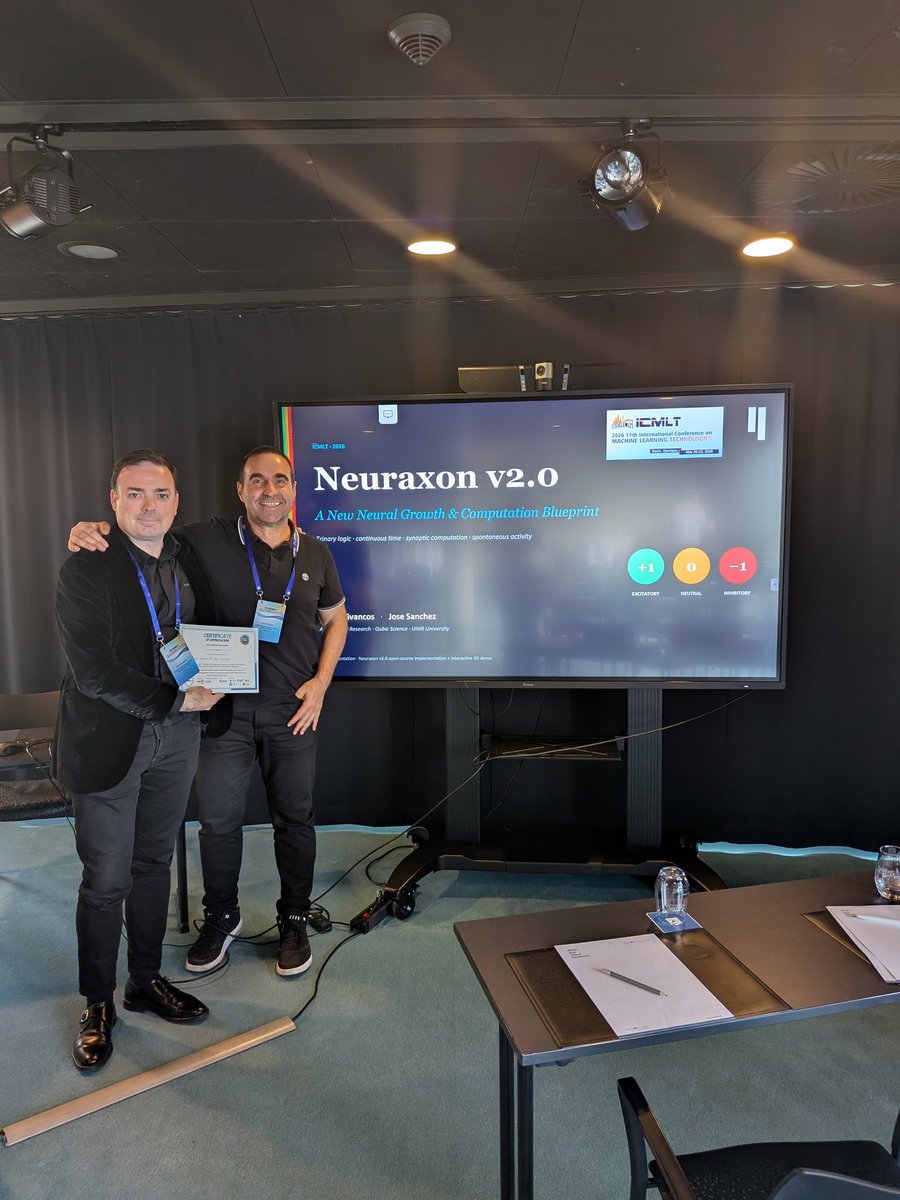
That’s the question behind Neuraxon’s latest experiment.
Artificial creatures growing their own modular brains, selected not for mastering any single task, but for the shared cognitive thread across many.
In 1904, psychologist Charles Spearman found that children who scored well in one subject scored well in almost everything.
He called the underlying factor “g”, general intelligence.
120 years later, g remains one of the most replicated findings in behavioral science.
And yet, when researchers run the same psychometric analyses on large language models… the g factor structure doesn’t show up.
LLM performance across domains doesn’t correlate the way human cognition does.
It tracks training data density, not genuine cognitive generality.
So what would it take to actually evolve g in an artificial system?
That’s the question behind Neuraxon’s latest experiment.
Artificial creatures growing their own modular brains, selected not for mastering any single task, but for the shared cognitive thread across many.
Qubic keep building. Now, the #qubic Wallet Google Chrome Extension has graduated from beta version.
Qubic makes life for humanbeing in AI's century easier.
#AGI#Aigarth
In the 1960s, the US and Soviet Union both launched rockets. Both burned the same fuel. Both pushed the limits of human engineering.
One program put a man on the moon. The other proved it could.
Bitcoin mining is the rocket that proved it could. Qubic is the one going somewhere.
On Qubic, the computors aren’t racing to stamp out a number. They’re training an AI.
The proof of work and the work itself are the same thing.
Every cycle goes into building something that didn’t exist before, something that actually matters.
That something has a name. Aigarth, an AI the network has been growing from scratch for four years.
And it’s about to get even faster and more coordinated.
A protocol upgrade called the Anthill is coming.
Until now, every miner searched for answers on their own, thousands of people digging random holes hoping to find gold.
Once the Anthill lands, each miner builds on where the others left off, the way ants reinforce each other’s trails until the whole colony moves as one.
The work of one starts making the work of everyone else better.
Same energy bill, yet a completely different destination.
ChatGPT is a photograph of intelligence.
It was trained once on a massive dataset, frozen, and deployed. Its weights do not update. Its architecture does not change. Whatever it retains between sessions is a note, not actual growth.
Every answer it gives comes from a snapshot that stopped updating the day training ended.
Qubic is building something fundamentally different. 🧵
Just imagine #trueai not LLM
It’s 2027…
AIGARTH by M. Ivancheglo, aka Come-From-Beyond, is ready.
Never sold your $QUBIC ? Then you’re about to unlock the superpowers.
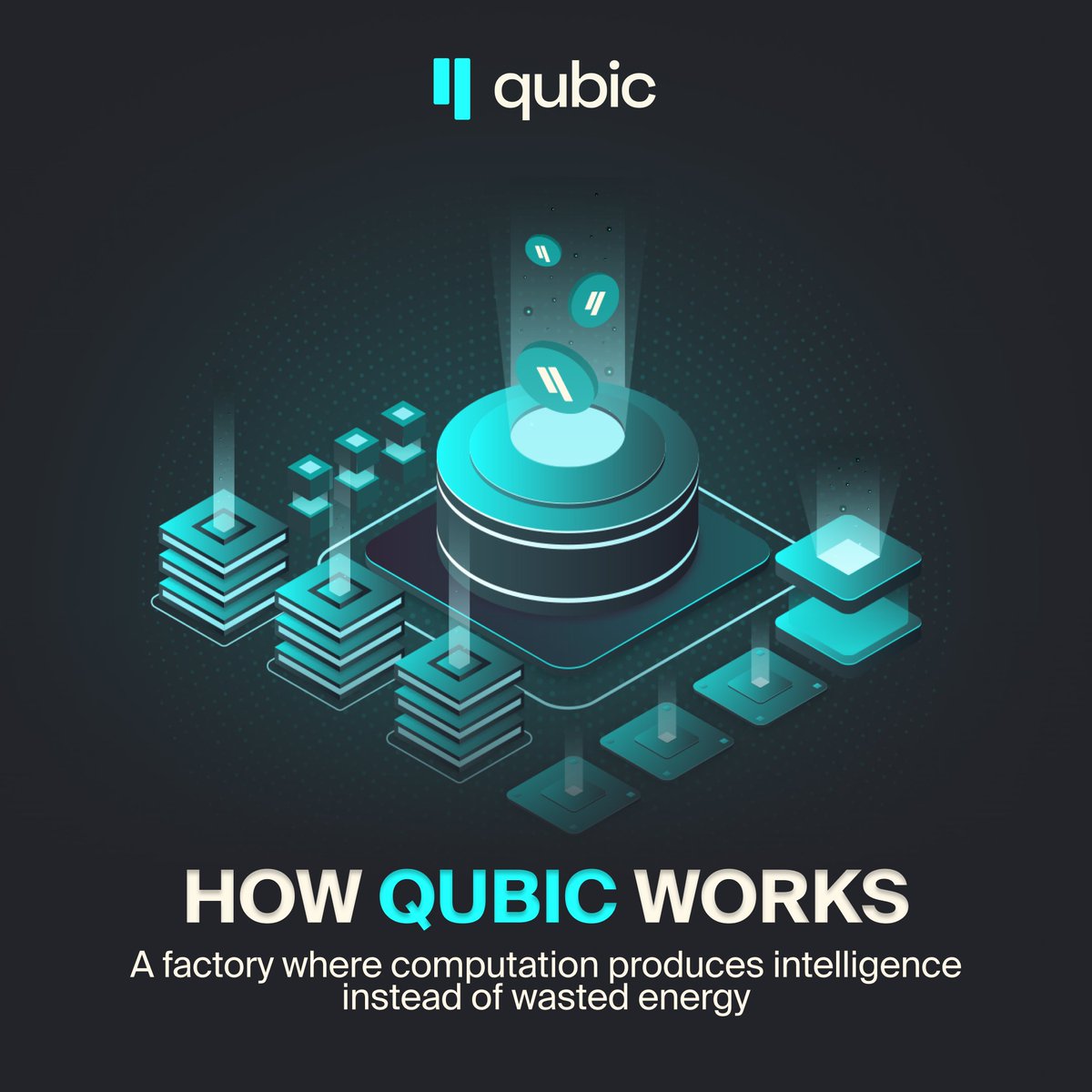
Most blockchains operate like a factory where every worker clocks in, shreds paper all day to prove they showed up, then clocks out.
The paper shredding is the job.
That is Bitcoin mining.
Qubic is different.
The electricity burned on this network trains AI. The compute produces a real output, not proof that electricity was spent.
Here is how the rest of the system works.
676 floor managers (called Computors) inspect every product (transaction) before completion.
For anything to leave the factory, at least 451 of them must sign off as a quality assurance check.
That is 66.7% agreement.
If a bad product slips in, the majority catches it before it reaches the door.
Every seven days, the factory resets.
Managers who did not pull their weight get replaced by ones who did.
You do not keep your seat by seniority. You keep it with measurable output.
There are no transaction fees for sending and receiving QU.
When a smart contract executes, the cost comes from the contract's own reserve, not from the user's wallet.
The factory's services do not bill the customer at the counter.
And here is the part most people miss: every time someone uses the factory's services, a small amount of its internal currency gets permanently destroyed.
The more people use it, the scarcer the currency becomes.
That is the whole system.
Workers train AI. Managers verify everything by supermajority. Seats rotate weekly. Fees are zero. Usage burns supply.
Four years running.